Tried out the game and it turned out to be an awesome experience. The visuals were impressive and the gameplay was enjoyable throughout. Absolutely loved it. @OmegaRoyaleEN & @KGeN_Community #KGeNPlaysOmegaRoyaleTowerDefence

English
Insane
38 posts
@TRP_INSANE
Just living life one upgrade at a time Mindset. Win. Repeat.


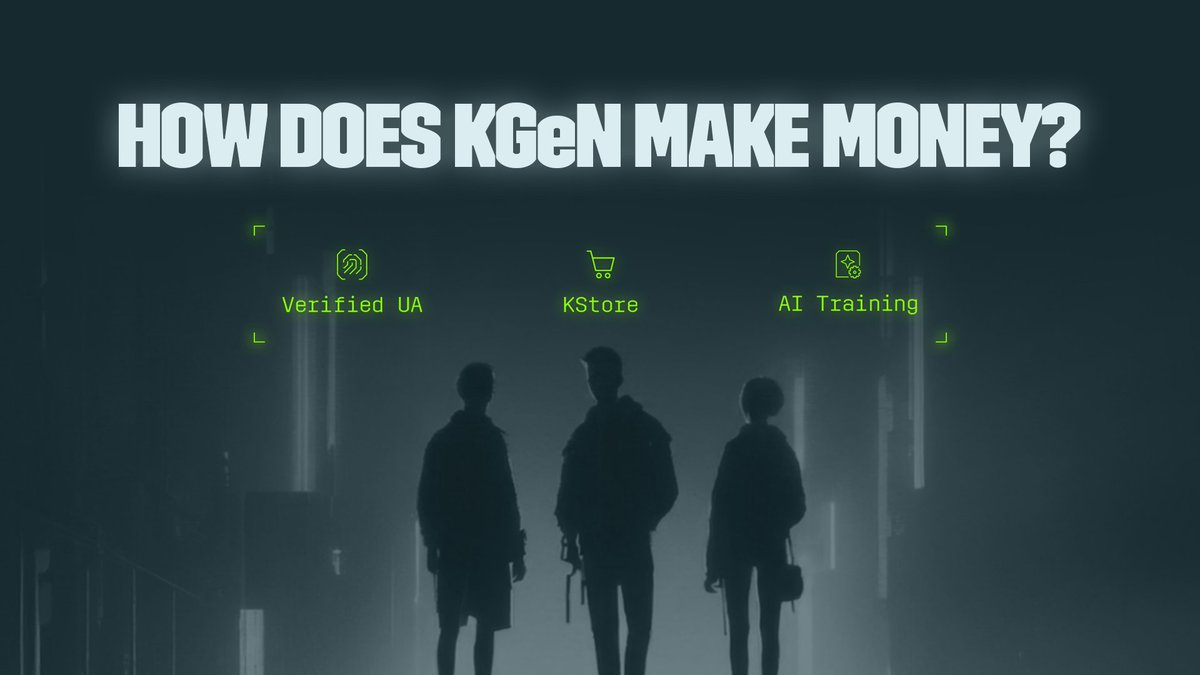
🟩 How does KGeN make money? — Part 3 This time, let’s talk about AI Training & Evaluation – how KGeN turns a global expert network into revenue. KGeN taps into a network of 1M+ verified experts across 60+ countries and 20+ languages, all profiled and ranked through the POGE reputation engine. These aren’t random users. They’re people tagged by skills, language, and domain; from engineers and doctors to writers, designers, and analysts. AI companies and annotation platforms work with KGeN when they need high-quality human intelligence at scale, not just cheap clicks. There are three places where we help them: 1. Data Collection Before any model learns anything, it needs data. KGeN helps collect that data across different formats and contexts: ➡️ Multi-modal data – text, images, audio, video, and combinations of these ➡️ On-site & offline data – collected by local experts when something needs to be captured in the real world ➡️ Online data – gathered through structured digital workflows In simple terms: Partners come to KGeN with the ask, “We need X data, from Y regions, in Z formats,” and KGeN runs the required pipeline through its expert network. 2. Data Labelling Raw data is just the starting point. To actually train useful models, that data needs to be labelled, structured, and enriched. This is where KGeN's Experts step in. KGeN manages labelling work across verticals like Coding, STEM, Healthcare, Content, Design, Legal, and general domains. That includes: ➡️ Multi-modal human response generation – experts writing, rating, or refining answers that models learn from ➡️Object detection – tagging and identifying objects in images and videos ➡️Localisation & transcription – turning speech into text and adapting content to different languages and regions AI companies partner with KGeN for this because they don’t just need “labels”, they need high-quality, domain-aware labels from people who actually know what they’re doing. 3. Model Evaluation Even after a model is trained, the big question remains: “Is this good enough to ship?” KGeN helps answer that too. KGeN's network is used to evaluate and benchmark models in real-world scenarios, including: ➡️ Search & response evaluation – judging if answers are relevant, accurate, and useful ➡️ Machine translation quality – checking if translations are correct, natural, and context-aware across languages ➡️ Geo-location data evaluation – validating content and outputs against local context, norms, or conditions This is how KGeN makes revenue through AI training, by wiring human intelligence directly into the next generation of AI models. Partners get real experts. Products get real workloads. Partner happy. Community happy. KGeN happy.