Today’s Supreme Court decision effectively guts a key pillar of the Voting Rights Act, freeing state legislatures to gerrymander legislative districts to systematically dilute and weaken the voting power of racial minorities - so long as they do it under the guise of “partisanship” rather than explicit “racial bias.” And it serves as just one more example of how a majority of the current Court seems intent on abandoning its vital role in ensuring equal participation in our democracy and protecting the rights of minority groups against majority overreach.
The good news is that such setbacks can be overcome. But that will only happen if citizens across the country who cherish our democratic ideals continue to mobilize and vote in record numbers - not just in the upcoming midterms or in high profile races, but in every election and every level.
Recent studies in neuroscience and psychology are reframing ADHD not merely as a set of cognitive hurdles but as a powerful driver of breakthrough creativity and innovation.
Long stereotyped for difficulties with focus, attention, and impulse control, individuals with ADHD traits often exhibit superior divergent thinking—the capacity to generate a wide array of novel ideas by connecting distant or unrelated concepts. This stems from reduced adherence to rigid mental frameworks, enabling freer conceptual expansion and the production of more original, unconventional solutions than neurotypical counterparts. Heightened mind-wandering, especially when deliberate (purposefully allowing thoughts to drift), acts as a fertile source for this creativity, bypassing conventional boundaries to yield abundant "outside-the-box" insights.
Complementing this cognitive flexibility is a neurological drive for novelty rooted in lower baseline dopamine signaling. This creates a chronic need for stimulation, translating into exploratory, risk-tolerant behavior and a propensity for adventure—qualities that can disrupt routine settings but prove invaluable in dynamic fields. Impulsivity, often reframed as rapid action initiation, becomes a catalyst for pursuing bold ideas and seizing opportunities in high-stakes environments.
These traits align closely with the profiles of many successful entrepreneurs, inventors, and pioneers. In fast-evolving creative and innovative economies, the ADHD brain's wiring for quick associative leaps, tolerance of uncertainty, and motivation through novelty-seeking provides a distinct edge, turning potential challenges into engines of originality and progress.
Emerging evidence from 2025–2026 research reinforces this view: studies link stronger ADHD traits to elevated creative achievements via mediated mind-wandering, intuitive insight-driven problem-solving, and higher real-world inventive output, highlighting neurodiversity's role in fueling societal advancement.
[Maisano, H., et al. (2026). ADHD Symptoms Predict Distinct Creative Problem-Solving Styles and Superior Solving Ability. Personality and Individual Differences (February 2026)]
Republican leaders rushed a 2 AM vote to let the government spy on Americans without a warrant.
It’s good they failed.
Americans are rightfully afraid of government overreach. We need to prioritize protecting their personal data & not force bills through in the dark of night.
Democratic Sen. Chris Van Hollen said the bipartisan Senate bill would have funded TSA and other DHS agencies “while we continue to negotiate reforms to ICE,” but Speaker Mike Johnson “refused to even have a vote on that in the House and went home.” abcnews.link/0Y8ZuQ6
From space to code-breaking, women have shaped STEM. 🚀
Space: Pioneers like Svetlana Savitskaya & Mae Jemison.
Invention: Sybilla Masters held the 1st US patent.
Tech: Ada Lovelace was the 1st programmer.
Science: Marie Curie, 2x Nobel winner.
@AFallsPETeach@MAPEC_Members@SHAPEAmerica Adapted PE Week reminder: today a mostly non-verbal student looked at me during play and said, “I do.”
Two small words. Huge moment.
Movement can unlock confidence, connection, and communication.
Moments like this are why we teach.
We don’t have a classroom management problem.
We have an emotional regulation crisis that teachers are being asked to handle.
Somehow, “classroom management” has turned into:
• de-escalating trauma
• supporting anxiety and depression
• calming panic attacks
• being the counselor, social worker, and crisis team
• carrying emotional loads no one sees
And then we remove the very things that help like
recess, movement, art, play, connection.
Teachers aren’t trained for that.
They shouldn’t have to be.
Classroom management is about relationships, structure, routines, and connection.
It was never meant to replace what families, communities, and systems failed to provide.
And until we stop offloading every societal failure onto schools,
teachers will keep drowning under expectations no human can meet.
This is not enough. We’re spending $350M on an unaccountable private school voucher program while constitutionally underfunding our public schools. Iowa kids deserve better. Accountability and transparency now. who13.com/news/politics/…
Big, profitable corporations often pay a lower tax rate than ordinary people like teachers and firefighters. Small businesses are paying more while massive corporations use loopholes to pay nothing.
Let’s close those loopholes and make corporations pay their fair share.
🧵
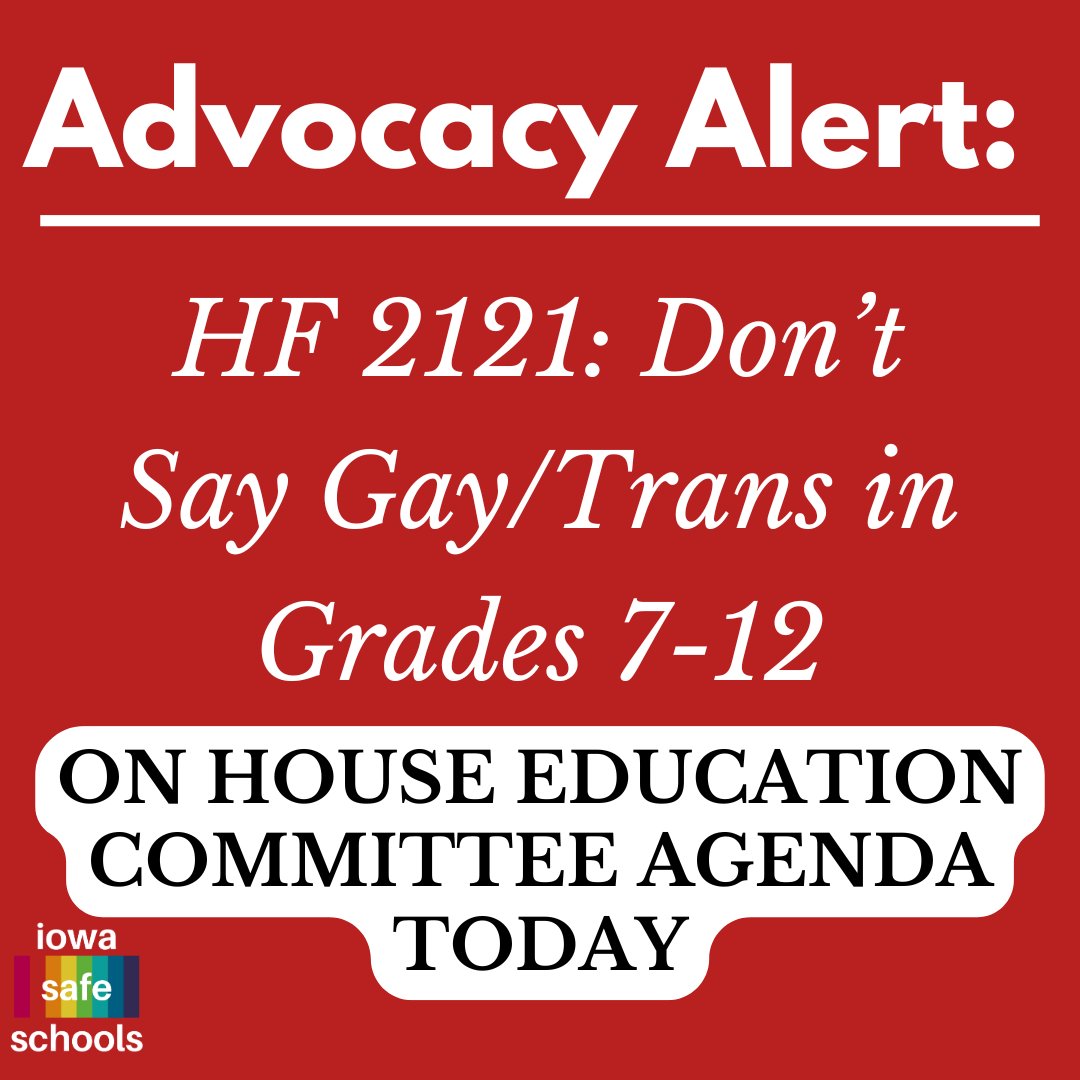
🚨UPDATE🚨
HF 2121 has now advanced out of subcommittee and is moving quickly to the full House Education Committee, with a committee meeting scheduled the same day as the subcommittee hearing...
The Texas power grid system, which failed during a previous winter storm, could be put to the test this weekend as the region faces subfreezing temperatures and dangerous wind chills. nbcnews.com/weather/winter…
For some reason, Trump said his tariffs would bring costs down for Americans. But the data shows what you already know: Americans are bearing 96% of the tariff burden. That's $200 billion coming straight out of our pockets because of him.
The day the music died.
That line from the song American Pie could just as easily be about schools.
Because the day No Child Left Behind Act began, something real changed.
That was the day music, laughter, creativity, and fun started disappearing from classrooms.
Not instantly. But steadily.
In their place came standards.
Practice tests.
Pre- tests.
Tests
Post-test
Retests.
Data. & more data.
Learning was no longer the goal.
Testing was.
Teachers did not suddenly forget how to teach.
Kids did not suddenly stop being curious.
The system just stopped valuing those things.
And after all of it, let’s be honest.
It did not improve anything that actually mattered.
Yes, that was the day the music died
and so did the joy of learning.
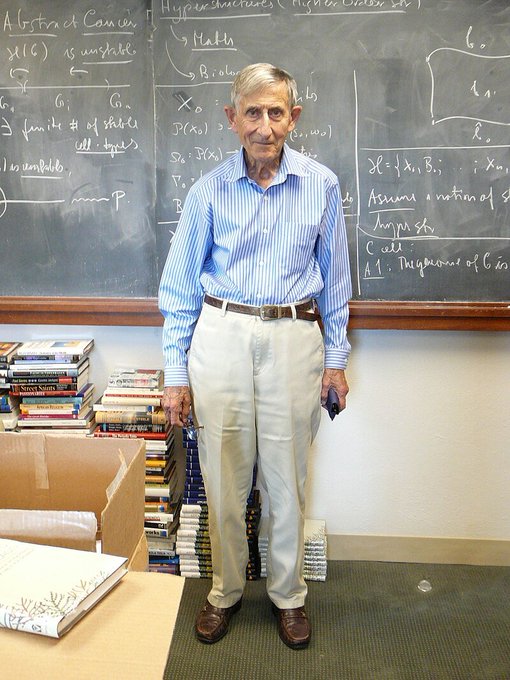
The public has a distorted view of science, because children are taught in school that science is a collection of firmly established truths. In fact, science is not a collection of truths. It is a continuing exploration of mysteries.
- Freeman Dyson
When a 2nd-grade math word problem is written at a 4th-grade reading level, it’s not really about the math anymore.
It’s about reading above grade level.
Reading belongs in math. Kids have to make sense of problems.
But when the language is harder than the math, the outcome is predictable.
Students can understand the math.
They can know how to solve it.
And still fail — because of how the question is written.
This isn’t an accident.
International comparisons (PISA and TIMSS) show that U.S. math assessments are often longer, wordier, and more linguistically complex than those used in many higher-performing countries — even when testing the same math concepts.
In other words, testing companies design questions that make it easier to miss the math.
If we want math scores to mean something, grade-level math needs grade-level language.