TerryTerry79

9.8K posts

TerryTerry79 banner
TerryTerry79

TerryTerry79

@TerryTerry79

Katılım Ekim 2015
137 Takip Edilen153 Takipçiler
David James
David James@DavidDJJames·
@Genetics56 ASU should be a slam dunk. AAU status, huge student body and alumni base, plus lots of Big10 alums live there. The question is who moves to the Big10 with them? Arizona, BYU, Cal, Colorado, Stanford and Utah will all volunteer, but I am not sure who the Big10 will choose.
English
5
2
9
5.4K
Big Ten information and news
True. Need to make sure there is at least 1 school in the various regions. I'd take ASU with fwiw. That way there is a presence in Arizona. I can see the appeal if Colorado since its a school with a real P2 rival, but man that school needs to start winning in football.
David James@DavidDJJames

@216_CFFOCUS @Genetics56 Agree with this. The NFL has a geographic balance that helps keep people interested. CFB already lost the northeast. CFB is on the verge of abandoning the MTN time zone and several western cities so they can have have 7 teams in Indiana, Alabama and Mississippi.


English
4
1
17
9.7K
Kevin Tomb
Kevin Tomb@mannplay01·
@TaylorRMarshall I wonder what Christ would think about all these rituals. The fact that the Catholic organization has amassed over 10 trillion in assets including cash , jewels ect. Just a thought
English
1
0
0
228
TerryTerry79
TerryTerry79@TerryTerry79·
@Osoronga @TaylorRMarshall On Holy Thursday, the Bridegroom and his Bride entered into the Eternal Covenant. Jesus’s body & blood is our Covenant Feast. Therefore, Holy Thursday is our Wedding Day.
English
0
0
0
47
Damola Awoyokun
Damola Awoyokun@Osoronga·
@TaylorRMarshall Nope. Lumen Gentium calls the Holy Eucharist the centre and summit of the church. Hence the birthday is Holy Thursday
English
3
0
1
384
TerryTerry79
TerryTerry79@TerryTerry79·
@TheOriginalBigL @Genetics56 Not good to have a CFB Super Bowl in an indoor NFL Stadium. Gotta admit the Rose Bowl game has a lot of charm & tradition and plays well on TV. The weather, parade, and tailgating bring a lot. NFL stadiums don’t offer much.
English
0
0
0
17
Leighton
Leighton@TheOriginalBigL·
@TerryTerry79 @Genetics56 SEC would likely agree to an alternating championship game between the Rose Bowl & Sugar (or another southern bowl). Never agree to one on the west coast every year.
English
1
0
0
35
Big Ten information and news
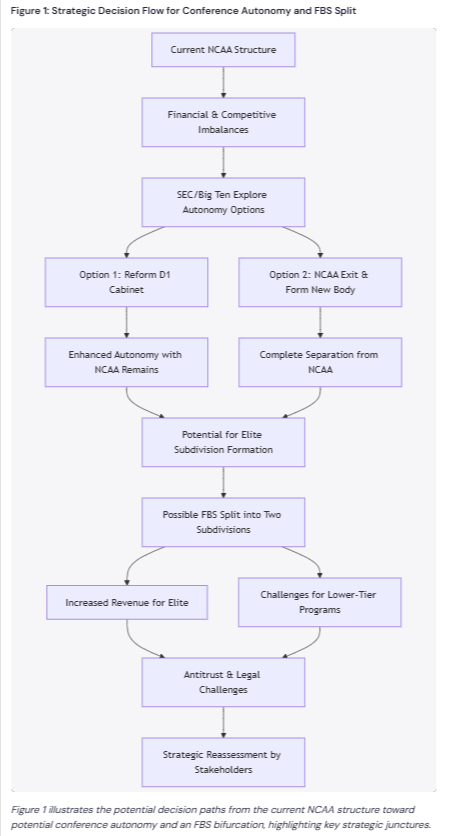
Big Ten and SEC Breakaway From The NCAA: Yes or No? Table of Contents 1: Conference Autonomy: Rule-Making, NCAA Exit, and Governance Changes 2: Do They Need to Leave the NCAA or Change the D1 Cabinet First? 3: Feasibility of Splitting FBS into Two Subdivisions 4: Big Picture: Break Away or Stay In? (My Analysis) The competitive practices attributed to these two conferences have been deliberate -moves to capture maximum revenue and establish a near-monopoly on elite college football. Such practices include: Selective Member Recruitment: By targeting programs with the highest financial and competitive potential, the SEC and Big Ten have ensured that their new members contribute significantly to media revenue and market power Rule Changes Favoring Core Members: To protect their interests, these conferences have proposed adjustments to the CFP structure and revenue sharing agreements, often to the detriment of less financially endowed schools Market Concentration: The consolidation of wealth and media rights within these conferences creates a self-reinforcing cycle where economic advantages lead to better on-field performance, which in turn attracts even more revenue Institutions within the SEC and Big Ten are increasingly insulated from the pressures that force resource-constrained schools to cut corners. Over the coming days, the potential for exclusive rule-making—such as the SEC voting to adopt its own rules independent of the NCAA, could deepen these cleavages. 1: Conference Autonomy: Rule-Making, NCAA Exit, and Governance Changes The SEC’s recent discussions about establishing its own rule-making process represent a seismic shift in NCAA governance. This move suggests that members might be preparing for a future where they either gain complete autonomy from the NCAA or force significant changes within the D1 cabinet to secure such autonomy. The question arises: does pursuing self-rule necessitate departing the NCAA, or can the restructuring of governance institutions within NCAA be sufficient? 1.1 The Case for Autonomy For the SEC and Big Ten, autonomy is driven by several factors: Financial Independence: The ability to negotiate media deals, CFP revenues, and manage their own revenue sharing models without NCAA oversight is a powerful motivator. As financial disparities widen, the dominant conferences see autonomy as a way to protect their economic interests. Competitive Balance Considerations: Since the traditional NCAA structure often leads to an uneven competitive playing field, especially when conferences lose members or engage in reactive recruitment, the prospect of self-governance offers a pathway to better tailor competitive policies to the unique realities of elite programs. Governance Efficiency: The centralized decision-making inherent in the NCAA may dilute the interests of powerhouse conferences. By carving out an autonomous governance structure, the SEC and Big Ten could expedite rule changes and minimize bureaucratic delays, addressing issues such as media rights distribution and eligibility criteria swiftly. 1.2 Necessity for NCAA Exit or Internal Reform? Adopting an entirely independent rule-making process might imply a departure from the NCAA structure. However, there are two potential pathways for achieving autonomy: Complete Separation from the NCAA: In this scenario, conferences like the SEC and Big Ten would form their own collegiate sports governing bodies. This radical approach might resemble the European football model where national leagues are independent. Internal Cabinet Restructuring and Enhanced Autonomy: Alternatively, the dominant conferences might seek a reformation within the NCAA framework, perhaps by influencing the new Division I cabinet to prioritize policies that benefit elite conferences. Such changes could grant them enhanced autonomy without a formal exit, thereby reducing the risks associated with a complete departure. In both cases, the move toward self-governance will likely necessitate significant legislative and administrative changes. Calls for enhanced conference autonomy are already resonating among stakeholders who perceive the current NCAA structure as ill-suited to address the evolving power dynamics in college sports. 1.3 The Immediate SEC Vote Reports indicate that the SEC board is scheduled to vote on adopting its own rule-making framework soon, a development that has sent ripples through the college sports community. This vote is not merely symbolic, it is a concrete manifestation of the desire for rules that protect the conference’s financial interests and competitive standing. Should the vote pass, it could set a precedent, potentially triggering debates about NCAA membership viability for elite conferences. 2: Do They Need to Leave the NCAA or Change the D1 Cabinet First? Not immediately for exploratory moves or even some new rules. NCAA Division I already grants "autonomy" to the Power conferences in certain areas since ~2014, things like scholarships, transfers, and some NIL guardrails. They could push the D1 Board of Directors or Cabinet for expanded autonomy (e.g., conference-specific enforcement). A cabinet vote or D1 restructure could formalize this without full exit. But for the full vision (tight caps on player movement/comp, uniform eligibility, robust enforcement that actually sticks, and excluding lower-tier FBS schools from key revenue), staying in the NCAA long-term gets messy. The national body still oversees non-rev sports, basketball tournaments and overall D1 structure. Joint Big Ten + SEC action (even without full NCAA) could still trigger antitrust scrutiny as "concerted action." Thus, instead of Joint, they would need to operate as their own entities for rules and enforcement to avoid "concerted action." 2.1 Full breakaway (or de facto self-governance outside NCAA/CSC enforcement) is the nuclear option they're actively exploring. Dellenger's reporting and follow-ups confirm both leagues are discussing models where they hire their own enforcement staff, set rules independently, and potentially limit inter-conference play or national title participation. 2.2 They could do conference-based rules inside NCAA membership via autonomy tweaks, but the current national gridlock (CSC not scaling, Congress failing again on SCORE Act due to politics/CBC opposition) is pushing them toward independence. Sources close to the meetings describe it as "self-govern or bust" if the four Power leagues can't agree on CSC reforms. 3: The Feasibility of Splitting FBS into Two Subdivisions One of the most contentious questions emerging from the autonomy debate is whether the FBS will split into two distinct subdivisions. With the SEC and Big Ten wielding considerable influence, the possibility of institutionalizing the divide between financially powerful and economically weaker schools is becoming increasingly plausible. 3.1 Rationale for a Subdivision Split Several factors support the argument for dividing FBS into two subdivisions: Financial Disparities: The financial imbalances between elite conferences (SEC/Big Ten) and other schools are so stark that a natural separation of interests is inevitable. Competitive Balance Concerns: A formal subdivision would allow conferences to set eligibility criteria that match similar competitive and financial profiles, potentially leading to more equitable competition among similarly resourced institutions. Rule-Making Autonomy: If conferences like the SEC and Big Ten continue to gain the power to set their own rules, they may also opt to create a structure that institutionalizes their dominant position. In such a scenario, the FBS might split into two tiers, one governed by elite conferences with robust revenue streams, while the other comprises schools with less financial clout. 3.2 Potential Structures for an FBS Split The proposed split might take several forms: Tiered Structure: The FBS could be divided into an “Elite Tier” and a “Standard Tier.” The Elite Tier would consist of schools from the SEC, Big Ten, and some additional schools moving to the Big Ten, which benefit from enhanced media rights and centralized control over scheduling and playoff structures. Meanwhile, the Standard Tier would bring together other institutions, potentially creating a separate playoff and revenue-sharing model. Regional Alignments: Alternatively, a regional framework might be adopted where geographic considerations drive the subdivision. However, given that the financial and competitive disparities are more pronounced than regional differences, the tiered approach seems more likely. Hybrid Model: A combination of both tiered and regional factors, where elite schools are grouped together but regional playoffs still determine qualification for a national championship, could balance competitive fairness with economic realities. 4: Big Picture: Break Away or Stay In? (My Analysis) They don't have to fully terminate NCAA membership to get conference-based rules/governance, and the smart money (for now) is on aggressive autonomy/self-enforcement first while staying affiliated. But the Dellenger reporting, SEC/Big Ten meeting leaks, and post-SCORE Act exhaustion show the breakaway talk is genuine contingency planning. Reasons they might prefer (or settle for) staying inside NCAA membership: March Madness + non-rev sports. Avoids huge political blowback. Easier antitrust path if done conference-by-conference (per Choh precedent) rather than a joint super-league. They can still coordinate loosely on CFP/media rights. Reasons full breakaway (or near-breakaway self-governance) is tempting: National enforcement is broken (CSC overwhelmed, no federal antitrust shield). They want to move faster on roster limits, transfer rules, revenue sharing without G6/ACC/Big 12 veto power. Legal cover for decentralized rules is stronger now. My take: A hybrid is likely, conference self-governance on football revenue/ eligibility/ enforcement, while technically staying NCAA members for basketball/other sports. An FBS subdivision split is a clean way to do this without burning everything down. But if CSC talks collapse this spring/summer, the breakaway momentum (already "getting real" per multiple reports) could accelerate fast Watch the SEC meetings fallout and any Big 12/ACC responses. The power conferences have been threatening this for years; the difference now is the House settlement + Congress + CSC dysfunction have made status quo untenable. What can lead to a quick termination of NCAA membership by the Big Ten and SEC is the $160M+ dollars that are to be paid to their athletes that have been rejected by the CSC. If the conferences are unable to get approval by the Big 12 and ACC to allow Big Ten and SEC schools to pay these money without CSC approval, that could speed up the separation. In order to create a complete "SEC mechanism and SEC rules, then, yes, removal from the NCAA would be needed." Thus, whether the Big Ten and SEC leave the NCAA or not will depend on: - the extent of rules desired within the conference-level - CSC money and whether the Big12 and ACC block the Big Ten and SEC - will rules and governance at the conference-level be for all sports or just football. If it is for all sports, then a separation of just football into a subdivision doesn't work since you still have the conflict of NCAA rules and conference-led rules. It is a complex topic to discuss. One thing is for certain though, the days of the P4 all being together under all of the same rules and same structure is coming to an end.
Big Ten information and news tweet media
English
2
5
12
6.1K
Big Ten information and news
Subdivision = operates like it does today. Leave NCAA = new LLC's created to operate and run post-season events. A university can withdraw a sport from the NCAA to compete vs SEC and Big Ten outside the NCAA. Thus, Big Ten hockey could invite Denver.
TerryTerry79@TerryTerry79

@Genetics56 So the champion from each silo would not be able to play each other? CFB Super Bowl game isn’t possible?

English
1
0
7
3.2K
TerryTerry79
TerryTerry79@TerryTerry79·
@Genetics56 So the champion from each silo would not be able to play each other? CFB Super Bowl game isn’t possible?
English
0
0
0
3.3K
Big Ten information and news
People can use "silo" if that is what helps them understand things, but this isn't silo. It's rather simple. Just like how the NIAI plays NCAA schools. If Big Ten,SEC leave NCAA, they would have their own championship structures, just like the NIAI does.
TerryTerry79@TerryTerry79

@Genetics56 Yes. Two silos. - AFL vs NFL - Cross silo scheduling allowed. - Each silo restricts their member schools to just one OOC cupcake game on the schedule - Silo champions meet annually in a national championship game on New Year’s Day at the Rose Bowl

English
1
0
1
2.4K
TerryTerry79
TerryTerry79@TerryTerry79·
@Genetics56 But what if Big Ten bluebloods demand an end to equal revenue sharing by 2030? What if Big Ten member schools are allowed to sign their own TV deals? If that happens, it becomes extremely easy for the conference to poach ND and the top ACC/Big 12 brands.
English
0
0
0
123
Big Ten information and news
I'm going to avoid an answer on the SEC. I don't know if they will want to go past 16. For the Big Ten, it will depend on how much money FOX Sports can spend that could cap a number. IMO, 24....could go as high as 28 if they basically "buy" the ACC.
PSUOutspoken@PSUOutspoken

@Genetics56 What’s your thinking on the number of teams in each league? I’m guessing 24-30 in each but you’ll probably have a better idea than I would.
English
6
1
6
5.6K
TerryTerry79
TerryTerry79@TerryTerry79·
@JaredW67913667 How much annual TV revenue can Miami expect in the Big Ten? FOX will be negotiating soon with greedy NFL & MLB. Cable bundle is collapsing and Big Ten bluebloods expected to demand the end of equal revenue sharing. Miami is better off in a new Super League.
English
0
0
0
74
JaredW
JaredW@JaredW67913667·
I think Miami is waiting to ultimately see what becomes of the ACC when teams leave. If the ACC adds schools like Tulane or Rice and becomes private school minded Miami isn’t going anywhere. If they add public schools like USF, Memphis, etc. then Miami would head to the B10 in my opinion because that would the backup plan for Stanford and ND. Just IMO
Grateful Trojan@Grateful_Trojan

@JaredW67913667 Miami is private and wouldn’t have the same political pressure FSU has. Miami would be a better add. Sorry Cal, I wish it was different, but it’s not.

English
4
0
7
3.7K
TerryTerry79
TerryTerry79@TerryTerry79·
@Genetics56 Schools like Kansas know they can’t remain in their current conference much longer. Kansas is going to have to form a new conference from scratch. Along with FSU/CU/MIA/Stanford/Cal/NC/VA/Ga Tech/ASU/Utah/Duke/ND. They can’t stay put and hope for the best.
English
0
0
1
188
Big Ten information and news
Kansas admitting they don't have the funds. I don't know how many more times I need to keep saying this, there is a financial fracturing happening between P4 universities. People act like "how dare you say that." It needs to be said because it is true. Separate the schools.
Mark Schipper - 5th Down CFB@5thDownCFB

There is going to be a trimming down of a lot of things on both academic and athletic sides at many universities over the next decade


English
15
6
76
39.4K
Brendan Jones
Brendan Jones@Brendan67357746·
@TerryTerry79 @KoolEconomics @WinterSportsLaw 1. NCAA D1 sports, even the low popularity ones, will generate more fan interest than club sports. 2. I think you might be surprised how popular those mystery sports are. 3. The NCAA requires member schools to sponsor at least 10-16 varsity teams, depending on their level.
English
1
0
0
28
TerryTerry79
TerryTerry79@TerryTerry79·
@Genetics56 Schools still enjoying the fruits of the cable bundle. Wishing it could live forever.
English
0
0
3
1.8K
Big Ten information and news
Total revenues for the Big Ten, SEC, ACC, Big 12 Big Ten $1.47 billion SEC $1.11 billion ACC $826.5 million Big 12 $610.9 million Distribution Big Ten: $76 million SEC: $70.3 million ACC: $42.8 million Big 12: $37.9 million
Brent Schrotenboer@Schrotenboer

All the latest tax returns are now in for the ACC, Big 12, SEC, Big Ten and Pac-12. Here is how they compare financially in the first year after the big realignment. usatoday.com/story/sports/c…

English
16
77
311
237.6K
TerryTerry79
TerryTerry79@TerryTerry79·
@Brendan67357746 @KoolEconomics @WinterSportsLaw That makes sense for the sports that generate revenue. It even makes sense for some Olympic sports that attract fan interest. But it doesn’t make sense for most sponsored sports that cost money and realistically should fall into the club sports category.
English
1
0
1
24
Brendan Jones
Brendan Jones@Brendan67357746·
@KoolEconomics @WinterSportsLaw Universities have athletics mainly for the prestige and the name brand recognition, which brings in more &/or better students to the university & so on. How many universities do you know of? How many of them either are in a power conference or had high lvl athletic success?
English
1
0
1
56
TerryTerry79
TerryTerry79@TerryTerry79·
@Genetics56 All realignment is on hold until the NFL finishes price gouging the hell out of its media partners. Will FOX have much left over to spend on MLB & Big Ten? And what will bluebloods demand as the Big Ten heads to unequal revenue sharing? Hold on to your butts!
English
0
0
0
30
TerryTerry79
TerryTerry79@TerryTerry79·
@FourPeaksSports @Gdubb1997 Certainly not the first time. It has happened many times over the decades. Any school playing Texas in any sport should expect to see the referees doing strange things that favor Texas.
English
0
0
1
19
Four Peaks Sports
Four Peaks Sports@FourPeaksSports·
@Gdubb1997 Not to mention we’re talking about this guy needing an absolute ref job to win a CFP game against ASU
English
2
0
2
17
Professor WildUte
Professor WildUte@TheWildUte·
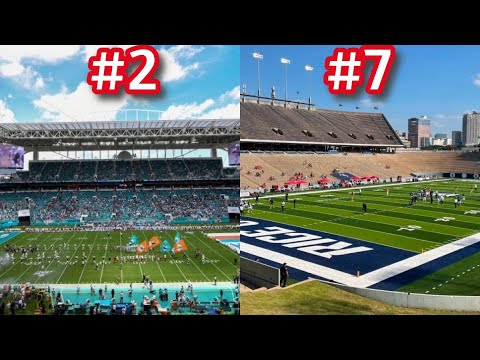
Baylor (#14), Cincinnati (#15), and Houston (#16). The three most underwhelming stadiums in the Big 12. All have sub-50% home win rates. Road teams are winning MORE than they're losing there.
English
5
1
8
1.4K
TerryTerry79
TerryTerry79@TerryTerry79·
@Genetics56 We shall see if the Big Ten survives after 2030 media rights negotiations. FOX is going to be seriously strapped after signing NFL & MLB deals. Big Ten needs Petitti to pull off a miracle.
English
0
0
0
47
Big Ten information and news
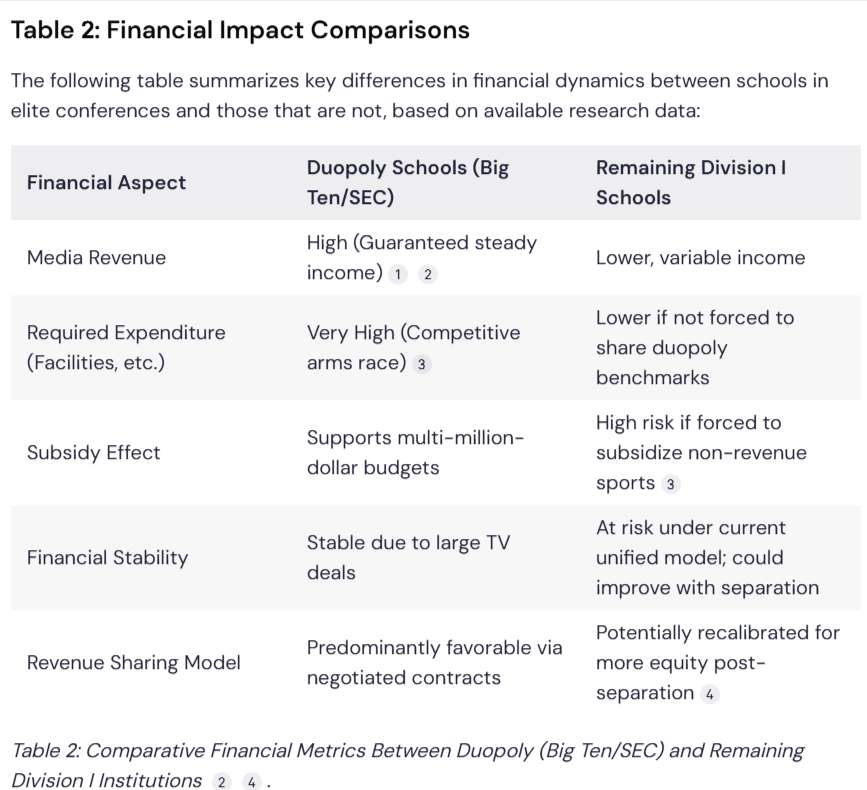
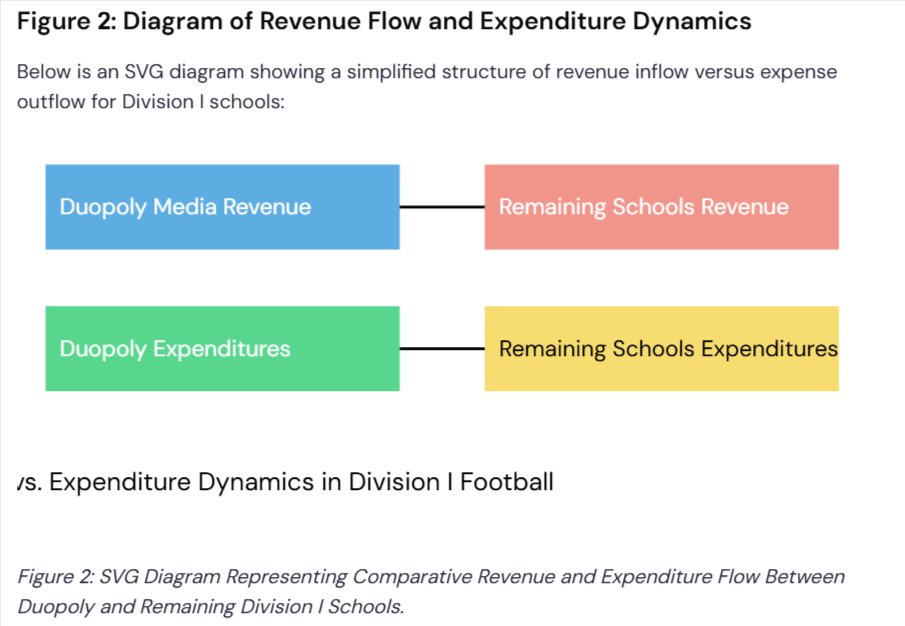
Why the Big Ten and SEC "breaking away" from the rest of D1, at the very least for football, saves the rest of D1 from financial catastrophe Table of Contents 1. Introduction 2. Current Financial Landscape in Division I Football 3. The Financial Arms Race: Revenue, Expenses, and the Subsidy Effect 4. The Big Ten and SEC: Building a Duopoly 5. Potential Benefits for Remaining Division I Athletic Departments 6. Comparative Analysis of Financial Metrics in Conference Realignment 7. Case Study: The Pac-12 Collapse and Its Implications 8. Future Scenarios and Strategic Shifts for Non-Duopoly Schools 9. Visualizing the Shifts: Diagrams and Tables 10. Conclusion: Avoiding Financial Catastrophe Through Realignment Separation 1. Introduction In recent years, the landscape of Division I college sports, and football in particular, has undergone transformative changes. Recent conference realignments, characterized by the aggressive pursuit of lucrative media deals and financial dominance, have been spearheaded by powerhouse conferences such as the Big Ten and SEC. These conferences are increasingly consolidating football revenues while creating an NFL-like ecosystem that shapes the future of college athletics. By analyzing supporting research and data from multiple sources, I discuss how the concentrated financial might of two elite conferences is altering revenue distribution, creating unsustainable spending pressures on other schools, and intensifying the “arms race” in athletic spending. At the same time, the formation of a duopoly by the Big Ten and SEC allows the remaining Division I institutions to escape escalating fiscal demands and achieve more realistic, sustainable financial models. The discussion is supported by detailed analysis of revenue streams, expenditure trends, and historical case studies such as the collapse of the Pac-12. 2. Current Financial Landscape in Division I Football Division I college football represents one of the largest revenue generators in U.S. sports. The financial engine behind football is not only responsible for generating income for the sport itself but also serves as a subsidizing force for numerous non-revenue sports within athletic departments. High-profile televised games, lucrative media contracts, and merchandise sales are all critical components that bolster the financial position of major conferences. At the collegiate level, football revenue is instrumental in sustaining large-scale investments, ranging from state-of-the-art facilities and high-caliber coaching salaries to extensive travel and recruiting expenses. In well-established conferences, such as the Big Ten and SEC, massive TV deals guarantee that schools receive multimillion-dollar allocations, thereby attracting the best talent from across the nation. However, while these conferences benefit from scale, other Division I institutions have historically struggled to generate comparable revenue levels. This financial gap has forced many schools to engage in an unsustainable arms race, striving to match the spending of their wealthier counterparts, even when doing so results in disproportionate expenditure increases relative to revenue gains. For many universities, football has become the engine that subsidizes other sports. Yet, this subsidy effect is a double-edged sword. Although a successful football program can generate substantial income, it also demands enormous financial outlays, often creating a financial balance that can lead to long-term instability. The challenge lies in maintaining this balance, especially as media rights and spending pressures continue to escalate in a highly competitive environment. 3. The Financial Arms Race: Revenue, Expenses, and the Subsidy Effect The contemporary college athletics financial landscape is defined by an intense competition for financial dominance. On one hand, conferences like the Big Ten and SEC have leveraged their size and media partnerships, primarily with networks like Fox -to secure TV deals that provide steady, inflation-resistant income streams. On the other hand, institutions not aligned with these powers are forced to invest heavily in athletic programs simply to remain competitive in recruiting and facilities. 3.1 Revenue Generation versus Expenditures A critical insight from the study by Hoffer and Pincin shows that when schools switch conferences, they experience a near-proportional increase in both revenues and expenditures. For instance, schools that have transitioned into automatic-qualifying conferences have seen revenue increases of approximately $12.15 million, coupled with an expenditure rise of about $10.12 million. Similarly, institutions entering any FBS conference have experienced revenues rising by $6.43 million, with expenses increasing by $5.03 million. This pattern indicates that while market realignment can boost revenues, it also forces institutions into an expensive financial commitment that may erode net gains. 3.2 The Subsidy Effect and Its Risks Football's role as a revenue engine is further complicated by its subsidy effect, which has profound implications for the broader athletic department. Non-revenue sports often rely on the surplus generated by football to stay afloat. However, this dependence means that any disruption in football revenues, be it due to poor team performance or a decline in fan engagement, can have negative effects on the entire athletic budget. The escalating costs of maintaining a top-tier football program, including facility investments and coaching salaries, add further strain, making it imperative to reassess the overall financial strategy in collegiate athletics. 3.3 The Consequences of the Financial Arms Race The relentless pursuit of financial dominance has resulted in unsustainable spending across many schools. As athletic departments invest millions to keep pace with the spending of elite conferences, they expose themselves to significant financial risk. In several instances, particularly among schools with weaker revenue streams, the heavy expenditures have led to financial instability. The looming threat is that sustained overspending, without a proportional increase in revenue, could eventually lead to a financial catastrophe for these institutions. 4. The Big Ten and SEC: Building a Duopoly Over the past few years, the Big Ten and SEC have emerged as the uncontested titans of college football, largely due to their robust media contracts and strategic realignment moves. Their measured expansion and acquisition of high-profile programs have not only consolidated their market power but have also created a distinct financial and competitive dichotomy between them and the rest of Division I schools. 4.1 Strategic Consolidation via Media Contracts The Big Ten and SEC have secured TV deals that are unmatched by other conferences. For example, the Big Ten’s primary media partner, Fox, has played a pivotal role in ensuring that no school in the conference sees a decline in its annual revenue share. This financial security affords these schools a high degree of stability and predictability in their budgets, allowing them to plan for long-term investments. 4.2 The Formation of an Advisory Duopoly An important milestone in this evolution was the creation of the “SEC-Big Ten Advisory Group,” which further solidifies the strategic alignment between these two conferences. This move marks a significant shift away from the traditional NCAA governance model, emphasizing the need for a specialized economic strategy that prioritizes a tightly controlled, private market dynamic. Such systemic changes echo historical financial shifts, like those initiated by the Board of Regents lawsuit in the 1980s, which set the stage for today’s financial consolidation in college sports. 4.3 Implications of a Football-Only Duopoly As the Big Ten and SEC move increasingly toward operating as an autonomous entity within college football, their separation from the broader Division I population carries significant implications. While this duopoly pursues aggressive financial growth through media deals, competitive bidding for marquee programs, and expansive realignment initiatives, it simultaneously raises the stakes for the remaining institutions. The removal of these financial juggernauts from the broader revenue-sharing pool may, paradoxically, alleviate some of the pressure on the remaining schools, allowing them to escape the relentless arms race for football dollars and focus on achieving sustainable fiscal practices. 5. Potential Benefits for Remaining Division I Athletic Departments While the Big Ten and SEC are accelerating toward financial and competitive isolation, their departure as a unified football bloc may confer several indirect benefits on the remaining Division I athletic departments. Although the prospect might initially seem like a further diminution of resources for the broader ecosystem, a closer analysis reveals potential pathways to financial stability for the non-duopoly schools. 5.1 Reduced Competitive Spending Pressure One of the primary challenges for many schools outside the Big Ten/SEC duopoly has been the need to continuously invest in high-cost football programs to remain competitive. In the current model, all schools are forced into a spending arms race, as they attempt to match the state-of-the-art facilities, coaching salaries, and recruitment budgets of the elite conferences. Should the Big Ten and SEC break away, the remaining schools would no longer have to compete on an uneven playing field. This reduction in competitive pressure could allow them to adopt a more measured approach to spending - focusing on "good enough" programs that fit within their budget constraints without the need for extreme financial gambles. 5.2 Stabilization of Revenue Models The disproportionate media deals and sponsorship agreements secured by the Big Ten and SEC create a financial model that is unsustainable for smaller conferences. With the duopoly’s departure, the remaining conferences might recalibrate their revenue-sharing models, leading to more equitable distributions among member institutions. This shift could help prevent the hyper-inflation of spending that has plagued many athletic departments, thereby reducing the risk of financial collapse. Moreover, without the constant lure of extravagant television contracts, the focus could shift to diversified revenue streams - such as digital media rights, esports, and incremental donor engagement - ensuring long-term fiscal stability. 5.3 Enhanced Focus on Athletic and Academic Balance A side effect of the duopoly’s separation may be an increased emphasis on balancing athletics with the academic missions of the institutions. The current model forces university presidents and institutional governing boards to prioritize athletic success often at the expense of academic values. By extricating the financial juggernaut of the Big Ten and SEC from the broader NCAA framework, remaining schools could have greater freedom to realign their resources, ensuring that athletic departments do not excessively drain funds that could be redirected toward academic and student-athlete support services. This rebalancing could foster a healthier ecosystem where athletic achievement does not come at the cost of financial ruin or academic compromise. 6. Comparative Analysis of Financial Metrics in Conference Realignment To better understand the potential financial benefit for remaining Division I institutions, it is instructive to examine comparative data that draws a picture of how conference realignment has historically influenced revenue and expense trends. The study by Hoffer and Pincin provides valuable insight into these dynamics. 6.1 Revenue and Expenditure Shifts According to Hoffer and Pincin’s analysis of NCAA Division I athletics from 2006 to 2011, schools that transitioned into automatic-qualifying conferences saw an average revenue increase of approximately $12.15 million coupled with an expenditure rise of around $10.12 million. Meanwhile, schools entering any Football Bowl Subdivision (FBS) conference experienced revenue growth of about $6.43 million with expenses increasing by roughly $5.03 million. These figures suggest that while conference realignment offers a revenue boost, it simultaneously forces schools into higher spending brackets, leaving only marginal net benefits. 6.2 Financial Strain on Non-Duopoly Schools For those institutions that are not part of the Big Ten/SEC duopoly, competing in a market where every dollar is matched by spiraling costs can be perilous. The rising costs of coaching salaries, facility upgrades, and travel expenses have become a major factor in the financial instability of many programs. The subsidy effect further exacerbates this situation, as successful football programs are expected to finance other sports despite their own financial vulnerabilities. A shift away from the expensive duopoly environment might allow these schools to stabilize their expenses relative to revenue, reducing the inherent risk of financial collapse. 6.3 Table: Comparative Financial Impact Pre- and Post-Realignment Below is a table summarizing key financial metrics based on the research by Hoffer & Pincin, illustrating the typical revenue and expenditure changes seen in conference realignment scenarios: | Financial Metric | Automatic-Qualifying Conferences | Any FBS Conference | Non-FBS Conference | |--------------------------------------------------|----------------------------------|---------------------|------------------------------| | Average Revenue Increase (Million USD) | 12.15 | 6.43 | No Statistically Significant Change | | Average Expenditure Increase (Million USD) | 10.12 | 5.03 | No Statistically Significant Change | | Net Profit Growth (for Football Programs) | Approx. 1.00 | Approx. 1.00 | None Observed | **Table 1: Financial Impact of Conference Realignment on NCAA Athletic Departments** *This table, adapted from Hoffer and Pincin’s research, underscores that while transitioning to stronger conferences increases both revenue and expenses nearly proportionately, the net benefits remain minimal, particularly for institutions with smaller football programs.* As this data illustrates, the realignment process forces schools into an economic model where increased revenue comes at the significant cost of increased expenditures. For non-duopoly schools, escaping this cycle could represent a direct pathway to enhanced financial stability. 7. Case Study: The Pac-12 Collapse and Its Implications One of the most dramatic examples of conference realignment is the collapse of the Pac-12 in August 2023. Historically known for its stability and tradition, the Pac-12 was upended in a matter of days as its most prized schools were poached by the Big Ten and Big 12. This realignment had profound implications for the entire college sports ecosystem, illustrating the extreme risks of trying to compete with financially dominant conferences. 7.1 The Rapid Demise of a Tradition In August 2023, within just six days, the once-stable Pac-12 disintegrated. The Big Ten acquired marquee programs like USC, UCLA, Oregon, and Washington, while the Big 12 added Arizona, Arizona State, and Utah. The remaining institutionsSt, anford, Cal, Oregon State, and Washington State, were left in a precarious position, effectively reduced to “fire-sale merchandise” in the rapidly consolidating market. This collapse underlined the financial vulnerability of schools (ORST, WAST) that could not match the spending power of dominant conferences. 7.2 Lessons Learned from the Pac-12 Experience The fall of the Pac-12 offers several critical takeaways for other Division I institutions: - Market Consolidation and Financial Dominance: When financial interests overshadow institutional values and athletic integrity, even historically strong conferences can crumble. - **Expenditure Inflation:** The frantic spending spurred by aggressive realignment led to escalated expenditures that erased much of the incremental revenue gains. - **Vulnerability of Non-Revenue Programs:** The Pac-12 schools that remained behind suffered from diminished marketability and reduced visibility, echoing the broader risks faced by institutions caught in an unsustainable financial race. The collapse of the Pac-12 serves as a cautionary tale: attempting to compete directly with the financial juggernauts of the Big Ten and SEC can result in devastating consequences. In contrast, a scenario where these two dominant conferences separate from the broader Division I ecosystem might allow remaining schools to escape destructive spending patterns, thereby preventing similar catastrophes in the future. 8. Future Scenarios and Strategic Shifts for Non-Duopoly Schools Looking toward the future, the potential for a separation where the Big Ten and SEC operate as a distinct football entity offers several strategic opportunities for the remaining Division I schools. By consciously stepping away from the hyper-competitive, high-cost model pursued by the duopoly, these schools may realign their financial priorities and institutional strategies. 8.1 Establishing a Sustainable Financial Model Without the overwhelming pressure to compete for multimillion-dollar media contracts and the attendant spending sprees that characterize the current duopoly, remaining schools could design more sustainable budgets. Such a model would be driven by: - Realistic investment in athletic facilities and coaching staffs that are commensurate with expected revenue levels. - Diversification of revenue streams that include digital media, esports, and community-centered fundraising, reducing overreliance on football alone. - A more balanced revenue-sharing system that does not force schools to sacrifice academic or other institutional priorities for fleeting athletic success. 8.2 Rethinking Conference Membership and Alignment If the Big Ten and SEC break away, the remaining Division I institutions could explore new models of conference alignment. This might include: - **Forming Regional Alliances:** Institutions could band together in geographically or competitively similar groups to negotiate more equitable media and sponsorship deals. - **Innovative Revenue Sharing Models:** New conferences might develop structures that focus on long-term stability, rather than short-term revenue spikes, ensuring that increased income does not come with unsustainable expense commitments. - **Academic and Athletic Integration:** Freed from the intense financial heat of the duopoly, remaining schools may reallocate resources to strengthen academic programs and student-athlete welfare, creating a healthier overall environment. 8.3 Mitigating Financial Risk and Avoiding Catastrophe Removing the Big Ten and SEC from the collective revenue pool would not mean a loss of revenue for all schools; rather, it would lessen the immediate pressure to meet unsustainable spending benchmarks. In the current model, non-duopoly schools are compelled to engage in an “arms race” with institutions that have access to exponentially larger sums of money - an endeavor that often leads to long-term financial instability. By recalibrating the competitive field, these schools could avoid measures that nearly lead to financial catastrophe, fostering an ecosystem where the priorities shift from expensive, high-stakes competition to sustainable development and steady growth. 10. Conclusion The rapidly evolving landscape of Division I college football, with the Big Ten and SEC consolidating their financial dominance, carries profound implications for all athletic departments. The duopoly’s emerging separation from the broader ecosystem could, counterintuitively, relieve much of the unsustainable financial pressure experienced by many non-duopoly schools.
Big Ten information and news tweet mediaBig Ten information and news tweet mediaBig Ten information and news tweet media
English
3
2
25
2.3K