Thad Scheer

3.5K posts

Thad Scheer banner
Thad Scheer

Thad Scheer

@ThadOfSphere

Principal and Chief AI Officer at @Sphere_OI. Lots of artificial intelligence and some actual intelligence. #AIGuy #AI #LeanDesign

Reston, VA Katılım Nisan 2015
199 Takip Edilen373 Takipçiler
Thad Scheer
Thad Scheer@ThadOfSphere·
Seriously @NASA, why aren't there hundreds (thousands) of superb HD images and videos from space here? #images" target="_blank" rel="nofollow noopener">nasa.gov/artemis-ii-mul… Nobody cares about glamour pics of the crew/hardware preflight. Where are the all the pictures from the trip (emphasize Earth and Moon)?
English
0
0
0
30
Thad Scheer
Thad Scheer@ThadOfSphere·
@SciGuySpace For $60 billion, NASA could have built a laser comm link that didn't suck and then strap a couple HD cameras to the thing. After all, Firefly Blue Ghost live streamed decent HD right to the surface.
Thad Scheer tweet media
English
0
0
1
228
Thad Scheer
Thad Scheer@ThadOfSphere·
@AJamesMcCarthy For $60 billion, they could have built a laser comm link that didn't suck and strap a couple HD cameras to the thing.
English
0
0
0
92
Andrew McCarthy
Andrew McCarthy@AJamesMcCarthy·
Many seem to expect the livestream to have stunning high quality moon photos- those are coming. Keep in mind, bandwidth at the distance to the moon is a highly limited resource, they don't have the ability to quickly upload high resolution images while also streaming everything they're seeing. For now, you'll see a stream coming from the exterior GoPrso, then the crew will share photos captured from their cameras with better lenses etc from inside the cabin. Amazing photos are on their way!
Andrew McCarthy tweet media
English
261
455
4.9K
163.6K
Thad Scheer
Thad Scheer@ThadOfSphere·
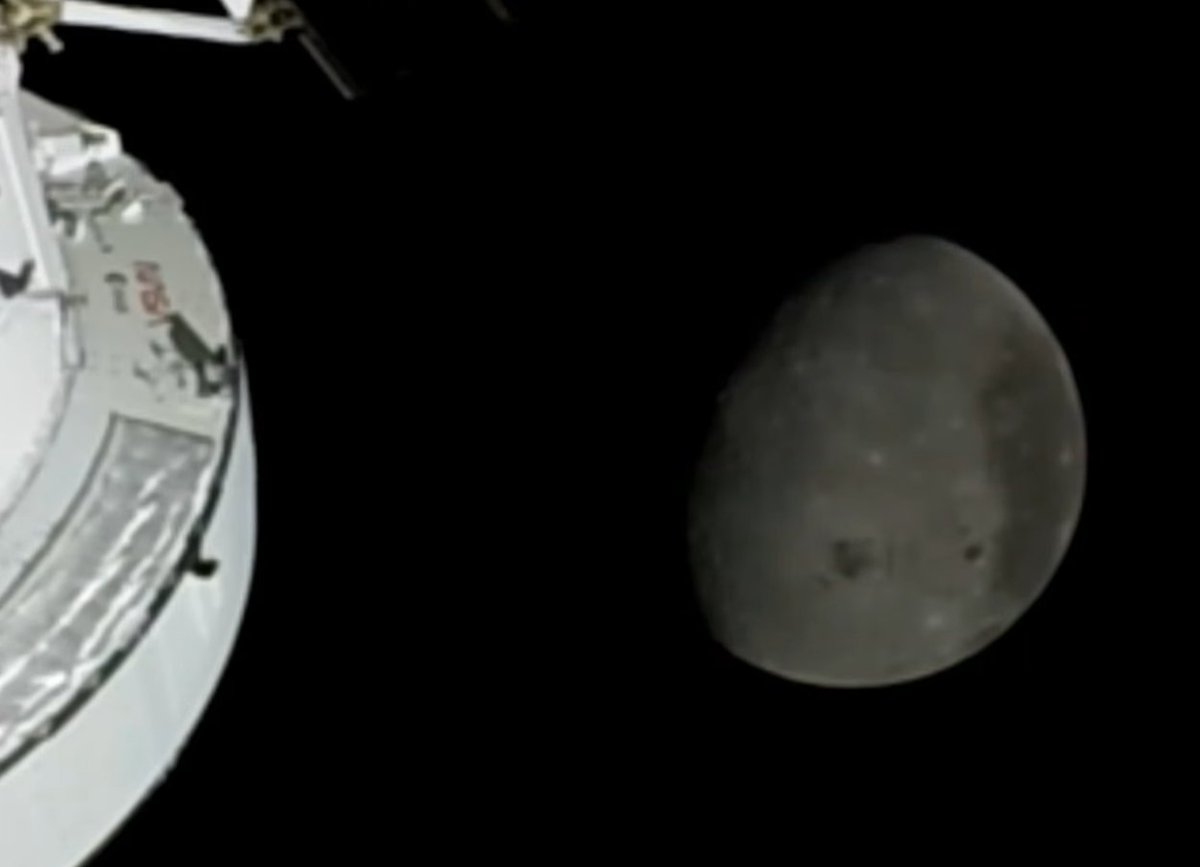
I love space exploration, but...WTF? We've spent $58B–$62B (based on NASA OIG audits) developing SLS + Orion. This ONE FLIGHT has cost us ~4.2 billion. And this is the image they send back to Earth for all mankind? Not worth it. No HD? Seriously?
Thad Scheer tweet media
English
0
0
0
44
Alex Nitzberg
Alex Nitzberg@alexnitzberg·
@NASA @NASAArtemis Would you rather pay less in taxes, or have the government send astronauts back to the moon?
Alex Nitzberg tweet media
English
272
9
150
58.7K
NASA
NASA@NASA·
History in the making In this new image from our @NASAArtemis II crew, you can see Orientale basin on the right edge of the lunar disk. This mission marks the first time the entire basin has been seen with human eyes.
NASA tweet media
English
1.8K
14.3K
105.3K
6.3M
Thad Scheer
Thad Scheer@ThadOfSphere·
Let's keep our hats on. Nothing's changed. * The error correction and scaling needed (for fault tolerance at 0.1% non-local physical error rates) is decades away. * Neutral atoms are slow (Hz-scale) with gobs of control overhead, and nobody has built even a single logical qubit that beats physical error rates at the distances required. * Any such quantum machine would be nation-state-scale in cost. Which will be the first to occur? (a) VR headsets finally go mainstream with consumers; (b) nuclear fusion makes electricity too cheap to meter; or (c) we get a practical quantum computer that does something useful better than a classical physics computer. Big well-funded public and private labs should be working on quantum computing. They should also be working on a lot of moonshot-type programs (cures for cancer, near-infinite energy, asteroid mining, etc.). A 1:100 chance is still a chance, but let's not get excited. Until something fundamental changes, q-day remains 20-40 years away. Could it happen tomorrow? Sure. Could we get fusion energy working tomorrow? Sure. Same odds. Buzzkill. I know.
English
1
0
1
37
Dion Hinchcliffe
Dion Hinchcliffe@dhinchcliffe·
New dual breakthroughs in quantum computing + cryptography make Q-day — the day quantum computers can readily decrypt our secrets — a possibility soon. Many implications but mostly for CIOs today: They must prepare long-time sensitivity data so it can’t be read in the future.
Justin Drake@drakefjustin

Today is a monumentous day for quantum computing and cryptography. Two breakthrough papers just landed (links in next tweet). Both papers improve Shor's algorithm, infamous for cracking RSA and elliptic curve cryptography. The two results compound, optimising separate layers of the quantum stack. The results are shocking. I expect a narrative shift and a further R&D boost toward post-quantum cryptography. The first paper is by Google Quantum AI. They tackle the (logical) Shor algorithm, tailoring it to crack Bitcoin and Ethereum signatures. The algorithm runs on ~1K logical qubits for the 256-bit elliptic curve secp256k1. Due to the low circuit depth, a fast superconducting computer would recover private keys in minutes. I'm grateful to have joined as a late paper co-author, in large part for the chance to interact with experts and the alpha gleaned from internal discussions. The second paper is by a stealthy startup called Oratomic, with ex-Google and prominent Caltech faculty. Their starting point is Google's improvements to the logical quantum circuit. They then apply improvements at the physical layer, with tricks specific to neutral atom quantum computers. The result estimates that 26,000 atomic qubits are sufficient to break 256-bit elliptic curve signatures. This would be roughly a 40x improvement in physical qubit count over previous state-of-the-art. On the flip side, a single Shor run would take ~10 days due to the relatively slow speed of neutral atoms. Below are my key takeaways. As a disclaimer, I am not a quantum expert. Time is needed for the results to be properly vetted. Based on my interactions with the team, I have faith the Google Quantum AI results are conservative. The Oratomic paper is much harder for me to assess, especially because of the use of more exotic qLDPC codes. I will take it with a grain of salt until the dust settles. → q-day: My confidence in q-day by 2032 has shot up significantly. IMO there's at least a 10% chance that by 2032 a quantum computer recovers a secp256k1 ECDSA private key from an exposed public key. While a cryptographically-relevant quantum computer (CRQC) before 2030 still feels unlikely, now is undoubtedly the time to start preparing. → censorship: The Google paper uses a zero-knowledge (ZK) proof to demonstrate the algorithm's existence without leaking actual optimisations. From now on, assume state-of-the-art algorithms will be censored. There may be self-censorship for moral or commercial reasons, or because of government pressure. A blackout in academic publications would be a tell-tale sign. → cracking time: A superconducting quantum computer, the type Google is building, could crack keys in minutes. This is because the optimised quantum circuit is just 100M Toffoli gates, which is surprisingly shallow. (Toffoli gates are hard because they require production of so-called "magic states".) Toffoli gates would consume ~10 microseconds on a superconducting platform, totalling ~1,000 sec of Shor runtime. → latency optimisations: Two latency optimisations bring key cracking time to single-digit minutes. The first parallelises computation across quantum devices. The second involves feeding the pubkey to the quantum computer mid-flight, after a generic setup phase. → fast- and slow-clock: At first approximation there are two families of quantum computers. The fast-clock flavour, which includes superconducting and photonic architectures, runs at roughly 100 kHz. The slow-clock flavour, which includes trapped ion and neutral atom architectures, runs roughly 1,000x slower (~100 Hz, or ~1 week to crack a single key). → qubit count: The size-optimised variant of the algorithm runs on 1,200 logical qubits. On a superconducting computer with surface code error correction that's roughly 500K physical qubits, a 400:1 physical-to-logical ratio. The surface code is conservative, assuming only four-way nearest-neighbour grid connectivity. It was demonstrated last year by Google on a real quantum computer. → future gains: Low-hanging fruit is still being picked, with at least one of the Google optimisations resulting from a surprisingly simple observation. Interestingly, AI was not (yet!) tasked to find optimisations. This was also the first time authors such as Craig Gidney attacked elliptic curves (as opposed to RSA). Shor logical qubit count could plausibly go under 1K soonish. → error correction: The physical-to-logical ratio for superconducting computers could go under 100:1. For superconducting computers that would be mean ~100K physical qubits for a CRQC, two orders of magnitude away from state of the art. Neutral atoms quantum computers are amenable to error correcting codes other than the surface code. While much slower to run, they can bring down the physical to logical qubit ratio closer to 10:1. → Bitcoin PoW: Commercially-viable Bitcoin PoW via Grover's algorithm is not happening any time soon. We're talking decades, possibly centuries away. This observation should help focus the discussion on ECDSA and Schnorr. (Side note: as unofficial Bitcoin security researcher, I still believe Bitcoin PoW is cooked due to the dwindling security budget.) → team quality: The folks at Google Quantum AI are the real deal. Craig Gidney (@CraigGidney) is arguably the world's top quantum circuit optimisooor. Just last year he squeezed 10x out of Shor for RSA, bringing the physical qubit count down from 10M to 1M. Special thanks to the Google team for patiently answering all my newb questions with detailed, fact-based answers. I was expecting some hype, but found none.


English
1
4
4
443
Thad Scheer
Thad Scheer@ThadOfSphere·
@allenholub Agree with Allen. Lately I'm meeting a lot of mostly non-technical people convinced they are about to launch a unicorn by buying 1-month of Grok Heavy and using Claude Code. There are many good ways to increase productivity with vibe coding. But these things aren't magic.
English
0
0
0
19
Allen Holub. https://linkedIn.com/in/allenholub
I both agree & don't 😄, and a lot depends on how you define vibe coding. With sufficient guardrails, it's good enough to get a v1 to the point where you can either get the customers (or VCs) you need to toss it and start over from scratch. It's a bootstrap strategy, not product development.
English
2
0
4
755
Thad Scheer
Thad Scheer@ThadOfSphere·
Is your business model to launch a tech company on a paper route budget and vibe code your way to the fortune 500? THIS PLAN WILL FAIL Vibe coding is good for starting, for first drafting, for testing. It's good for a lot of things. But vibe code in production = AI slop
Thad Scheer tweet media
English
1
1
1
857
Thad Scheer
Thad Scheer@ThadOfSphere·
Politics conditions us to hate and to dehumanize the competing tribe. Better to condition our minds to think vs hate. More thinking = less tribal rivalry = progress. HINT: Whenever we join in the tribal rivalry, it proves we aren't thinkers, we are just propaganda.
English
0
1
1
23
Thad Scheer
Thad Scheer@ThadOfSphere·
@StuartHameroff One way to look at it: Cognition is any control loop, i.e., Input → Process → Output. Consciousness is what its like to be the observer inside that loop. The loop itself is computable. The observer, not so much.
English
0
0
0
24
Thad Scheer
Thad Scheer@ThadOfSphere·
@Q_looP_rM The clip is from the White House press briefing on July 23, 2025.
English
0
0
2
830
Mr. Pool 2.0
Mr. Pool 2.0@Q_looP_rM·
🔥🇺🇸 BOOM!!! OFFICIAL WHITE HOUSE STATEMENT: 10-Year Betrayal EXPOSED – Karoline Leavitt Confirms Obama Tried to Take Down Trump – IT WAS A COUP [VIDEO] 🔥🇺🇸 In a historic White House statement, Press Secretary Karoline Leavitt exposes Barack Obama and top officials in a seditious plot to sabotage President Trump before he took office. Declassified intel confirms a decade-long betrayal.
English
224
2K
4.9K
112K
Thad Scheer
Thad Scheer@ThadOfSphere·
Folks will hate this, but... Performance improvement plans never work. This is horrible HR policy. Giving a dysfunctional employee a formal 30-60 day improvement period, after documenting their failures, is stupid. Firing on the spot works. First - Performance feedback is ongoing in EVERY job. Every employee gets feedback from peers, colleagues, metrics, and the boss (even bad bosses put a stink in the air). Bad employees know they suck, but they won't or can't improve. Second - by the time you (the boss) has gone through the trouble of documenting the performance pattern, the employee has likely already been "sat down" multiple times and given direct feedback with improvement advice. If the situation is so bad that you can formally document it, just fire the person. Third - any employee on a 30-60 day performance improvement plan is an INSIDER THREAT to the organization from both cybersecurity and physical security perspectives. Don't mess around with this. Fourth - the HR person who formalized the policy that bad employees need to remain embedded in the company for 30-60 days beyond their expiration is the problem. That HR person should be immediately dismissed because this will be one of dozens of stupid policies that are counter to the company's health and the happiness of good employees. After the HR person has been dismissed, place every HR policy under immediate review and you will uncover layers of stupid.
Thad Scheer tweet media
English
1
1
2
59
Thad Scheer
Thad Scheer@ThadOfSphere·
For the record, Lloyd's of London has NEVER considered the Strait of Hormuz to be safe. The average peacetime premium is > 0.2% and war time premiums run ~0.5%.
Thad Scheer tweet media
English
0
1
0
24
Thad Scheer
Thad Scheer@ThadOfSphere·
A couple of charts to keep the headlines in perspective as it gets reported that Iran is increasing strikes. Zero would be good, but that's the whole point of Phase 2 of this campaign.
Thad Scheer tweet media
English
0
1
0
35
Stuart Hameroff
Stuart Hameroff@StuartHameroff·
Many thanks. Nice article and I agree with Bruno Vanswinderen that fruit flies are conscious. In a follow-up anesthesia paper he showed flies have the same sensitivity to anesthesia as all other animals including humans. I used the same halothane with a ‘MAC’ (ED50) of .8%, same as in flies when I started in anesthesiology in the 70s. I think all animals and plants are conscious, though at different frequencies/intensities. In Orch OR we calculate humans have about 10 million Orch OR conscious collapses per second and Drosophila would have about a hundred (based on number of tubulins/microtubules per brain or organism). A plant a few per minute. I think proto-conscious feelings were present in the early universe by Penrose OR and sparked the origin of life in aromatic hydrocarbons (e.g. dopamine-like) in a primordial soup. The aromatics would couple and oscillate by Van der Waals quantum forces and access and optimize pleasureable qualia by OR events. The notion that consciousness depends on complexity only in brains is a coverup. How and why did life begin and develop, e.g. a hundred million years before genes, with all that purposeful behavior to survive and reproduce? What was the motivation? Conscious feelings. How do we study behavior in animals? Feelings. Reward with pleasure, or aversive bad feelings to avoid. Feelings drive reproduction. OR is everywhere, at tiny fast Planck scales inside of everything. Organic aromatic rings are everywhere (sequestered from aqueous regions) in biology. Oil and water don’t mix. Anesthesiologists know anesthetic gases are poorly soluble in water/fluids and highly soluble in quantum-friendly nonpolar hydrophobic regions inside proteins, nucleic acids and lipid membranes. We call it the ‘quantum underground’’ nsuworks.nova.edu/cps_facbooks/6… The hard problem requires the Penrose connection to spacetime geometry at the basic level of the universe. Here’s my paper ‘The quantum origin of life-How the brain evolved to feel good’ sciencedirect.com/science/chapte…
Peter Godfrey-Smith@pgodfreysmith

@StuartHameroff Here is one of @vanswinderenlab's papers looking at anesthesia, sleep, and attention – in flies. "The remote roots of consciousness in fruit-fly selective attention?" A review/position paper (from some years ago now). pubmed.ncbi.nlm.nih.gov/15714556/

English
8
12
74
4.4K
Thad Scheer retweetledi
SOAA - Special Operations Association of America
17.6 veterans die by suicide daily (2024), up from 16.5 in 2001. Congress directed VA to use AI for prevention. VA uses REACH VET to identify highest-risk veterans, but it faces bias concerns. SOAA's Ryan Ziegler: "AI does not have compassion." It can help, but can't replace human care. soaa.org/ai-veteran-car…
English
0
2
1
96
Thad Scheer
Thad Scheer@ThadOfSphere·
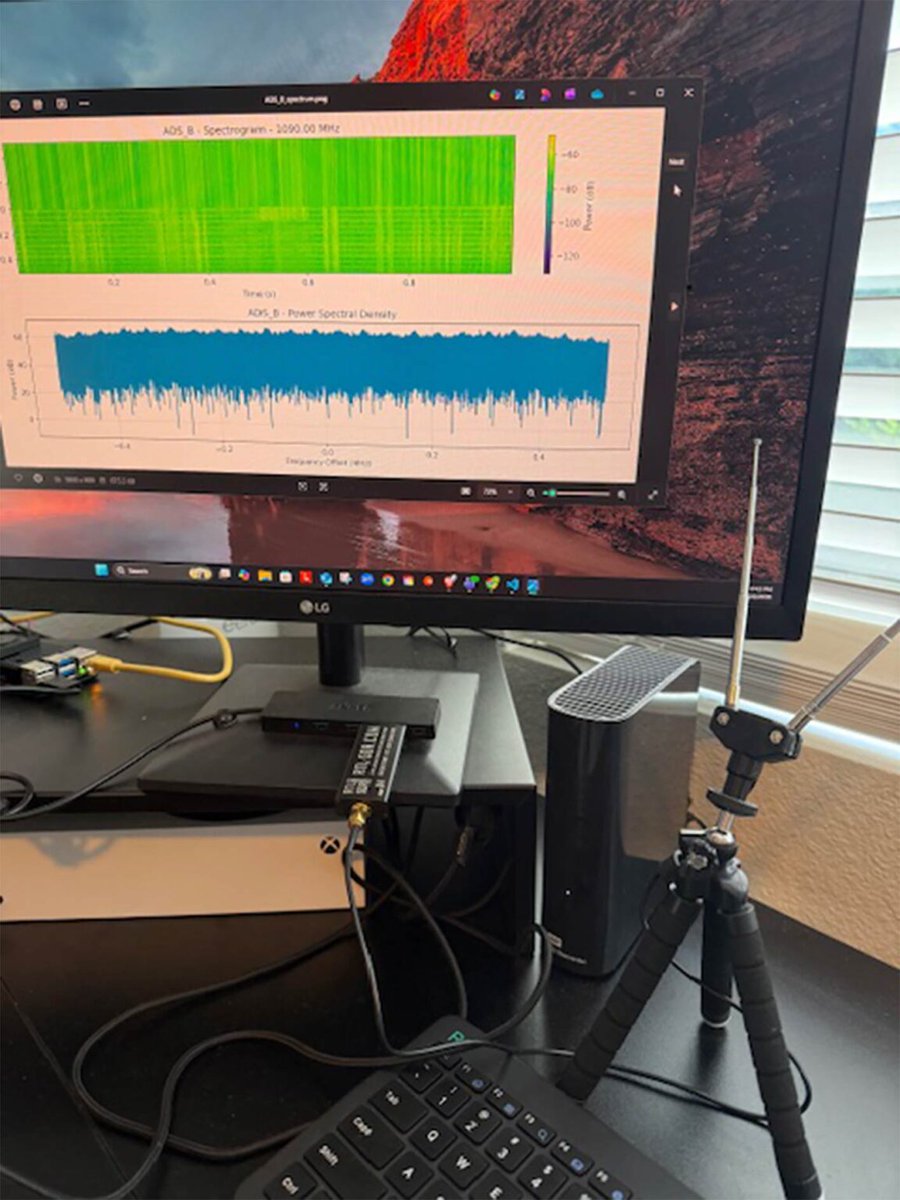
@rtlsdrblog It's an interesting approach. Unfortunately, in any real-world domain 87.5% accurate is seen as inaccurate. 87% is gut-hunch guess accurate, not monitor the spectrum for alien invasion accurate.
English
0
0
0
312
Thad Scheer
Thad Scheer@ThadOfSphere·
@STurbovsky The secret to innovation = try lots and keep what works. Experiments rule, especially the repeatable ones.
English
0
0
1
3
Sedale Turbovsky
Sedale Turbovsky@STurbovsky·
@ThadOfSphere Dude, I want more experiments! we def need to try more things lolol we should have government sandboxes where consenting parties can go try different ways of running things
English
1
0
1
7
Sedale Turbovsky
Sedale Turbovsky@STurbovsky·
The Marshall Islands just launched the world's first nationwide UBI. $800/year. 40,000 citizens. Funded by a US military access agreement. While the US debates whether cash transfers "disincentivize work," a Pacific island is running the real experiment. Watch this closely.
English
2
0
0
48
Thad Scheer
Thad Scheer@ThadOfSphere·
@STurbovsky Let's first see what upheaval is real versus hallucinated and respond with targeted help. Let's also keep separate 'universal' income supplements from targeted 'assistance' supplements. Until the bots take over, maximizing individual productivity is still important.
English
0
0
1
17
Sedale Turbovsky
Sedale Turbovsky@STurbovsky·
@ThadOfSphere curious to get your take @ThadOfSphere, are there programs like this that we should consider to help bridge the economic upheaval that AI will bring? do you think there will be upheaval and disruption? and....do we do anything about it, or just grin and bear it?
English
1
0
1
2