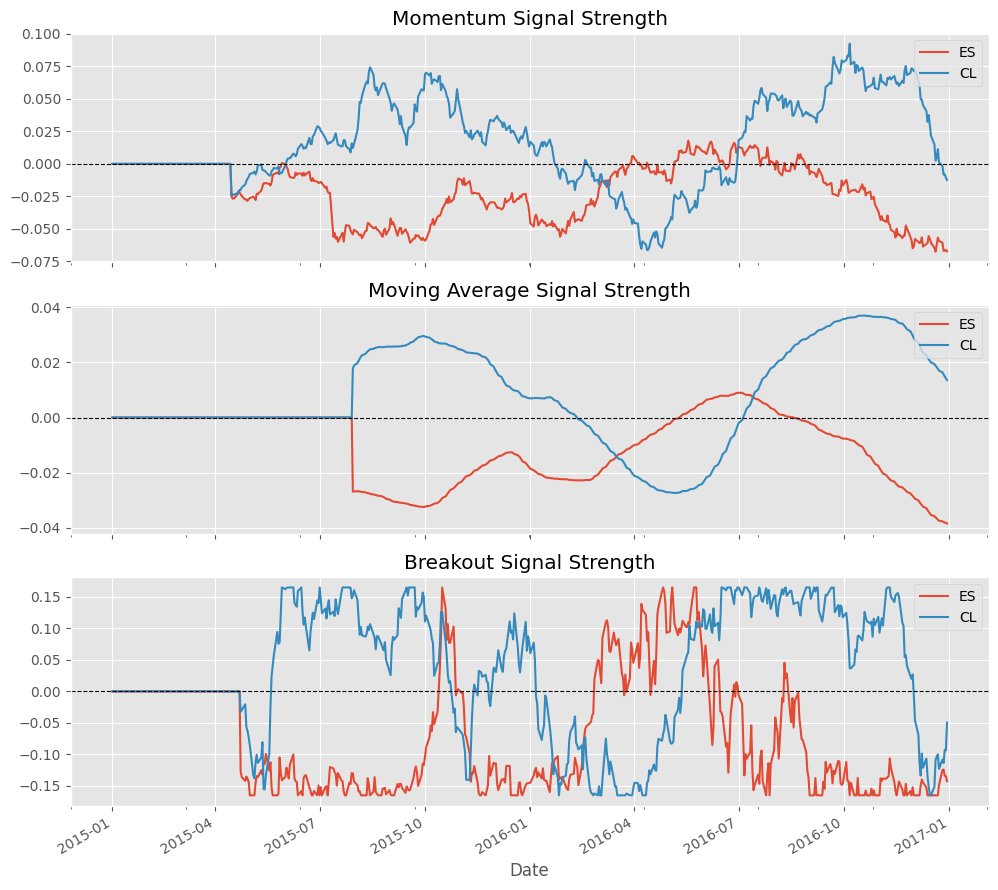
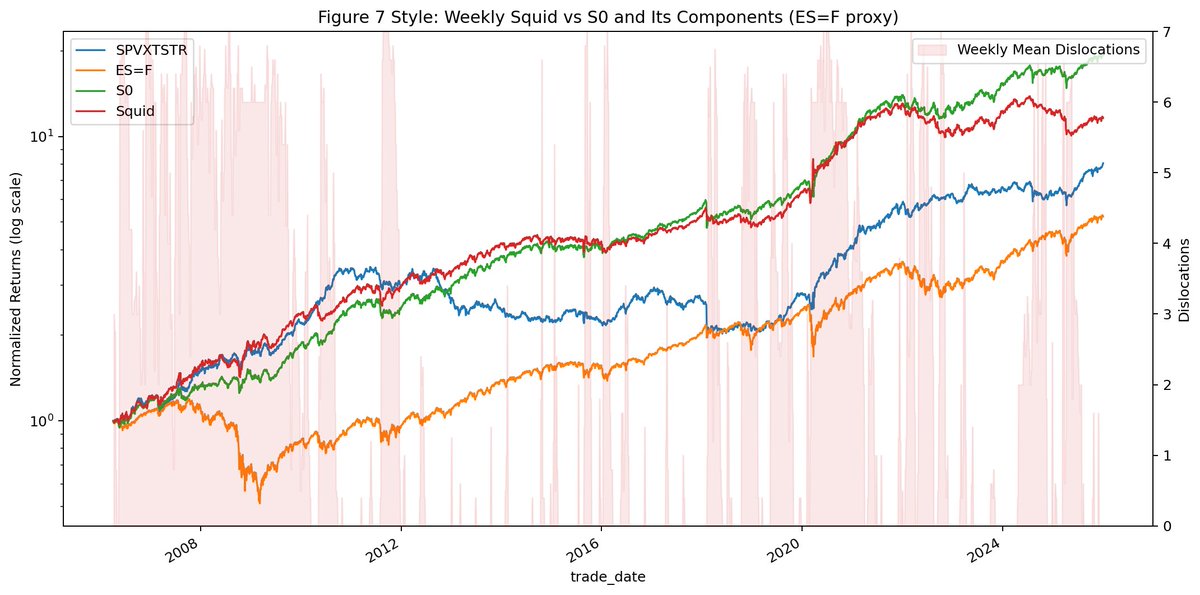
@integerQuant Those Yahoo futures prices are unadjusted which can lead to some surprises later on :)
English
TheCTAFan
258 posts
@TheCTAFan
📈Systematic Investing & Quant | 🚀Tech & Eng. Leader | 💼Exited Startup Vet | 🏦Investment Bank Alum | 💡Tweets with positive skew


Introducing USVC - a single basket of high-growth venture capital, for everyone. No accreditation required, SEC-registered, and a very low $500 minimum. Includes OpenAI, Anthropic, xAI, Sierra, Crusoe, Legora, and Vercel. As USVC adds more companies, investors will own a piece of that too. Liquidity typically comes when companies exit, but we’re aiming to let investors redeem up to 5% of the fund every quarter. This isn’t guaranteed, but if we can make it work, you won’t be locked up like in a traditional venture fund. It runs on AngelList, which already supports $125 billion of investor capital. And I’ve joined USVC as the Chairman of its Investment Committee. — Go back to the 1500s, you set sail for the new world to find tons of gold - that was adventure capital. Early-stage technology is the modern version. It says we are going to create something new, and it’s risky. It’s daring. But ordinary people can’t invest until it’s old, until it’s no longer interesting, until everybody has access to it. By the time a stock IPOs, most of the alpha is gone. The adventure is gone. Public market investors are literally last in line. This problem has become farcical in the last decade. Startups are reaching trillion dollar valuations in the private markets while ordinary investors have their noses up to the glass, wondering when they’ll be let in. Investing in private markets isn’t easy. You need feet on the ground. You need judgment built over years. Most people don’t have the patience to wait ten or twenty years for an investment to come to fruition. But there is no more productive, harder-working way to deploy a dollar than in true venture capital. USVC enables you to invest in venture capital in a broad, accessible, professionally-managed way, through a single basket of innovation, focused on high-growth startups, at all stages. It is how you bet on the future of tech: the smartest young people in the world, working insane hours, leveraged to the max, with code, hardware, capital, media, and community. Your dollar doesn’t work harder anywhere. There is an old line - in the future, either you are telling a computer what to do, or a computer is telling you what to do. You don’t want to be on the wrong side of that transaction. USVC lets you buy the future, but you buy it now. Then you wait, and if you are right, you get paid. Get access here: usvc.com

In the 1995-2010 era, it took a lot of bodies to run a scaled Tiger-Cub strategy. 100+ headcount was common across research, back office & trading (starting in '08, I was one of a large research team) Largely due to technology, that headcount requirement declined dramatically: what once had to be built in-house was increasingly offered in a more effective and cost efficient matter on an outsourced basis with technology. Traders, in particularly, deeply understand the impact of technology from 1995-2015 on their role. You no longer needed a full time person sourcing short borrow or a full time person doing forensic accounting. This happened both on front office & back office roles: the idea that you need seven investors on a consumer team to cover that space seems anachronistic even before LLMs (I was one of seven). You see similar approaches now operated with ~15 people across front & back office. This efficiency benefit fed back into alpha compression...as headcount barriers to entry dissipated, traditional alpha in Tiger style investment approaches compressed as it was easier to practice that particular approach to investing. Today, the multi-strategy approach to long/short investing is ascendant. And it has been a very headcount intensive approach, with the large firms employing 3,000-5,000+ bodies. Is the technology impact to Tiger style investing a relevant prior for the next 5 years? With AI, can the multi-manager firm of the future operate with 500 bodies instead of 5,000? And what does that mean for alpha pools & the "peak pod" debate, talent demand and the future of fundamental investing?