Jason Meltzer
2.4K posts

Jason Meltzer
@TheJasonMeltzer
#Founder @paway_app | @skoottv | @WagWalking | #Dogs #Film #Travel #Entrepreneur #AngelInvestor #btc #Startups #Advisor #Father #tech #mentor Do what you love!
Los Angeles, CA Katılım Aralık 2009
3.6K Takip Edilen1.6K Takipçiler

A $500,000 home at 6% APR over 30 years costs $1,078,836 total.
You pay $578,836 in interest alone.
That's the cost of borrowing in a fiat system, you hand the bank more than the house is worth just to live in it.
SRM works differently.
→ Post 1:1 Bitcoin as collateral.
→ Rate drops to as low as 3% APR.
→ No credit check.
→ No income verification.
Bitcoin stays 100% yours, multisig custody, never rehypothecated.
As your $BTC appreciates, you can withdraw excess collateral or use it to pay down principal, effectively letting asset appreciation pay your mortgage.
The mortgage gets cheaper as Bitcoin gets more valuable.
Legacy finance built a system where debt compounds against you.
We built one where Bitcoin compounds for you.
Unlock your $BTC’s full purchasing power, without selling a single sat ⚡
Build Wealth Smarter.

English
Jason Meltzer retweetledi

I didn’t just “release a white paper” this week—I lit a fire under Sacramento.
First, I dropped the white paper exposing up to a $425 BILLION problem in California’s finances. Not guesses. Not vibes. Hard numbers pulled straight from state audits, federal reporting, and the Governor’s own budget.
Then came the press release.
Then CAL DOGE doubled down with a second release. @JennyRaeCA @SteveHiltonx
And then—surprise, surprise—the NY/CA Post picked it up, because when the numbers are this big, the story writes itself.
Meanwhile…
Malia Cohen just missed her FOURTH consecutive reporting deadline. Four. In. A. Row.
At this point it’s not a delay—it’s a pattern. And that pattern is exactly how billions disappear without accountability.
Here’s what I laid out:
We’re talking massive exposure across:
•Medi-Cal
•Unemployment Insurance
•K–12 Education
•CalFresh
•Homelessness spending
•Infrastructure
•Public pensions
All adding up to a system where reporting can lag 700+ days—which basically means by the time Californians see the books, the money is already gone.
That’s not oversight. That’s a blackout.
So yeah—I didn’t just point out the problem. I gave the solution:
Radical Transparency.
•Timely reconciliations (not years later)
•Daily transaction-level reporting (yes, every dollar)
•Blockchain-backed public ledger
•AI-powered fraud detection in real time
Translation?
No more hiding the books. No more guessing. No more excuses.
California doesn’t have a revenue problem.
It has a visibility problem.
And I’m running for State Controller to fix exactly that.
Follow the money. Freeze the theft. Fix California.
English

My 10-year old: “Why are only half the people clapping?”
English
@DrMargaretShow @grok is this analysis on vaccines accurate? Is there any bias?
English

NOTE: Today, I updated this article by adding a summary of all 25 articles to the top. Thank you to those who provided this input.
English

𝗜𝗻𝘁𝗿𝗼𝗱𝘂𝗰𝗶𝗻𝗴 𝗧𝘄𝗶𝗻 — 𝘁𝗵𝗲 𝗔𝗜 𝗰𝗼𝗺𝗽𝗮𝗻𝘆 𝗯𝘂𝗶𝗹𝗱𝗲𝗿.
No setup. Secure. Infinitely scalable.
We just raised a $𝟭𝟬𝗠 𝘀𝗲𝗲𝗱.
After a beta with 𝟭𝟬𝟬,𝟬𝟬𝟬+ 𝗮𝗴𝗲𝗻𝘁𝘀 𝗱𝗲𝗽𝗹𝗼𝘆𝗲𝗱, we’re now opening to everyone.
RT and comment “Twin” — first agents on us. 👇
English

You could also do this STRK strategy without taking out debt by accessing your trapped home equity using Horizon.
joinhorizon.com/?ref=ADAM
English
1. Take out second mortgage at ~7%
2. Buy STRK paying a 9.45% effective yield right now
3. Pay off mortgage with STRK dividends, pocket the spread
4. Wait for Bitcoin + MSTR to moon
5. Convert STRK to MSTR shares when MSTR is $3000 (this happens in 9.2 years with 25% amplification on 30% BTC CAGR)
6. Capture massive life-changing gains instead of sitting on the trapped equity in your home
7. $829,434 net payoff after loan payoff and carry given these inputs w/ a $300,000 loan
Congratulations, you have turned your house into a long Bitcoin / short fiat war machine.
English
@lindsaybitcoin Been considering this for the last 4 months where I executed another real estate transaction. Will see if Refi’s make up the difference
English

I’ve been in the public eye most of my life and there isn’t any dirt you can find on me that hasn’t already been aired. Seems like the only thing people don’t know is my voter registration, so here go: I registered Republican in 2020 and never changed it. And I wasn’t going to change it now just to check a different box. This is a non-partisan race - there will be no D or R next to my name. As Mayor, I will not serve either party. I will work with anyone who wants to help the City. No labels necessary.
English
English

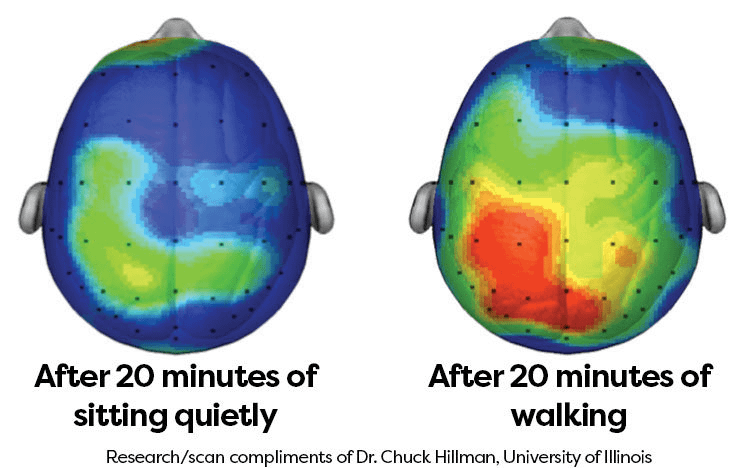
1. The Power of Walking
When bored and lacking ideas, keep walking until the day becomes interesting. (via @sahilbloom + @bzaidi)
English
Rich people collect fancy watches.
I collect useful mental models—timeless rules of thumb that simplify decisions.
12 most powerful (and dangerous) mental models I've found:
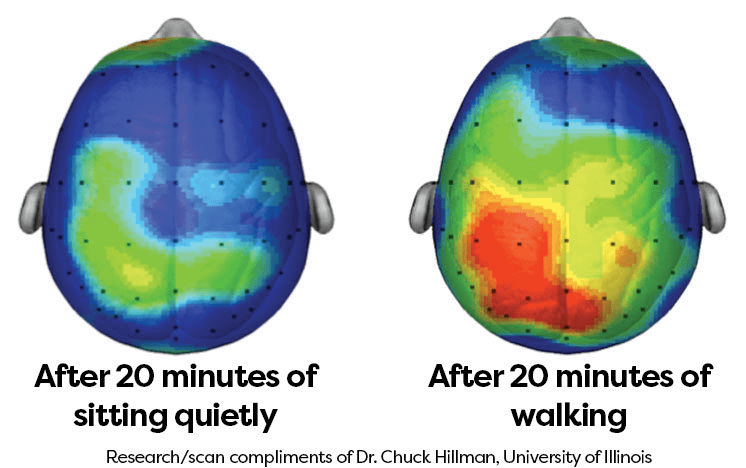
1. The Power of Walking
English

If you want to see one of these for your area, drop your state (or county/city) in the comment section! 👇
📍 California Real Estate Market Outline — Updated Through December 2025
1. Mortgage & Distress Signals •Mortgage delinquency rate: ~2.5% •One of the lowest in the nation; roughly 1 in 40 homes behind on payments •Foreclosure filings: Low and below national average •About 1 in 4,000 units (stable amid modest national increases)
⸻
1. Inventory & Listings •Homes for sale: ~93,000 •Slightly down YoY but up from recent lows •Months of inventory: ~4.5 months •Up from prior year, moving toward balanced territory •New listings this month: ~18,000 •Homes with price cuts: ~23% •Average reduction 3–5%
⸻
1. Pricing •Median sale price: $829,000 •Flat to slightly down YoY (seasonal softening) •Sales volume: ~20,500 closed this month •Down ~4% YoY but showing gradual recovery signs
⸻
1. Days on Market & Timeline •Days on market: 49 •Up ~10 days from last year •Time to close (end-to-end): ~65 days
⸻
1. Lending & Refinance Opportunities •30-year fixed “refi sweet spot”: ~6.2% •Saves about $250–300/month on an $829K loan (median price) •Buyers with 6.0–6.3% approvals seeing more lender concessions as rates stabilize.
⸻
1. Demand Trends •Showings steady with seasonal slowdown, but above recent lows. •Investors active in entry-level and mid-tier segments. •Luxury homes ($1M+) taking longer to sell, increasing seller concessions. •First-time buyer activity edging up with slight rate relief, though affordability still strained.
⸻
1. Supply Pressure •Builders cautiously adding inventory heading into 2026. •Price reductions more common in competitive segments as demand cools seasonally. •Months of inventory rising modestly, pointing to a gradual shift toward balance.
⸻
English

Dr. Andrew Huberman dropped a simple, science-backed protocol that’s melting fat faster than most people think possible:
Eat only meat, fish, eggs, fruit, and vegetables. Nothing else. No bread, pasta, rice, tortillas, or processed foods. Drink water, coffee, or tea — skip alcohol and milk.
Why it works so fast? When you remove the hyper-palatable combo of refined carbs + industrial fats, insulin stays low, catecholamines (adrenaline/norepinephrine) rise, and lipolysis (fat burning) gets unleashed. People who’ve lived on processed foods for years often drop serious body fat in weeks because their body finally shifts into genuine fat-oxidation mode. Pure physiology, no gimmicks.
Watch Huberman explain the mechanism in 30 seconds ↓ Your future self might thank you. What’s one processed food you’d ditch first?
English
Jason Meltzer retweetledi

Today I turn 55.
I’m the fittest, sharpest, and happiest I’ve ever been.
If I’m an outlier, it’s not because I’m built different or discovered a secret formula. The truth is far less glamorous:
It’s a million tiny choices, compounded over decades.
Here are 55 of them:
1. Walk 15+ miles a week, even if you do other exercise. Humans are uniquely made to move slowly over long distances—it’s critical to longevity.
2. Develop a writing practice. It’s the single best way to sharpen your mind. And remember, you don’t have to be a good writer to write. Start with 10 minutes a day.
3. Swap out your toothpaste, deodorant, lotions, soap, shampoo, and other personal care products for natural versions. Here’s a rule of thumb: Don’t put anything on your skin that you couldn’t safely eat.
4. If you have a positive thought about someone, don’t keep it to yourself—share it immediately. Encouragement defies the laws of physics: When you give energy, you also receive it.
5. Wear shoes with a wide forefoot (I like Topo Athletic) and wear toe spreaders around the house (search “yoga toes” on Amazon). Spine health begins with the feet.
6. Get sunlight regularly. Moderate sun exposure (without sunscreen) is hugely important for overall health.
7. Do a 3-minute deep (“ass to grass”) squat every morning. Deep squats are often called the anti-aging exercise. It’s been said that, “It’s not that you can’t do deep squats because you’re old, it’s that you’re old because you can’t do deep squats.”
8. Explore minimalism (it’s not what you think it is).
9. Set boundaries on toxic relationships. We tend to cling to relationships past their expiration date, and it takes a bigger toll on our health than we recognize.
10. Eat real food. Not too much. Don’t eat garbage. Binge occasionally. Fast occasionally. That’s the diet.
11. Learn about FIRE. It’s a great framework for financial success.
12. Don’t take antibiotics except in emergency situations. They’re massively over-prescribed and aren’t needed in most cases. Antibiotics have done untold damage to our guts, which is where health begins. Great natural alternatives are out there.
13. Get 8 hours of quality sleep each night. To optimize sleep:
—Don’t eat after 6pm
—Get blackout shades and cover LEDs with black tape
—No screens 2 hours before bed
—Try ashwagandha (an herb) to calm the nervous system
14. Stop drinking, even in moderation. People find all sorts of ways to justify drinking, but there’s no escaping the simple fact that alcohol is a toxin and it limits your potential.
15. Travel as much as possible. Nothing expands the mind like seeing the world. And travel doesn’t have to be expensive—the best experiences happen outside of fancy resorts, when you live like a local.
16. Let go of resentment. When you forgive someone, you release the prisoner, and the prisoner isn’t them… it’s you.
17. Show up on time, every time. Poor time management limits success more than most people realize. If you struggle with punctuality, stop everything else and fix that first.
18. Spend lots of time in nature and touch the earth. Humans evolved over 300k years to live in harmony with nature, and only recently have we retreated indoors. If you don’t spend time outside, you’re fighting biology (hint: You won’t win.)
19. Stop doing dumb things. As Leo Tolstoy said, “People try to do all sorts of clever and difficult things to improve life instead of doing the simplest, easiest thing—refusing to participate in activities that make life bad.”
20. Find your happy place and (eventually) move there. Most people live where they live because... that's where they live. We are products of our environment—choose yours carefully.
21. Find a hobby and pursue mastery. You can’t have a happy life without a passionate pursuit that isn’t your vocation. Your work—even if you enjoy it—isn’t enough.
22. Avoid mainstream medicine except as a last resort. The results are in—our healthcare (or more appropriately, sick care) system is badly broken and only makes people sicker.
23. Have a mindset of abundance. There is no advantage to being a pessimist—even if you’re right, it’s a miserable way to live. In a very real way… whatever you believe, you’re right!
24. Do hard things. Choose courage over comfort. Everything you want is on the other side of fear and hard work. As Jerzy Gregorik said, “Hard choices, easy life. Easy choices, hard life.”
25. Ignore haters. Hurt people hurt people. Negative/toxic people live in a prison of their own design. Don’t join them!
26. Say no. Protect your time and energy like it’s your most precious asset… because it is.
27. Become a water snob. As an alien said on Star Trek, humans are “ugly bags of mostly water.” You are what you drink—literally! We have Mountain Valley Spring water delivered in glass 5-gallon jugs and also have whole-house water filter (Aquasana Rhino).
28. Stop drinking sodas and sugary energy drinks. After a few weeks you won’t miss them, and a few months later they’ll seem disgusting. Refined sugar causes inflammation, which is the root of most disease.
29. If you’re over 35, find a good functional/longevity medicine doctor and start tracking your hormones. Modern life is hell on the endocrine system and restoring healthy hormone levels can change your life. As we get older, we either accept a slow decline in performance or we do something about it—choose the latter!
30. Develop a morning routine and follow it faithfully. Win the morning, win the day!
31. Invest in experiences, not things. People frequently regret buying things, but rarely regret investing in great experiences (especially when shared with loved ones). Remember, there’s nothing you can buy in a mall that you’ll remember in ten years.
32. Explore spirituality. It’s arrogant and small-minded to believe there’s nothing going on in our universe that is beyond our comprehension. We know less about our universe than an ant meandering on a sidewalk understands about this planet.
33. Have a strong bias toward action—doing rather than talking. If you ask a bunch of old people about their regrets, they’ll talk about the things they *didn't* do—the shots they didn’t take—more than the things they did do (even if it went wrong). As Wayne Gretzky famously said, “You miss 100% of the shots you don’t take.” Most people don’t take enough shots.
34. Stay lean. Men in particular are obsessed with muscle mass these days, but bulk doesn’t age well. The goal is to be strong but lean. The fittest guys in their 50s and beyond aren’t meatheads, they’re lean guys who are serious about a sport.
35. Curate your inner circle carefully. Surround yourself with people you admire and who challenge you to grow. Remember, we’re the average of our 5 closest relationships.
36. Be the fittest version of yourself. Your body is your only vessel for experiencing life—so treat it as such. Fitness isn’t working out a few times a week, it’s a lifestyle. The older you get, the more time you need to devote to your health.
37. Take the time to appreciate art and beauty in all its forms.
38. Think globally, but act locally. Too many people put their energy into far-away problems they don’t understand and can’t impact, while ignoring problems right under their nose. Want to change the world? Start at home.
39. Try psychedelics. It’s one of those things everyone should do at least once, and it might be the breakthrough you’ve been looking for.
40. Limit bad habits, including unhealthy thought patterns. We all have them—practice avoidance and find substitutes. Get professional help if needed.
41. Be a lifelong learner. Your brain is just like a muscle—if you don’t feed and flex it regularly, it will atrophy.
42. Find your purpose. People with a strong sense of purpose are happier and live longer. Lack of purpose sucks energy and magnifies depression.
43. Only take advice from people who embody the traits you want to have. Talk is cheap—emulate those who have DONE it.
44. The goal is not to retire and do nothing, it’s to build a great day-to-day life that you don’t need to escape. A life of leisure is a slow death. Happiness isn’t possible without a little struggle, uncertainty, and skin in the game.
45. Have fun! Do frivolous and silly things that make you smile. As George Bernard Shaw famously said, “We don't stop playing because we grow old; we grow old because we stop playing.”
46. Whatever you want to do or achieve in life, start NOW. Don’t fall victim to “someday thinking” because someday never comes.
47. Accumulate assets—things that grow in value over time. It’s the #1 habit of rich people, and it can be done in tiny chunks. Instead of spending $100 on an impulse purchase that has no lasting value, put that money into an index fund or Bitcoin. It becomes addictive (in a good way).
48. Don’t ignore the big 3 canaries in the coal mine for health:
—Low libido (and ED)
—Frequent sinus & respiratory issues
—Depression
These usually aren’t medical conditions in themselves, they’re symptoms of an underlying problem. Find a good doc (outside of the mainstream) and figure out the root cause.
49. Have a clear vision for your future. How can you decide which direction to go if you haven’t clearly defined the destination? It sounds obvious, but 95% of people haven’t defined their “Ideal End State” in detail and in writing. (Check out my thread on this topic.)
50. Make your own decisions. We live in an era where most of what society tells us is wrong. Don’t be afraid to break from societal norms—if people say you’re crazy, it’s a sign that you’re doing something right.
51. Get hardcore about mobility exercise. As you age, it’s usually the knees, hips, and lower back that limit physical performance. 30 min a couple times a week can spare you a lifetime of pain. YouTube is a great resource.
52. Go all in on family. Get married, stay married, have kids. Burn the boats. In the end, family is all that matters.
53. Be ruthless with your time. Money comes and goes. Time only goes. Audit your calendar ruthlessly—cut the trivial, double down on the meaningful, and spend your hours like your life depends on it. (Because it does.)
54. Have a strong bias toward action. Be curious, try things, meet people—it’s how you increase your surface area for serendipity, the most powerful unseen force in our lives.
55. Reinvent yourself every decade. Over time, we slowly drift off course from our priorities, values, and true identity. Take stock and don’t be afraid to hit the reset button. Bold, calculated moves made for the right reasons almost always pay off—usually even more than you can imagine.
🎁 P.S. If you enjoyed this post, would you give me a birthday gift? Repost or comment with the item number(s) you liked best?

English

When AI can generate anything, the only thing that matters is how you instruct it.
Vague prompts = average slop
Cinematic terms + visual rules = $10k-level shots every time
I just created a full crash course on the secret terminology of cinema & direction that 99% of people will never learn (and AI obeys blindly).
Want the PDF?
Reply “WAZA” + RT this, and I’ll DM it instantly (must follow).
English
Jason Meltzer retweetledi

First mushroom trip data is out: my brain activity.
Dose: 5 g dried Psilocybe cubensis (B+ strain)
Containing 24.9 mg psilocybin
Psilocybin longevity experiment.
What we see in the brain:
+ brain activity data mirror my subjective experience
+ strong decrease in my brain’s control center (prefrontal + premotor cortex)
+ strong increase in sensory, auditory and speech integration
+ higher entropic brain patterns: open, flexible, less predictable, exploratory
+ brain network patterns resembling a youthful state vs aged and rigid
Matching what I reported experiencing:
+ “felt like my consciousness was dialed up to 10/10.”
+ “I felt hyper aware and hyper alive.”
+ “I experienced sense of touch with awe.”
+ “my mind was insatiably curious and wanted to deploy its sensors into the world and discover all things.”
+ “My brain wanted to stare, study and marvel.”
+ “The flavor exploded in my mouth.”
+ “...restored my perception to youthful levels, returning them to factory settings and dissolving my aged numbness.”
Why this could matter for longevity:
+ In people aged 65-85, higher happiness was linked to a 22% reduced risk of all-cause mortality over 15 years.
+ A meta-analysis showed that optimism correlated with a 35% decrease in heart attacks and a 16% decrease in all-cause mortality.
+ Having a strong purpose in life is associated with a 17% reduction in both heart attacks and all-cause mortality.
+ In psychedelic medicine, treating depression with ketamine has been shown to reverse biological age by up to 3 years.
Together, these findings suggest a plausible mechanism by which psychedelics, including psilocybin, can prolong both health and lifespan by improving mental well-being and rewiring the brain to a more positive, creative, and curious state.
My team and I hypothesized that neuroplasticity, the loosening of rigid inhibitory patterns that makes the brain more flexible, creative, and relaxed, and even the subjective psychedelic state itself may be as meaningful for longevity as methylation shifts, senescence reversal, or telomere biology.
What’s happening mechanistically
Earlier work shows that psilocin (the active metabolite of psilocybin) acts primarily as an agonist at 5-HT₂A serotonin receptors in the cortex. These receptors are especially dense in high-level association and sensory regions, as mapped in a high-resolution PET/MRI atlas of the human serotonin system.
When these receptors are activated, brain imaging studies show an induced state of desynchronization, entropy, and neuroplasticity. This process erodes the rigid brain hierarchy and default mode networks in favor of a brain-wide spontaneous, creative, curious, and child-like state.
Kernel Flow data shows the same pattern:
The recorded timepoints included:
+ baseline: directly before session start (not shown)
+ timepoint 1: 4 hrs after dose (acute phase effects).
+ timepoint 2: end of the day, before bedtime.
+ timepoint 3: the following morning.
I continue to measure my brain daily.
Image notes
+ The three maps show changes vs. baseline (not absolute activity)
+ Red = increased connectivity, blue = decreased connectivity vs. my baseline.
+ The left reference map shows the 5-HT₂A receptor distribution from PET, the main psilocybin target.
Time Point 1 - 3 hrs post dose
+ Reduced connectivity in the prefrontal and premotor cortex, correlating with acute brain desynchronization.
+ Increased connectivity and hyperintegration between the primary motor and sensory cortex regions.
+ Enhanced connectivity in the auditory and speech areas of the cortex.
+ Inhibited connectivity in the medial prefrontal and posterior zones, areas associated with the Default Mode Network (DMN).
Subjective experience:
+ Enhanced sensory vividness and bodily presence: The brain's top-down hierarchy, originating in the pre-frontal cortex, was attenuated. This reduced predictive filtering, leading to a flood of bottom-up sensory information and heightened bodily perception (e.g., a fascination with water and light dynamics in a jar, a restored, primal joy of touch and sensation).
+ Peak neuroplasticity and cortical entropy: A peak in cortical entropy and neuroplasticity contributed to a feeling of hyperawareness (e.g., heightened sensory perception, feeling "at one with existence," hyper-aware and hyper-alive).
+ Deeper appreciation of music and uninhibited movement and expression: Sharpened auditory senses and reduced top-down inhibition allowed music to be enjoyed on a profound level. Concomitant functional connectivity in speech-motor and auditory-motor integration areas facilitated uninhibited expression through both speech and movement (a restored, uninhibited, child-like joy of music).
+ Note: Full ego dissolution was not experienced, which may necessitate a higher dose to achieve more advanced desynchronization of the prefrontal and parietal cortices.
Time point 2 - 5 hrs post dose, end of trip
+ Intensified sensory and motor hyperconnectivity.
+ Continued increased connectivity in auditory and speech centers, with a relative restoration of connectivity to the speech understanding area.
+ Partial re-emergence of the prefrontal parietal coupling, while prefrontal context remains partially inhibited.
+ Partial re-emergence of connectivity in areas related to the default mode network.
Subjective Experience
+ High-order brain networks begin to restabilize, alongside persisting sensory, motor, auditory, and speech hyperconnectivity, suggesting neuroplasticity in action.
+ The narrative shifts from pure sensation and experience to meaning generation, accompanied by deep philosophical reflection (e.g., reconsidering the meaning of life and one's relationship with mortality in the time of AI, and pondering the future of human evolution).
Time point 3 - next morning (afterglow)
+ Persistence: Patterns from the acute phase continue, including general prefrontal cortex inhibition, ongoing neuronal plasticity, and heightened senses.
+ Intensified connectivity: Increased connectivity is noted in the speech generation area and the somatic sensory association area.
+ DMN inhibition: The default mode network remains inhibited.
Subjective Experience:
+ "Afterglow" effect: Characterized by continued sharpened senses, calm clarity, emotional openness, and low inhibitions. For instance, I felt more comfortable expressing uninhibited, self-deprecating humor (i.e. my post making fun of myself about the insane lengths I go for my Don’t Die experiment)
+ Integration of experience learnings: The heightened activity in the somatic sensory association area aligns with the process of integrating and "making sense" of the raw sensory experience of both the self and the external world.
+ Enhanced creativity: The intensified connectivity in the speech generation area contributed to the uninhibited bout of creative writing I undertook to report my experience.

English
Jason Meltzer retweetledi

When Shohei Ohtani was a high school freshman, he created a detailed "dream sheet" with one central goal: to be the #1 draft pick for 8 NPB (Nippon Professional Baseball) teams.
It was a 64-cell roadmap based on a framework called the Harada Method.
Here's exactly what Shohei did 👇
1. First, some history.... The Harada Method was created by Takashi Harada, a Japanese junior high track coach. He took a team ranked last out of 380 schools and, using his system, turned them into the #1 team in the region within 3 years. They held that top spot for the next 6 years.
2. You start by placing your main goal in the center of an 8x8 grid. For Ohtani, this was "be the #1 draft pick."
3. Next, you identify 8 critical supporting pillars needed to achieve that goal. These surround the main goal.
Ohtani's 8 pillars were:
• Body
• Control
• Sharpness
• Speed
• Pitch Variance
• Personality
• Karma/Luck
• Mental Toughness
4. You then break down each of those 8 pillars into 8 smaller, actionable tasks or daily routines.
This fills out the entire 64-cell grid, turning a massive dream into a concrete, daily action plan.
To improve his karma, he listed tangible actions like:
• Showing Respect to Umpires
• Picking up trash
• Being positive
• Being someone people want to support
5. The method goes far deeper than just technical skills. It forces you to analyze your weaknesses and build confidence. It also has a highlight on service to others, emphasizing that humility and contributing to your community are essential for personal success.
6. The key to the system is daily execution and accountability. Once the 64-cell chart is complete, you turn the tasks and habits into a daily diary and a "Routine Check Sheet." It’s designed to transform abstract intentions into a measurable, daily practice.


MLB@MLB
The legend continues! Shohei Ohtani is the NL MVP for the second straight season!
English
@RoKhanna Name 1 thing you have achieved to make the lives of anyone better. Bring receipts
English