

james mclaughlin
2K posts
james mclaughlin
@TheMacArmy1
Husband, father, Retired Marine, TKD black belt, BJJ blue belt (aspiring purple belt), martial artist, and avid coffee drinker
Florida, USA Katılım Temmuz 2020
188 Takip Edilen151 Takipçiler

Abs weren’t the goal. They’re just evidence that I didn’t listen to people who gave up early.

English
@D_The_Husband That makes me feel better, sort of. It is just that I’ve quit probably three times, but I keep coming back🤷♂️.
English

Just because you quit doing jiu jitsu doesn't make you a bad person. Life gets in the way. Injuries, work, family, interest fades. It happens. Many people join and then leave when they feel they got what they needed out of it. That's okay. Don't let anyone convince you otherwise.
English
james mclaughlin retweetledi

I started Jiu-Jitsu 20+ years ago.
Got my black belt last year.
Here are 7 things I’d do differently:
1. I wouldn’t train hard all the time. I used to think intensity was the answer. It’s not. Load management is. You need hard days and easy days. If every day is hard, you’re on your way to poor performance and injuries
2. I’d prioritize nutrition for performance, not just leanness. I spent years doing low-carb. Bad idea. You need carbs to train hard, recover and perform. Calories, timing, and food quality matter more than any “diet.”
3. I’d protect my sleep like it’s part of training. I used to train late, get wired and sleep like shit. That caught up with me fast. Poor sleep leads to higher injury risk, worse recovery, and declining performance.
4. I’d build an aerobic base. Jiu-Jitsu is already high intensity. The answer isn’t more hard training. It’s low-intensity cardio to improve recovery and give you a bigger aerobic engine.
5. I’d train for performance, not just lift weights. Now I focus on mobility, plyometrics, and explosive work first. Then I do Full Body strength/hypertrophy work after. Leave bodybuilding splits for bodybuilders.
6. I’d learn how to rehab injuries early. I used to train through pain and hope it would go away. It doesn’t. Now I address issues immediately and know how to bring my body back.
7. I’d take recovery seriously. Before, I’d just sit around and hope I’d feel better the next day. Now I use massage, sauna, mobility work and other methods to facilitate faster recovery.
I progressed fast early. I got my blue belt in one year of training and got my purple a year later. But then the injuries started slowing me down.
Most people think it’s about training harder.
It’s not.
It’s about staying healthy long enough to get good.
English
@D_The_Husband Well, in here to tell you there is such a thing as purgatory😂.
English
@BjjTip Impressive that you are still competing! I hope to get there one day.
English

I managed to win my Gi and No Gi divisions at the IBJJF Boston Open this past weekend.
I only had one opponent in each division. That happens sometimes as you get older.
For No Gi, I had to go down two age divisions to find an opponent.
For my Gi match, I got a quick takedown that I had just developed the week before. I then passed and went to mount.
For my No Gi match, I pulled guard and got a quick sweep. My opponent pulled me into his dangerous closed guard. I managed to end up winning 2-0.
All things considered, I'm satisfied with my performance.
Thank you to all my teammates, family, friends, and supporters. 🙏
@ibjjf

English
@D_The_Husband Yep. I struggle with it at times, but keep coming back.
English
@THEGRTWH1TE @_TrueVoodoo Me too. I see “packs” of kids riding these E-bikes all over. They don’t realize yet just how fragile can be.
English

@_TrueVoodoo I’ve turned into the old man yelling at all the cars going by my house doing 50 in a 20mph.zone 😀
English

Little kid in my neighborhood was hit by a car today. Luckily no major injuries but man as a parent of 4 little ones- distracted drivers or the kids running into the street to chase a ball are about at the top of my anxiety list.
English
Congratulations on to my son, Rory Connors, for earning Silver at the IBJJF Boston Open against a very skilled division.
Thank you for your leadership and inspiration!
🙏💯
English
It’s been said that 95% of adults over 30 will probably never sprint again.
And I understand why.
Most guys try it once after years of only lifting weights and then something snaps.
They tweak a hamstring, flare up an old knee injury, or strain a calf.
And decide, "My body just can’t do this anymore.”
But that’s not true.
Your body just lost the qualities required to sprint safely.
Power
Mobility
Coordination
Tissue tolerance.
Tendon stiffness
The solution isn’t avoiding sprinting.
The solution is rebuilding your capacity in a gradual way.
At 49, this is how I approach sprinting now:
1. Mobility before every session
2. Plyometrics before speed work
3. Short hill accelerations first
4. Low volume at first
5. Long rest periods
6. Lift weights consistently
7. Progress slowly
The goal isn’t exhaustion.
It's to reclaim your athleticism.
Because sprinting isn’t just an exercise.
It’s one of the most powerful signals of youth, power and resilience your body can express.
If you feel like your athletic days are behind you, they aren’t.
You just need a better plan.
DM me “SPRINT” if you’re a successful man over 40 who wants expert help rebuilding without getting hurt.
English

One of the best decisions I’ve made in my life was walking through the front door of my Jiujitsu academy.
Most people wait until they feel ‘ready.’
I was 52 and terrified because of the unknown.
Now I’m 60 and still rolling with people at least half my age.
Do epic 💩
English

Ive just read up that our immune system isn’t aware we have eyes,
And if the immune system detects them it can cause blindness.
Guys I am not okay
English
@D_The_Husband I’d need a little more mat time. Having issues right now with the humans I roll with🤦♂️
English
@Nikki_tay13 I’m back to being happy I’m showing up. Struggling with the rest of it.
English

Alright what's your opinion on lower belts rolling with you and doing technique above their level? My defense is above their level too... Do I match them or let them know to keep to their own level? My concern is their safety.
English
@JiujitsuOtter Could be. I have not gotten an IBJJF membership either because they can be expensive, I’m told, and required for all IBJJF tournaments.
English

@bkwhite65 Good luck! Awesome you are still competing at Masters 7 level!
English
Thinking about doing another IBJJF Gi tournament in the fall.
Will be Masters 7 so not sure how likely I’ll get an opponent.
But it will keep me motivated toward a goal 💪🏽
English
@chrismwojcik All great points. Would be difficult to become an Olympic sport based on the above, and maybe it is not designed to be one.
English
5 of the biggest problems with modern Jiu-Jitsu:
I started Jiu-Jitsu a little over 11 years ago.
The sport has changed a lot in that time, in culture, technique, and as a competitive sport.
One thing that has been a constant in Jiu-Jitsu is problems. Problems with culture, problems with the sport itself, and of course, problems with the way we train.
Today, we're talking about the 5 biggest problems with modern Jiu-Jitsu.
-----------
1. There's still not very much money in the sport.
At the pro level, you can make decent money for matches, tournaments, seminars, private lessons, sponsorships, and more.
But everyone else has to scratch, claw, and grind just to get by.
When your career is over, you either have to get a job or open a gym, because no one is "set for life" after they're done competing.
-----------
2. Sexual predators are rampant in the sport, even at the highest levels.
This year alone, there have been a lot of sexual assault cases involving professional Jiu-Jitsu athletes and coaches.
I don't think it's a new thing either. We're just finally seeing how common this is.
It makes you wonder how many cases there are that have been swept under the rug.
-----------
3. Steroids are rampant.
I know, I know, "every" major sport has steroid users.
But if you get caught in the UFC, NFL, or MLB, you're punished. It's still illegal.
In Jiu-Jitsu, it's almost encouraged. I don't really think that's good for both the next generation and our reputation as a sport and community.
-----------
4. A general lack of professionalism.
I'll skip the horror stories and just say that we have shifty promoters, lazy athletes, and plenty of coaches who are checked out.
Some people on all of these fronts are doing a great job with their careers, teams, and promotions, but it's not super common.
The nice thing is, if you literally just act like you're kind of a professional, you'll go pretty far in our sport.
-----------
5. No one really watches Jiu-Jitsu.
CJI 1 was the most viewed Jiu-Jitsu event of all time.
In general, however, most people watch the highlights of matches and not the matches themselves.
Jiu-Jitsu thrives in the short-form era because the clips can be stunning even if the actual match is boring. We're basically the baseball of combat sports.
-----------
There are a lot of problems with Jiu-Jitsu today.
Some of these problems have existed for years and will probably always be there in some capacity.
But if we talk about the problems and work to implement solutions, we can make Jiu-Jitsu a better sport not just for athletes, but for everyone involved.
That's why I wrote today's post.
English
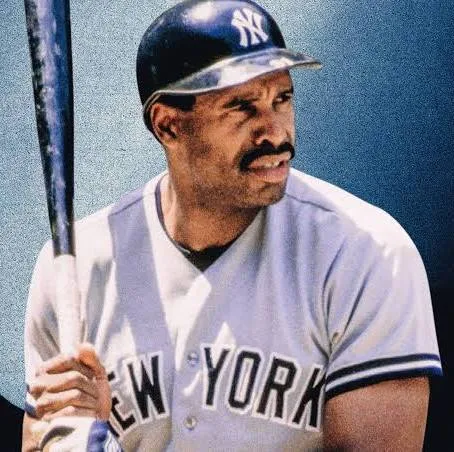
@ShkBkMediaGrp Winfield was great and went to Hall of Fame. I’ll say Don Mattingly. Watching him in the 80’s, he was one of the best in his era. Unfortunate, he couldn’t get a ring, but deserving of the hall in my opinion.
English
Name a former MLB player who does not get enough love for being great. I'll start.
English