
Sabitlenmiş Tweet
Ted Ryce
88.8K posts


Ted Ryce
@ted_ryce
Celebrity Trainer | Health Coach | Helping High-Achievers Over 40 with Fat Loss & Long-Term Health Optimization For 27+ years | BJJ Black Belt
Book Your Body Audit Call ➡️ Katılım Kasım 2013
948 Takip Edilen71.8K Takipçiler
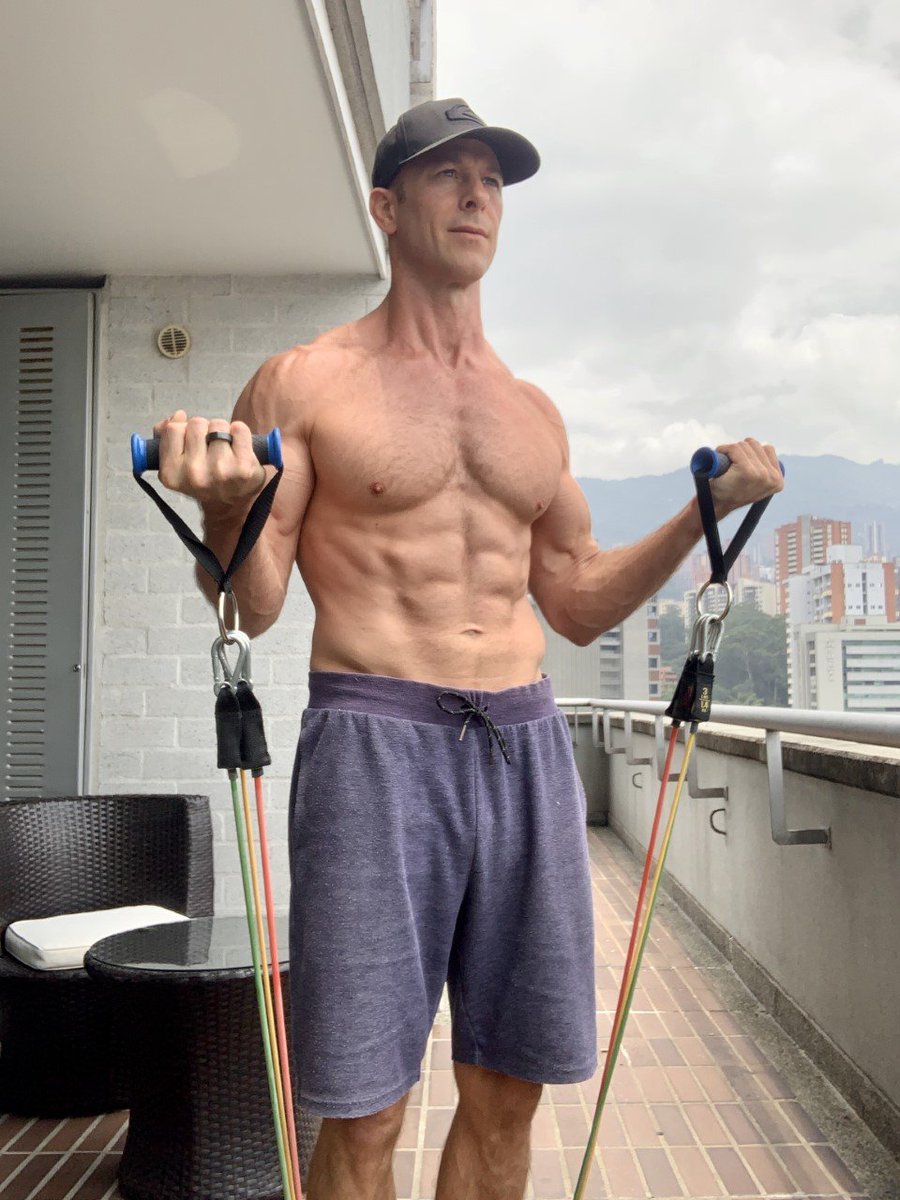

@ted_ryce Every one of these runs through the same vessel. Fix the body and you're not fixing ten things, you're fixing the one thing all ten depend on.
English
@Gabepluguez We don’t like to admit it but culture and standards have driven obesity more than genes
English

Fitness isn't what makes you a man.
But you, as a man, should not have man boobs and a belly spilling over your belt line.
English
@NapierHolland Haha yeah that’s a good quote
And you can def have complications from the surgery. Not sure how often they happen.
But it’s not super rare to have to get another surgery. Working right now with a client who had to go back again because the 1st surgeon fkd up (in his words)
English

I've also read studies that suggest the operation itself can potentially cause issues, eg. the damage caused by drilling plus a more un-natural angle after reconstruction.
In the words of my Sri Lankan consultant, 'Whatever you do next will never be the same as the ACL that god gave you!'
English
Connor McGregor said he's getting surgery.
Although it hasn't been confirmed, my guess is ACL reconstruction based on watching the position of his knee when the injury happened.
He's an elite athlete and surgery is the fastest option to get him back on his feet so he can finish the last fight in his contract.
But what about you if you've had an ACL tear?
We've been told for years that a torn ACL can't heal without surgery.
However, a secondary analysis of one of the best ACL studies ever conducted challenges this.
The original study enrolled 121 young, active adults (18–35 years old) with acute, complete ACL ruptures confirmed by MRI.
They were randomized into two groups:
Group 1: Early ACL reconstruction + rehabilitation
Group 2: Rehab first, with surgery only if they couldn't get back to doing what they wanted.
So what happened?
Of the 61 people assigned to the rehab-first group, 30 eventually chose to have ACL reconstruction because their knee wasn't getting better fast enough.
The other 31 never had surgery and continued with rehabilitation alone.
That's the group everyone is talking about.
When researchers examined MRIs from this group 2 years after the injury, they found that a little over half (16 of the 31 people) had ACLs that appeared to have healed.
On top of that, these 16 people also reported better knee function, less pain and overall better quality of life than the groups whose ACLs didn't heal or who ended up getting surgery.
This is important because any good orthopedic surgeon will tell you that MRI findings don't always match pain or function.
Why did some people get surgery while others didn't?
That's the million dollar question.
Although the study didn't answer this question conclusively, researchers think several factors matter:
• Individual biology
• Where the ligament tore
• The quality of rehabilitation
• How much the torn ends remain in contact
• How much instability occurs early after injury
Does this mean you should skip surgery?
No.
We still can't accurately predict who will heal and who won't.
But I think this study changes one important conversation.
Maybe the question shouldn't always be, "When should we operate?"
Maybe it should first be, "Have we given rehabilitation every chance to work?"
But if you're not Conor McGregor with a UFC contract to finish, then going through rehabilitation first seems the best bet.
You can always opt to have surgery if the rehab ain't cutting it.
One other thing stood out to me.
The researchers mention the quality of rehabilitation.
That's where outcomes are often won or lost.
Rehabilitation isn't just doing band exercises your physical therapist printed off.
It's making hundreds of decisions about exercise selection, progression, loading, pain, swelling and timing.
That's why great rehabilitation is worth paying for.

English

@NapierHolland Ah ok gotcha
Try reading the post again. It took a couple of years but some of the people in the study had their ACL re-attach naturally. No surgery
Based on what you said, I thought you might be one of lucky few who this happened to
English
That's an interesting question: nope!
I suspect it hasn't.
1. My consultant said it was a 100% tear
2. I've had my knee 'slide' a bunch of times
In the first few years it slid out maybe 3 times a year, usually doing something stupid.
I'd nail a big jump wakeboarding and be fine, then it'd slide out when I fell funny off a small kicker, or ran down some stairs after a few drinks.
It's been 3-4 years since my last slide-out.
Weights/mass have helped a lot, but also mechanics and awareness. I always subsconsciously guard that knee from rotation.
I also have a carbon fibre CTI brace for snowboarding, which helps.
English
@NapierHolland Awesome. Thanks for sharing
Did you end up ever getting a second MRI?
It would be interesting to see if your ACL reattached like some of the people in this study
English
@ted_ryce I've had no ACL for 15 years.
I still snowboard, skate and kick bags.
Building up my hamstrings (eg. RDLs) made a massive difference. My knee is more stable aged 40 than 30.
English

If you can see this post again just remember your training program is probably dumb and it's why you hurt
English

@josiahfitness I’ll give you two
Gates of Fire by Steven Pressfield
Shogun James clavell
English

Best fiction book or novel you’ve ever read ?
Give me your top 3 must read books 👇🏻
English

@ted_ryce It feels more difficult, and that feels good. Plus it's fun to include my daughter in with something she's familiar with
English
@MAKELUCAS @PGC1a_RB Não entendi porque só falo brasileiro
Não falo português não tá bom
Português

@ted_ryce I don't really like to work a job. Is there a substitute?
dumpster diving is a terrible plan.
English
@CoachDanGo @pigeonrhythm I will never not think of the show Kung Fu when I hear the word grasshopper
GIF
English

@brew_that Nice. They’re a good warm up for sure. And varying the jumps is a great idea if it feels good
English
@ted_ryce Started doing those plate jumps after I saw your video. Was showing my 9 y/o and she told me they do something similar in gymnastics, but they do 20 front/back then 20 on each side (no backwards jump). I tried that and found adding the variety helped mentally.
English