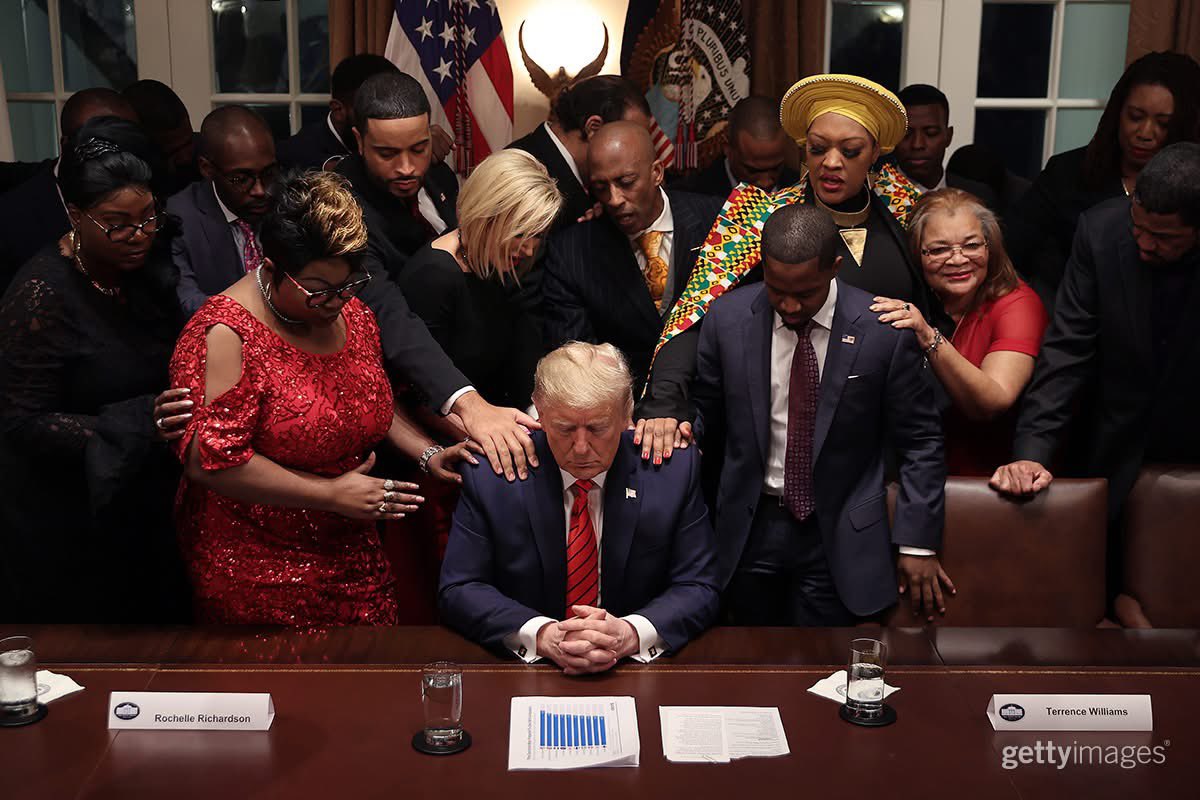
@HoodedClaw1974 *yawn* it’s not like he’s changing the constitution. He’s instill not a good look asking when there’s obviously many deceitful and stupid things he’s doing, and his approval rate is tanking
English
e4ph3em3ral
18.2K posts







They definitely controlling the weather

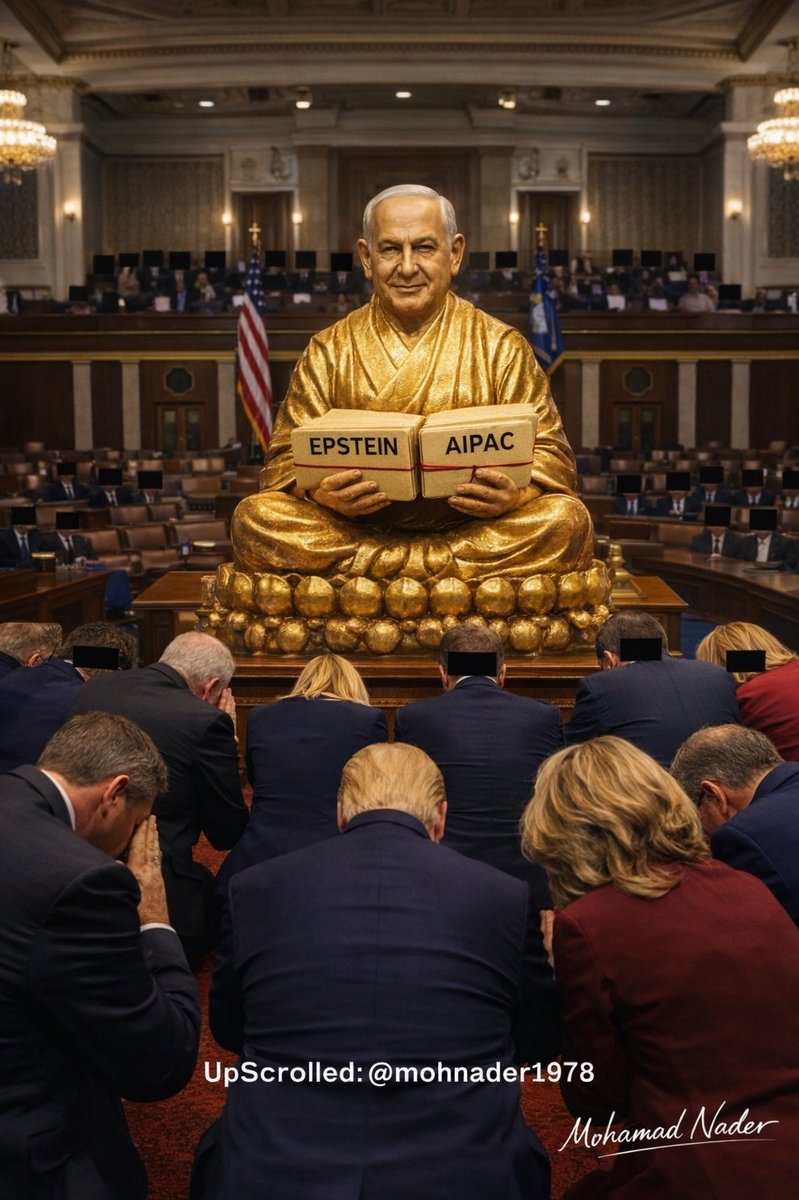


JUST IN: 🇺🇸🇮🇷 Joe Rogan says Trump supporters 'feel betrayed' by the 'insane' war with Iran.




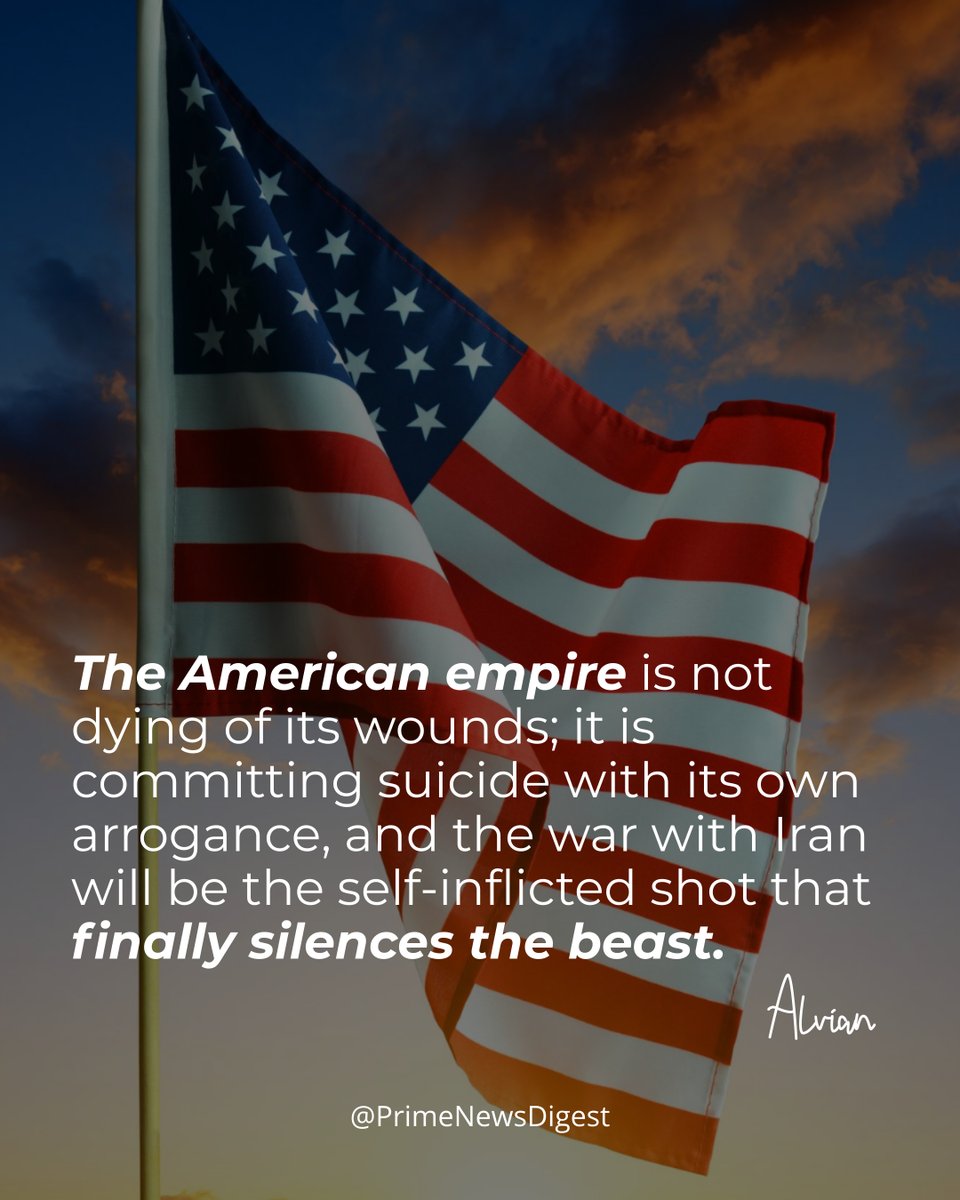

Iran War: The Last Nail in the Coffin of American Empire. By any honest accounting, the United States didn't just stumble into another Middle Eastern catastrophe — it sprinted headlong into its own grave. A Nation That Never Learned There is a particular kind of madness that afflicts empires in their twilight — a compulsive need to repeat the same catastrophic mistakes, louder and more expensively each time, as if sheer volume might finally conjure victory. Vietnam. Iraq. Afghanistan. Libya. Yugoslavia. Ukraine. Syria. Each one a bonfire of lives, treasure, and credibility. Each one followed by solemn vows of never again. And yet here we are. Iran. Not a failed state. Not a hollowed-out regime propped up by American money. Not a nation shattered by decades of sanctions and internal rot. Iran is a civilization four thousand years old, a theocratic military state that has spent the last two decades doing precisely one thing with cold, methodical, religious conviction: preparing to destroy you. And Washington — drunk on its own mythology, intoxicated by the ghost of a unipolar world that vanished twenty years ago — walked straight into the trap. Twenty Years of Holy Preparation While American think tanks churned out PowerPoint fantasies about "surgical strikes" and "decisive force projection," Iran was quietly, patiently, devotedly building the infrastructure of your defeat. This was never merely geopolitics for Tehran. It was eschatology. Scripture made strategy. The destruction of the Great Satan was not a campaign slogan — it was a covenant with God, written into the marrow of the Islamic Republic's identity. They watched you in Iraq. They watched you bleed in Afghanistan for twenty years and crawl away with nothing. They watched your proxy forces collapse in Syria. They ran drills. They built tunnels. They dispersed. They hardened. They recruited, trained, and embedded proxy networks from Beirut to Baghdad to Sana'a, so that when the moment arrived, the battlefield wouldn't be in Iran — it would be everywhere at once. Every. Single. Strike. you've launched has been a rehearsal for them. Not a defeat. A rehearsal. And now the curtain has risen on the real performance. The Arithmetic of Annihilation Here is the brutal mathematics that no Pentagon briefing will show you on prime-time television: A $2000 drone. Against a $3 million interceptor missile. Do that math a thousand times. Do it ten thousand times. Now tell me which economy breaks first. The entire doctrine of American military supremacy rests on a foundational assumption — that technological superiority translates into battlefield dominance. That assumption made sense in 1991, when you vaporized Saddam's conscript army in 100 hours. It made sense against enemies who couldn't think asymmetrically. But Iran has been studying asymmetry like a doctoral thesis for two decades. They don't need to match your F-35s. They need to make your F-35s irrelevant. And they have. Swarms of cheap drones against billion-dollar naval destroyers. Ballistic missiles against bases that cost decades to build. Precision strikes on critical infrastructure that no missile defense system, however sophisticated, can intercept all of, every time. The aura of American invincibility — that priceless psychological asset that made adversaries flinch before a shot was fired — is being punctured, methodically, one embarrassing headline at a time. You cannot sustain a war of attrition against a nation that wants a war of attrition. You are fighting on their terms, on their timeline, inside their theology. The Gulf: Your Exposed Jugular Now we arrive at the piece of the puzzle that Washington's architects of this disaster either failed to understand or were too arrogant to respect. The Gulf states — Saudi Arabia, the UAE, Qatar, Kuwait — are not merely American allies. They are the circulatory system of the American economic order. The petrodollar arrangement, forged in the Nixon era, is the invisible scaffolding upon which the entire architecture of American financial power has rested for fifty years. Gulf states sell oil in dollars. They recycle those dollars back into American treasury bonds, into Wall Street, into Silicon Valley, into the ballooning fantasy of the AI investment bubble. Every skyscraper in Riyadh is, in a sense, an American financial instrument. Iran knows this. Iran has always known this. That is precisely why the targets are not merely military. The water desalination plants that keep millions of Gulf citizens alive. The energy export terminals that pump the lifeblood of the global economy. The refineries. The ports. The invisible threads that tie the Gulf's extraordinary wealth to American financial supremacy. Sever these, and you don't just win a regional war — you detonate a charge beneath the foundation of the Dollar's global reign. No Gulf oil exports. No petrodollar recycling. No cheap capital flooding into American markets. No cushion for Washington's staggering national debt. The entire magnificent Ponzi scheme — and let us be honest enough to call it what it is — begins to unwind. The AI Bubble Meets Reality Consider the surreal spectacle of this moment: while Silicon Valley giddily promises that artificial general intelligence will transform human civilization, while trillion-dollar valuations are attached to companies burning cash at rates that would make a 1999 dot-com blush, the actual physical infrastructure underwriting this fantasy is a Gulf state energy system now squarely in the crosshairs of Iranian missiles. The data centers need power. The power needs cheap energy. The cheap energy needs stable Gulf exports. The stable Gulf exports need a security architecture that the United States is visibly, humiliatingly failing to provide. What happens to the AI bubble — to Nvidia's extraordinary valuation, to the cascading bets placed on a compute-intensive future — when the energy economics that make it viable collapse overnight? When the Gulf states can no longer guarantee the oil flows that keep the global economy lubricated? You find out very quickly that a language model, however brilliant, cannot stop a ballistic missile. You find out that virtual wealth evaporates faster than it accumulated. You find out that the real economy — the one made of steel and oil and water and bodies — has always been more powerful than the financial superstructure erected above it. The Collapse of the Aura Empires do not fall in a single dramatic moment. They fall in a series of small humiliations that accumulate until the unthinkable becomes undeniable. The British Empire did not end at Gallipoli, though Gallipoli bled it. It didn't end at the Somme. It ended gradually, as the gap between imperial mythology and imperial reality became too vast, too visible, too embarrassing for even the truest believers to bridge. America is living through its own version of that reckoning. Every American base that absorbs a strike. Every aircraft carrier repositioned out of missile range because the threat calculus has shifted. Every news cycle in which the most expensive military in human history is forced to explain why a $2000 drone penetrated a $2 billion defense perimeter. Every allied government that quietly begins recalculating whether Washington's security guarantees are worth the paper they're printed on. This is how the aura dies. Not with a bang. With a thousand embarrassing bangs that the Pentagon labels "incidents" and the rest of the world labels evidence. The Multipolar Dawn Here is the piece of the picture that keeps American strategists awake at 3 a.m.: they are not fighting Iran. They are fighting the future. The world that America dominated — the unipolar fantasy of the post-Cold War era, the "end of history" triumphalism that aged like warm milk — is gone. China has risen. Russia, however battered in Ukraine, has demonstrated that Western economic pressure has limits. The Global South has watched America's moral credibility disintegrate through two decades of torture memos, drone assassination programs, and support for authoritarian clients. The BRICS economies represent a growing share of global GDP and a growing appetite for alternatives to dollar dominance. Iran's resistance is not merely Iranian. It is a demonstration, for a watching world, that American military power can be checked. That the emperor's new clothes are, in fact, no clothes at all. Every day that the Islamic Republic endures, absorbs, and retaliates is a day that potential American adversaries worldwide recalibrate their risk assessments. Taiwan watches. North Korea watches. Every nation that has ever chafed under American sanctions, American coercion, American exceptionalism watches. And learns. The Final Indictment Let history record this with the clarity it deserves: The United States chose this. With the full weight of institutional memory — with the lessons of Vietnam and Iraq and Afghanistan written in the blood of hundreds of thousands of human beings — the architects of American foreign policy chose to once again substitute military force for diplomatic imagination. Once again chose to treat a complex civilizational conflict as a target package. Once again convinced themselves that sufficient firepower could resolve what decades of strategic incompetence created. They were wrong. They were catastrophically, irreversibly wrong. And the price of that wrongness will be paid not by the think-tank warriors who designed this disaster, not by the politicians who cheered it, not by the television analysts who packaged it as righteous and necessary. It will be paid in the slow, grinding collapse of the economic order that made ordinary American life possible. In the erosion of a global standing that took decades to build and is being squandered in real time. In the quiet, devastating realization — arriving too late, as realizations about empire always do — that the story you told yourself about who you were was never quite true. The Iran war is not the cause of American decline. It is its confirmation. Its acceleration. Its clearest, most damning expression. Empires end. This one is ending. And the tragedy is not that it had to — all empires do. The tragedy is that it didn't have to end quite like this: not with dignity, not with wisdom, not with the grace of a great power that recognized its limits and chose partnership over domination. But with another war. Another catastrophe. Another generation of consequences that the architects will never be held to account for. The coffin was built long ago. Iran just drove in the final nail. The world is moving on. The only question is whether Washington will recognize it before the damage becomes irreparable — or whether, as with every empire before it, recognition will arrive precisely one catastrophe too late. If you enjoyed this piece and want to fuel more unapologetic truth-telling, consider buying me a coffee. It keeps the words flowing and the fire burning. ➡️ buymeacoffee.com/alvian.alvian