Bogdan Maran

1.9K posts

Bogdan Maran banner
Bogdan Maran

Bogdan Maran

@TheOneWthABeard

Video Monetisation Specialist | Digital Event Designer & Storytelling | Data Strategy | #Eventtech Evangelist & Speaker | #eventprof

London, England Katılım Nisan 2016
1.5K Takip Edilen589 Takipçiler
Sabitlenmiş Tweet
Bogdan Maran
Bogdan Maran@TheOneWthABeard·
Events generate visual content as a byproduct, regardless if they want to or not. #eventprofs what is the lifespan of your visual content? The average of an image online is 2.1 seconds. Can you beat that?
Bogdan Maran tweet media
English
1
1
5
0
Bogdan Maran retweetledi
Muzzammil
Muzzammil@DevMuzzammil·
🚨 Breaking: Microsoft just released Copilot Pro, and it's insane. It's BETTER than ChatGPT in every way. Here are 11 Copilot features, you should check out 🧵:
Muzzammil tweet media
English
61
346
2.3K
776.6K
Bogdan Maran retweetledi
Visual Hive
Visual Hive@Visual_Hive·
📚 Learn with Ease! Video reigns supreme! 🤩 72% of people prefer video over text to learn about a new product or service. It's not just time-efficient; it's a visual experience that resonates. 🚀🎓 #SmartVideo #SmartHive #EvenTech #EventProfs #EventMarketing
Visual Hive tweet media
English
0
1
1
26
Bogdan Maran retweetledi
HiveClip
HiveClip@HiveClip·
📚 Learn with Ease! Video reigns supreme! 🤩 72% of people prefer video over text to learn about a new product or service. It's not just time-efficient; it's a visual experience that resonates. 🚀🎓 #SmartVideo #SmartHive #EvenTech #EventProfs #EventMarketing
HiveClip tweet media
English
0
1
1
25
Bogdan Maran
Bogdan Maran@TheOneWthABeard·
I have pledged for gender equality in the workplace. Make your pledge before 10 November 12 noon GST (8am UTC) to help us break a world record! @Aurora50 invt.io/1txbytvhlk5
English
0
0
0
15
Bogdan Maran retweetledi
Adam Parry
Adam Parry@punchtownparry·
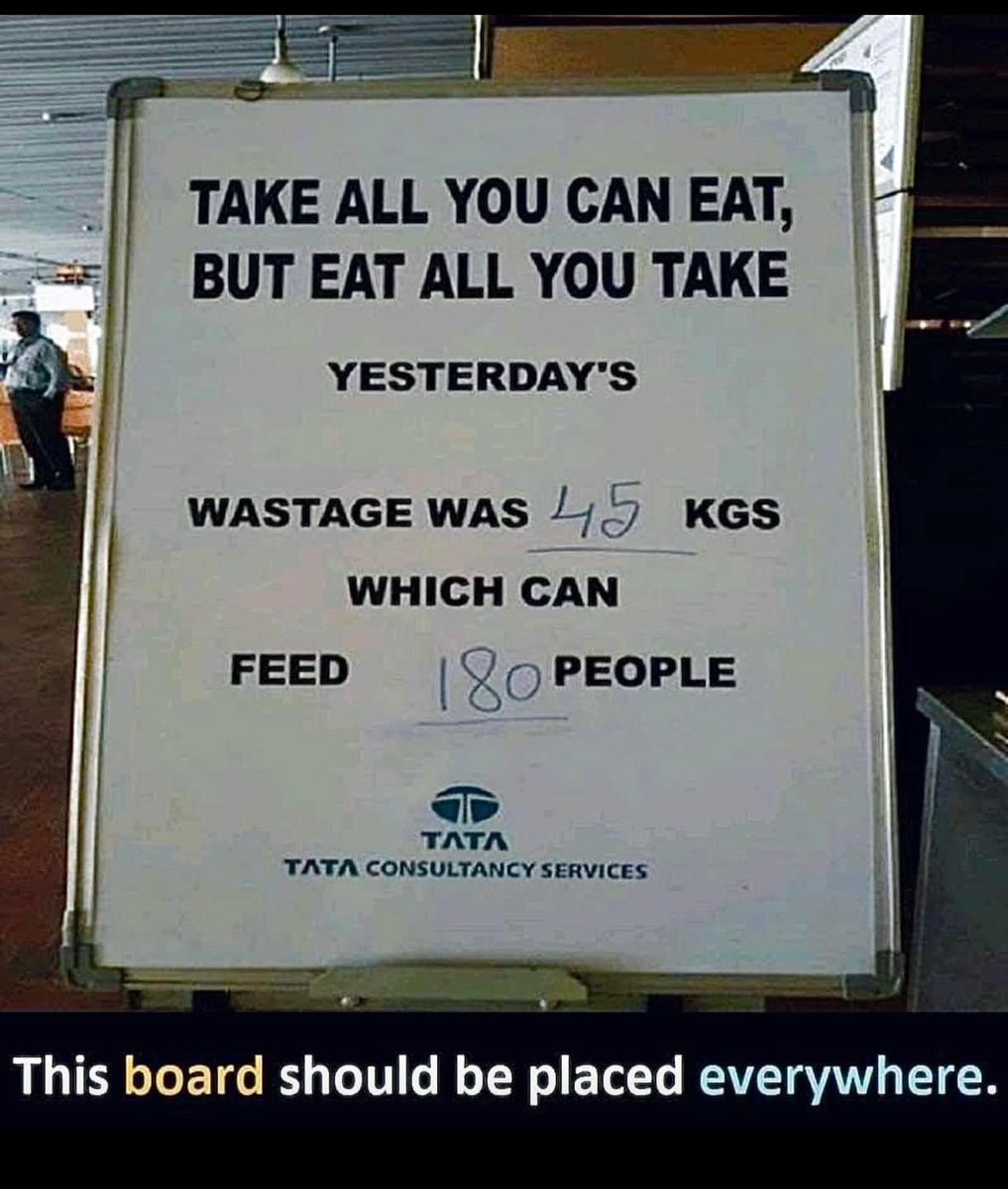
We should have signs like this at every event. It’s easy to get carried away especially when the event catering looks so good. Gentle reminders help create change. #sustainableevents @ESLiveExpo
Adam Parry tweet media
English
0
2
4
870
Bogdan Maran retweetledi
Vagina Museum
Vagina Museum@vagina_museum·
Barbie is a polymath, but in the circles we move in, she is perhaps better known for her hairless, featureless vulva than her myriad achievements. Here's a very brief history of "Barbie Crotch" - labia-less, hairless, featureless vulvas in art.
Vagina Museum tweet media
English
22
508
2.8K
706K
Bogdan Maran retweetledi
Elizabeth Laraki
Elizabeth Laraki@elizlaraki·
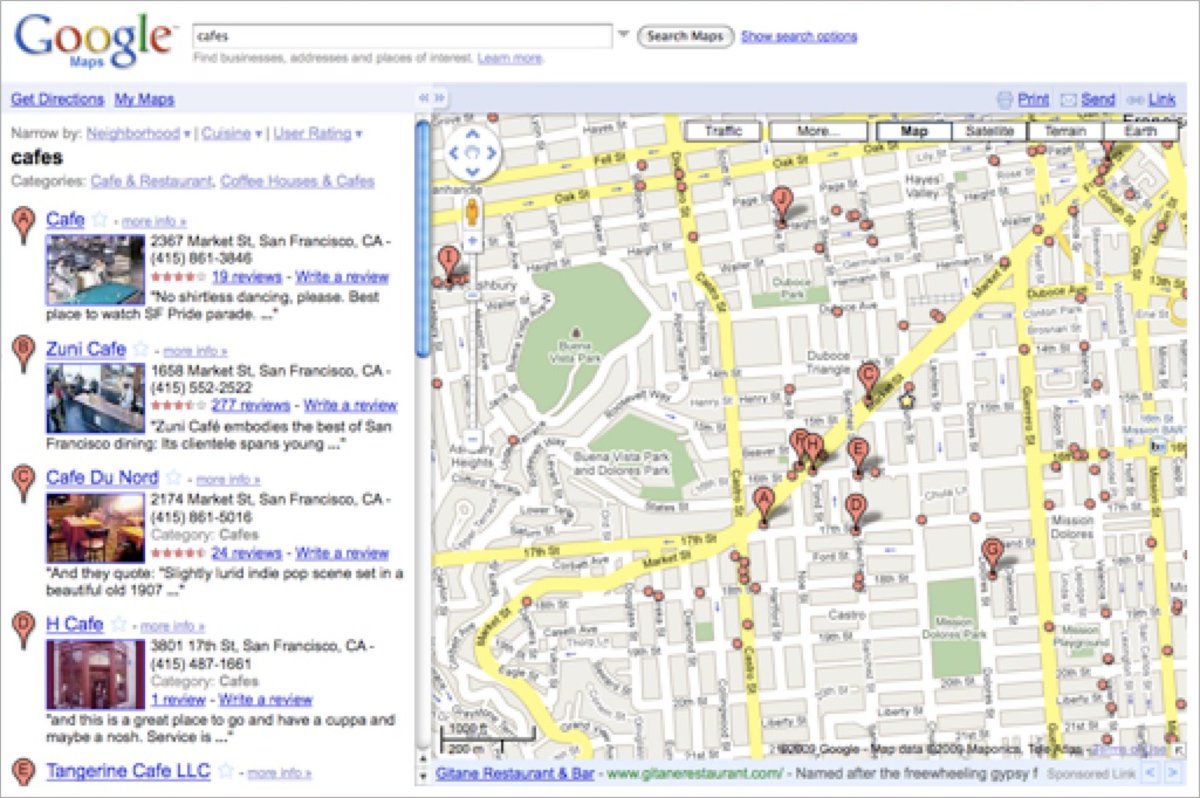
In 2007, I was 1 of 2 designers on Google Maps. The app was growing like wildfire. But it was becoming a cluttered mess — new features were being shoved into every pixel. Here’s the 4-step process we used to redesign Google Maps into one of the most loved apps in the world: 🧵 ––– But first, it’s important to understand it is normal to build a product based on the underlying technical structure. In 2005, Google Maps queried one of three databases for any search: • Maps data • Local business data • Directions data Not surprisingly, the first version of the website had three tabs, one for each of these databases: Maps, Local Search, Directions. ––– By 2007, Google Maps still wasn’t the dominant mapping application. But it had hit PMF, its user base was growing quickly, and we were rapidly adding new content and features like: • Satellite and Terrain views • Streetview, 3D buildings, Traffic • Editable map data, Reviews, Photos • Transit Data We were wedging new features into any space we could find in the UI. It became clear the user experience was suffering and the product was growing increasingly complicated. At that time, our VP, Marissa Mayer likened Google Maps to a Christmas tree that we kept adding more and more ornaments to until it started to fall over… We tried many different ways to rearrange the UI to accommodate new features. Eventually we had to step back and rethink Google Maps based on what we knew was working, what brought people to the product, and what we believed the future might look like. ––– These were the 4 key steps we took to simplify the design of Google Maps to be the intuitive, durable, much-loved product that 1B people still use today: 1. Deconstruct We wrote down all of the product’s current and upcoming content, features, and functionality and loosely grouped them into categories: • Core features — The most common tasks people came to do (search, get directions, find businesses) • Aspirational use cases — Tasks we wanted people to start doing (adding their own content, correcting inaccurate information, using Maps to explore new places, etc.) • Global actions — Actions that impacted the entire page (print, share, save, etc.) • Use case specific actions — Actions that were relevant only within a specific use case (eg while getting directions, being able to drag a route or add a destination) • Related features — Things that weren’t a part of Google Maps at the time, but existed and were closely related. (eg transit information, business searches on Google.com) ––– 2. Reframe We leveraged a combination of user research, business goals, and our own intuition to make the product better, simpler, and scalable over time. We focused on understanding: • What brought people to the product • How they navigated through the product • What was working well • What flows were confusing • What things were missing • What information was valuable when • What functionality was redundant We emerged with several key points: • “Searching” was the most pivotal task in Maps • Searching addresses, businesses, parks, mountains, cities, etc could all be thought of as searching for “places” • Getting directions was important, but rarely happened between two specific addresses. Directions searches usually had a known start or end point, like home or work. It was also more intuitive to be able to search for directions by a place name e.g., Carmel Library rather than having to look up the address first. • It was strategically important for people to be able to contribute content to Google Maps and to be able to explore the world around them. ––– 3. Reconstruct Based on what we learned, we then explored ways to reshape the product. We held these general usability principles in mind: • Entry points to core use cases should be prominent • Flows within core use cases should be intuitive • Common actions, interactions, and views should be consistent • Contextual actions should be accessible when relevant This is one exploration of clustering tasks and connecting relevant content: Our explorations of how to reconstruct the site around people’s needs and flows led to several key design changes: • There would be only one search box for everything • Directions would live as a secondary feature • Other features would appear in context (eg, transit became a mode within directions) ––– 4. Scale for the future This was 2007. We knew the product would continue to evolve, the information set would grow exponentially, and the feature set would continue to expand. But by focusing on key use cases and folding information in to the UI where it was relevant, we created a framework to support future growth. 16 years later, Google Maps has continued to evolve, yet is still a simple, intuitive, much-loved product that 1B people use around the globe. For more on design, follow @elizlaraki
Elizabeth Laraki tweet mediaElizabeth Laraki tweet mediaElizabeth Laraki tweet mediaElizabeth Laraki tweet media
English
94
644
4K
873.4K
Bogdan Maran retweetledi
Ed Krassenstein
Ed Krassenstein@EdKrassen·
Today Elon Musk held a Twitter Space to discuss xAI. Here is a recap of what was discussed for those who missed it: - The founding team was on hand to introduce themselves, and I must say it is an impressive team with an impressive background. They had very strong backgrounds with Deep Mind, OpenAI, Google, Tesla, etc. - Elon Musk said the goal with xAI is to build a good AGI (artificial general intelligence) with the purpose of understanding the universe. - Musk said that the safest way is to build an AGI that is ‘maximum curious’ and ‘truth curious,’ and to try and minimize the error between what you think is true and what is actually true. - For truth-seeking super intelligence humanity is much more interesting than not humanity, so that’s the safest way to create one. Musk gave the example of how space and Mars is super interesting but it pales in comparison to how interesting humanity is. - Musk said there is so much that we think we understand but we don’t in reality. There are a lot of unresolved questions. For example, there are many questions that remain about the nature of gravity, and why there is not massive evidence of aliens. He said he has seen no evidence of aliens whatsoever so far. He went further into the Fermi Paradox and how it's possible that other consciousness may not exist in our galaxy. - If you ask today’s advanced AIs technical questions, you just get nonsense, so Musk believes we are really missing the mark by many orders of magnitude and that needs to get better. - xAI will use heavy computing, but the amount of ‘brute force’ will become less as they become to understand the problem better. - Co-Founder Greg Yang said that the mathematics they find at xAi could open up new perspectives to existing questions like the 'Theory of Everything.' - Elon stated that you can't call anything AGI until the computer solves at least one fundamental question. - He said that from his experience at Tesla, they have over complicated problems. “We are too dumb to realize how simple the answers really are," he said. "We will probably find this out with AGI as well. Once AGI is solved, we will look back and think, why did we think it would be so hard.” - They are going to release more information on the first release of xAI in a couple more weeks. - Elon Musk said that xAI is being built as competition to OpenAI, when asked by @krassenstein. - The goal is to make xAI a useful tool for consumers and businesses and there is value in having multiple entities and competition. Elon said that competition makes companies honest, and he’s in favor of competition. - Musk said every organization doing AI has illegally used Twitter’s data for training. Limits had to be put on Twitter because they were being scraped like crazy. Multiple entities were trying to scrape every tweet ever made in a span of days. xAI will use tweets as well for training. - At some point you run out of human-created data. So eventually AI will have to generate its own content and self-access that content. - Answering a question from @alx, Musk said there is a significant danger in training AI to be politically correct or training it not to say what it thinks is true, so at xAI they will let the AI say what it believes to be true, and Musk believes it will result in some criticism. - Musk said it’s very dangerous to grow an AI and teach it to lie. - Musk said he would accept a meeting with Kamala Harris if invited. He said he’s not sure if Harris is the best person to be the AI czar, but agrees we need regulatory oversight. - Musk believes that China too will have AI regulation. He said the CCP doesn’t want to find themselves subservient to a digital super intelligence. - Musk believes we will have a voltage transformer shortage in a year and electricity shortage in 2 years. - xAI will work with Tesla in multiple ways and it will be of mutual benefit. Tesla’s self-driving capabilities will be enhanced because of xAI. - According to Musk, the proper way to go about AI regulations is to start with insight. If a proposed rule is agreed upon by all or most parties then that rule should be adopted. It should not slow things down for a great amount of time. A little bit of slowing down is OK if it's for safety. - Musk thinks that Ray Kurzweil's prediction of AGI by 2029 is pretty accurate, give or take a year. I've love to hear everyone's thoughts on where you think xAI will go.
Ed Krassenstein tweet media
English
1K
2.9K
13.8K
8.9M
Bogdan Maran retweetledi
Henningham Family Press
Henningham Family Press@HenninghamPress·
Time is money. If it takes twice as long to do something you earn half as much. This is the brutal fact at the heart of Brexit. Let’s "Brexit" a £12.99 paperback, blow by blow, and see what difference leaving the single market has made.
Henningham Family Press tweet media
English
209
3K
7.6K
4.3M
Bogdan Maran retweetledi
Ad Professor
Ad Professor@The_AdProfessor·
The 10 most creative ads I've collected this week: 1. Luxor Highlighters
Ad Professor tweet media
English
51
714
8.9K
2.2M
Bogdan Maran retweetledi
0xDesigner
0xDesigner@0xDesigner·
Web2 vs Web3 UX I was asked by a reporter from a crypto publication about the disparity between web2 and web3 UX. It’s a meaningful line of questioning that isn't covered enough. So I’m going to share some half-baked thoughts in hopes that it triggers more discourse. Why is web3 UX considerably worse than web2 UX? The most unique challenge that web3 UX faces is permanence. Unlike web2, every action taken on the blockchain is irreversible. There's no undo button on the blockchain and mistakes are expensive. So more often than not, product teams prioritize security and error prevention over convenience. As they should. But it requires substantially more cognitive effort for the user. In order to keep users safe and prevent costly errors, you have to show the user what's under the hood upfront in order for them to feel in control and reduce errors. Informing the user usually involves surfacing technical info, which requires more thinking and upfront education. Think of it this way: Web2 is like driving an automatic car. It's straightforward; you get in, press the pedal, and off you go. Web3, on the other hand, is more like driving stick. You need to understand the gears, the clutch, and constantly monitor the tachometer otherwise you’ll damage the transmission or stall the car. Is web3 lacking talent? From what I've seen, most product teams are engineering driven. The designer to developer ratios are lower than in web2. That usually results in more technical solutions. One guess: Over the last few years, the tolerance for difficult-to-use apps is asymmetrically high because there’s been a financial incentive for users to overcome it. Most products and protocols have competed on incentives, not usability. It’s a chicken or egg problem with attracting designers. Designers help make great products, and great products help attract designers. The big talent unlock in my opinion is creating crypto applications that are consumer-oriented—sexy, highly visible products with a large user base. I think the next crypto cycle will be driven by consumer apps that are powered by crypto, but users won’t know it’s crypto unless they look closely (gaming, music, social apps, etc.). What are you and other industry figures trying to do about it? The next cycle (consumer crypto) will require infrastructure that makes the crypto part feel invisible. And we’re basically there: web2 logins that spin up wallets in the background (i.e. magic link, privy, Coinbase WAAS, etc.), simple on and off-ramps (i.e. moonpay, ansible, ratio, etc.). It’s not just third-parties that can improve this, but the base protocol layer too. There are a series of upgrades and changes that make wallet creation and management easier with smart contracts and NFTs. The ones in my purview: EIP-4337 and EIP-6551. There are also several emerging Layer 2, scaling solutions and cross-chain compatibilities that improve the UX of the interactions *after* onboarding stages, too. That will reduce UX burden created by gas fees. A lot of factors are converging to lower the amount of education needed to participate and get started, and that’s the foundation for most of the UX issues. Ultimately, it’s a vicious cycle of solving UX problems and then making better products that require solving more UX problems. The more consumer-oriented products we create, the more of a forcing function it is for infrastructure and talent. ---- TL;DR Web3 UX faces unique challenges, namely protecting users from irreversible mistakes. However, the rise of consumer apps that abstract away the blockchain and new, user-friendly infrastructure signals promising progress.
English
61
49
353
118.5K
Bogdan Maran retweetledi
Alex Xu
Alex Xu@alexxubyte·
Top architectural styles In software development, architecture plays a crucial role in shaping the structure and behavior of software systems. It provides a blueprint for system design, detailing how components interact with each other to deliver specific functionality. They also offer solutions to common problems, saving time and effort and leading to more robust and maintainable systems. However, with the vast array of architectural styles and patterns available, it can take time to discern which approach best suits a particular project or system. Aims to shed light on these concepts, helping you make informed decisions in your architectural endeavors. To help you navigate the vast landscape of architectural styles and patterns, there is a cheat sheet that encapsulates all. This cheat sheet is a handy reference guide that you can use to quickly recall the main characteristics of each architectural style and pattern. – Subscribe to our weekly newsletter to get a Free System Design PDF (158 pages): bit.ly/42Ex9oZ
Alex Xu tweet media
English
31
987
3.5K
304.5K
Bogdan Maran retweetledi
Edwin Hayward
Edwin Hayward@edwinhayward·
Here's how the future is going to play out... (Long - please expand the tweet.) 1. The Tories will wreck things at a faster and faster pace as we get nearer to the next general election. (Implausible? You haven't been paying attention these last 13 years.) Why would the Tories behave that way? A) It stores up bigger and bigger problems for Labour - remember this crucial point for later B) It's their last chance to funnel cash to friends and cronies C) It's their last chance to feather their nests before they're out of power (and, for many, out of office) D) The more chaotic things become, the less likely it is that any given scandal gets investigated in depth E) It increases the probability that some of their changes will survive a full election cycle F) Some (not all) find vicarious pleasure in upsetting the "woke Remain establishment". For them, that's reason enough to make destructive changes. You can see that reflected in their choice of policies designed to fan the culture wars. From a Tory POV, the best stuff to break is anything unfixable. For example, the closure of ticket offices across the rail network. Once they become coffee concessions, and their staff get redeployed, it's game over. Across Britain, thousands of years of accumulated expertise will disappear forever. There will be neither the knowledge nor the physical space to reverse the changes in future. 2. Regardless of their actual policies, Labour will win the next election. A huge number of people want to Get the Tories Out, and will vote on that basis no matter what's on offer. That's great for Labour, but only for one election cycle. (We will come back to this point later.) Once in power, their manifesto commitments will constrain what they can do. The Tories, by contrast, will have free rein. You see, the GE grants the losing party a blank slate. The electorate thumbed their noses at what they were being offered. That lets the losers get away with binning their manifesto and starting over. ("Nobody liked what we were selling, so we're adopting a different approach.") No such flexibility is available to the winning party. Throughout history, pledges get broken, and commitments forgotten. But the broad strokes of their manifesto will still limit the extent of what they can and cannot do in power. This is especially true of headline policy issues such as Brexit. 3. Labour will start trying to fix the stuff the Tories broke. This will prove slow going, and very expensive. It's alway much harder and much more expensive to mend stuff than it is to break it in the first place. That would be true no matter whose party's policies were being unwound. But Labour have a huge problem that the Tories don't. They're trapped by the need to be "fiscally responsible" at all times in a way the Tories never were. Why? Simple: British media is not a level political playing field. Our majority RW press will pounce on Labour if they spend as much as a brass penny without accounting for it. It's an unfair situation. There's no denying that it is. But it's also reality - a known known, if you like. It's pointless moaning about it. It's no good trying to ignore it. Labour must find ways to win, and win repeatedly, despite being hobbled by the press. (NOTE: If you don't read the RW tabloids, you may not realise that they attack Labour on a daily basis even today. That's despite the fact Labour haven't had a sniff of power for 13 years. You can imagine how much more virulent their attacks will become once Labour is in power.) 4. Labour will try to Make Brexit Work. As a result, you might expect the RW tabloids to pick up the intensity of their attacks. And they will. But their own past and present actions constrain the potential future limits of their rage. You see, they're misrepresenting Labour's Brexit position on a daily basis even today. That may explain why only 16% of people in a recent Redfield & Wilton survey were aware of Labour's actual Brexit position. In contrast, a huge 41% think that Labour's current policy is to rejoin the EU. In short: the tabloids will paint Labour as Brexit betrayers no matter what they do. So Labour might as well take huge lumbering steps rather than teeny tiny ones. 5. Make Brexit Work won't. Work, that is. You might as well try to put the toothpaste back in the tube after you've brushed your teeth with it. Brexit is inherently unworkable by nature. We cannot replicate what we had inside the EU while outside it. (Remember Labour's 6 Brexit tests? They appear to have forgotten them all.) Some observations: A) Small incremental improvements will never appease Rejoiners. B) Even a hint of closer ties with the EU will infuriate some still-Leavers. (Others, more pragmatic, will wait and see what the results are.) C) The number of still-Leavers is declining every day. Young voters who came of age since the referendum break 86/14 in favour of Rejoin. By the time we get to the end of a first Labour term, anyone under 32 will be overwhelmingly keen to re-enter the EU. D) There will always be a core group of Leavers who will continue to believe Brexit could have worked. That will always be true, no matter how what form actual Brexit takes. But their numbers dwindle every day. The lived experience of Brexit combined with the passage of time see to that. E) The only way to undo our Brexit problems is to make major changes of the sort Labour ruled out ("no to SM/CU/FoM/Rejoin"). It is also vital to remember that Brexit damage is likely to increase over time. It will continue to be a drag on the UK economy. As well as all the current problems of Brexit, we will experience new ones. (Not least because many temporary mitigations will expire.) For example: - Introduction of ETIAS/EES for travellers going to the EU. - Introduction of incoming border checks. This will reduce the range of goods in shops and raise prices further. - UK REACH, meaning that firms that use chemicals will have to certify them twice, once in the UK and once in the EU. - UKCA marks, requiring firms to go through multiple certification processes to sell in the UK and the EU. This ever more visible Brexit damage is likely to convince more and more people that Brexit was a bad idea. 6. Labour will have to spend more and more money to stop things falling apart. The legacy of Tory underinvestment has played havoc with our already fragile infrastructure. Think leaky sewers and water pipes, collapsing schools and crumbling hospitals. (Privatised firms, by contrast, have generally done very well indeed.) Where's the money going to come from to pay for everything that needs fixing? That's what every journalist on the Right will demand of Labour, again and again. 7. Much of the Tory party is likely to get wiped out by the GE. But the MPs that survive will sit on the sidelines laughing and jeering. They will point to every broken thing and claim it's all Labour's fault. The RW media will be in lockstep, amplifying the message. Consider that people like Greg Hands still talk about the "no money" letter after 13 years. It's easy to imagine how things will play out. ("Typical Labour, always spending money they don't have.") As we approach the GE after next, the Tories and the RW press will step up their attacks further. "Same old Labour. Can't trust them with the economy. Can't get anything working. Can't even fix Brexit, despite all their lofty promises." With luck, Labour will go into the GE after next with the situation in Britain better than when they took office. But it won't be that much better. The depth and breadth of the problems they were left will see to that. We'll only be knee-deep in metaphoric (and maybe literal) sewage, rather than thigh-deep. than thigh-deep. 8. GE2: Electric Boogaloo. This is the big one. This is where the wheels come off for Labour. The bright red Brexit lines they spent so much energy painting will bite them like a rabid crocodile. You see, Labour are stuck. The taunts about the failure of their flagship Make Brexit Work policy will hit home. Why? Because they're true. And because the process will have irritated everyone across the Remain/Leave spectrum. That lubricates the way for all the lies the Tories/RW media will spin to slip down like honey. But if Labour pivot to "rejoin SM/CU/EU" to win GE2, they give the game away. They might as well tattoo "We wasted the last 5 years. We prolonged the Brexit damage. All because we didn't know what they hell we were doing." on their foreheads. They may well pivot anyway. The alternative is even more unthinkable. And if they do, the press will scream "U-turn", and again they'll be completely right. It will be a U-turn big enough to be visible from space. (Consider the difference between changing stance now, a year before GE1, and doing so after 5 years of Make Brexit Work.) Think back to where we started, a long long way up the page. Remember when I said there's no Get the Tories Out vote. That will prove critical in GE2. People who voted Labour once through gritted teeth to GTTO won't do so again. Not when Labour didn't do what they wanted on issues such as Brexit and PR. (PR is a huge deal which we will explore in a bit.) And what will the Tories do? Already, we have people like Tobias Ellwood decrying the problems caused by Brexit. And Brexiters like George Eustice admitting it has hurt the labour market. What will the Tories do to get their hands back on those sweet, sweet levers of power? Especially if a drubbing in GE1 clears out most of the headbanger Brexiters. Think back a few years, to the days of Rory Stewart and Anna Soubry and Heidi Allen. Back then, there were many moderate Tories, even though they were in the minority. A devastated Conservative party may decide the quickest way back to power is to pivot back to the centre. Remember, they aren't constrained by anything they promised in GE1. They lost. Their manifesto was so much chipwrap the day after. 9. Labour lose GE2. They're a one-term wonder, and then they're done. Sunk by their Brexit maximalism, and by the impossible cleanup task the Tories left them. The Tories do what they do best: sweep into office, and blame everything on Labour. Five years is a long time for an electorate with short attention spans. Especially one conditioned by decades of RW media lies into believing Labour can't be trusted with the economy. We know how this plays out. We've seen how fast the horror spread these last 13 years. Another decade or so of Tory misrule is an unbearable thought. It's also a probable future, unless Labour makes changes now. BTW, from the standpoint of history, being PM is 100x more important than being Leader of the Opposition. A place in posterity for eternity is the grand prize. It's the one thing even rich people can't buy, though their wealth can certainly help them secure it. Heck, schoolkids will still be talking about Liz Truss a century from now. (What a dreadful thought.) If Keir Starmer survives a full term, that's already longer than May, Johnson, Truss (!) or Sunak managed. His standing becomes assured. Put another way: his incentives are not our incentives. Cynical? Absolutely. True? Without a doubt. 10. Another ruinous decade or so of Tory rule. We all know how this plays out. We've seen how fast the horror can spread these last 13 years. We also know how hard it is for Labour to win. They need the Tories to mess up so badly that a tide of outrage carries them over the finish line. But the RW press will remind us of Labour's actual and perceived failings 24/7. So it will take a long time for that outrage to reach critical mass again. In the meantime, we'll be stuck in an unbearable situation we're all too familiar with. That is, unless Labour makes changes NOW. They have to reposition the first domino so that the last domino never falls. (We should at least allow for the idea that the Tories will take a different approach to governing next time. Unlikely, but not impossible. They may decide the country's so beaten down, there's no appetite for culture wars and immigrant-bashing. And things may be ok... for a while. But the tendency to revert to type is likely to prove hard to shake in the longer term.) == Deep breath. Have a coffee and a biscuit. You've earned them. We've seen the problem. After the break, it's time to tackle the solution. == Scroll back through the scenario above. Notice how Brexit runs through it like a vein pumping poison. That's why Labour need to change their approach to Brexit. They need to do it now, not just before the GE. It takes a long, long time for the message to sink in. (Remember, just 16% of people even realise Labour's current Brexit position.) Labour has to stop ruling things out. Important: Not saying you won't do something is not the same as saying you will do it. Please read the sentence above several times, until it makes sense. Something like: "Labour will do whatever it takes to mitigate the damage Brexit is causing Britain." They can also add that they can only analyse the full extend of that damage once they're in power. Of course, the actual message will need polishing by the pros. They can do a much better job of it than I ever could! But you get the idea. It's the intent that's key. Without the red lines on SM/CU/FoM/Rejoin, anything becomes possible. Labour will be able to react as the situation demands, free of artificial constraints. Will the tabloids scream? You bet. But not as much as you might think. After all, Labour's Brexit position will still be less radical than they have been claiming it is. (Labour are not saying "Rejoin"!) And if they're going to scream, better to have that scream diluted over a year, rather than at max volume just before a GE. The other huge issue is the amount of time it will take to make a dent in Britain's mountain of problems. If Labour only get the one term, they're not going to make a lot of headway. Don't think of GEs as coming in 5-year cycles. When the party in power changes, they need a year to pick through the mess and learn what's going on. And the final year of every 5-year cycle focuses on the next GE. So there's only ever 4 (more often 3) years of governing in any 5-year cycle. That's under FPTP. Under PR, the story would be completely different. PR is the only hope we have of achieving any sort of long-term stability. Why? Because many of the problems Britain faces will take 2, 3, 4+ election cycles to fix. And by gosh do they need fixing! But the only way to find the time to fix them is to form long-term partnerships in the national interest. In other words, PR. PR rids us of the short-termism mindset that has dragged Britain down for decades. The exact balance in Parliament will change from GE to GE, even under PR. But a coalition should always be possible without involving the Tories or other RW parties. Isn't it better to have a share of power forever than absolute power for a few years? (In the latter scenario, the other lot will come in and undo everything you worked towards.) If you accept the reasoning so far, then you understand why Labour may only get one term. And that means they have to bring in PR in their first term. Because it's too late afterwards. FPTP will sink them. But bring in PR, and the pressure valve releases. There's time to plan things. To fix things. To build things. To improve things. To make Britain better. Not as a cloying, hollow slogan. But in real, tangible ways. In summary: Labour need to adopt a different approach to Brexit. They need to do so now, not in the runup to the GE. They also need to lay the groundwork to introduce PR. Those two elements together unlock endless possibilities. Phew, we're almost done. Thank you for persevering this far. In parting: You may disagree with what you just read. You probably will. But please take a big step back and look at the situation with a critical eye. Is your disagreement because the scenario I painted is too horrible to think about? In other words, is the reality so stark and so depressing that you shy away from acknowledging it? And is your support for a particular party blinding you to what they can achieve in a short 5 (really 3) period in office? And that's it. Let me know what you think. Please share this material if you think it has value. Have a great day.
English
327
1.6K
4.2K
904.8K
Bogdan Maran retweetledi
Seth Abramson
Seth Abramson@SethAbramson·
I truly believe this is one of the most important things anyone has ever said about Elon Musk. The quote below summarizes perfectly how much his presence in the public sphere wastes everyone’s time and is on many occasions profoundly dangerous as well as premeditatedly dishonest.
Seth Abramson tweet media
English
1.2K
9.9K
43.4K
2M