

The Prime Doctor
2.6K posts

I am sure it is done by one of his (Ministers) ass licking worm
खुरपेंच@khurpenchh
मिनिस्टर को सड़क से हटाने वाली महिला के खिलाफ FIR हो गई है, इसीलिए कहता हूं कि देश गड्ढे में जा रहा है तो खाई में जाने दो, लेकिन नहीं वोकल बनना है, गड्ढे में जाने से रोकना है, लाडो मुकदमा।
English

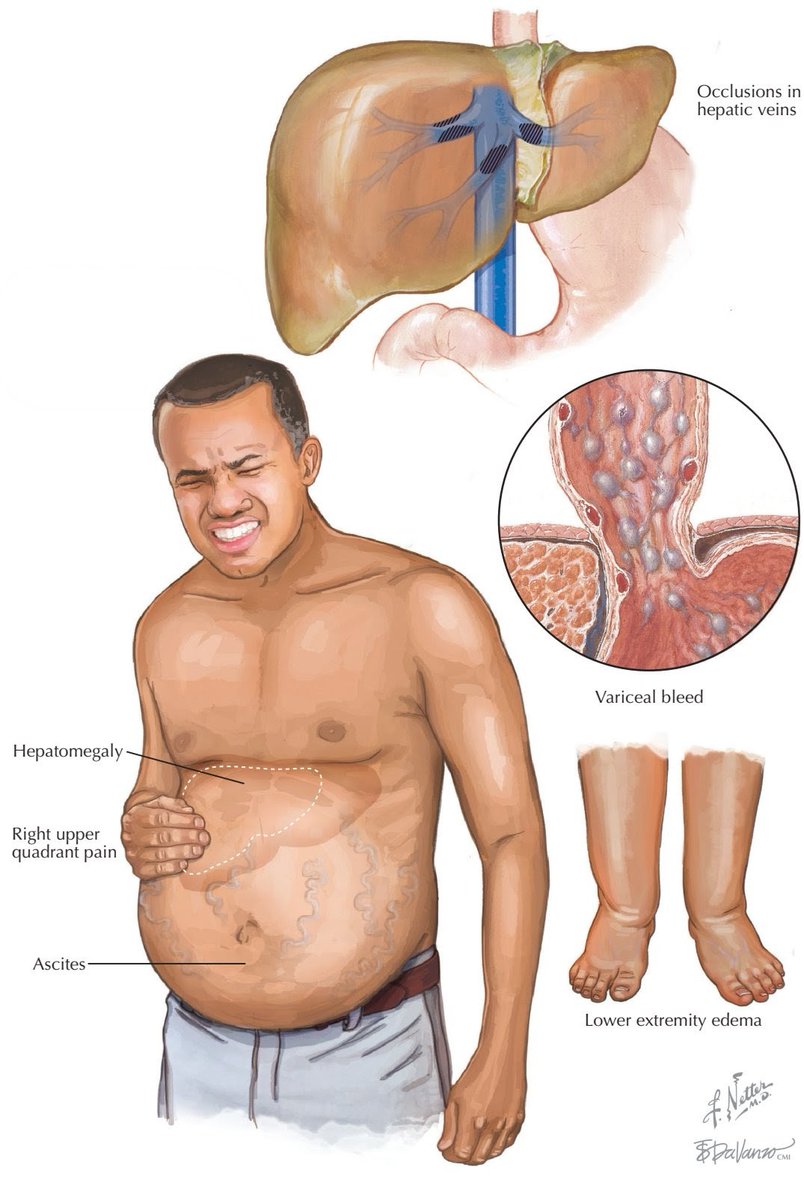
1. The liver is enlarged.
2. The veins are blocked.
3. The portal pressure rises.
Name the syndrome?
English
C) 0.9% saline
In a child with shock, start with an isotonic fluid bolus. 0.9% saline is preferred because it stays in the intravascular space and rapidly improves perfusion.
Ringer's lactate can also be used, but normal saline is usually given first.
5% dextrose and 0.45% saline are not suitable since they do not effectively expand circulating volume.
English
The Prime Doctor retweetledi

Why muscles look bigger then smaller then bigger again during training?
Initially, exercise causes exercise induced hyperemia. Increased blood flow and capillary dilation make the muscle look fuller and slightly reddish, giving a temporary increase in girth.
In the early days, there is also fluid shift into muscle cells and mild inflammation, which adds to the apparent increase in muscle volume.
After a few days to weeks, this effect settles. Reduced edema and normalization of fluid balance can make muscles look slightly smaller, even though adaptation is ongoing.
With continued training, true muscle hypertrophy begins. There is an increase in muscle fiber size due to protein synthesis, leading to a sustained increase in muscle volume.
At the same time, fat loss may reduce overall size initially, which can mask muscle gains. Over time, as fat decreases and hypertrophy progresses, muscles again appear larger, more defined, and fuller.
English
Why do your chest or muscles turn reddish when you train them?
面白ツイート図鑑@snsnokyoufu
ある男性が、わずか2週間で胸筋を鍛えた方法を紹介してくれた。これ大丈夫なん?
English
Why muscles look bigger then smaller then bigger again during training?
Initially, exercise causes exercise induced hyperemia. Increased blood flow and capillary dilation make the muscle look fuller and slightly reddish, giving a temporary increase in girth.
In the early days, there is also fluid shift into muscle cells and mild inflammation, which adds to the apparent increase in muscle volume.
After a few days to weeks, this effect settles. Reduced edema and normalization of fluid balance can make muscles look slightly smaller, even though adaptation is ongoing.
With continued training, true muscle hypertrophy begins. There is an increase in muscle fiber size due to protein synthesis, leading to a sustained increase in muscle volume.
At the same time, fat loss may reduce overall size initially, which can mask muscle gains. Over time, as fat decreases and hypertrophy progresses, muscles again appear larger, more defined, and fuller.
Modern Health@modernHealthMe
Why do your chest or muscles turn reddish when you train them?
English
Hydrophobia in rabies isn’t just “fear of water.”
It’s due to painful, involuntary pharyngeal spasms triggered even by attempting to swallow, so the patient avoids water because it literally hurts to drink.
Modern Health@modernHealthMe
He looks afraid of drinking water and liquids. What's the reason??
English
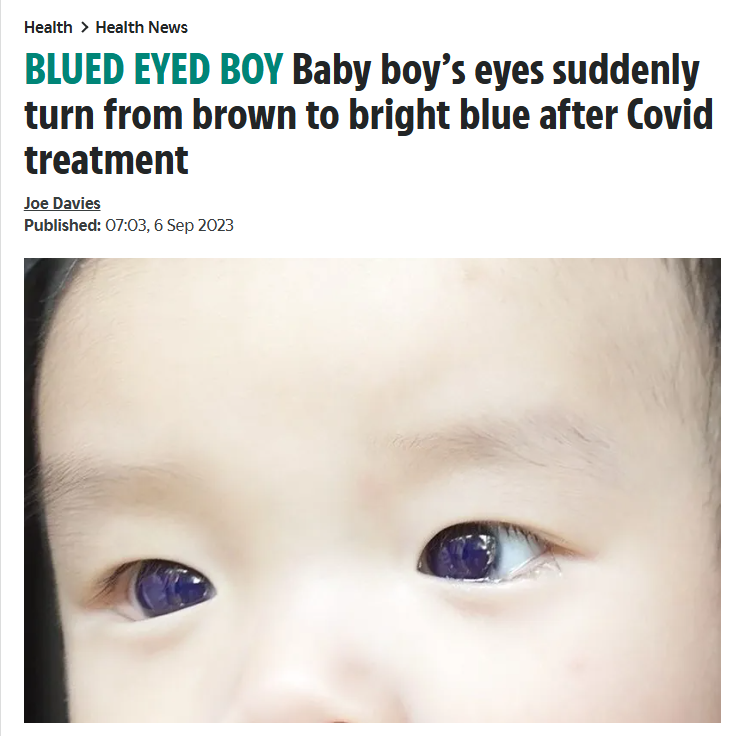
Favipiravir can do this.
There are reports where favipiravir causes bluish discoloration of the cornea and even fluorescence under UV light, making the eyes appear blue temporarily. It’s not a true change in iris color, but a drug related optical effect.
Usually reversible once the drug is stopped, but still worth getting the eyes examined to rule out corneal involvement.
Dr. AK 🇮🇳@docakx
How?
English
Favipiravir can do this.
There are reports where favipiravir causes bluish discoloration of the cornea and even fluorescence under UV light, making the eyes appear blue temporarily. It’s not a true change in iris color, but a drug-related optical effect.
Usually reversible once the drug is stopped, but still worth getting the eyes examined to rule out corneal involvement.
English
The Prime Doctor retweetledi

REAL CASE 🚨
🏥 You’re evaluating a 40-year-old patient when you find a calcium level of 11.8 mg/dL (normal: <10.5).
🔬 PTH is 115 pg/mL (normal: ~45 pg/mL)
📚 Bone density, creatinine clearance, and urinary calcium are all normal.
💬 What should your next step be?
✅ 1. Administer bisphosphonates
✅ 2. Parathyroidectomy
✅ 3. Observation
✅ 4. Give calcium-wasting diuretics
👉 Your answer?
@Ausbones @Dr_Chibuike_M @Dr_Shiv_kumar_ @drobiy12 @hemo_shk @Ausbones @DrMedica_13
Las Palmas de Gran Canaria, Spain 🇪🇸 English
This is called maintaining adequate hydration in summer 🌞 🏝️
English
The Prime Doctor retweetledi
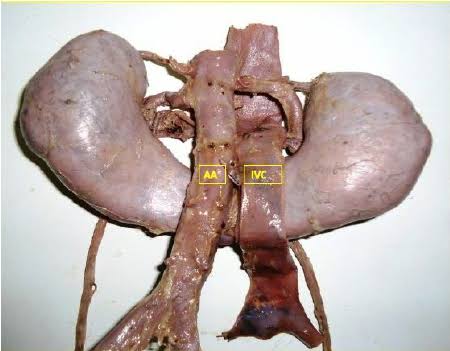
One of the cleanest demonstrations of aortic–mitral valve anatomy.
English
@modernHealthMe Severe anemia with ccf
Hypoproteinemia
Hypothyroidism
@modernHealthMe Any vital organ damage can tell you by showing pedal edema
The heart disease, Liver failure, renal failure
English

Lungs.
Chronic hypoxia drives nail clubbing, so think long standing pulmonary disease first.
Dr. Priyam Bordoloi@DocPriyamMD
When the fingertips start looking like this, which major organ is likely struggling?
English
@DocPriyamMD Lungs.
Chronic hypoxia drives nail clubbing, so think long standing pulmonary disease first.
English

When the fingertips start looking like this, which major organ is likely struggling?

English
Let's try to break it down:
1) Her tongue is twitching or more likely fasciculations, in this case hypocalcemia 2° to pancreatitis, hypokalemia due to enteritis or alcohol withdrawal syndrome
2) She might have had alcohol withdrawal seizures
3) Pancreatic insufficiency
Waiting for @schowardjd response
Scott C. Howard@schowardjd
A woman in her 30s w/ AUD, alcohol-related pancreatitis, & anorexia nervosa presented after a seizure-like episode and was admitted to the ICU for severe metabolic derangements in the setting of diarrhea/enterocolitis. What is this finding and suspected diagnosis❔
English
The Prime Doctor retweetledi

Every man or woman should aspire to be bored as shown in the images below.
Men's Aesthetic@AestheticsMens
You are bored because you are not doing side quests. Life is not just work and lying in bed doing nothing. Here are 50 side quests every man should complete:
English