Sabitlenmiş Tweet
Simon Hill MSc, BSc
18K posts

Simon Hill MSc, BSc
@theproof
Masters in Nutrition Science & Bachelor of Science (Physio). Author and podcast host. Science over hyperbole. Tweets are educational only, not medical advice.
Australia Katılım Ekim 2019
1.4K Takip Edilen35.6K Takipçiler
Simon Hill MSc, BSc retweetledi

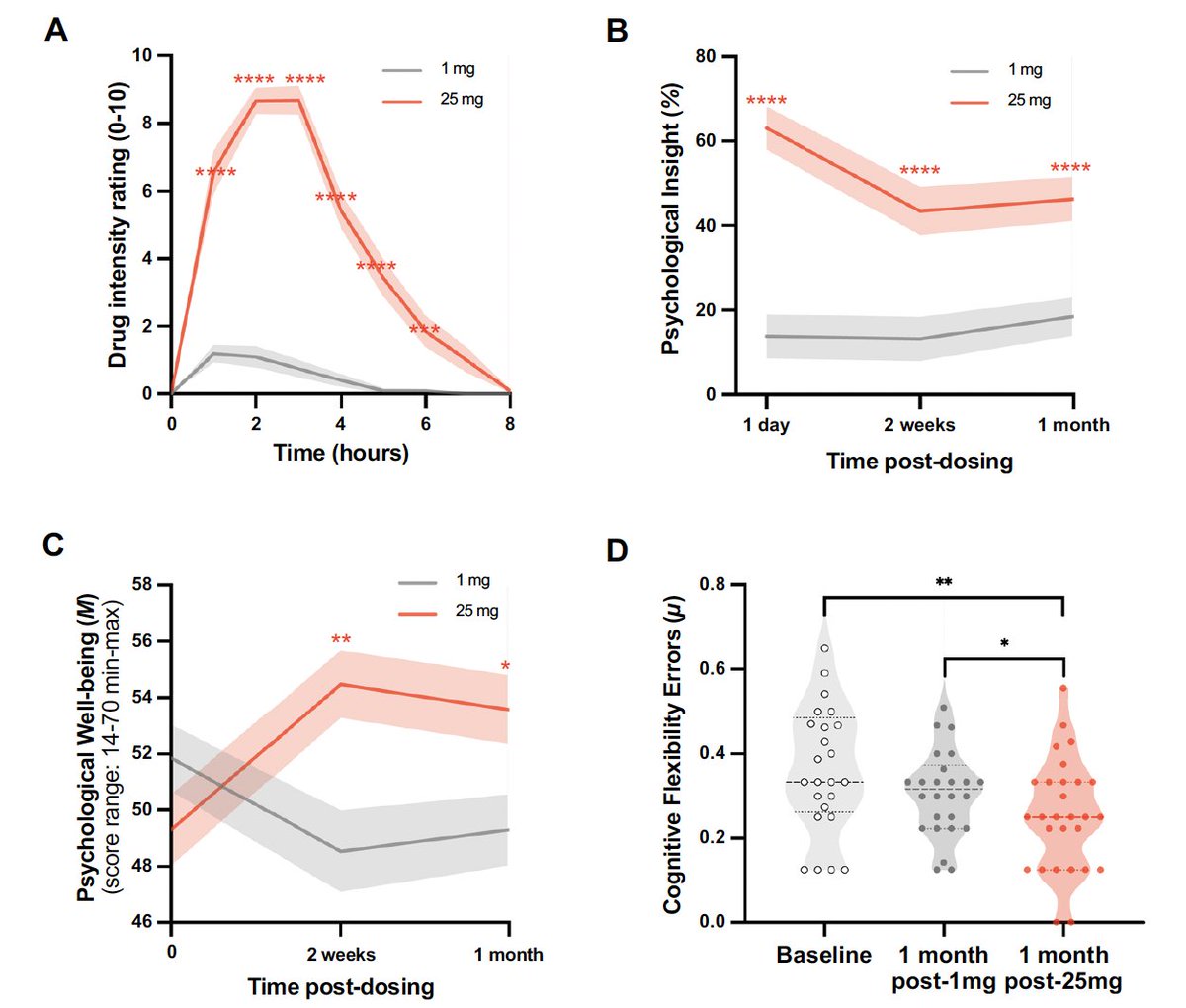
A single 25 mg dose of psilocybin leads to brain structural changes that were seen at 1 month. From a cross-over study of 28 healthy volunteers, no prior psychedelic, who also were also assessed after 1 mg. Behavioral results in Figure
nature.com/articles/s4146…

English

@stathi_ @Drlipid @ethanjweiss @DrMarthaGulati @MohammedAlo @drterrysimpson @NutritionMadeS3 Before choosing all tests I’ll do I’m doing a deep dive on validation. I can run both the baseline and follow up scans through one or more AI systems
English

@theproof @Drlipid @ethanjweiss @DrMarthaGulati @MohammedAlo @drterrysimpson @NutritionMadeS3 Did you get different results?
May as well add in QAngio and then people can accuse you of repeating the analysis until you get the answer you want
English

Cleerly or Heartflow for accurately quantifying plaque?
What has better validation data?
Cc @Drlipid @ethanjweiss @DrMarthaGulati @MohammedAlo @drterrysimpson @NutritionMadeS3
English


@realDaveFeldman @Tellit007 Thanks I appreciate the thoughtfulness. I just replied to your DM. Hope that clarifies my position.
English

I genuinely try to be more compassionate and leaning into the private when someone is discussing their own personal journey -- hence DMing. Yes, when someone is take the steps to share theirs publicly, then it likewise opens the door to discuss it openly as well. But even then, I try to exercise compassion and default toward private.
You're a unique case in many respects because you've actually made more content on our Keto-CTA study any anyone else (of those critical, that is), and linked the April 7th paper (specifically, the Cleerly analysis) for a comparison to your personal plaque levels when first discussing them. Thus, there's a genuinely interesting level of tie in throughout.
That said, I still very much believe what I have before -- I think there's much, much more to the story of ASCVD than LDL/ApoB. But my understanding to this point is that you have generally considered LDL/ApoB (but particularly ApoB) a central driver of atherosclerosis, and moreover, that LLTs (particularly statins) are safe and effective.
So when I said I was surprised, I wasn't meaning for it to come across as antagonistic. Just that -- given your position to this point, and in this context -- I am genuinely surprised.
Anyway, again, I generally reserved about talking on someone's personal journey of disease management publicly unless they are themselves interested in it -- so feel free to let me know if at any point you'd prefer drop off (you know me by now well enough that I'd respect that sentiment, ofc)
English

I had my CT angiogram results from @BudoffMd sent to Heartflow to analyse - comparing a 2024 scan to a scan 16 months later.
Once I have the results and review them in full with cardiac imaging experts expect an episode.
What’s your prediction?
English

@realDaveFeldman @Tellit007 Happy to flesh it out here too. I take it you didn't watch the episodes I put up with my results about a year or so ago. And my episode with Dr Soffer and Dayspring?
English

@theproof @Tellit007 It's less our position, just more your position (but also possible it's changed...?)
I'll DM...
English

@DJL01 @Tellit007 TBC - i’ll probably do a video on this with a cardiologist to continue the conversation conversations that I’ve already had on the show. Stay tuned.
English

@realDaveFeldman @Tellit007 That surprises me given how much emphasis you and Nick place on personal experiments and curiosity. What surprised you?
English

@theproof @Tellit007 I have to concede -- I was likewise surprised.
English

@theproof @Tellit007 On the bigger picture have you ran any polygenic tests to see the potential longer term picture? We find it even more helpful in the LT decision making
English

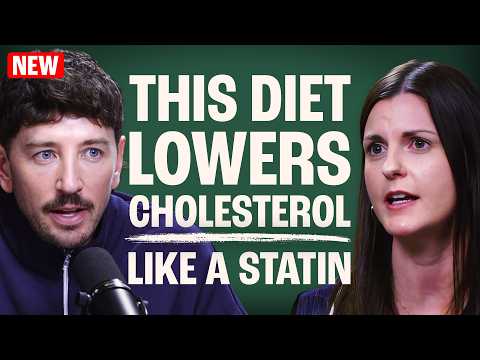
Please note the reduction in cholesterol with the portfolio diet is approximately 30% for those with high adherence. This has been shown to be equivalent to a low intensity statin. Not equivalent to a high intensity statin or a statin with pcsk9 inhibitor/ezetimibe - but still a meaningful reduction for many that depending on their overall risk profile may mean they can avoid LLT medications or take a lower dose.
English

Harvard Scientist: The Diet That Lowers Cholesterol Like Statins (Without Drugs) EP#416
youtu.be/eGpwGzjZouw
@AndreaGlennRD

YouTube
English

@whitfieldlewis6 @BudoffMd LDL was 120-130 up until age 30 when I made the diet switch.
LP(a) super low
English

Yes. Controlling vascular risk factors. I'm not sure if you ever got Lp(a) and checked your pattern of LDL, whether it's pattern A or pattern B. Pattern B has more predominant sdLDL, lower LDL to ApoB ratio, and more triglyceride-rich particles. This also coincides with lower HDL and higher triglycerides.
Also, not sure what the trigger was for plaque, your LDL was ~90 from what I remembered. We all get some plaque as we age. The important thing is that the plaque doesn't become flow-limiting or develop significant atheroma and inflammation to cause a rupture.
A WFPBD is fine as it has minimal refined carbohydrates; if well-planned with enough protein, fat, and supplements, it's totally fine. As you know, my stance is that it's not the most species-appropriate diet for homo sapiens, and it's not the overall healthiest in my opinion, but it can certainly work for many people.
English

@whitfieldlewis6 @BudoffMd If there’s regression what do you thinks possible without medications. Just a WFPBD and healthy lifestyle in general
English

@jeffreythare A WFPBD with about 30-40% calories from fats
English

@theproof What diet have you been following to lower your LPa and ApoB? Mediterranean?
English

@Tellit007 I wanted to see what my rate of plaque progression looked like. And I’ll start lipid lowering drugs this month.
English

@theproof With your family history, existing plaque and none 0 CAC what on earth are you doing not being on ApoB lowering medication?
English