

TheShortPro
150 posts

TheShortPro
@TheShortPro
Trader | Ex-Pro Esports Player
Katılım Temmuz 2025
104 Takip Edilen45 Takipçiler

Bear markets are a breeding ground for fresh opportunities and new leadership.
Embrace the pullbacks because they don’t last forever.
English

The crazier things get, the more you need to put the blinders on and try to stay as focused as possible.
When I find myself getting wrapped up in the latest embarrassing bullshit news, I remind myself: Focus on your kids. Focus on your family. Focus on the things you love to do. Show up to the market, and leave the rest behind. Nothing else is real, it's all a distraction from what matters.

English
TheShortPro retweetledi

Quotes of the Day:
Two great traders, 100 years apart, stressing patience.
"Sit be patient and wait for the fat pitch. Get your entries and chill and don't do anything."
~ @Qullamaggie
"It never was my thinking that made the big money for me. It was always my sitting. Got that? My sitting tight!"
~ Jesse Livermore
English
TheShortPro retweetledi
Just so good from @theparabolic1 - the King of EPs. 🔥
"You want your charts so perfect when you're trading, to look so good. You'd put them in a custom $300 coffee table book
I swear, if you guys traded like that
You're going to make millions."
English
TheShortPro retweetledi

Your job is to wait; doing nothing doesn't mean you're being lazy.
You can't wait if you don't know what you're supposed to be waiting for.
Define clearly the trades you should be waiting for and the trades you should actually take.
What you need to do:
- Build a system with an edge through exhaustive testing.
- Define clearly which trades you should take, and spell out explicit rules (including rules for what you must not do).
- Draw up your trading plan (scenarios) in advance, and then do nothing but wait until the market matches that plan.
- When that plan materializes, execute without hesitation (don't think! If you still need to think in order to execute, keep practicing until it's drilled into your body and you can execute without thinking).
The opportunities you are desperately hunting for are almost never any good.
Only take the opportunities that come to you.
Trading is not about chasing; you trade only when you "have no choice but to trade".
Set your own opinions aside and only execute trades that are defined by the rules—trades you genuinely have no choice but to take.
Probability works on the sample of trades you accumulate.
Don't contaminate that sample with off-plan trades.
The quality of a trade is not determined by whether it wins or loses.
Quality means whether you followed the rules of a system with edge.
Don't treat a loss as a low-quality trade.
A loss cut in accordance with the rules is a high-quality trade sample.
A system with edge is designed so that, by cutting your losses according to the rules, you're still left with profit overall.
Don't forget that stop-losses taken strictly by the rules also contain edge and are evidence that the system is functioning properly.
What matters is how consistently you can "take planned trades exactly as planned".
Your job is to keep functioning, as precisely as possible, as one component of the system.
Don't try to win, and don't try to avoid losing.
Make a plan and act according to it, and keep building up a collection of high-quality trade samples over time.
Then leave the rest to the law of large numbers and the convergence of probabilities.
The point at which probability really starts to work is much further out than you think.
Even if you can't see your system's edge right away, it's growing steadily, like a plant putting down roots beneath the soil.
Don't stop watering it.
Understand that your harvest doesn't come now, but much further down the road.
Good night 😴
English
TheShortPro retweetledi
When you review your year, you likely have 20% of stocks contribute to greater than 80% of your gains - the Pareto 80/20 rule.
Oftentimes, 3-5 names gave you most of your gains.
This is just evidence that staying patient and waiting for the big opportunities is important.
It will also lead to less frustration.
English
TheShortPro retweetledi
Many traders lack consistency, but strictly speaking, even their inconsistent behavior is actually consistent "in terms of following their emotions".
Out of fear, they refuse to cut losses, out of anxiety, they rush to lock in profits, and when they lose, they increase their position size to make it back – all of this amounts to consistently following a very poor risk-reward strategy.
This is how so many people "inevitably" end up failing.
English
TheShortPro retweetledi
Quote of the Day:
“A good setup should be obvious. You are looking at it and you are like WOW, that is an INSANE setup”
~ @Qullamaggie
English
TheShortPro retweetledi

Don't let the main indices fool you, the true story of the market is being told by its equal-weighted counterparts.
The relative underperformance here is massive
The Equal-Weighted S&P 500 has spent the last six months (since June) trapped in consolidation right near its breakout point.
Despite the powerful AI tailwind, the Equal-Weighted Nasdaq has only managed a meager 4% increase over the same period.
This major divergence suggests that market gains are highly concentrated, with the broad market trailing far behind historical annualized growth targets...
0% and 8% annualized.
Behind a potential reshuffling, your best cards would to hope for a broad participation and capital flowing into the market as a whole, not just the AI theme.

English
Each trade is one outcome in a probabilistic game.
Follow the system, let the math do the work.
English
Stick to your plan.
Follow your rules.
Let discipline do the heavy lifting.
English
TheShortPro retweetledi
【What Is “Expectancy,” a Trader’s Must‑Know Concept? A Mindset for Building Profit Even When You Lose】
Many traders ride an emotional roller coaster over each win and loss and drain their mental capital.
Yet once you adopt probabilistic thinking, your view of trading changes dramatically.
Here, we take a close look at the foundational concept of “expectancy.”
This understanding will become the bedrock that supports your trading.
■ Why “Expectancy” Matters to Traders
Short‑term trading outcomes are heavily influenced by randomness, much like a coin toss.
Flip only ten times and you might see seven tails, but as you scale to 1,000 or 10,000 trials, the result converges toward 50%.
This is the Law of Large Numbers.
Trading is no different, and long‑term success requires executing a strategy with positive expectancy—an edge—with unwavering consistency and growing your sample size.
And once you truly grasp expectancy, a striking fact emerges.
So long as you are following your rules, even a losing trade yields an “invisible payout.”
■ How to Calculate Expectancy
Put simply, expectancy is the average P&L per trade if you keep repeating the setup over time.
Suppose a 1,000‑trade backtest of your strategy produced the following performance profile.
・ Win rate: 60%
・ Average profit per trade (reward): +2%
・ Average loss per trade (risk): −1%
Expectancy (%) is computed as follows.
Expectancy (%) = (Win rate × Average profit) − (Loss rate × Average loss)
= (0.6 × 2%) − (0.4 × 1%)
= 1.2% − 0.4%
= +0.8%
This “+0.8%” is your strategy’s per‑trade expectancy.
With $10,000 in capital, each rule‑based trade is, in conceptual terms, equivalent to earning $80 (10,000 × 0.8%)—regardless of whether that particular trade wins or loses.
That is what it means to “bank expectancy.”
■ The “Losses = Cost” Mindset
Many traders view losses as setbacks that push success further away and grow overly averse to them.
From an expectancy perspective, that is a fundamental mistake.
If your system has positive expectancy, every rule‑compliant trade moves you one step closer to success.
Each trade increments your sample size and nudges results toward statistical stability.
Even when a trade ends in a loss, you are still capturing the “+0.8%” invisible expectancy.
In this light, losses that inevitably arise from a positive‑expectancy system function as the necessary cost of earning profits.
They are not something you should seek to avoid at all costs.
■ The System Is Always “Working”
You often hear, “The system worked today because we won,” or “It didn’t work this time because we lost.”
That statement betrays a failure to understand expectancy.
The premise for compounding capital by following the rules is that the system has positive expectancy.
Which means that as long as you adhere to the rules, the system is always “working.”
A positive‑expectancy system collects positive expectancy regardless of any single outcome.
Conversely, a negative‑expectancy system merely accumulates negative expectancy over time, no matter how many lucky wins it strings together.
■ Summary: Expectancy Is the Compass That Sustains Consistency
Of course, expectancy is not a real‑time line item that appears directly in your account balance.
Yet understanding and applying this conceptual measure is a powerful compass for maintaining long‑term consistency without being whipsawed by short‑term randomness.
Don’t be rattled by the loss in front of you.
Trade with the confidence that you are steadily banking expectancy, and keep executing with discipline.
If this post was helpful, my book will take your probabilistic thinking to the next level.
📚 Get your copy here👇
payhip.com/YumiSakura/col…
English
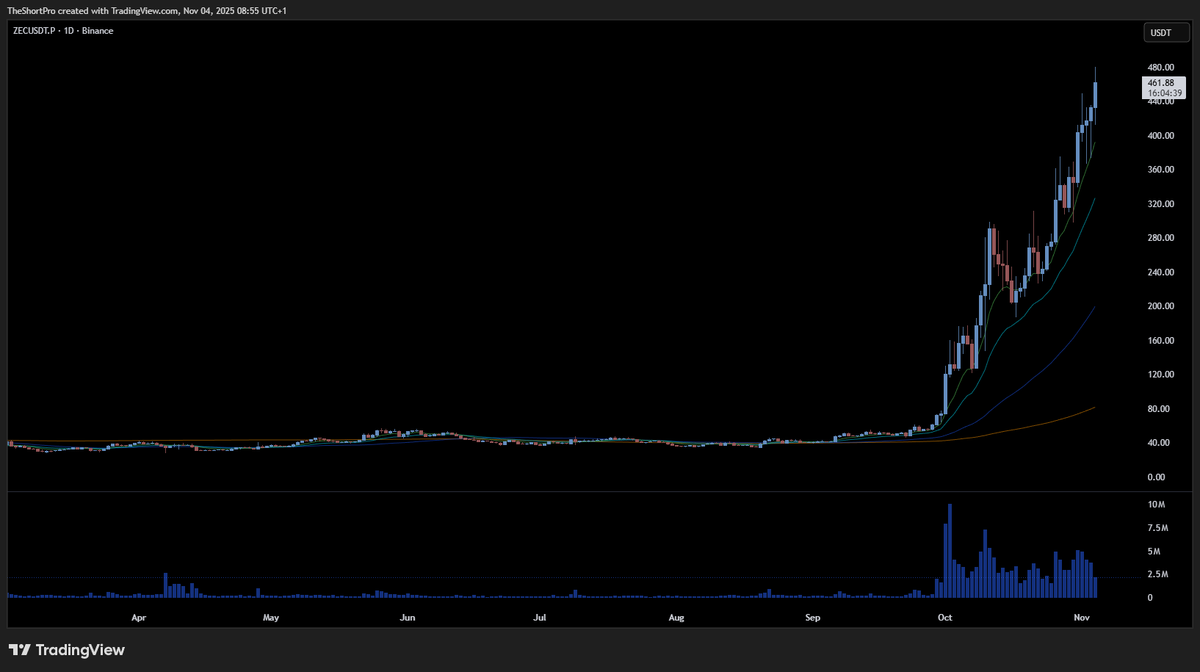
Before chasing profits, build an edge.
Without it, no strategy, no system, no luck will make you consistently profitable
English
Most traders don’t fail because of emotions.
They fail because they’re trading randomness and calling it strategy.
English