Gokul Rangarajan

4.3K posts

Gokul Rangarajan banner
Gokul Rangarajan

Gokul Rangarajan

@The_Product_VC

Founder at Pitchworks VC Studio Product Manager 2 unicorns | Ex-Freshworks, Keka, Bigbasket

Katılım Ekim 2012
1.1K Takip Edilen648 Takipçiler
Gokul Rangarajan retweetledi
Balaji
Balaji@balajis·
Towards the Solana Network State.
English
166
159
1.7K
219.3K
Gokul Rangarajan retweetledi
Balaji
Balaji@balajis·
Just to calibrate, tech unicorn founders are much rarer than pro athletes.
Balaji tweet media
English
176
285
4K
233K
Gokul Rangarajan retweetledi
a16z
a16z@a16z·
Balaji Srinivasan says every startup now needs a founding creator. Someone who speaks for the product before it ships. “The founding engineer is the how… The founding creator is the why.” @balajis
English
175
229
2K
714K
Gokul Rangarajan retweetledi
Shanaka Anslem Perera ⚡
Shanaka Anslem Perera ⚡@shanaka86·
OpenAI’s $500 Billion Valuation Has A 12-Person Auditor Problem The company building artificial general intelligence is audited by Fontanello, Duffield & Otake … a boutique firm with 12 employees designed for nonprofits. This matters because Michael Burry just exposed the structure: OpenAI reports $3.7 billion in 2024 revenue while Microsoft invests $13 billion, then OpenAI buys Azure compute from Microsoft, which purchases Nvidia chips, inflating both their revenues. IRS filings confirm the same small auditor through 2022 with no public upgrade since. The numbers tell the story. Nvidia’s 2025 earnings show 45% of sales going to three hyperscalers who are simultaneously OpenAI’s investors and customers. When you map the actual money flows, over 85% traces back through these closed loops. Strip away the circular transactions and organic end-user demand appears to be under 1% of the reported ecosystem. 98% of S&P 500 companies use Big Four auditors specifically because boutique firms lack capacity to detect fraud at scale. OpenAI converted to for-profit status in October 2025, bypassing Sarbanes-Oxley requirements entirely. No SEC oversight. No mandatory independent verification of revenue sources. Here’s what breaks: The AI sector now represents $10 trillion in market value built on $1.4 trillion in announced infrastructure spending. These commitments depend on revenue growth that may be accounting artifacts rather than genuine demand. If Q4 2025 earnings show Microsoft or Nvidia deriving more than 50% of growth from these circular arrangements, probability of systemic correction jumps to critical mass. A 20% demand shock cascades through network dependencies to generate 50% sector valuation collapse. This isn’t theory … it’s basic network mathematics applied to the documented ownership and transaction structures. Verify yourself: IRS Form 990 filings through 2022 list Fontanello explicitly at projects.propublica.org/nonprofits OpenAI’s trust portal confirms only SOC2 operational controls, not financial audit scope. No Big Four announcement exists in any public disclosure. The 2008 financial crisis happened because complex instruments hid circular risk. This is the same architecture in silicon. The difference is these companies are building the infrastructure that’s supposed to power the next century. When the auditor checking half-trillion-dollar valuations has twelve employees, either everyone else is wrong about audit requirements or we’re watching the setup for the largest market correction in technology history. The math doesn’t lie. The structure is documented. And nobody’s asking the obvious question until now.​​​​​​​​​​​​​​​​ Read the deep dive full article here! open.substack.com/pub/shanakaans…
Shanaka Anslem Perera ⚡ tweet media
English
100
587
2.3K
303.6K
Gokul Rangarajan retweetledi
Naval
Naval@naval·
In 1971, money changed from a natural system (gold) to a socialist system (fiat). Crypto is tech to replace socialist money with a free-market system. Market systems are inherently competitive and as tech evolves, new monies will continue to emerge to challenge existing ones.
English
819
1.7K
13.5K
1.7M
Gokul Rangarajan retweetledi
Balaji
Balaji@balajis·
After the trade war, China rerouted trade away from America towards other countries. The US actually got down[1] to 15% of Chinese exports, so China wasn’t fully dependent on the US market. Some would argue that’s a win/win — China just exports goods to other countries, and America builds up its homegrown manufacturing. Similarly, after the talent war, India is rerouting talent away from America and towards other countries. The US actually has only ~17% of the Indian diaspora[2], so Indians aren’t fully dependent on the US market. Some would also argue that’s a win/win — India just exports talent to other countries, and America builds up its homegrown talent. Where do they go? The #1 destination for Indian talent may shift to the UAE and the Middle East more generally, while the #2 could be Singapore. A global rerouting of talent flows.
Balaji tweet media
English
115
104
622
102K
Gokul Rangarajan retweetledi
Balaji
Balaji@balajis·
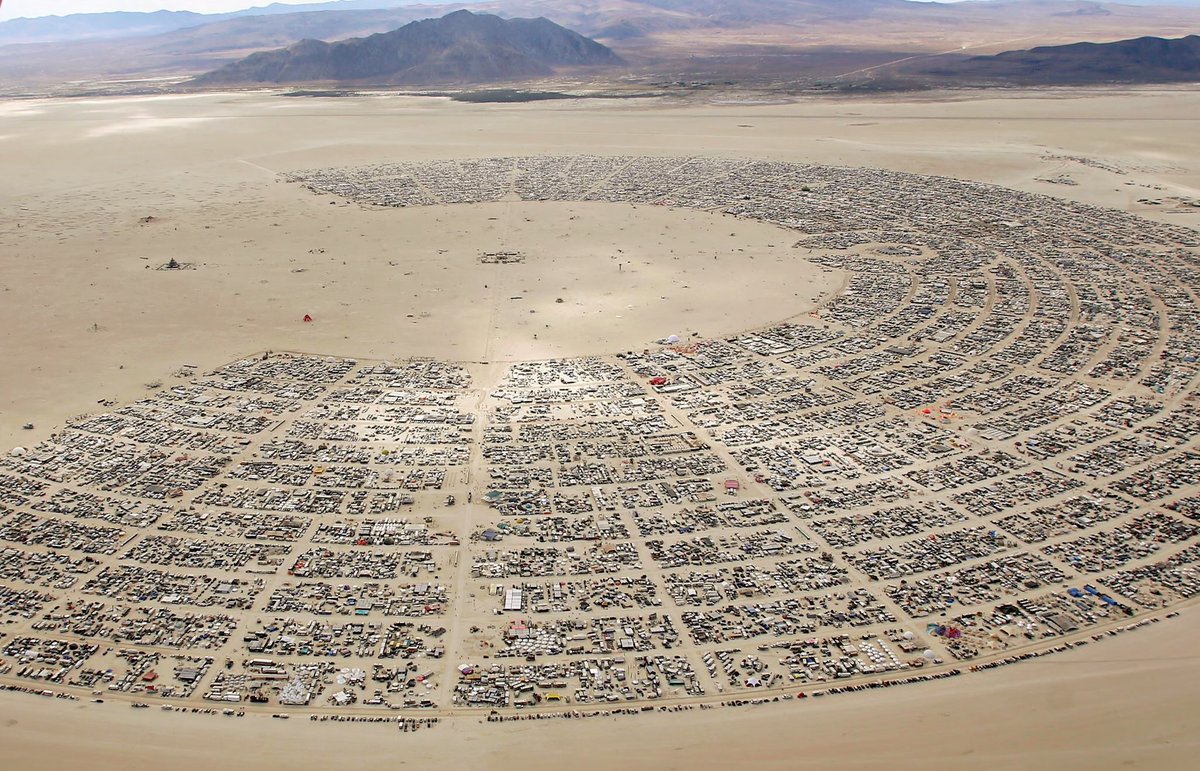
The Internet has completely transformed global markets. The UAE isn’t limited by its territory, and neither are countries like Singapore (or, nowadays, El Salvador).
Shonik@Shonik

@balajis There are limitations in these countries w.r.t the number of high paying jobs available and the general high cost of living in these countries inhibits people from moving unless they have a high paying job. How do you think these factors will affect the talent migration?

English
19
24
151
62.7K
Gokul Rangarajan retweetledi
Reads with Ravi
Reads with Ravi@readswithravi·
Reads with Ravi tweet media
ZXX
13
56
419
13.8K
Gokul Rangarajan retweetledi
Balaji
Balaji@balajis·
Socialists are verbal. Nationalists are visual. Capitalists are numerical.
Català
123
169
1.8K
100.3K
T.R
T.R@thename500·
The takeaway: Quantum computing won’t kill Bitcoin. It will force it to evolve — into the first quantum-secure asset that anchors the digital age. $23M per BTC by 2060 is not a meme. It’s a glimpse of what happens when scarcity meets quantum intelligence. 🚀 #BTC #BTC2060
English
1
0
1
49
T.R
T.R@thename500·
Perfect timing to buy the dip #BTC
T.R tweet media
English
5
0
0
49
Cliff Rhodes
Cliff Rhodes@cliffrhodes·
Oh, you mean the Chinese pulled entirely out of the Quantum Computer race? That doesn't make sense. But that is the only way that any single Quantum Computer stock in the entire U.S. will ever get "crushed". The game is on, and whoever wins will dominate. Quantum is not going away any time soon, not until something better comes along.
English
1
0
5
730
Common Sense Investor (CSI)
Common Sense Investor (CSI)@commonsenseplay·
BREAKING: $RGTI CEO on Yahoo Finance this morning: “Sales don’t matter for us.” “3–5 years for quantum advantage.” “7–9 years for fault-tolerant quantum computers.” The reason the CEO can be honest is he sold all of his shares back in May! Translation: the CEO is openly saying there will be no meaningful commercial revenue for the better part of a decade. Investors are pricing a revenue story around quantum advantage being here and now that literally doesn’t exist yet. This stock is going to get crushed.
English
105
117
921
379.9K
Gokul Rangarajan retweetledi
Haseeb >|<
Haseeb >|<@hosseeb·
One of the underappreciated secrets to winning in any new sector is: just stick around. If you just stick around long enough, the losers blow up early. Then the winners retire early. So eventually you win by just doing the work when nobody else can or wants to. When people ask me how we built Dragonfly to became one of the biggest VCs in crypto, this is mostly the answer. We didn’t start with a big brand or any obvious advantages. Few people in the crypto world knew who I was before Dragonfly. But we just kept doing the work. While others got too rich and retired, or just got bored or distracted, we kept doing the work. For 7 years. It’s kind of that simple. (This insight shamelessly stolen from @naval)
English
118
151
1.7K
195.7K