

Sue Bishop
4.8K posts
Sue Bishop
@Theq_16
Hockey playing pharmacist. Love the Chicago Blackhawks, Cubs, and horse racing.
Chicago, IL Katılım Aralık 2014
345 Takip Edilen207 Takipçiler

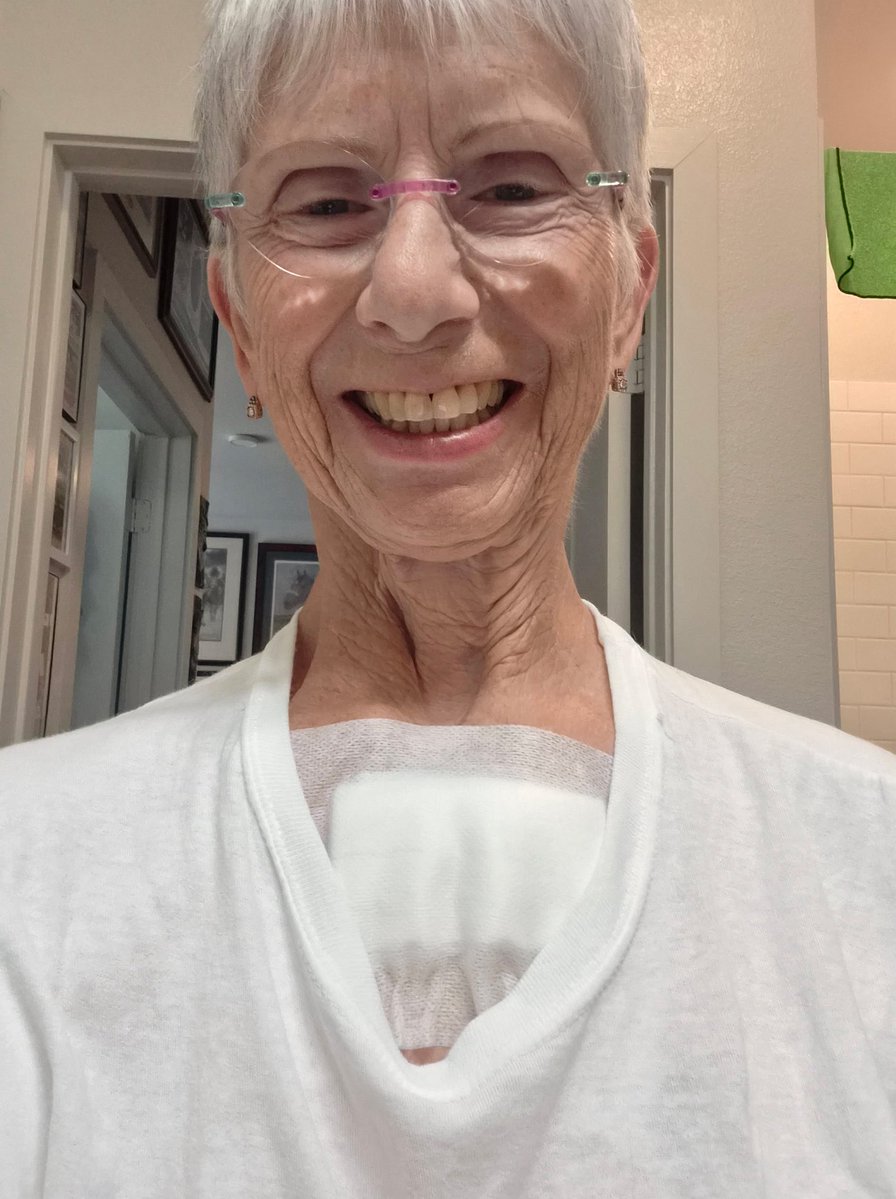
Update from @yvon1430 after her skin cancer outpatient surgery! Prayers continuing! “Hi, I am doing good. I still don't feel any discomfort. Have to be careful for 24 hours. No heavy lifting till I get stitches out in 2 weeks. Thank you so much and everyone for your prayers.🤗💖🤗💖🙏🙏”
English
Prayers Warriors, you are needed for @yvon1430 who will be having out patient skin cancer surgery on Thursday! Well wishes, prayers and thoughts are sent her and Maurice's way from our pasture! Please join us!
English
Found this fabulous video of Suki! Turn volume up to hear her sounds!
English


@LAB019 @GloriousAllianc When did they start running the Kentucky Derby on Turf?
English


Pixie had an abscess burst. We are unsure whether a gum or a bone. She is on watch for a week to make sure her appetite stays normal. So far, she’s eating and drinking perfectly. K sluiced her mouth with salt water several times before going back to Desert GAHQ. At her age, we want to keep her off antibiotics unless they are absolutely necessary. Prayers for Pixie’s infection to heal and for her appetite to remain normal.


English

What makes central KY a prime place for raising livestock? Limestone bedrock. Limestone comes from skeletal remains of fish that swam in a shallow sea that was the Midwest eons ago. Limestone is rich in calcium which is absorbed by the plants & consumed by the livestock.

English
Hackleton has become a connoisseur of apples, bananas and other fruit salads. He’ll dabble in berries and mangos too.


English
@GloriousAllianc Love Norteño music. Why do I suddenly want a Margarita?
English
Sound up on this video of me lunging on a line while a local Norteno band practices nearby. I love that music! @Theq_16
English
K would love to swim with a great white shark like that. Well, I can't argue with that... She rode me after all...
Nature Unedited@NatureUnedited
The largest great white shark ever recorded near the island of Oahu, Hawaii
English
@GloriousAllianc @DairyQueen No wonder why I saw so many people outside the Dairy Queen I passed earlier today. Wish I would have known.
English


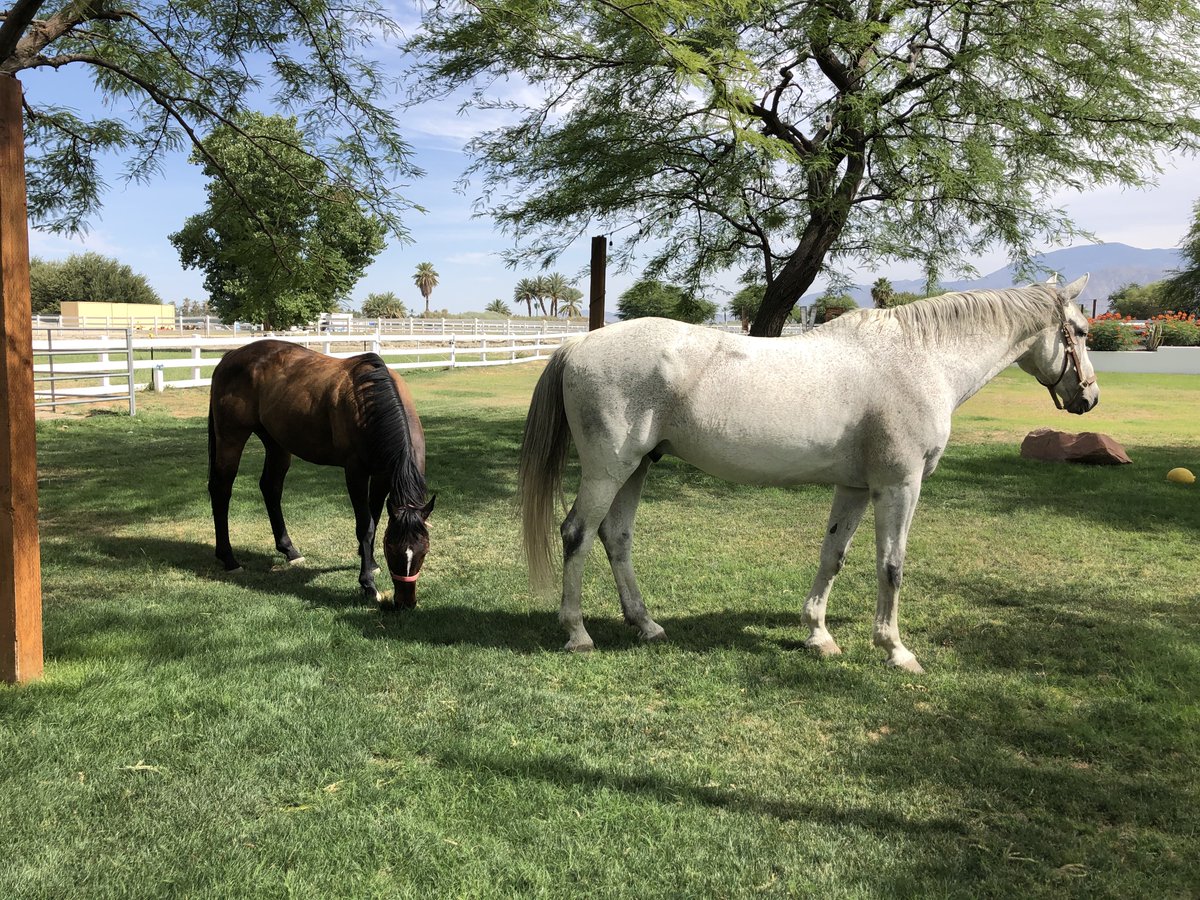
For those who asked, this photo shows the difference in size between Nileist and Surfer... If K turned her back with them this way, it'd be rough and tumble grabassing in no time.
English
@GloriousAllianc Just when you thought a foal couldn’t get any cuter.
English
Foal sheets and blankets have to be the most delightful fashion accoutrement ever.
高橋ファーム(次男)@t_f_2nd
元気な子馬🤭 心配する母馬😅 お母さんも疲れるね
English
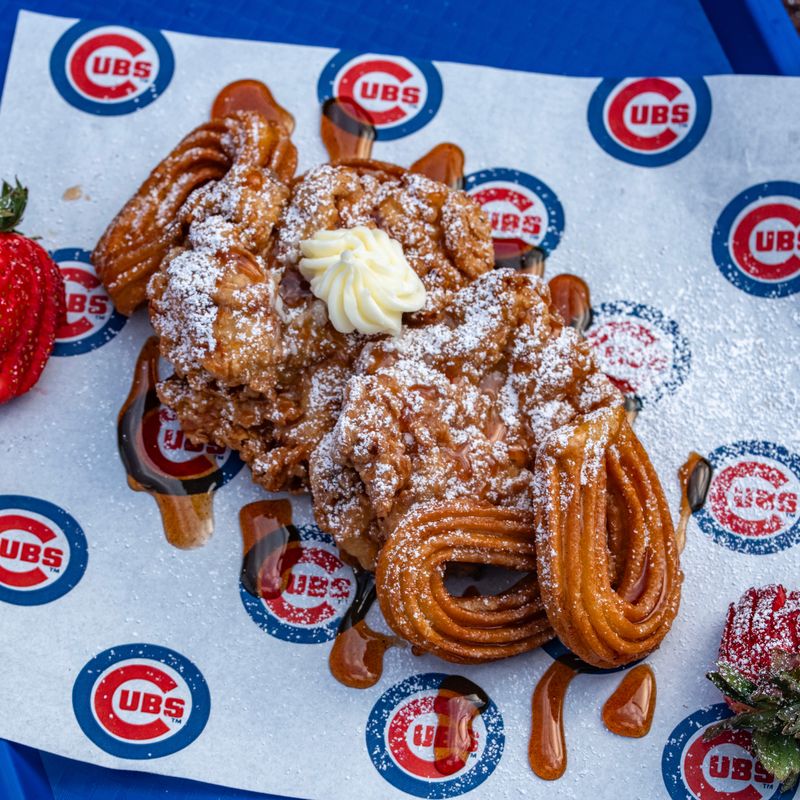
@GloriousAllianc You must come visit in the summer and we can try it together! Churros are one of my all time favorite desserts. This is an amazing twist on Chicken and waffles.
English
English

Here's your best new food item at an MLB ballpark this year: Chicken & Churros at Wrigley Field!
(Source: @LevyRestaurants)
English
Sue Bishop retweetledi
Recent conversations on social media about the future of horse racing and finding solutions for funding thoroughbred aftercare -- including discussion of the supposed role or responsibility of the United States Jockey Club with regard to these matters -- seem to have largely missed the mark. Hyperbolic, sometimes poorly informed chatter is not conducive to effecting positive structural changes in the horse racing industry, much less achieving any improvements in the welfare of the thoroughbred horses who make the industry possible in the first place. While some may find it more entertaining to promote division, acrimony and ad hominem attacks on prominent personalities and institutions in the horse racing industry, that is no way to build consensus, and certainly no way to actually accomplish what most informed stakeholders agree are much needed changes in all aspects of horse racing.
1. Providing Quality Lifetime Care For Thoroughbred Horses is Expensive, as is the Sport Itself. If You Can't Afford it, Get Out of the Game. Stop Making Innocent Horses Pay for Your Misguided Social Aspirations or Delusions of Grandeur.
A recent analysis by Mareworthy Charities, a 501(c)3 charity thoroughbred rescue located in Georgetown Kentucky, indicates that some 470,000 to 540,000 thoroughbreds from the Nation's 2000-2025 foal crops may still be alive today, of which nearly 260,000 may represent mares, with the balance of some 210,000-280,000 horses representing male horses (either geldings or stallions). Assuming an average unisex life expectancy of 25 years from birth, there is an indication that roughly 37.5% of those horses are between the ages of 5-15, with an average per horse life expectancy of 15 years, and 51% of those horses are aged 16 yrs and older, with an average per horse life expectancy of 9 years. Another major assumption is that only about 30% of horses still alive actually need aftercare assistance, the balance are already thankfully in good hands.
The bottom line – using standard actuarial mortality factors, the cost of money, inflation, etc. -- the total present value of cost of providing quality care for these horses for their lifetime is estimated to be well in excess of US$6 Billion Dollars. No discussion about thoroughbred aftercare to date has effectively dealt with or proposed any solution to dealing with this level of unfunded liability -- which makes talk about thoroughbred aftercare funding levels of $25-35 million a year, based on increased thoroughbred registration fees or 'taxes' on breeding or auction sales, nothing more than a drop in the bucket, when compared to actual needs.
2. Decisions About Thoroughbred Aftercare and the Welfare of Horses Should Be Made By Hands-On Horse People, Not Management Consultants, Thought Leaders, Disengaged Owners, or Well-Intentioned But Unqualified Social Activists.
Just as some level of actual competence and experience is required to run a successful business, write articles, be a podcaster or act as an influencer, so too is actual competence and experience in the hands-on care and handling of thoroughbred horses required in order to make decisions about how to provide high quality care for off-the-track thoroughbreds. It is notable that far too few hard-working people from this group appear to have been involved in these on-line discussions -- possibly because they're actually too busy caring for horses on a daily basis, and aren't interested, or too tired at the end of an exhausting day to participate in political chatter that isn't calculated to achieve anything practical anytime soon in the real world.
3. Horse Racing Venues Built Long Ago to Support a Lifestyle That No longer Exists Are Now Located in the Wrong Places and Do Not Provide an Optimal Environment for Today's Thoroughbred Race Horses.
Contributing to the thoroughbred aftercare funding problem is an often overlooked fact that affects both thoroughbred aftercare and the decline in public interest in horse racing as a whole -- namely that the oldest, most well-known U.S. racetracks are located very close to large urban centers, in order to allow average Americans who depended on public transport back in the 1930's to conveniently access a track and wager on races. In those times, of course, all legal wagering on horse races occurred at the track, not via the OTBs and cell phone-based ADWs which facilitate the bulk of wagering activity today.
There is no practical reason to locate race tracks on high cost, urban-adjacent real estate today, where space considerations dictate marginal accommodations for high energy thoroughbred race horses, lacking any form of turnout and the opportunity for low intensity exercise and freedom of movement that are essential to a horse's sense of well-being. Moreover, long term private ownership of such facilities is constantly subject to the draw of much more lucrative private mixed use development alternatives – as was already the case with Hollywood Park and Golden Gate Fields in California, and may in the future be the case with Gulfstream and Santa Anita. Because of this, a significant and increasing number of thoroughbred race horses don't have any permanent, farm-based home during their racing career, but are essentially destined to live out their lives while on track in small stalls, denied the benefits of grass pasture and freedom of movement that is such a defining aspect of a thoroughbred horse's genetic destiny.
This is just another instance of the horse racing industry failing to adapt to significant and obviously impactful cultural changes, mistakenly focusing instead, whether intentionally or by default, on preserving the antiquated artifacts of its historical legacy despite the obvious destructive effects of those obsolete practices on enhancing the sport's popular appeal . Whether it's antiquated tote systems, unable to process CAW betting activity fast enough from displaying radical odds shifts well after a race's start, run-down physical facilities, or the lack of innovations in wagering options or availability of handicapping data that might attract a younger, video game-oriented group of bettors to the game. In today's world, the need to embrace change is no longer optional, it is a critical requirement for survival. The blame for this rests with the horse racing industry as a whole, not any particular institution or individual. To suggest otherwise is simply not appropriate.
4. Requiring Breeders of Thoroughbred Horses to Take Management Responsibility for their Lifetime Care is the Only Credible and Ethical Way to Enforce Welfare Standards Over The Long Term.
Many people seemingly lose sight of the fact that thoroughbred horses are intentionally bred for racing, they do not exist in the wild. The responsibility for their lives, just as in the case of a human parent's child, is in the first instance, the responsibility of the breeder. The difference between a human child and a horse is, of course, that a human child is expected under normal circumstances to eventually become self-supporting and no longer dependent on its parents, while a horse, remains dependent on his or her human owner, the identity of which can of course, change over time, as a horse, unlike a human, can be sold as property from one owner to the next.
That is why a credible and ethical method for providing lifetime care therefore requires the breeder to be the primary guarantor of the thoroughbred's lifetime care for so long as the breeder owns the horse, and to insure the financial standing and credit-worthiness of any person or firm to whom the horse might be transferred during its lifetime, with all parties being held jointly and severally liable by contract to provide the requisite cost of care during the horse's lifetime. If a person or firm cannot demonstrate that financial standing, they cannot purchase the horse, and the owner cannot sell the horse to such a person, and must remain on the hook until they can. No solution for lifetime care that does not take this reality into account in one way or another is simply not credible, as is the status quo, of course, which is infinitely worse. The goal here is not to subject the breeder to financial liability for a horse who gets into trouble after the horse is sold, the goal is to create a contractual framework which makes it possible to enforce aftercare obligations of the owner of a horse at the time it gets into trouble, with the use of a legal representative or trustee that acts as the legal parent of all the horses throughout their lifetime to ensure their care obligations are fulfilled.
The principal financial benefit of a farm ownership requirement is that represents a form of dedicated in-kind investment in lifecare that is more likely to deliver quality results than throwing cash at ad hoccaregivers. The same is often said about the benefits of family-centric or home-based care for elderly humans, as opposed to throwing out-of-pocket cash at for-profit care alternatives - which as anyone who has followed recent medicare and government health program fraud disclosures knows has resulted in less than satisfactory outcomes.
5 .Sending Horses Back to the Farm is the Best Way To Provide the Financial and Operational Resources to Insure That Every Thoroughbred Race Horse Has A Home When Their Racing Career is Over.
One way, perhaps even the only way of providing a comprehensive solution to providing lifetime care is to insure that no thoroughbred horses are bred unless the breeder or any subsequent owner in the chain title owns and operates a farm which can provide a permanent home for the horse which is capable of providing high quality care and located in an area which is not subject to endemic climactic hazards that create real survival risks for the affected horses. Prospective breeders or owners of such small numbers of horses that would make farm ownership impractical or economically inefficient could join together with other such breeders or owners and acquire a farm in common. Individual owners or breeders could also purchase shares or interests in existing farms affording one or more horses a permanent home, much like a condominium or cooperative, and solve the problem that way. The incentive for doing any of this would be that unless compliance with such a scheme were demonstrated, the horse or horses involved could not be entered into the relevant stud book and hence could not be entered to race.
For those who would say that such a requirement might exclude half of the present number of owners or breeders because they lack the resources or inclination to adhere to these standards, the response should be, so be it, then the racing industry will be smaller, but its quality and ethical standards will be higher. It isn’t called 'the sport of Kings' for nothing.

English