Little Sun
82.7K posts

Little Sun
@ThreeItalians
Lover of classic films, music, languages, literature, cooking, arts and theatre , traveling and photography. I’m pro choice and anti maga. 🌊🌊🌊 #GenX
Katılım Ağustos 2018
313 Takip Edilen1.5K Takipçiler
Little Sun retweetledi

🚨 Absolute madness in the US right now as the Uruguay national team gets pulled to the side of the road and treated like straight-up suspects.
They literally just landed for the World Cup and security is already ripping their luggage open on the tarmac with sniffer dogs everywhere
Qatar and Russia hosted without this level of paranoia but the "land of the free" is handing out pure humiliation to Global South athletes before a single match is even played, the double standards are screaming.
English
Little Sun retweetledi

Hi @realDonaldTrump, we're at Walter Reed!
You don't remember that place?
No wonder they give you that test you brag about—it's for 𝙙𝙚𝙢𝙚𝙣𝙩𝙞𝙖.
Anyway, you're never going to forget me—especially after I get to Congress.
georgeconwayforcongress.com
English
Little Sun retweetledi

Today, my wife & I joined Donald Trump’s hit list. He has directed his Department of Justice to investigate us. They have not found a crime - they are simply trying to find one.
He isn't coming after me because of mean tweets, but because I am considering running for President.
He hates that I consistently call him out. He is simply the most corrupt President in American history.
We have nothing to hide.
Mr. President, come after me. I am not going anywhere.
The country is watching.
English
Little Sun retweetledi

Barack and I were so honored to have @AkunyiliCrosby create our portrait for the Obama Presidential Center. Her artistic brilliance shines through — and the way she infused such life and joy into the piece is truly extraordinary. We love it, and we think everyone who visits the Center will too!
English
Little Sun retweetledi

🔥 @CMPunk: “No, I wouldn’t go to the White House — If David Duke invites me over for tacos I’m not going. A racist is a racist. I call it like I see it.” x.com/SI_MMA/status/…
English
Little Sun retweetledi

Everyone knows John Hancock for his giant signature. Almost nobody knows the actual man, and his real life was wilder than the legend.
He was an orphan. His father died when he was 7, and he was taken in by his uncle Thomas, the richest merchant in Boston. John was groomed to run the family shipping empire, inherited the whole thing in 1764, and became one of the wealthiest men in all of America before most people his age owned anything at all.
He was also, by the crown's definition, a criminal. In 1768 the British seized his ship Liberty for smuggling, and Boston rioted in his defense. The man we now put on patriotic posters was, to London, a wealthy smuggler dodging customs.
He didn't just resent the crown quietly. He bankrolled resistance and became such a thorn that the British wanted him gone. On the night of April 18, 1775, when Paul Revere made his famous ride, the warning was not vague. He rode to Lexington specifically to warn two men that the British were coming to arrest them: Samuel Adams and John Hancock. The opening night of the Revolutionary War was, in part, a manhunt for Hancock.
Weeks later, General Gage offered a pardon to every rebel in Massachusetts who would lay down arms, with exactly two exceptions: Samuel Adams and John Hancock. Being left off that list was essentially a public death warrant.
Here is the part nobody tells you. As president of the Continental Congress, Hancock actually wanted to be named commander of the army himself. He sat in the chair and watched as the Adams cousins instead rose to nominate George Washington. He was reportedly stung by it. Then he did the thing most people never manage. He swallowed his pride, signed Washington's commission, and spent the next eight years pouring his personal fortune into the war he could not lead.
So when Hancock signed the Declaration of Independence first, big and bold across the top, it was not a cute flourish. He was already a hunted man with a price on his head, putting his name, his fortune, and his neck on the line before anyone else dared lift a pen.
And that famous line about signing large "so King George can read it without his spectacles"? He almost certainly never said it. It is a myth stitched onto him generations later. The real story is better. He just signed first, as president, knowing exactly what it could cost him.
The flamboyance was real, though. He lived in princely splendor in a granite mansion on Beacon Hill overlooking the harbor, with imported mahogany furniture and apricot trees shipped from Spain. In 1775 he married Dorothy Quincy, and the two became one of Massachusetts' first political celebrity couples, famous for endless lavish dinners that slowly drained his fortune.
He went on to become the first Governor of Massachusetts, serving roughly eleven years, and died in office in 1793. His funeral was one of the grandest ever given to an American up to that point. Samuel Adams declared the day a state holiday.
The orphaned smuggler with a target on his back had become the face of American defiance.
That is why, 250 years later, we still say "put your John Hancock right here."

English
Little Sun retweetledi

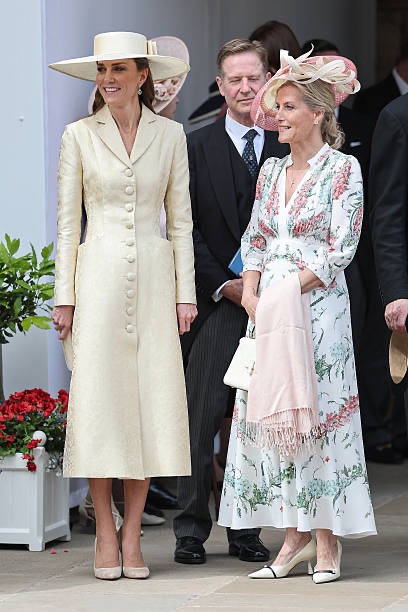
Today is Garter Day, another day of pomp and ceremony 💖💖💖💖💖
Garter Day is an annual, highly traditional royal ceremony held every June at Windsor Castle. It celebrates the Order of the Garter, the oldest and most senior Order of Chivalry in Britain, founded by King Edward
III in 1348.
The Origin of the Order
King Edward III founded the Order of the Garter in 1348, directly inspired by Arthurian legends and the chivalric ideals of the Knights of the Round Table.
The Famous Legend
According to tradition, Edward III was dancing with the Countess of Salisbury at a court gala when her garter slipped to the floor. As onlookers snickered, the King chivalrously picked it up and tied it to his own leg. He rebuked the crowd with the phrase "Honi soit qui mal y pense" (Shame on him who thinks evil of it), which remains the motto of the Order.
The Symbol
The garter, made of dark blue velvet and edged in gold, is worn below the left knee by male members (and on the left arm by female members).
The Evolution of the Ceremony
While the Order itself is nearly 700 years old, the modern "Garter Day" as a major public ceremonial event is a more recent evolution.
Medieval Roots
Originally, the ceremonies were private affairs held in the castle rather than the elaborate public spectacles seen today.
Revival
In the early 20th century, King Edward VII revived the grand annual service and procession, moving the location permanently to St George's Chapel.
Modern Tradition
Today, Garter Day takes place every June. The Monarch and the Companions of the Order gather at Windsor Castle dressed in vivid blue velvet robes, white ruffs, and plumed Tudor-style velvet hats. They process from the State Apartments down into the Lower Ward for the religious service, where new members are officially invested.
Membership
Historically limited to male medieval knights and aristocracy, the criteria have changed significantly over the centuries.
In 1987, women were made official Royal Ladies and Ladies of the Garter.
Today, membership is strictly limited to 24 Knight or Lady Companions, alongside Royal Knights (like the Monarch) and supernumerary (extra) members.
Appointments are entirely at the Monarch’s discretion, awarded in recognition of major public service or significant contributions to national life, without needing to consult government ministers.
The event itself involves several key activities and traditions:
The Procession
The highlight of the day is a grand procession through the precincts of Windsor Castle. The Monarch and the Companions of the Order walk from the castle to St George's Chapel.
Attire
Participants dress in elaborate ceremonial regalia, which includes:
The Mantle: A sweeping dark blue velvet robe.
The Hat: A black velvet Tudor-style bonnet topped with a plume of ostrich and heron feathers.
The Collar: A heavy, pure-gold chain worn over the shoulders.
The Service
Once the procession reaches St George's Chapel, an hour-long service is held for the Order, which serves as the spiritual home of the chivalric group.
New Appointments
While any new Knights and Ladies of the Order are officially announced in April (on St. George's Day), they are formally invested with their insignia by the King in the Throne Room at Windsor Castle just before the Garter Day procession.


English
Little Sun retweetledi

When Barbra Streisand joins Louis Armstrong in “Hello, Dolly!” (1969), you're watching a remarkable piece of film history: Armstrong’s final screen appearance, Gene Kelly’s last film as director, and choreography by Michael Kidd.
Streisand’s gold-beaded Irene Sharaff gown originally weighed 40 pounds, cost $8,000, and had a 2.5-foot train that caused so many rehearsal tumbles - including Streisand tripping twice and other dancers stumbling over it - that it was eventually removed before filming.
#HelloDolly #BarbraStreisand #LouisArmstrong
English
Little Sun retweetledi

"THE LAWS OF HUMANITY"
In 1940, in the midst of World War II, Italian submarine commander Salvatore Todaro made a decision that is still regarded as one of the most humane acts in the history of naval warfare.
While on combat patrol in the Atlantic Ocean, his submarine, Comandante Cappellini, sank the Belgian merchant ship Kabalo.
According to the laws of war, everything should have ended there. The submarine was expected to dive immediately and leave the area. Remaining on the surface meant risking the lives of the crew and jeopardizing the entire mission.
But Todaro saw something else. Among the wreckage in the cold ocean were people fighting for their lives.
Sailors. Shipwreck survivors. Men with little chance of being rescued in time.
He did what no one expected. He ordered the submarine to surface and take as many survivors aboard as possible. There was not enough room for everyone, so some had to remain in a lifeboat. Then Todaro went even further: he ordered the lifeboat to be tied to the submarine and began towing it toward a safe shore.
For several days, the submarine traveled almost defenseless — slowly, on the surface, constantly risking detection and attack. Crew members reminded their commander that he was endangering the entire operation for the sake of men who had been the enemy only hours earlier.
Todaro's reply became legendary:
"They are not enemies now. They are sailors."
After delivering the survivors safely and handing them over to local authorities, the submarine resumed its military mission.
More than 80 years have passed. Countries, borders, and wars have changed.
Yet this story reminds us of something important: even in the darkest times, a person remains human. Sometimes a single act speaks of true greatness far more than any victory on the battlefield.
For there are the laws of war.
And then there are the laws of humanity.
And it is those that are remembered the longest.

English

Little Sun retweetledi

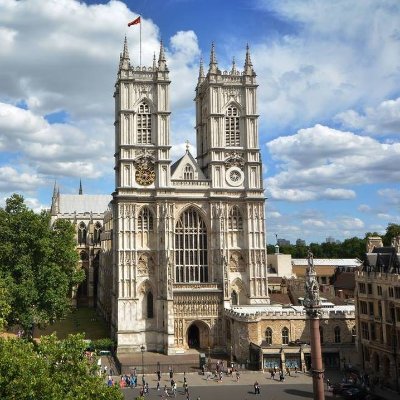
Today we remember Stephen Hawking, whose ashes were interred in the Abbey #onthisday in 2018.
A renowned physicist, his best known work is 'A brief history of time.'
His memorial lies next to the graves of Sir Isaac Newton and Charles Darwin, and his Caithness slate gravestone is inscribed with his most famous equation, describing the entropy of a black hole.

English
Little Sun retweetledi

Mit 51 Jahren, zweifach geschieden und völlig mit dem Gedanken an die Ehe abgeschlossen, begegnete Audrey Hepburn Robert Wolders.
Er war 43. Witwer. Und er empfand genauso.
Keine Zeremonie. Keine Gelübde. Keine Ankündigung. Nur zwei Menschen, die beide geliebt und verloren hatten und irgendwie zu demselben stillen Schluss gekommen waren – dass sie einfach einander wollten.
Sie schufen etwas, das die Welt selten feiert, weil es nicht in die übliche Geschichte passt. Keine Hochzeitsfotos. Keine Schlagzeilen zum Jahrestag. Nur 13 Jahre ganz normaler Tage, die durch den Menschen, mit dem man sie teilt, außergewöhnlich werden.
Robert begleitete sie auf ihren UNICEF-Missionen in einige der ärmsten Regionen der Welt – Äthiopien, Sudan, El Salvador – und sah die Frau, die er liebte, im Staub neben hungernden Kindern knien und sie mit denselben Händen halten, die einst Givenchy auf den größten Bühnen der Welt getragen hatten.
Er sah sie in ihrer Gesamtheit. Die Ikone und die Frau dahinter.
Als 1992 der Krebs kam, wich er ihr nicht von der Seite.
Er begleitete sie zu jedem Arzttermin, zu jeder Behandlung, zu jedem Tag, den die Welt mitbekam und zu jedem, den niemand mitbekam. Er bereitete ihr das Essen zu. Er hielt ihre Hand. Er blieb einfach da – mit einer unaufdringlichen, aber unerschütterlichen Beständigkeit.
Audrey Hepburn starb am 20. Januar 1993 in seinen Armen.
Sie war 63 Jahre alt.
Robert heiratete nicht wieder. 25 Jahre lang lebte er zurückgezogen, bewahrte ihr Andenken und sprach mit derselben Wärme von ihr, die er immer hatte. Wenn ihn Interviewer nach ihr fragten, sprach er nicht in der Vergangenheitsform, wie man es tut, wenn etwas abgeschlossen ist.
Er sprach über sie, wie man über jemanden spricht, der noch da ist.
Als Robert Wolders 2018 starb, war sie ihm immer noch nahe.
Ihre Liebe hatte keine Bescheinigung. Sie brauchte keine. Sie bewies sich nicht in einem einzigen öffentlichen Moment, sondern in tausend privaten – in der Geduld, in der Präsenz, in der täglichen Entscheidung zu bleiben.
*Manche Lieben brauchen keine Zeremonie, um echt zu sein.*
Sie beweisen sich in den stillen Entscheidungen, die jeden Tag getroffen werden – da zu sein, zu bleiben, immer wieder denselben Menschen zu wählen, selbst wenn die Welt nicht mehr zuschaut.
Geschichte ClassicCinema legends goldenera hollywood

Deutsch
Little Sun retweetledi

On this day in 1940, German troops marched into Paris and not a single shot was fired to stop them.
Just six weeks earlier, France had one of the largest and most respected armies on earth. Newspapers across the world assumed any war with Germany would grind on for years, the way the last one had. Then in May the Germans attacked through the Ardennes forest, a region the French high command had dismissed as too dense for tanks. Within days the front had collapsed. By early June, German columns were racing across northern France faster than the French could redraw their maps.
The French government fled the capital for Bordeaux. The military governor of Paris faced an impossible choice. He could defend the city street by street and watch it be shelled, bombed, and burned into rubble like Warsaw had been the year before, or he could declare Paris an "open city" and surrender it intact. He chose to spare the city. No defense would be mounted.
By then Paris was already emptying. Somewhere between one and two million people had packed whatever they could carry and joined a desperate flood south. Cars ran out of gas and were abandoned in the road. Families pushed prams and carts loaded with mattresses and birdcages. German planes strafed the refugee columns. It was one of the largest civilian exoduses Europe had ever seen, and it became known simply as the Exodus.
The Parisians who stayed woke on June 14 to an eerie silence, then the sound of boots. German soldiers poured in and immediately began acting like tourists. They photographed each other at the Arc de Triomphe and on the steps of Sacre Coeur. A massive swastika banner was hung on the Eiffel Tower, though the wind kept tearing it apart and a smaller one had to be raised in its place. When German soldiers tried to take the elevator up the tower, they found the French had cut the cables. If they wanted the view from the top, they would have to climb.
Loudspeakers announced a curfew. German military bands played in the squares. Officers settled into the best hotels and restaurants. And eight days later, Hitler forced France to sign its surrender in the very same railway carriage near Compiegne where Germany had signed its own humiliating armistice in 1918. He had the carriage dragged out of its museum for the occasion, sat briefly in the same seat the French commander had used to dictate terms in 1918, then had the site destroyed.
The fall of a great power, the nation of Napoleon, took six weeks. It remains one of the most stunning collapses in the history of warfare, and it happened on this day.

English
Little Sun retweetledi