
Tim(ber) Gokhman

4.4K posts

Tim(ber) Gokhman banner
Tim(ber) Gokhman

Tim(ber) Gokhman

@TimGokhman

Developed 🌎’s tallest #masstimber #ascentmke | MD @newlandMKE | CEO @timberpartners | @YPO 🇺🇦 🇮🇱

Milwaukee Katılım Mart 2013
472 Takip Edilen2.3K Takipçiler
Sabitlenmiş Tweet
Tim(ber) Gokhman
Tim(ber) Gokhman@TimGokhman·
I’ve assembled my 24-post #masstimber campaign into a single thread. Enjoy.
Tim(ber) Gokhman@TimGokhman

Inspired by the likes of @moseskagan, @DallasAptGP, @bobbyfijan and others in the #REtwit community, I’m going to focus on sharing about #masstimber. The goal is a post every day for the next 30 days. Let’s get started with a non-obvious one: logistics. Unlike concrete, which is almost always sourced and mixed locally, mass timber is only manufactured in a handful of geographies across North America. That means limitations on panel size, and costs with oversized panels, if trucking the material. If you’re shipping it (like we did, from Austria), then it’s limited by container size. The panel sizes impact design, and construction schedules, because larger panels go faster. It’s something we don’t need to think through in concrete construction.

English
5
3
48
19.1K
Tim(ber) Gokhman
Tim(ber) Gokhman@TimGokhman·
Amazing to see the Pacers players coming back to the hotel after the game with Avli restaurant bags… in which Giannis is an investor/owner. That’s class.
Tim(ber) Gokhman tweet media
English
1
0
13
1.3K
Eli Lever
Eli Lever@aussieflya·
@TimGokhman This is probably the most misunderstood part of development... How deals are capitalized and what makes most projects a go or no go...
English
1
0
1
160
Tim(ber) Gokhman
Tim(ber) Gokhman@TimGokhman·
A comment on an article about workforce housing. Those “crooks” are often pension funds - teachers, firefighters, public employees, etc - they represent 30 to 40% of all institutional real estate equity. So, to fix housing, email these people and tell them to live on less.
Tim(ber) Gokhman tweet media
English
3
0
9
1.1K
Tim(ber) Gokhman
Tim(ber) Gokhman@TimGokhman·
#comment-1659878" target="_blank" rel="nofollow noopener">urbanmilwaukee.com/2025/04/15/thr…
ZXX
0
0
3
212
Tim(ber) Gokhman
Tim(ber) Gokhman@TimGokhman·
Roughly 30% of my husband duties are telling my wife when the cooktop is too hot, and when her coffee is getting cold.
English
0
0
4
306
Tim(ber) Gokhman
Tim(ber) Gokhman@TimGokhman·
Your theories work well - in 2018. They don’t work today. Have you ever done ground up development? Madison, with median incomes 20% higher than MKE, has 42% of its population rent burdened. Rents are up 30% in 2.5 years. Whereas small govt Texas signs 99 year leases abating taxes to build affordable housing. Please. Stop.
English
0
0
0
51
Ross Leinweber
Ross Leinweber@BoldCoastCap·
You describe TIF as a binary calculation. It’s much more of a philosophical spectrum of how involved in housing construction a municipality should be as a whole. This is no different than education, transportation, etc. Culturally, I believe less government involvement in life is better. That sentiment is contrary to the mindset in MKE. And for standard development projects, I just don’t see TIF as a priority for the city to take on. That might mean building comes at a slower pace and certain types of ROI institutional guys can’t make the numbers work in the near term. But if the decision making and work across the city is solid, the prospects for the city will improve and private housing investment will follow. Is growth slow in Milwaukee slow because city leaders haven’t embraced TIF development for workforce housing or is it because the housing Authority, MPS, the HOP and the City Attorney under Spencer were train wrecks in management? I would be much more interested in slimming down housing code friction on renovation of existing buildings. That in my mind aligns with the opportunities currently in the market and reduces govt involvement as a side benefit.
English
1
0
0
66
Tim(ber) Gokhman
Tim(ber) Gokhman@TimGokhman·
Up until 11 pm, drafting talking points for an upcoming Milwaukee-Madison thought leadership trip with @Ian_Mke It’s been nearly 2 years of advocacy for a comprehensive workforce housing program in Milwaukee. Still no result. This is a big reason why housing is unaffordable.
English
1
0
9
542
Tim(ber) Gokhman retweetledi
Bill Ackman
Bill Ackman@BillAckman·
Worth a few minutes for those who have questioned the @realDonaldTrump administration’s recent deportation of Mahmoud Khalil.
Mark Goldfeder@MarkGoldfeder

On with the renowned @DrPhil last night to discuss the Khalil case, but first I had to set the record straight after the lawyer from CAIR straight up lied about a number of important facts and legal concepts. The difference between his "facts" and mine? Mine have citations.

English
282
528
3.1K
669.9K
Tim(ber) Gokhman
Tim(ber) Gokhman@TimGokhman·
Again - you are simply incorrect. You are not “tethering” taxes - they don’t exist without the development. So you’re comparing apples and phantoms. The fact that you believe - with no math whatsoever- that if there’s a demand it’ll “somehow” get built makes you part of the problem. I really am sorry to make it seem personal - it isn’t - but you write your opinions as fact, and they are empirically incorrect.
English
1
0
0
50
Ross Leinweber
Ross Leinweber@BoldCoastCap·
TIFs are a choice to tether taxes, and that tether has a great magnetic effect to restricting tax dollars to a particular area of govt (housing) and a particular geo within the municipality. For a game changing development like the one in PW, sure form a TIF. For distressed areas where no private dollars will go, sure. But that is not what’s going on in the industry…developers are using them on everyday projects binding munis against one another. If housing is in demand, private and speculative dollars will follow. That’s the nature of greed. Your assertion is that housing is the bottleneck to growth in MKE. I simply disagree with that theory. And as I suggested, even if you are right and it is the case, moving the needle on poverty via salaries - earned income is a lot more efficient way to make housing more affordable.
English
1
0
0
51
Ross Leinweber
Ross Leinweber@BoldCoastCap·
You continue to bang the drum on subsidies for RE development, derisking your/others speculative activity. Why should the public underwrite your financing? RE is a speculative activity. Change your timeframe, change the composition/type of investors, increase your geo concentration on high conviction bets, grow slower organically. A person’s capacity to earn an income is the most sensitive/leveraging factor that can propel ability to pay for whatever available housing exists, will be produced.
English
2
0
0
59
Tim(ber) Gokhman
Tim(ber) Gokhman@TimGokhman·
@BoldCoastCap @Ian_Mke Ross, you’re killing me. I can’t reduce poverty - i’m pretty sure you know that. I have designed a no-cost solution for the city to increase workforce housing. Nothing gets done if we don’t focus on the low hanging fruit.
English
1
0
1
69
Ross Leinweber
Ross Leinweber@BoldCoastCap·
Two vectors of unafforability. Supply of housing - Percent poverty. Focus on reducing the second vector. Reduction in poverty has a direct effect, also a derivative effect in attracting more private capital for housing construction. Reduces need for subsidy by govt. indexmundi.com/facts/united-s…
English
2
0
1
87
Tim(ber) Gokhman
Tim(ber) Gokhman@TimGokhman·
It's the EXACT same thing with rental housing. Good ideas and intentions litter the road to hell. It usually costs considerably more to build an affordable unit than a market rate unit, wasting taxpayer dollars and reducing the # of affordable units built due to regulation.
Baptiste@BaptisteVicini

Jon Stewart just went viral for reasons no one could believe. On his weekly podcast, he finally realized "Elon was right" about govt corruption. But that was just the beginning. Here's the moment that left him (literally) speechless: 🧵

English
0
0
6
800
Tim(ber) Gokhman
Tim(ber) Gokhman@TimGokhman·
OK #retwit - let's deliver some substance. I'll soon be moderating a panel at a multifamily symposium with a CEO of a major CRE sales/financing firm, head of equity for a large CRE investment bank, and a VP of a national developer. The panel will focus on what the next multifamily real estate cycle could look like. From 2011-2020, we had low interest rates and a ton of production. The last 5 years have been broken by COVID, construction costs and interest rates. Homeowners with low-interest-rate loans are frozen in place. And now, the tariffs. There are certainly investment opportunities in buying existing product, and sometimes updating those buildings to charge higher rents, but at some point, the market will want new. How could that work? What happens to affordability? What questions would you want answered? I’ll update afterwards with main takeaways.
English
3
0
1
689
Tim(ber) Gokhman
Tim(ber) Gokhman@TimGokhman·
@BoldCoastCap Floor plate (depth, core efficiency, window lines) and basis (cost of the shell - has to basically be land cost). Office is usually overparked compared to resi so that’s rarely an issue. Historic tax credits help. Otherwise likely requires TIF. And sometimes both.
English
0
0
0
48
Ross Leinweber
Ross Leinweber@BoldCoastCap·
@TimGokhman What are the most important factors in office to multifamily conversions?
English
1
0
1
71
Tim(ber) Gokhman
Tim(ber) Gokhman@TimGokhman·
I guess lots of people are gonna be watching Margin Call this weekend…
English
0
0
6
369
Tim(ber) Gokhman
Tim(ber) Gokhman@TimGokhman·
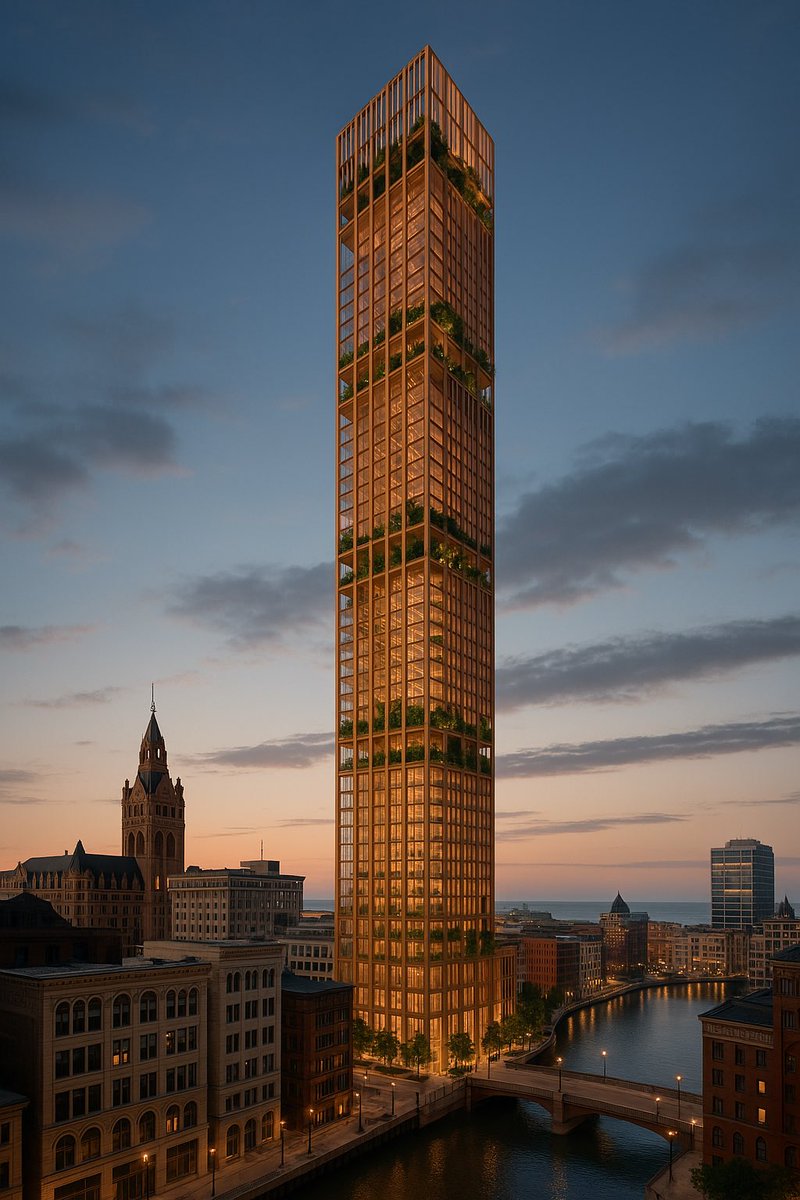
@MarqHamburgler Quite to the contrary, you’re very sober in your assessment. My post is facetious. As for the rendering, that’s compliments of chatgpt.
English
0
0
0
34
Tim(ber) Gokhman
Tim(ber) Gokhman@TimGokhman·
Imagine! A 1,000’ tall mass timber building. It’s easy. You don’t need any development expertise. I just created this using AI in a few minutes. Anyone can. Next, the pro forma. Raise $300m because crypto blockchain is the future. Investor returns 🚀 🚀 🚀 .
Tim(ber) Gokhman tweet media
English
1
0
12
759