Tim Li

80 posts

Tim Li

Tim Li

@TimLi_DR

Co-Founder & CEO @DeepReach_ai | Building next-gen AI data & evaluation platform | Bridging global expert network with enterprise AI solutions

San Jose, CA Katılım Eylül 2025
267 Takip Edilen42 Takipçiler
Tim Li
Tim Li@TimLi_DR·
US Congress just made one thing clear: AI competition is no longer just about models, it’s about data supply chains, control, and security. In Physical AI, this matters even more. Robots don’t learn from the internet. They learn from real-world, egocentric video data loops. At DeepReach.ai, we’re building: → US-based data engine for Physical AI → Trusted, scalable data pipelines → 100K+ hours/month egocentric data processing The next AI winners won’t just train better models. They’ll control the data + deployment loop. #PhysicalAI #Robotics #AI #WorldModel #Data #GTC #Nvidia #DeepTech here is the video link ---->youtu.be/Q1Woplm0HwM
YouTube video
YouTube
English
0
0
0
19
Tim Li
Tim Li@TimLi_DR·
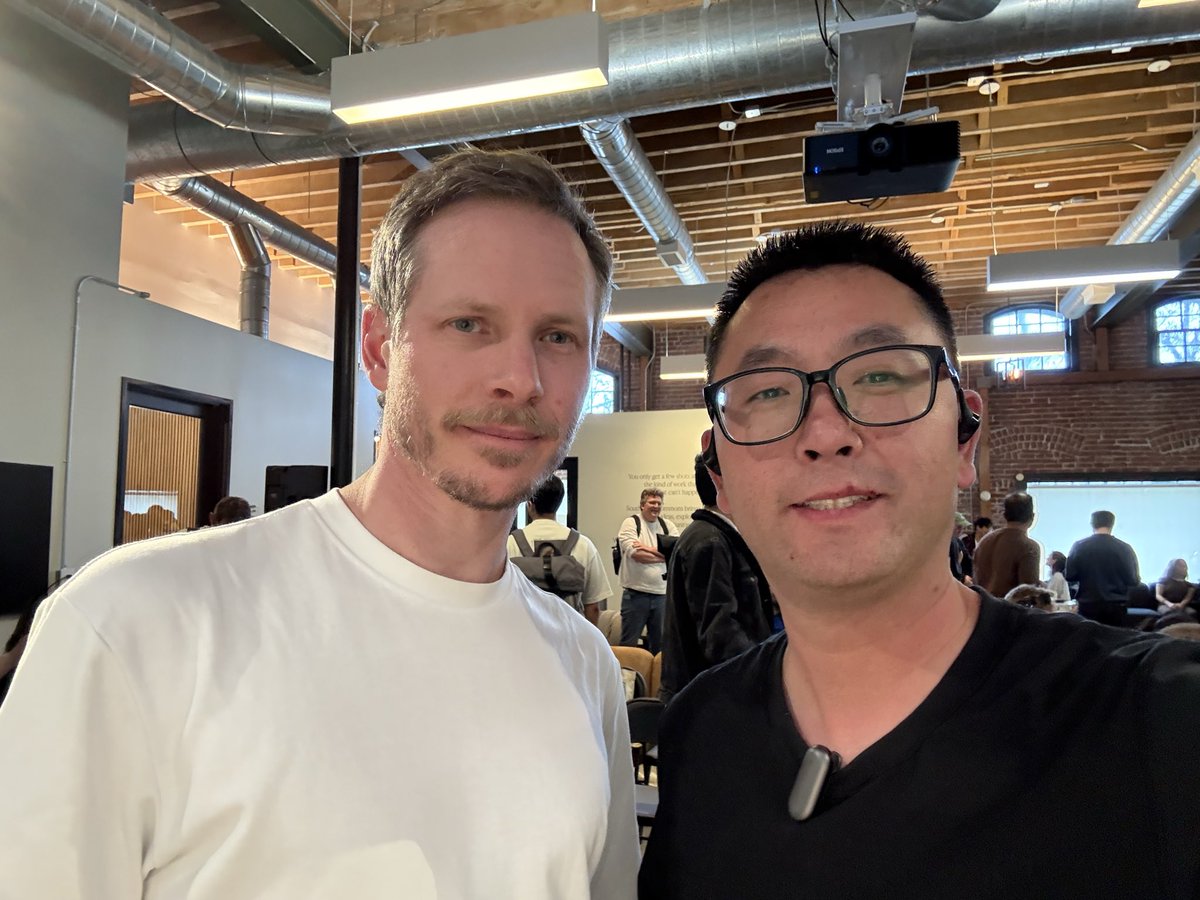
Great embodied AI discussion today hosted by South Park Commons with @Thom_Wolf . A few big takeaways: • robotics is approaching its “ChatGPT moment” • the real bottleneck is still data • human-robot interaction is hugely underexplored • the future won’t be only humanoids • open ecosystems will accelerate robotics innovation Physical AI is getting real. #EmbodiedAI #Robotics #PhysicalAI #RobotLearning #AIInfrastructure
Tim Li tweet mediaTim Li tweet mediaTim Li tweet media
English
0
0
0
18
Tim Li
Tim Li@TimLi_DR·
American is facing structural labor supply crisis in agriculture and factores, this a great demo how robot can address that problem. but the navigation and model training require massive data in real working environment, and make sure the bot can fight against all weather condition. I am looking forward to see more outcome on this.
Jonathan Moon@jmoonio

For the past 12 months, I’ve been heads down building a robot. Introducing Emma – an autonomous robot that scans farms, detects diseases, and measures yield. Currently deployed in 14 vineyards and orchards in CA and NY.


English
0
0
0
18
stash
stash@stash_pomichter·
last week we got 1M views and 100s of death threats for giving Openclaw access to drones, humanoids, quadrupeds, and other physical hardware. Now we’re releasing EVERYTHING open-source. Dimensional gives agents access to the physical world. Join us. Repo 👇🏽👇🏽👇🏽
English
142
293
1.9K
151.3K
Tim Li
Tim Li@TimLi_DR·
@drfeifei @drfeifei World generation is powerful, but grounding it with real embodied interaction data will be critical. We’re building task-level data engines at DeepReach to capture real robot experiences across diverse environments. We can provide 200k hours.
English
1
0
0
55
Reflex Robotics
Reflex Robotics@ReflexRobot·
At Your Service, Episode 1: Good Morning
English
33
72
560
80.9K
Mark Gadala-Maria
Mark Gadala-Maria@markgadala·
So cool. Chinese AI studios are now creating full TV show series using Seedance 2.
English
267
820
5.4K
344.7K
Tim Li
Tim Li@TimLi_DR·
ABB + NVIDIA Omniverse is an important signal. But it also highlights a bigger problem: Robotics doesn’t have a hardware problem. It has a deployment problem. Most automation is built for large factories. The real opportunity is SMB manufacturing, where robots must be: lightweight affordable fast to deploy Physical AI will scale through data and deployment engines, not just better robots. #Robotics #PhysicalAI #EmbodiedAI #Automation #DeepTech
ABB Robotics@ABBRobotics

Today marks a major step for industrial automation. ABB Robotics and @nvidia have closed the sim-to-real gap - achieving 99% accuracy with RobotStudio® HyperReality. Design, test and optimize production lines virtually with unprecedented confidence.

English
0
1
1
186
Tim Li
Tim Li@TimLi_DR·
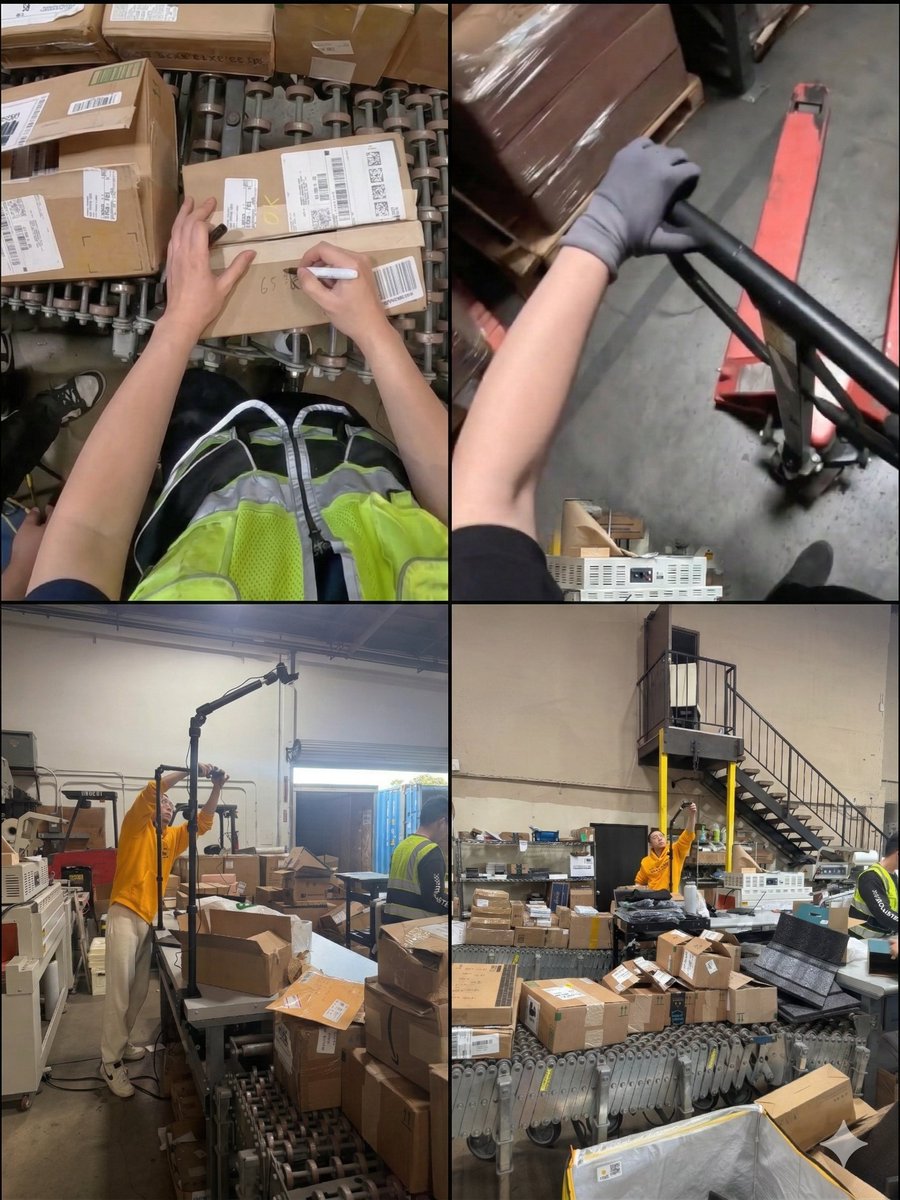
Synthetic data and lab settings can only take embodied AI so far. The real challenge for production-grade dexterity lies in the stochasticity of the field. Body:We’re addressing the domain shift by capturing high-fidelity Ego-centric (1st-person) sequences directly from the frontlines: 1. Active US Warehouses 2. Industrial Manufacturing. 3. Agricultural Operations The Research Value: Unstructured Ground Truth: Moving beyond "clean" datasets to capture real-world occlusions, variable lighting, and complex hand-object interactions. The "Last Inch" Problem: Specialized manipulation sequences designed to bridge the gap between high-level perception and fine-motor control. Long-tail Distributions: Authentic industrial edge cases that are nearly impossible to simulate accurately. Providing the foundational visual intelligence required for next-gen VLA (Vision-Language-Action) models to master task-specific physical mastery. DM to discuss our data acquisition methodology or collaboration. #EmbodiedAI #Robotics #ComputerVision #EgoCentric #VLA #FoundationModels #SimToReal #MachineLearning
Tim Li tweet media
English
0
0
0
25
Tim Li
Tim Li@TimLi_DR·
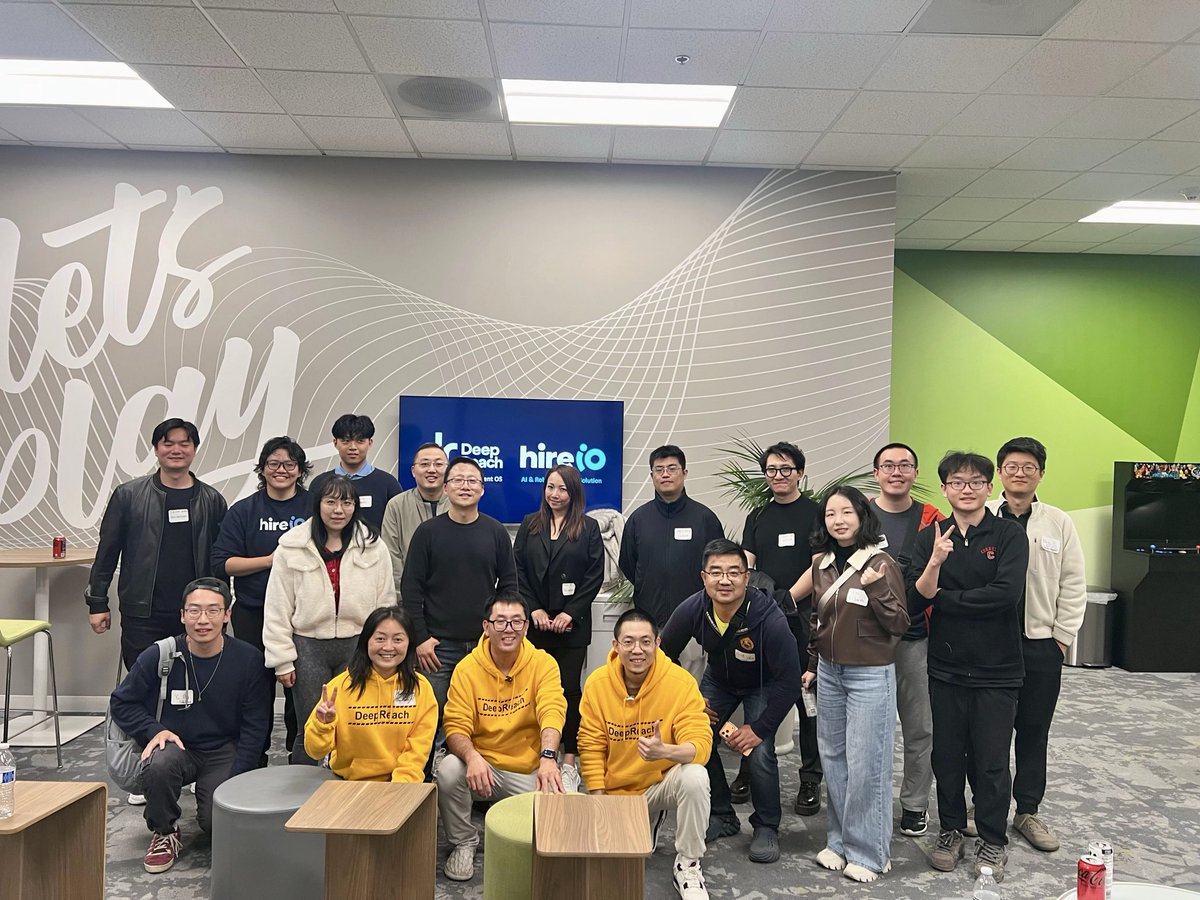
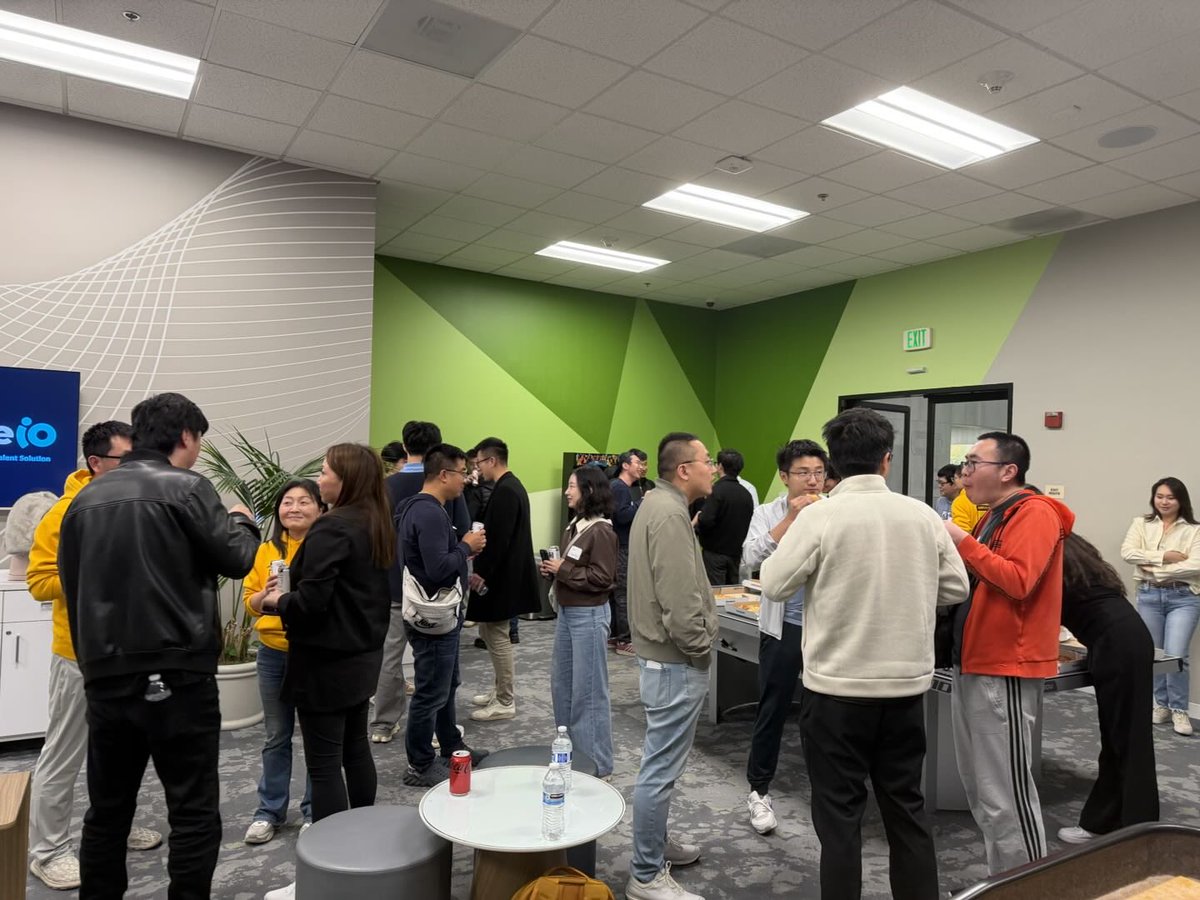
Still thinking about the Physical AI / robotics meetup we hosted in San Jose this week. We had 3× more people register than we could accommodate. Researchers, founders, and investors working on world models, robotics, and real-world AI showed up. One thing became very clear during the conversations: The biggest bottleneck for robotics right now isn’t just better models. It’s real-world deployment and data. Robots need environments to learn, tasks to execute, and systems that can actually run them in production. This is exactly the problem space we’re working on at DeepReach. Feels like the Physical AI era is just getting started. #PhysicalAI #Robotics #EmbodiedAI #WorldModels #DeepTech
Tim Li tweet mediaTim Li tweet mediaTim Li tweet mediaTim Li tweet media
English
0
1
8
10.6K
Tim Li
Tim Li@TimLi_DR·
@chelseabfinn Hi Prof Finn, how can I get contact with your team since we are building deployment OS for physical AI. I’d like to utilize your most updated model for our client production environment.
English
0
0
0
86
Chelsea Finn
Chelsea Finn@chelseabfinn·
We added short-term visual memory + long-term text memory to pi models. 🤖 Enables robots to: - complete tasks up to 15 min long - cook grilled cheese while keeping track of time - adapt in-context Paper & videos: pi.website/memory
English
9
50
489
29.9K
Tim Li
Tim Li@TimLi_DR·
Memory is powerful. Most of what makes us human comes from memory. If a bot remembers something from your last interaction and brings it up naturally, you immediately feel a sense of humanity.
Physical Intelligence@physical_int

We’ve developed a memory system for our models that provides both short-term visual memory and long-term semantic memory. Our approach allows us to train robots to perform long and complex tasks, like cleaning up a kitchen or preparing a grilled cheese sandwich from scratch 👇

English
0
0
0
33
Tim Li
Tim Li@TimLi_DR·
there are over 600 robot startups. and keep adding more. Every 1 US robot deployment, China x 7.
Miyu Horiuchi@miyuselene

The U.S. thinks the humanoid robotics race is Boston Dynamics vs Unitree. Meanwhile China has dozens of companies shipping humanoid robots that nobody here is paying attention to The numbers tell the story: ~13,000 humanoid robots shipped globally in 2025. Chinese companies made roughly 90% of them. AgiBot shipped 5,168. Unitree shipped 5,500. UBTech shipped 1,000. And those are just the top three. China now has over 150 humanoid robot companies and 330+ unveiled models. Unitree alone plans to ship 20,000 units this year. The Chinese government allocated over $20 billion in subsidies to robotics in late 2024 and early 2025. Provinces are in a "subsidy race," each competing to produce the next national robotics champion. The entire cycle, R&D, supply chain, manufacturing, deployment, is compressed into a single tight loop. Companies go from prototype to factory floor faster than most U.S. startups finish a seed round. I saw this firsthand in Shenzhen. The density is hard to describe until you've walked through it. Factories, component suppliers, assembly lines, test labs, all within a few miles of each other. Someone has an idea in the morning and a working prototype by the afternoon. That's not an exaggeration. That's just how the ecosystem operates when everything is that close together and moving that fast. And there's a dynamic most people aren't thinking about. Robots that build robots is a recursive problem. If China builds a few hundred thousand humanoid robots and those robots help them build a million more, that's not linear scaling, that's full industrial capture. A manufacturing workforce that doesn't age, doesn't strike, and gets cheaper with every unit produced. Every robot off the line teaches the factory something about yield, about process, about cost. The knowledge compounds, and China is 13,000 units into that curve. The U.S. is barely on it. The companies that will matter in humanoid robotics aren't the ones with the best demo. They're the ones building the factory where the process is the product and every unit shipped makes the next one cheaper. Right now, those factories are in China. That should concern everyone

English
1
0
0
78