

@Layan22_22 @MarioNawfal Yes engaged, not lost. There’s a difference.
English
The Majestic BooYaa!!
762 posts


🇮🇷🇺🇸 Iran's former Foreign Minister, Javad Zarif, is offering everyone a way out of the war. As the chief nuclear negotiator for the 2015 Joint Comprehensive Plan of Action, he knows exactly how this story usually ends, with both sides crawling back to negotiations after pretending they didn’t want them. His latest proposal simply skips the theatrical middle act. Iran has held up under pressure. It has taken hits, returned them, and reminded the world that it still sits astride one of the most economically sensitive choke points on Earth, the Strait of Hormuz. That’s enough to claim leverage, maybe even “victory.” He proposes capping the nuclear program at non-weapons levels with real monitoring. Lift the sanctions that have turned Iran’s economy into a case study in endurance. Reopen Hormuz so the global economy can stop holding its breath. And sign a non-aggression pact that forces both Washington and Tehran to put their favorite pastime, mutual hostility, on pause. It’s a deal built on mutual exhaustion and cold calculation, which, historically, is the only kind that ever sticks. The uncomfortable reality here is that every side has already tested its preferred strategy. The U.S. tried squeezing Iran into submission with sanctions. Iran adapted. Israel tried setting back capabilities with strikes. The program still exists. Iran tried proving it could outlast everyone. It did, but at a cost that keeps rising. Zarif is basically saying: call it. Of course, that’s where the proposal runs into its biggest obstacle, not feasibility, but pride. Because “declaring victory and going home” sounds suspiciously like compromise, and compromise is deeply unpopular in the middle of a war people are still trying to narrate as winnable. Critics will say Iran can’t be trusted, that sanctions relief is a gift, that any deal is just a timeout before the next round. But the alternative is more strikes that don’t resolve the core issue, more sanctions that don’t collapse the system, and more escalation that inches everyone closer to a conflict no one can control.





🇺🇸🇮🇷 The 15-point plan is on the table The U.S. sent Iran its terms through intermediaries: dismantle all three nuclear sites, end enrichment on Iranian soil, suspend the missile program, cut off every proxy, and reopen Hormuz. In return, sanctions lifted and American assistance with civilian nuclear energy. This is essentially the same deal Trump offered before the war started. Four weeks of bombing, 13 dead Americans, $12+ billion spent, 1,400+ Iranian civilians killed, and the offer on the table is almost identical to the one Tehran rejected in February... Iran's new leadership says it wants more now, specifically compensation for the destruction. Trump says they've "agreed they will never have a nuclear weapon." The gap is narrowing but the hardest part remains. Iran won't accept zero enrichment. Trump won't pay reparations. And Netanyahu is still bombing while everyone else is negotiating. The deal will live or die on whether creative language can bridge the distance between what both sides need to tell their people back home. Source: WSJ


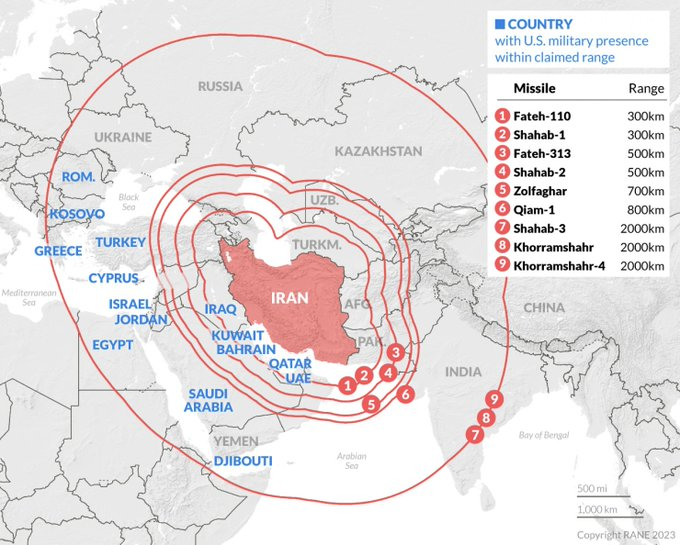
🇮🇷🇺🇸 How Iran hit the "unhittable" jet The F-35 is invisible to radar. It was never invisible to heat. Iran likely used infrared tracking systems that detect engine exhaust instead of radar signatures. Because these systems emit no energy, the F-35's warning systems never alerted the pilot he was being targeted. The suspected weapon: Iran's 358 missile, a hybrid between a loitering drone and a surface-to-air missile that hunts using optical and infrared sensors, bypassing stealth entirely. Stealth dominates radar. Physics doesn't care. Source: AiTelly



🇮🇷🇮🇶 The war that built everything you're watching right now If you want to understand why Iran has an IRGC, why it hoards missiles, why it built proxy armies across four countries, and why it would rather burn the Gulf down than surrender, you need to go back to 1980. Saddam Hussein invaded a post-revolution Iran that was fractured and weak. What followed was eight years of trench warfare, chemical attacks, and a million dead. The world armed Iraq. Nobody helped Iran. That trauma is baked into the regime's DNA. Every tunnel, every drone factory, every mine in the Strait of Hormuz exists because Iran swore after 1988 that it would never be that vulnerable again. Operation Epic Fury is the climax of a 45-year story... Source: Johnny Harris on YT



Another "defensive" B-52 landing at RAF Fairford to rearm and refuel before bombing Iran.

