

Tom Ben
2.1K posts

Tom Ben
@TomBener
𝕰𝖝𝖕𝖑𝖔𝖗𝖎𝖓𝖌 𝖘𝖔𝖒𝖊𝖙𝖍𝖎𝖓𝖌 𝖓𝖊𝖜 𝖆𝖓𝖉 𝖎𝖓𝖙𝖊𝖗𝖊𝖘𝖙𝖎𝖓𝖌.
Worldwide 🌍 Katılım Mart 2019
1.2K Takip Edilen133 Takipçiler

在读的 PhD 可以联系我,Happy-Sci 会为在读 PhD 捐助 $240,一年的 Plus 订阅 or 一个月 Max 加点咖啡钱。助力每一个科研梦,不限专业,不限国家,不限学校。
经费会通过 @BNBCHAIN 上的稳定币发放。
Jason Young@Jason_Young1231
在中转站的群里看到很多大学生,他们是真的价格敏感用不起 $200 的订阅,这点让我感觉中转站的存在是有意义的
中文
Tom Ben retweetledi

Tom Ben retweetledi

Tom Ben retweetledi

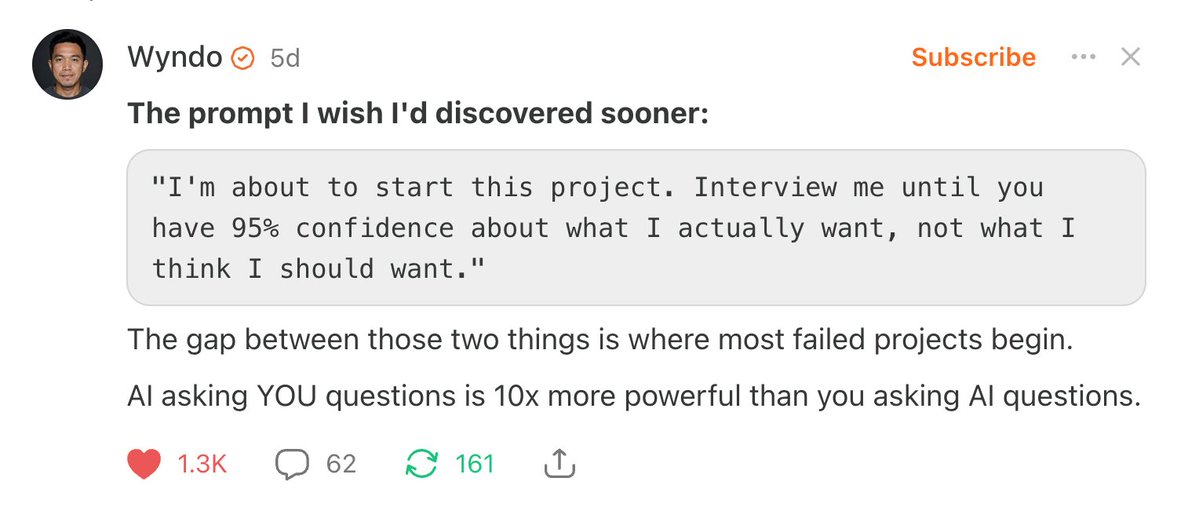
I’ve recently decided to no longer accept requests as a reviewer for scientific papers. Current top AI models do a better job than me for more than 95% of the review process, so with less than 5% effort, it would not be fair for me to take credit & journals don’t like it anyway.
English

Tom Ben retweetledi

The idea that technology, like AI, deskills us is not a surprise. I learned cursive at school, my father learned how to use a slide rule. Neither skill is widely mourned.
What is important is whether we will make deliberate choices about what skills to keep & which they will be.
English
Tom Ben retweetledi

Tom Ben retweetledi

Periodic reminder this all started when Dr. Bender, unprompted, decided to single me out as someone didn't deserve tenure for using LLMs. Her followers tagged my employer with calls to fire me and sent threats to me and my family. Everything since has been a response to that.
Joscha Bach@Plinz
I deeply agree with Emily Bender's main point: LLMs are useless, unless you want to offload cognition. (The other two usecases she suggests are rare special cases of the third.) Offloading cognition into machines has always been the purpose and application of computer science and AI.
English
Tom Ben retweetledi

this is so fucking wholesome
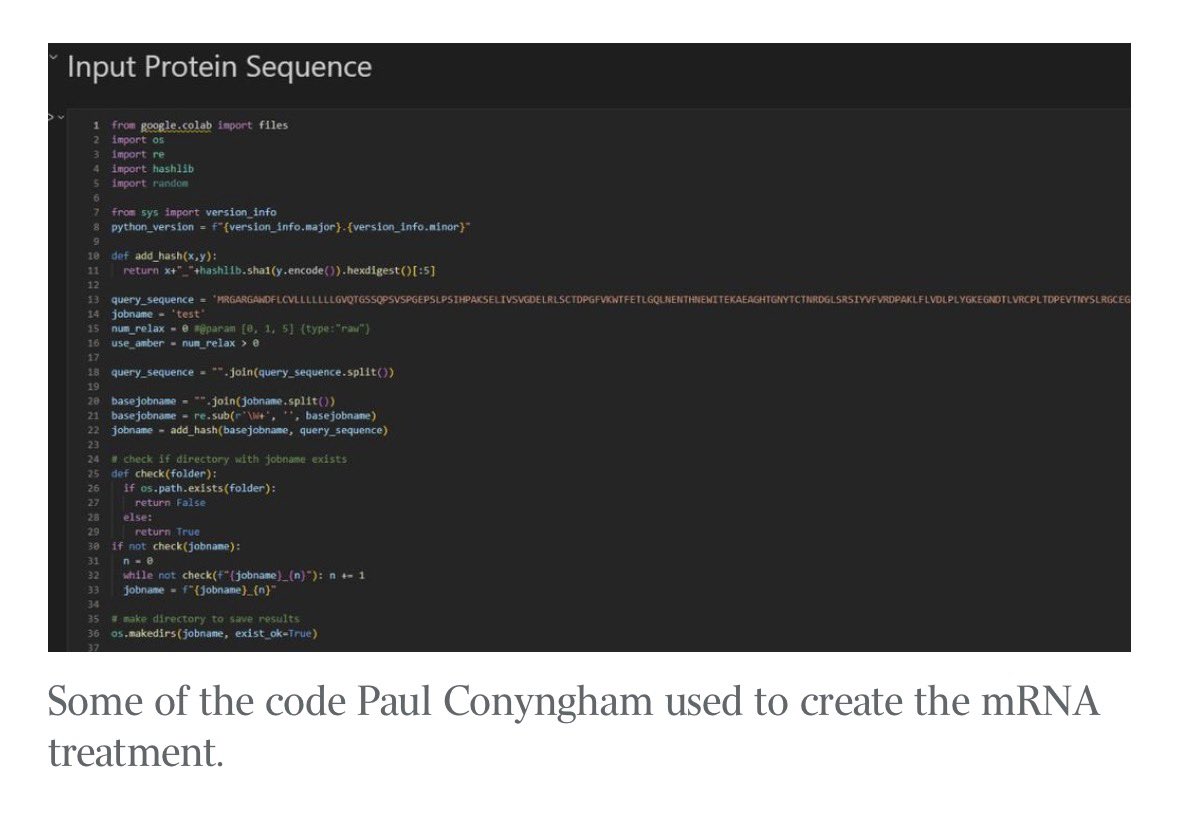
guy used AI to save his cancer-ridden dog by sequencing its DNA and creating a CUSTOM cure.
the tech behind this is fucking awesome (well done @demishassabis and the google team):
- used CHATGPT to sequence dogs DNA discovers mutations
- ran the mutations through Google’s Alphafold (AI protein sequencer) which CREATED A CUSTOM VACCINE TO TREAT THEM.
- treated dog and reduced tumour by 50% in WEEKS. dog is alive and well.
- this is the 1st time AI has been used to create a custom vaccine for a dog (and it worked)
- dude is now working on similar vaccines for humans using AI!
2026 is definitely the year we see AI change personalised medicine in a HUGE way
so sick


Séb Krier@sebkrier
This is wild. theaustralian.com.au/business/techn…
English
Tom Ben retweetledi

Dear Publishers -
We are getting increasingly frustrated.
We often spend years on a single(!) study. It includes a lot of planning, expensive experiments, discussions, complex data analysis and writing the final masterpiece.
Our students spend their most precious time on it. Our postdocs work to the limit because they know the cost of tenure-track positions.
When we finalize the study, we write a thorough story and submit it.
And we often celebrate because it’s done.
We celebrate all the work we put into the study.
But only to find out later that our manuscript is left sitting on someone’s desk for years.
__
We don’t blame the editors, many of whom work tirelessly for very little compensation to assess submitted papers, find reviewers and make difficult decisions. Editors are often the same faculty & scientists as we are.
We blame the system that favors business over science.
The system in which we are expected to use our precious funding just to have that PDF uploaded online.
Those $10,000 fees come from taxpayers’ money.
Our students could attend 3 conferences instead.
We could buy chemicals, instruments, computers...
In other words, we could spend it on science and education.
But instead we give $10,000 to a journal so that our PDF gets ‘approved’ and comes online, generating up to 40% profit margins for the publisher.
__
Ruslan Rust@rust_ruslan
I currently have three papers in review at "high impact" journals. One of them has been sitting there for two years. In that time my daughter was born and learned how to walk, but apparently publishing a PDF was still not possible for me. For another one, after four months in review the editor told me they cannot find a second reviewer and asked me to suggest more reviewers. A third one sent me a message in 2026 saying the PDF I uploaded was larger than 10 MB and that I should please reupload everything to make the file smaller. All of this just to eventually pay between 7,000 and 12,000 USD per paper so someone can officially approve that the science we do is "legitimate". Reminder: not a single reviewer will be compensated here. I still don't understand how we as scientists can collectively be so smart when doing science and still tolerate a system like this when it comes to sharing our findings. We should move to preprints plus open review, whether human or AI, asap. So frustrated about it. I'd suggest sharing your work on bioRxiv or medRxiv, reading and reviewing preprints when you can, and highlighting good research, especially if it is still a preprint. Try platforms like ResearchHub (that pay for peer review) and experiment with AI based reviewers for faster feedback. Instead I read this as a proposed "revolutionary" measure:
English
Tom Ben retweetledi

I currently have three papers in review at "high impact" journals.
One of them has been sitting there for two years. In that time my daughter was born and learned how to walk, but apparently publishing a PDF was still not possible for me. For another one, after four months in review the editor told me they cannot find a second reviewer and asked me to suggest more reviewers. A third one sent me a message in 2026 saying the PDF I uploaded was larger than 10 MB and that I should please reupload everything to make the file smaller.
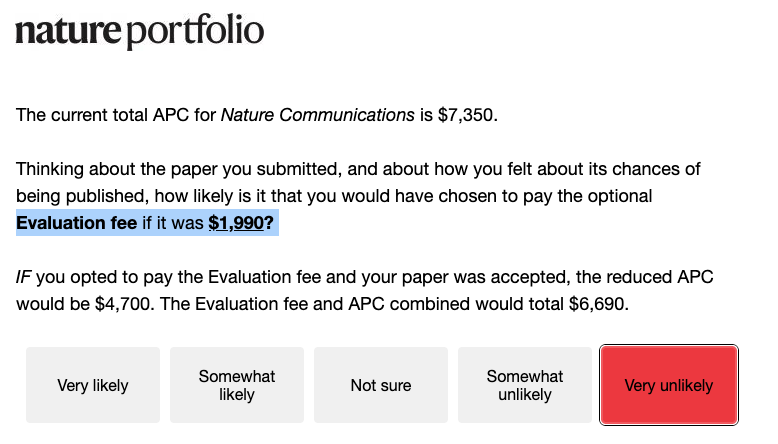
All of this just to eventually pay between 7,000 and 12,000 USD per paper so someone can officially approve that the science we do is "legitimate". Reminder: not a single reviewer will be compensated here.
I still don't understand how we as scientists can collectively be so smart when doing science and still tolerate a system like this when it comes to sharing our findings. We should move to preprints plus open review, whether human or AI, asap. So frustrated about it.
I'd suggest sharing your work on bioRxiv or medRxiv, reading and reviewing preprints when you can, and highlighting good research, especially if it is still a preprint. Try platforms like ResearchHub (that pay for peer review) and experiment with AI based reviewers for faster feedback.
Instead I read this as a proposed "revolutionary" measure:
English
Science had never been for the scientists — science had always been for everyone, for the species, for everyone. Its value was external, not internal.
causalinf.substack.com/p/claude-code-…
English
Tom Ben retweetledi

Il voulait simplement faire plaisir aux enfants du village 🥹
Alors il est arrivé avec un tracteur et des bouées gonflables pour leur offrir un moment qu’ils n’oublieront jamais.
Parfois, il suffit de très peu pour créer une journée magique pour des enfants. 💛
Français
Tom Ben retweetledi


Tom Ben retweetledi

We made a blind taste test to see whether NYT readers prefer human writing or AI writing.
86,000 people have taken it so far, and the results are fascinating. Overall, 54% of quiz-takers prefer AI. A real moment!
nytimes.com/interactive/20…
English
Tom Ben retweetledi

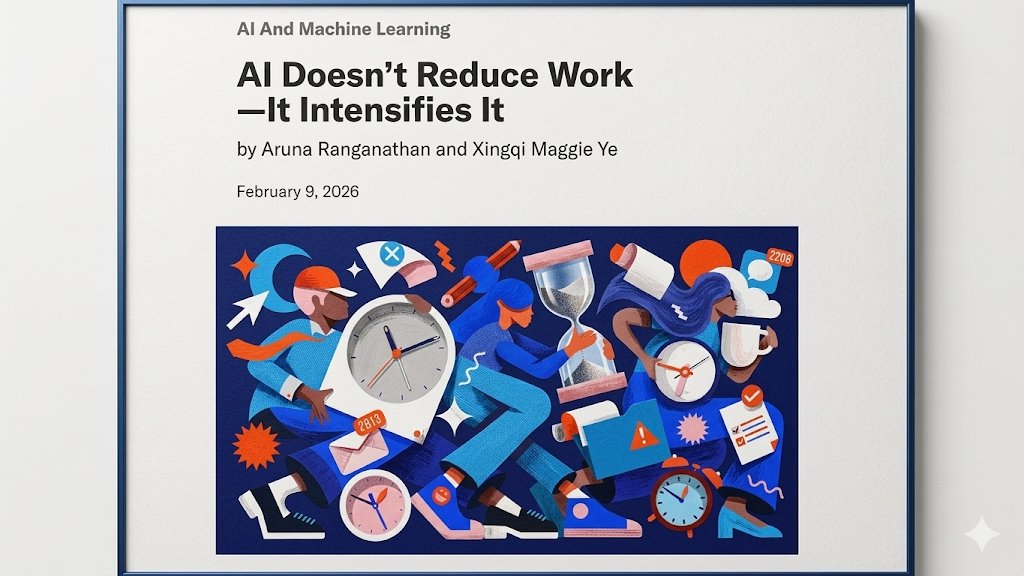
🚨BREAKING: Berkeley researchers spent 8 months inside a tech company watching how employees actually use AI.
The promise was simple: AI will save you time. Do less. Work smarter.
The opposite happened.
Workers didn't use AI to finish early and go home. They used it to take on more. More tasks. More projects. More hours. Nobody asked them to. They did it to themselves.
The researchers sat inside the company two days a week for 8 months. They watched 200 employees in real time. They tracked work channels. They conducted 40+ interviews across engineering, product, design, and operations.
Here's what they found. AI made everything feel faster, so people filled every gap. They sent prompts during lunch. Before meetings. Late at night. The natural stopping points in the workday disappeared. People ran multiple AI agents in the background while writing code, drafting documents, and sitting in meetings simultaneously.
It felt like momentum. It felt productive. But when they stepped back, they described feeling stretched, busier, and completely unable to disconnect.
83% said AI increased their workload. Not decreased. Increased.
62% of associates and 61% of entry-level workers reported burnout. Only 38% of executives felt the same strain. The people doing the actual work absorbed the damage while leadership celebrated the productivity numbers.
Then came the trap nobody saw coming. When one person uses AI to take on extra work, everyone else feels like they're falling behind. So the whole team speeds up. Nobody formally raises expectations. But the new pace quietly becomes the default. What AI made possible became what was expected.
The researchers gave it a name: workload creep. It looks like productivity at first. Then it becomes the new baseline. Then it becomes burnout.
AI was supposed to give you your time back. Instead it's eating more of it. And the worst part? You're doing it to yourself. Voluntarily.
English
Tom Ben retweetledi

Tom Ben retweetledi

Tom Ben retweetledi

Introducing the Google Workspace CLI: github.com/googleworkspac… - built for humans and agents.
Google Drive, Gmail, Calendar, and every Workspace API. 40+ agent skills included.
English