Tom Trainer

234 posts

Tom Trainer banner
Tom Trainer

Tom Trainer

@TomTrainerSci

@LabManka Research Associate, Structural Neurobiology of Prions at @ImperialInfect

London, England Katılım Haziran 2018
1.8K Takip Edilen328 Takipçiler
Tom Trainer retweetledi
TK Kozai (BIONICLab.org)
TK Kozai (BIONICLab.org)@BIONIC_Lab·
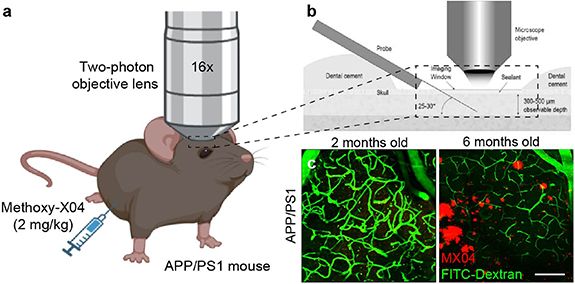
⚠️ An uncomfortable finding from our lab that I want to state carefully. BCI trials are enrolling participants without routine genetic screening for neurodegeneration risk. We have mouse data that makes this worth examining systematically. 🧵
TK Kozai (BIONICLab.org) tweet media
English
7
36
215
34.5K
Tom Trainer retweetledi
Simon Mead
Simon Mead@smead2·
Nice paper from colleagues emphasising prion-like mechanisms in dementia and inclusion of CJD in funding mechanisms for dementia disorders. Surprising resistance to prion-like mechanisms in dementia communities which imo often stems from poor understanding sciencedirect.com/science/articl…
English
1
4
13
4.1K
Tom Trainer retweetledi
Niko McCarty.
Niko McCarty.@NikoMcCarty·
Important inventions are often framed as happening by “serendipity,” where a scientist dreamed something, or took LSD, and made a breakthrough that changed the world. The more I read about famous inventions in molecular biology, though, the more I’m struck by how many (not all, but many) were deliberate creations with no “chance” involved. This was the case for optogenetics, a tool that uses light to control cells; often neurons. The way it works is that you insert a gene encoding a channelrhodopsin into cells. The cells make the protein, which naturally embeds itself into the cell membrane. Then, when you shine a light at the cell, some photons will strike this protein and force it open, allowing ions to rush inside to trigger an action potential. The breakthrough came about when scientists wrote down the exact requirements they were looking for (specifically, a technology which could activate individual neurons with high spatiotemporal resolution) and then enumerated, or wrote down, all the ways they could possibly imagine to make this happen. Small molecules, magnets, electricity, light…. Here is how Ed Boyden told this story last year: “How did we make ourselves so lucky? … Simply put, try to think of every way of solving a problem… In this case, we made a list of all the forms of energy you can deliver to the brain – there’s light, sound, radio waves, a few other things. You can write the whole list down in a couple minutes. I liked light because it’s faster than anything else, and you can aim it precisely..." "Next question: how do you make brain cells sense light? Well, you can either design a tiny solar panel, or you can try to find one. That’s the whole list, just two cases. Finding one sounded easier. So we started emailing people, asking anyone who would listen – could you send us the light-driven molecule that you are studying, so we could put it into brain cells? And some people replied. We were in business! We took one molecule, put it in a brain cell, and as I told you, we could activate it with light. By writing down every way of solving a problem, in a systematic way, you can hone in on the best path. You may even find ideas you wouldn’t ordinarily think about. It helps you make a map of your own, when none is given to you.” It’s worth trying this approach on your own. Define your needs, like “I want to turn neurons on- and off at the milliseconds timescale.” Then, write down a list of possibilities to do this. Drugs are leaky and diffuse everywhere … electricity is too hard to control … light is cheap and abundant, and can be turned on- or off quickly, and you can shine it at a narrow point … Then, start emailing people. Ask for their advice. Perhaps you’ll quickly figure out that Nature has already evolved proteins to sense light! Maybe you could use one of those. And even if your first idea doesn't work, you’ll have a starting point to troubleshoot. Full blog, more details: nikomc.com/2026/04/01/opt…
GIF
English
7
32
204
15.7K
Tom Trainer retweetledi
M W
M W@Michael_E_Ward_·
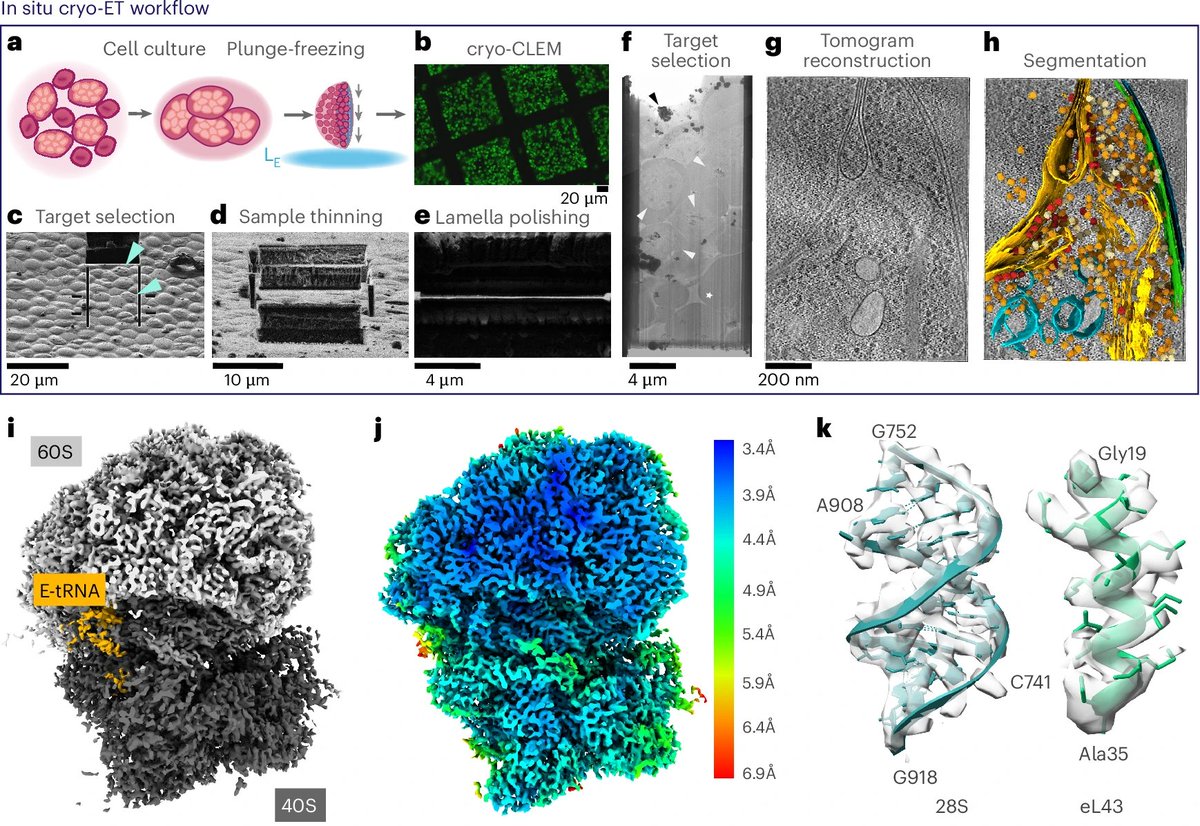
Excited to share a pre-print from a collaboration between my lab at NIH, Len Petrucelli's lab at University of Miami, and Shyamal Mosalaganti's lab at University of Michigan.
M W tweet media
English
1
18
79
6.5K
Tom Trainer retweetledi
Ali Max Erturk
Ali Max Erturk@erturklab·
Live-clearing 2.0 is there! Work from @TakeshiImaiLab in @naturemethods. 2nd major live clearing work after (Qu et al. Science, 2024), with a stronger emphasis on isotonic, minimally invasive conditions & preservation of neuronal physiology. #Sec51" target="_blank" rel="nofollow noopener">nature.com/articles/s4159…. Congrats!
English
2
20
86
8.3K
Tom Trainer retweetledi
Gisella Vetere
Gisella Vetere@InAnOther·
How does the brain build a memory? A common assumption is that the neurons activated during an experience collectively form the memory engram. In our new Nature Neuroscience paper (finally out!), we show that this is not the case. nature.com/articles/s4159…
English
6
64
347
20.1K
Tom Trainer
Tom Trainer@TomTrainerSci·
Very honoured to be one of the recipients for the 2026 @CJDFoundation Post-doctoral fellowship! Many thanks to the foundation, families, and volunteers that make such a great organisation possible. More about the funded project here: cjdfoundation.org/thomas-j-train…
English
0
0
5
59
Tom Trainer
Tom Trainer@TomTrainerSci·
I can happily share that I passed my PhD viva last week! I can hardly believe it! I've loved the journey and being in this field of prion research - no matter the ups and downs! Big thanks to @LabManka and to a list of colleagues too long for a tweet limit! More to come soon 🎓
English
0
0
6
628
Tom Trainer
Tom Trainer@TomTrainerSci·
@smead2 The fact this was recombinant too is a worry, too easy to accidentally make the transmissible confomer. If your rA-syn is ThT silent, but there's still amyloid in your preps: Danger.
English
0
0
9
2K
Simon Mead
Simon Mead@smead2·
Papers like this which demonstrate that alpha synuclein can act potently as prions, are exactly why you need to have proportionate safety measures in labs doing this kind of work. If you work on this and don’t have safety measures ask why! Great paper btw. nature.com/articles/s4158…
English
7
24
109
59K
Tom Trainer
Tom Trainer@TomTrainerSci·
@ATinyGreenCell @solarleak 2M NaOH overnight also does the job, we dunk all our prion contaminants in that. Followed by incineration, just to be sure.
English
0
0
2
33
Sebastian S. Cocioba🪄🌷
Sebastian S. Cocioba🪄🌷@ATinyGreenCell·
@solarleak Yup! Life is tenacious but 133°C is beyond impossible for amino-based matter associated with living things to survive. Proteins turn to strings at that temp and permanently break their folding like eggwhite on a skillet. Life has its limits.
English
1
0
28
545
Sebastian S. Cocioba🪄🌷
Sebastian S. Cocioba🪄🌷@ATinyGreenCell·
Biology is so intense that you sometimes actually have to ultra-autoclave (133°C) old hardware to decontaminate and decommission after a life in the lab...especially if prions. Nothing compares to the living world.
English
10
58
1.6K
79.3K
Tom Trainer
Tom Trainer@TomTrainerSci·
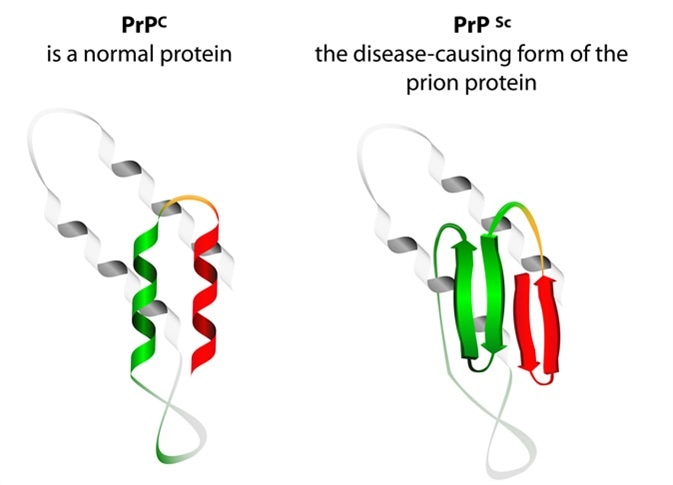
@KiwiSoggy We are cursed by old, outdated and totally incorrect structures of PrPSc occupying the internet
English
1
0
8
177
Tom Trainer retweetledi
Westlake University
Westlake University@Westlake_Uni·
🎉 Congratulations to Prof. Peilong Lu’s team! This work represents a landmark achievement: the first de novo design of a transmembrane protein that senses voltage through engineered conformational changes and exerts a physiological effect in vivo.
Peilong Lu@PeilongLu

De novo designed voltage-gated anion channels suppress neuron firing Congratulations to the dedicated team for over six years of hard work and commitment! 🎉🎉🎉 Share Link To the article (free access): authors.elsevier.com/a/1ly0AL7PXuGJc x.com/CellCellPress/…

English
1
3
8
1.3K
Tom Trainer
Tom Trainer@TomTrainerSci·
@Abhinavsns @malikules @neuralink I've always thought this could be done better optically. Input via optogenetics, output using GEVI reporters. A good camera over too many electrodes seems more sensible.
English
0
0
1
25
Abhinav
Abhinav@Abhinavsns·
@malikules Of course, unless we develop the technology needed. Would love to know anyone who has pushed the frontier recently or is working on arrays of more than a 10000 flexible nano electrodes with accurate reporting. @neuralink is trying.
English
1
0
0
97
Malika 🧬
Malika 🧬@malikules·
Malika 🧬 tweet media
Abhinav@Abhinavsns

I worked on these @Harvard and let me tell you, it is far far away. We lack technology to record signals at the precision required. It's like pointing a radar into space and saying we are computing by detecting some space wave and blasting some signal.

ZXX
7
0
42
5K
Tom Trainer retweetledi
BBC Breaking News
BBC Breaking News@BBCBreaking·
Huntington's disease has been successfully treated for the first time, doctors tell BBC bbc.in/46jnMiX
English
236
2.5K
11.1K
1.5M
Tom Trainer retweetledi
Vidhya Rangaraju, PhD
Vidhya Rangaraju, PhD@RangarajuVidhya·
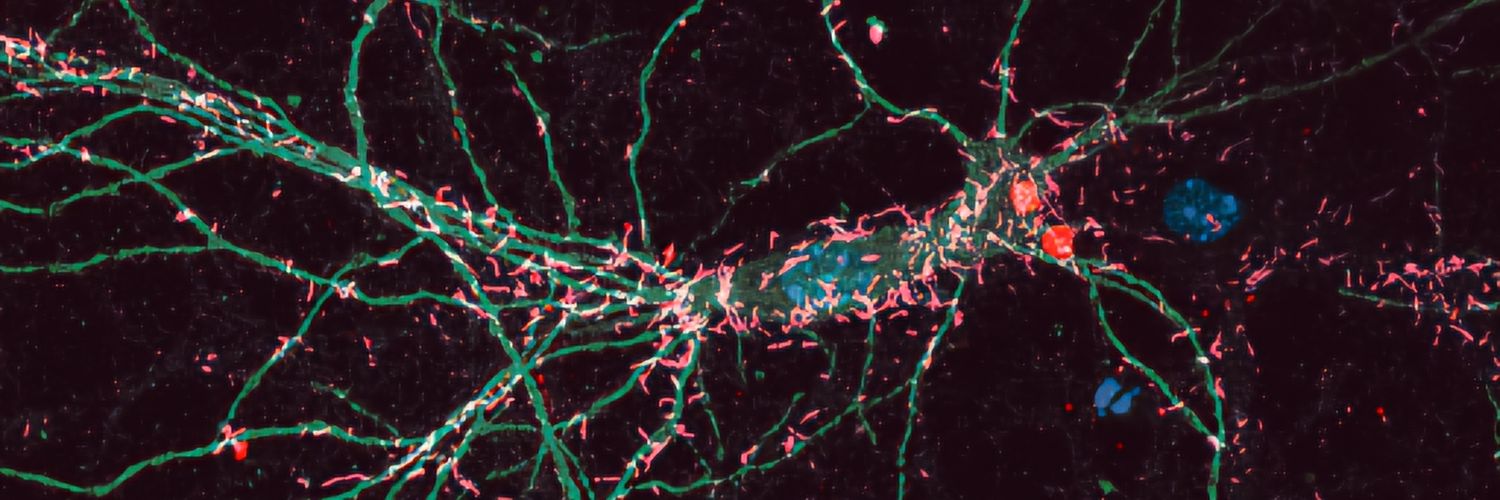
New preprint alert🚀 biorxiv.org/content/10.110… We show mitochondria remodel near synapses during brain plasticity for learning 🧠 Led by Monil Shah (@MPFNeuro IMPRS PhD student) using advanced microscopy & new algorithms revealing stunning neuronal beauty ✨🔬 Thank you, team!
Vidhya Rangaraju, PhD tweet media
English
4
26
127
8.8K