

Tom Schmidt >|<
9.6K posts

Tom Schmidt >|<
@tomhschmidt
Investing @dragonfly_xyz Vos debes periculum pro buccellatum
New York, NY Katılım Ocak 2011
3.2K Takip Edilen40.2K Takipçiler




Can someone explain how a $5M round is considered pre-seed?
And why everyone gets so excited about something that’s basically just an onchain VRF?
Megapot@megapot
We raised $5M led by Dragonfly to build a global lottery
English

@willsims in this case it’s *annualized revenue, unfort the acronym is the same!
English
New: OpenAI has surpassed $100m in ARR from its ads pilot, which launched 6 weeks ago. It's expanded to 600+ advertisers and plans to launch self-serve advertiser access in April.
theinformation.com/briefings/excl…
English
@ThinkingUSD hey if you're in distress and need help, call me
English
lottery. on the internet. no gas station required.
proud to be backing @megapot !
Megapot@megapot
We raised $5M led by Dragonfly to build a global lottery
English

got 'chartreuse' into the grok-generated headline. we control the airwaves 🗼

English
imagine pulling up to the cage with the chartreuse openai ball

Ben Tossell@bentossell
merch gifts have gone up a level ty @OpenAI
English

What was Clavicular? theatlantic.com/technology/202…
English
modeling the brains of all of my ops so i can predict their next move and hit em with one of these
AI at Meta@AIatMeta
Today we're introducing TRIBE v2 (Trimodal Brain Encoder), a foundation model trained to predict how the human brain responds to almost any sight or sound. Building on our Algonauts 2025 award-winning architecture, TRIBE v2 draws on 500+ hours of fMRI recordings from 700+ people to create a digital twin of neural activity and enable zero-shot predictions for new subjects, languages, and tasks. Try the demo and learn more here: go.meta.me/tribe2
English
is this something you would do if you thought AGI was 9 months away?
Financial Times@FT
OpenAI puts erotic chatbot plans on hold ‘indefinitely’ ft.trib.al/4Q2hLpT
English
Tom Schmidt >|< retweetledi

Liquidity matters, but overall execution costs are often overlooked by traders
For the past month, @lighter_xyz has been the cheapest venue to trade $XAU on-chain, for both $10K (0.8bps) and $100K (2.5bps) clips


English

@tomhschmidt mind sending me the complete list of ppl who liked this tweet so i can follow them?
English
@hopes_revenge you should do Golden Gate Claude again, but for Uncrustables
English

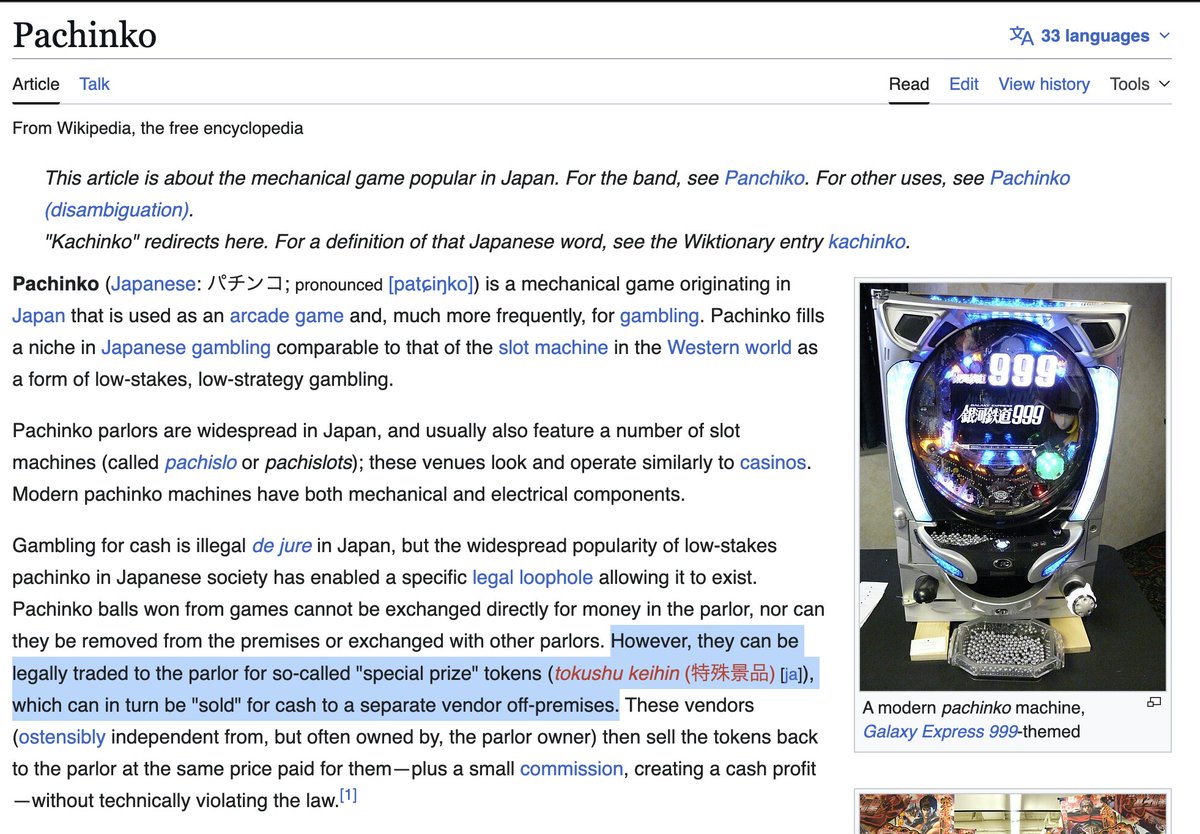
ok @coinbase we NEED you to get onboard with the pachinko gambit!!!
Brendan Pedersen@BrendanPedersen
News in PBN Midday: Coinbase told Senate offices this week it could NOT support the late st version of a stablecoin yield compromise. Key senators have been projecting optimism over the last few days about a deal being close. Coinbase killed the last markup over yield concerns
English

stablecoin issuers should take a lesson from pachinko parlors
1. give away worthless NFTs to stablecoin holders
2. unaffiliated business offers to buy back NFTs at $X
3. business sells NFTs back to stablecoin issuer
who is building this? 👇
Eleanor Terrett@EleanorTerrett
🚨NEW: New details are emerging about the latest legislative text outlining a compromise on stablecoin yield and rewards, along with early reactions from crypto industry leaders who reviewed it today. According to an internal stakeholder email shared with me, the proposal would prohibit platforms from offering yield “directly or indirectly” for holding a stablecoin or in a manner that resembles a bank deposit. The restriction would apply broadly to digital asset service providers (exchanges, brokers, etc.) and their affiliates to limit workarounds, and would bar anything “economically or functionally equivalent” to interest. The proposal would also permit activity-based rewards tied to user activity, including loyalty, promotional, or subscription programs, provided they are not deemed economically or functionally equivalent to interest. It would also direct the @SECGov, @CFTC, and @USTreasury to jointly define permissible rewards and establish anti-evasion rules within one year. One industry leader who reviewed the text today tells me the draft is a “departure” from what had been previously discussed with the White House, warning the “economic equivalence” standard is vague and could be interpreted more restrictively by future regulators. They also point to limits on tying rewards to balances or transaction amounts, which could make incentives difficult to structure. “Overall, this is a more narrow and restrictive approach toward crypto,” they said. Another says the text is “largely in line with expectations” and reflects a balanced outcome, preserving transaction-based incentives while making clear stablecoins cannot function like interest-bearing deposit accounts. “This is the best possible result,” they said, noting that the text is broader than the initial Tillis-Alsobrooks proposal, which would have been more restrictive on crypto. Up next: Bank reps are set to review the text tomorrow.
English
Tom Schmidt >|< retweetledi

Honored to be working with @ChairmanSelig and @passalacqua_mj on the Innovation Advisory Committee of the CFTC to help think through DeFi, perps, and AI. The future of finance will be built in the US!
cftc.gov/About/Advisory…
x.com/ChairmanSelig/…
Mike Selig@ChairmanSelig
Under my leadership at the @CFTC, we’re committed to future-proofing regulation for the new frontier of finance. Today, I’m proud to announce the launch of our Innovation Task Force, which will build on our Innovation Advisory Committee work and establish clear rules of the road for innovators in our financial markets. Read more⬇️ cftc.gov/PressRoom/Pres…
English