Sabitlenmiş Tweet
Travis Wiedower
1.8K posts

Travis Wiedower
@TravisWiedower
Optimist, investor. Seeking the forest through the trees.

Austin, TX Katılım Mayıs 2016
373 Takip Edilen4.7K Takipçiler

Not sure who this guy is, but he makes a compelling case as to why $LMND is way undervalued today much like $PGR was on IPO and after.
traviswiedower.com/2026/03/24/lem…
English

@cfo_mm So tickets sell at their same market clearing prices on a different website?
English

@FrameworkWisely I don't know but I'm sure it's 2-3x worse than that. Happy to say I'm not bothered, just focused on what I can control and the underlying business performance of my holdings. Mr Market will do whatever he wants to do 🤷♂️
English

@RecurveCapital How dare Costco make money from memberships when they're just a grocer
English

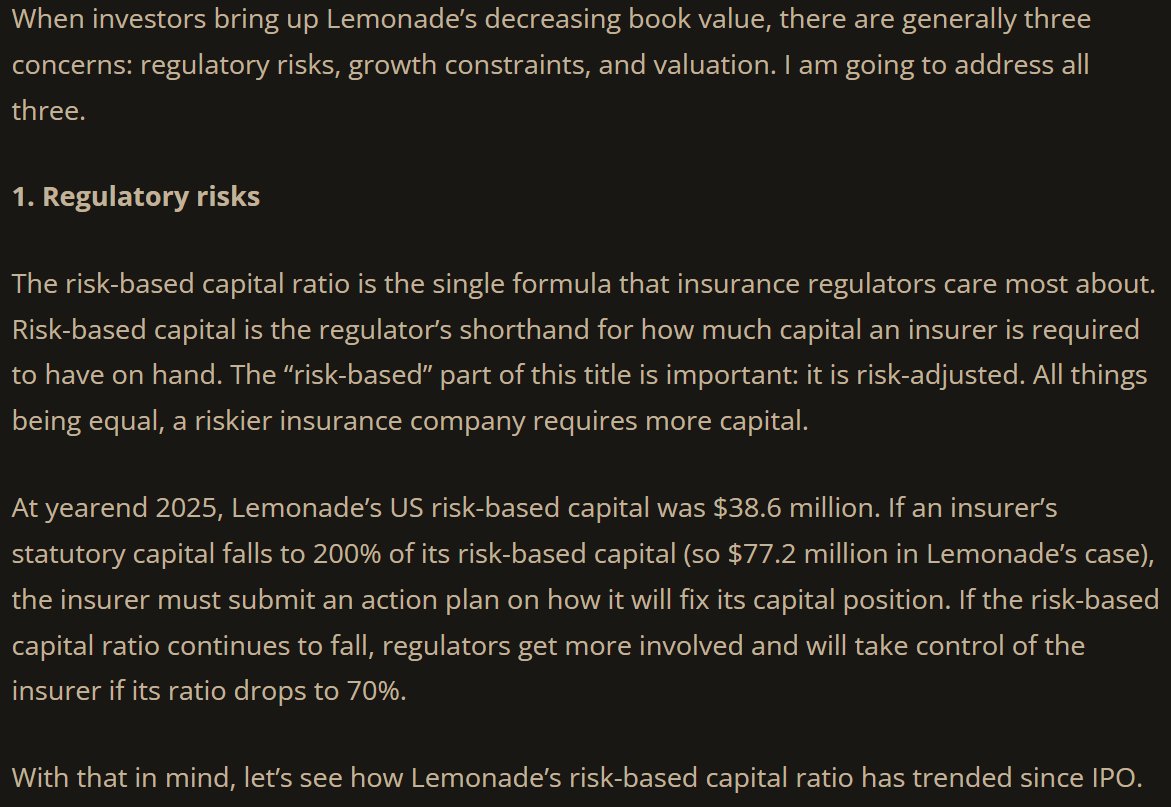
Lemonade's "attempted dilution" has fallen significantly the past four years.
Their share-based comp was a common bear point a few years ago (though part of that was due to $LMND's revenue recognition with reinsurance and how share-based comp is accounted for in GAAP).
Nonetheless, 1-3% dilution for a fast growing tech company is fine and sustainable in my opinion. Happy to see it.

English

@Noalgos I still own Netflix and agree it also looks great at today's prices.
English

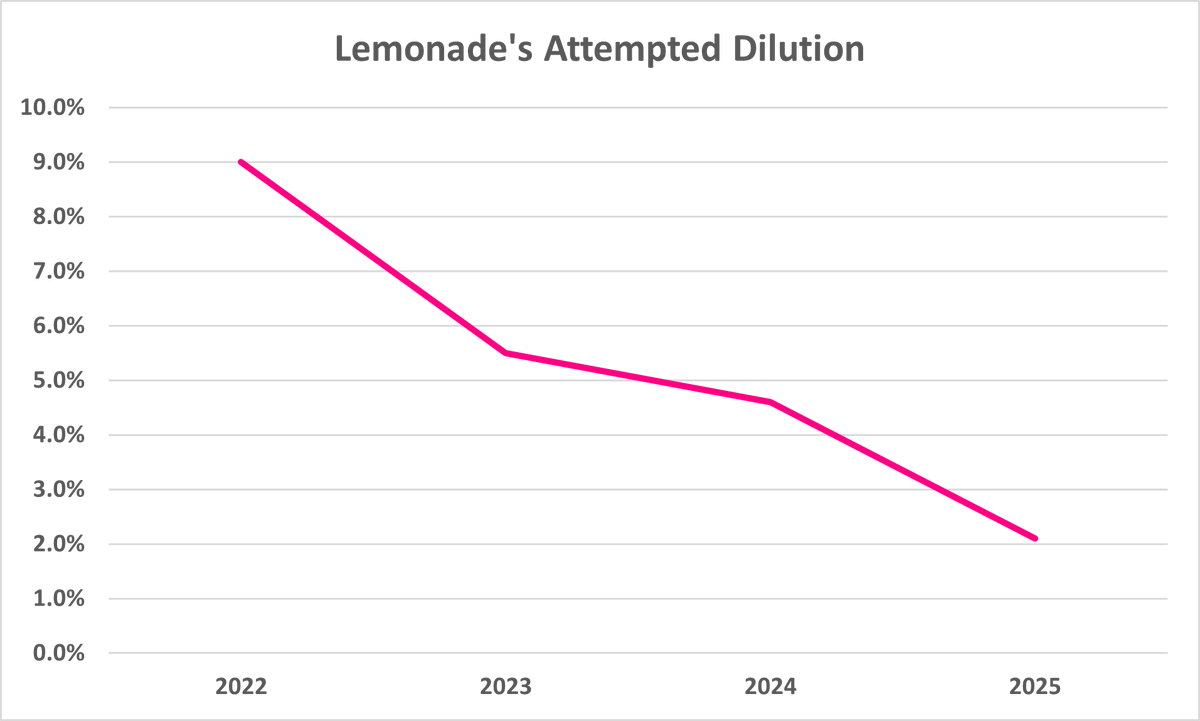
Up until 2021, Netflix was a much more hated investment. There were many bears on Twitter (#Debtflix) and short reports were not uncommon in the preceding years.
Then, seemingly out of nowhere, $NFLX became profitable and started paying down its debt and regularly repurchasing its shares.
But this was inevitable, and had been obvious for years. Netflix had a superior product with a wide moat and a long runway for growth, and revenue that was growing faster than expenses.
Look at the below chart. Profitability is what follows this kind of chart.
A consistent dynamic I noticed then is the bears only focused on GAAP financials. Netflix was consistently unprofitable and they had a lot of debt. That was that.
Bulls focused on the underlying unit economics and could see where those led.
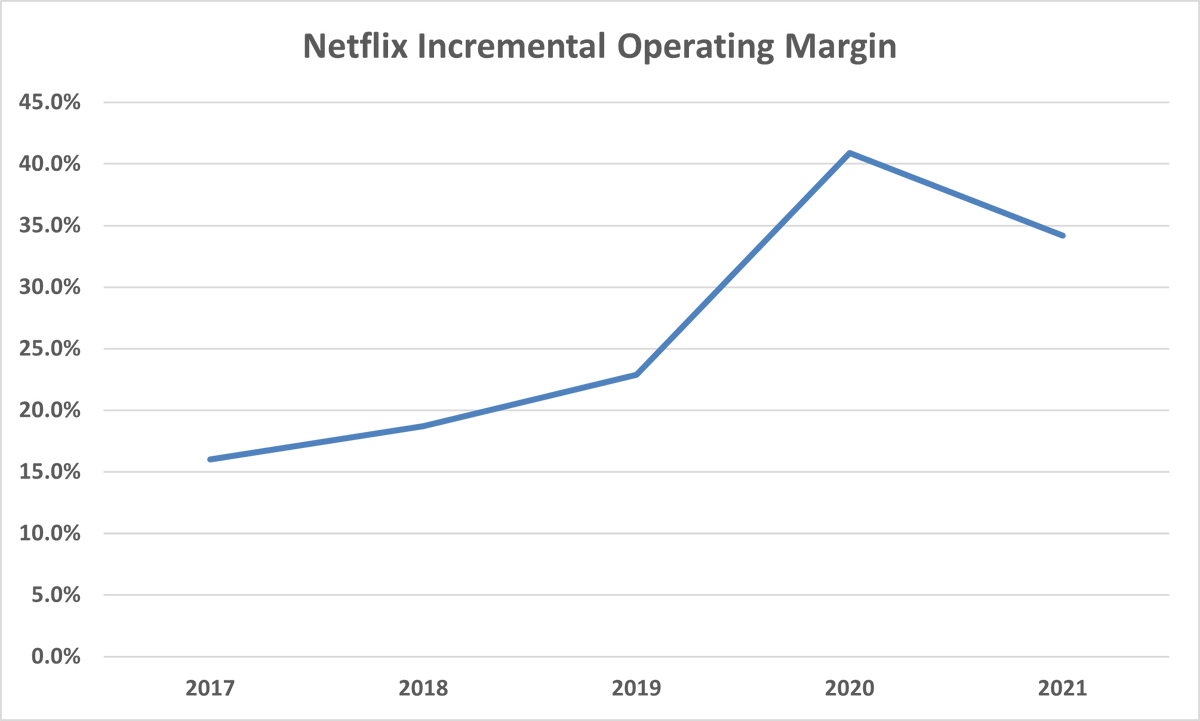
Anyway, this tweet is really about Lemonade's next couple of years. Bears are overly focused on GAAP financials (unprofitable, declining book value) while the underlying trends are clear and inevitable.
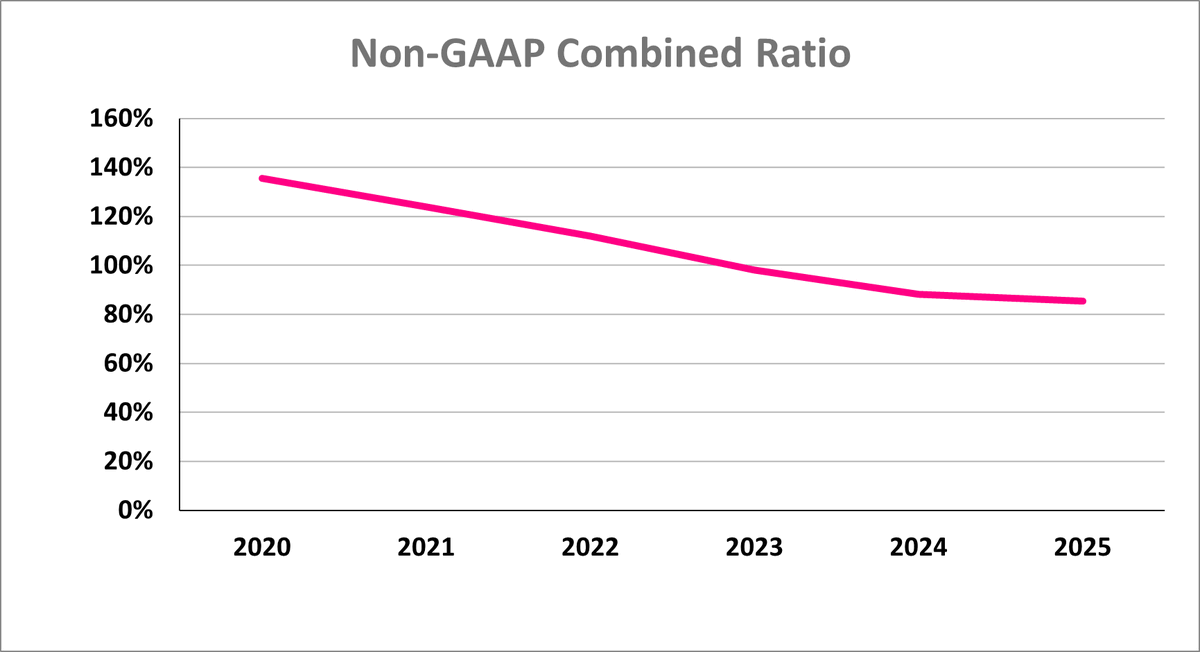
In 2027, $LMND will reach profitability and book value will start going up. This will be a surprise to a large portion of the market.


English

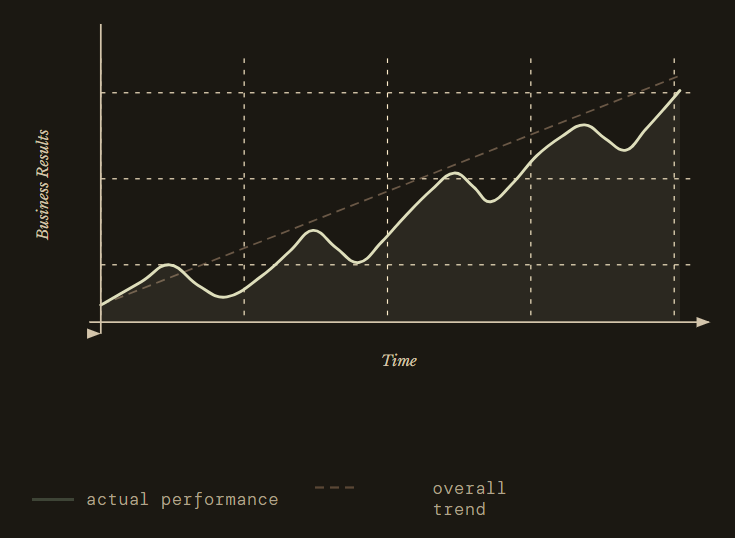
@morrismok5 Even easier to 6x now :) but yes, I've lost zero confidence. The long term is what matters and nothing about that has changed. Business results and stock prices are not linear.
English

My thoughts on Lemonade Q4 2025 results
Q4 results were very good. Every line of insurance now has a gross loss ratio <75%. Europe grew >100% for the 10th straight quarter. Car growth continues to accelerate to +53% now. And as a former 7-year shareholder of Trupanion, Lemonade's results in pet continue to blow me away, now growing 55% with a 71% loss ratio.
They talked about some incremental R&D spend that maybe spooked some investors, but they reiterated that non-growth spend will grow flattish to single digits over the longer term. This is great.
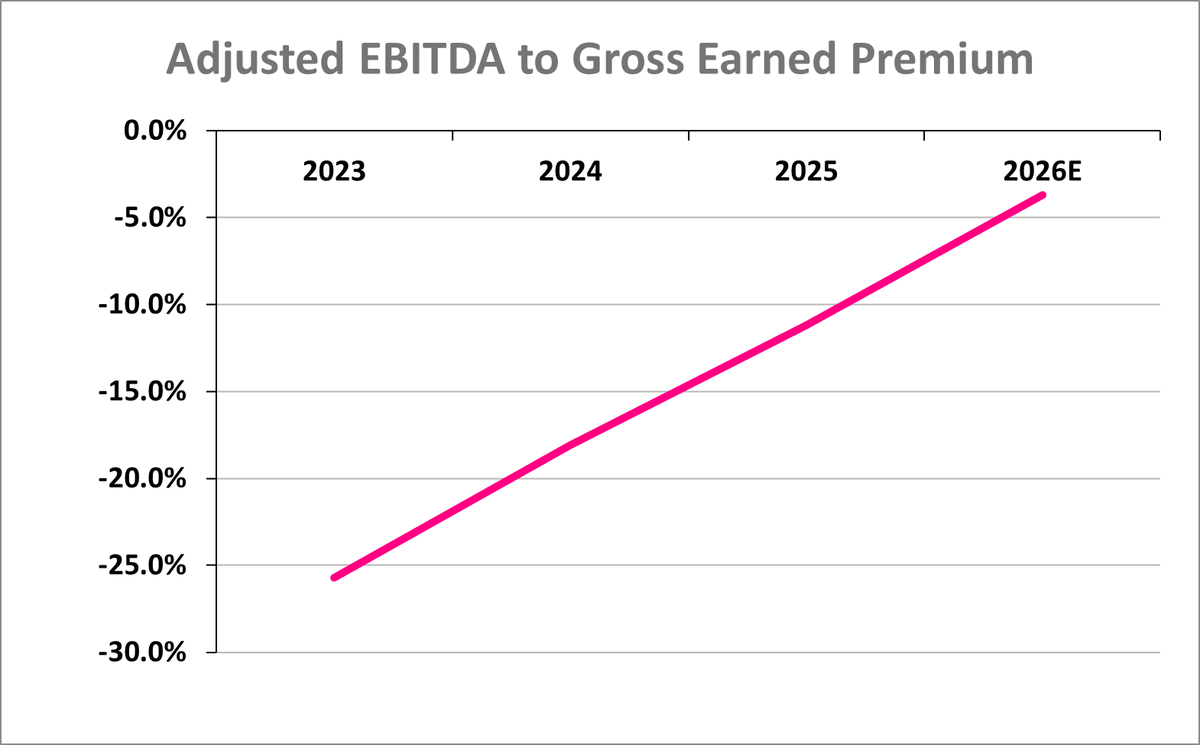
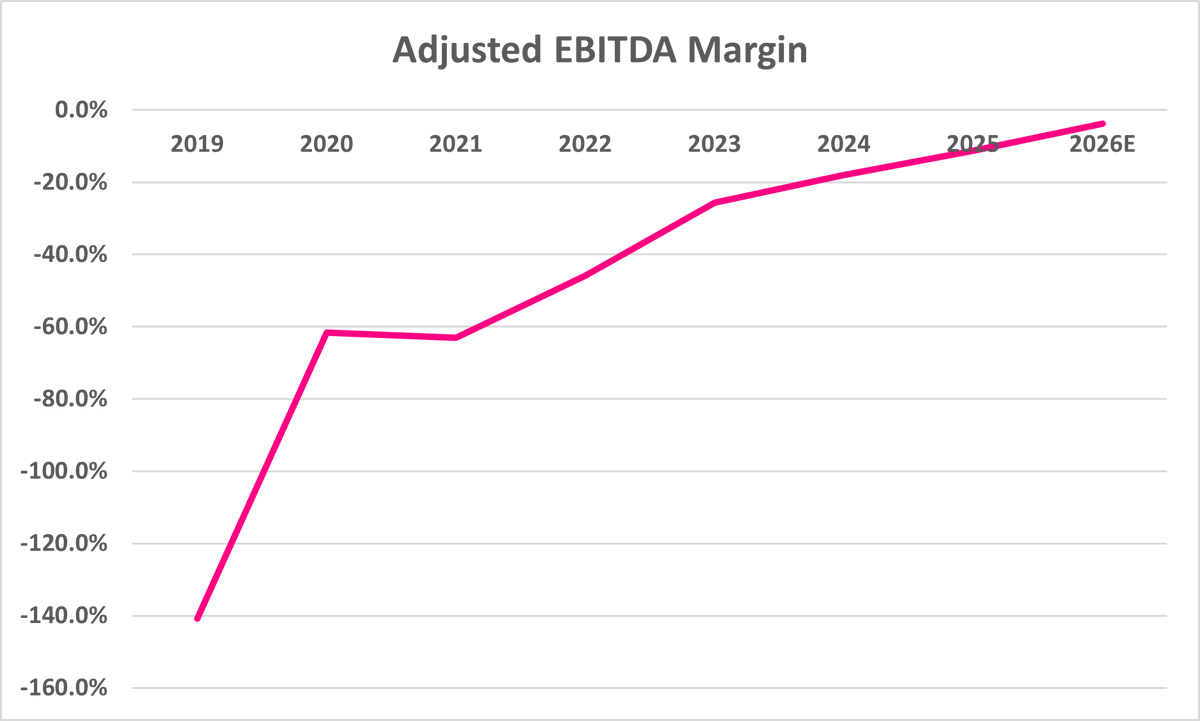
For 2026 I expected the adjusted EBITDA guidance to be better, which I suspect is the main reason why the stock is down. But really, this is meaningless to the long-term value of $LMND.
For four years they have said they will hit adjusted EBITDA breakeven by the end of 2026 and that was reiterated. After that will come GAAP income profitability and it's off to the races.
As profitability becomes more obvious over the coming quarters, more of Wall Street will wake up to Lemonade. Whether they lose $20 million or $50 million this year won't matter in a couple of years.
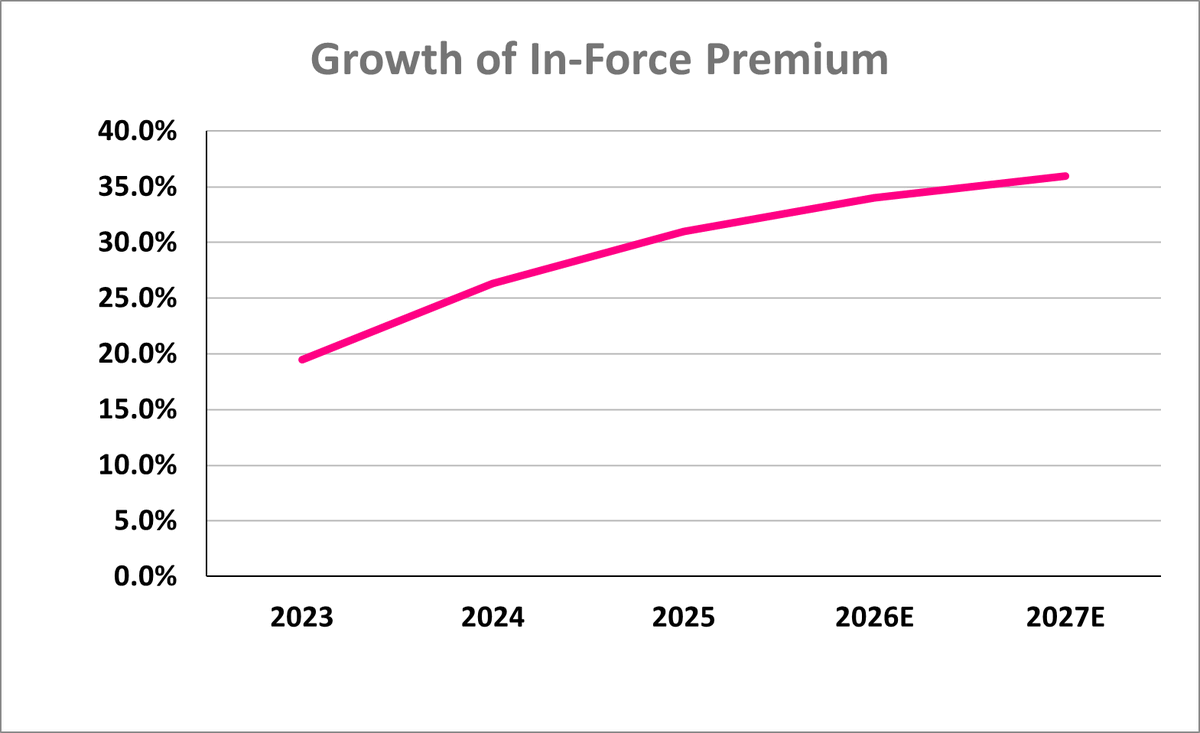
Finally, their IFP guidance and commentary does not add up. They guided to Q1 growth of +31.5% and 2026 growth of +31.8%. Yet they also guided to accelerating growth each quarter "into 27 and beyond".
Given how much control they have over growth and they reiterated numerous times their desire to accelerate growth each quarter, I expect them to beat the Q1 guide a little and then increase growth by maybe 0.5% per quarter. That would put us at +34% growth in 2026 and +36% in 2027.
So, two years from now we have an accelerating business bringing in $2.2 billion of premiums inflecting into GAAP profitability with a much more diversified, proven business. Yes please.
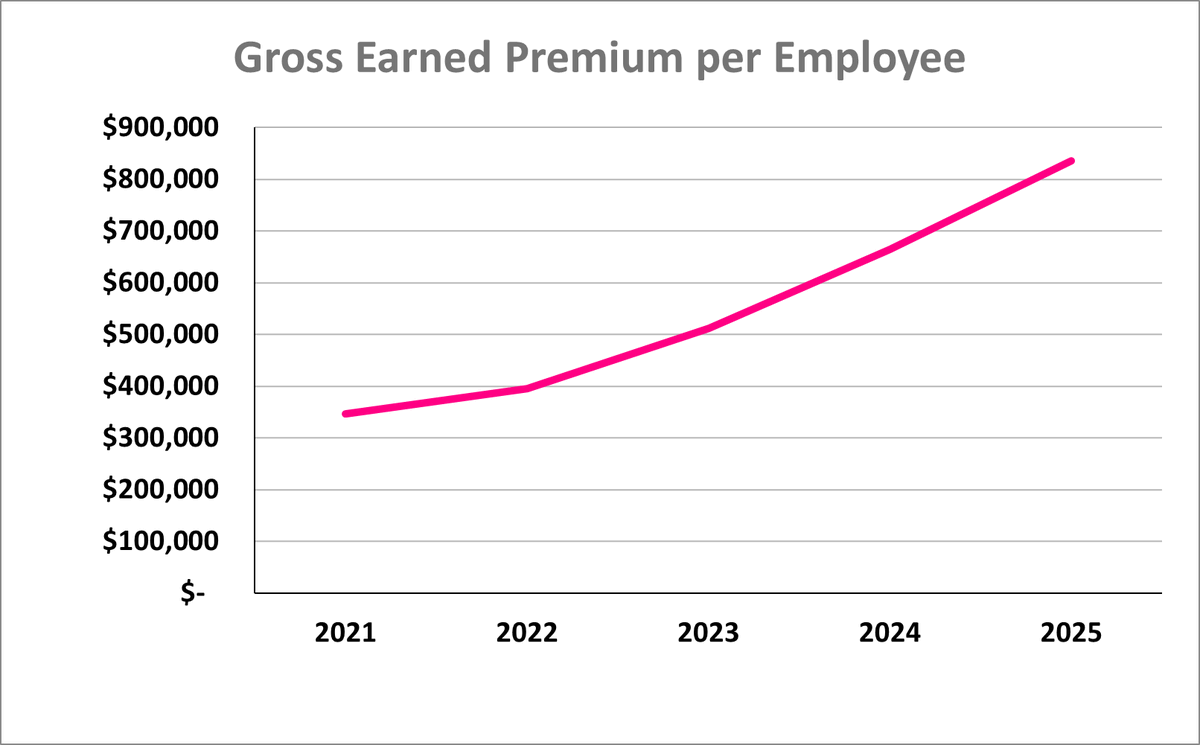
Now, $LMND chart porn:


English

@mxschumacher @RecurveCapital @Swany407 Yeah, I just never posted any thorough thoughts publicly so those two are easier to point to.
English

@TravisWiedower @RecurveCapital @Swany407 Okay, but did you read the Hindenburg and Gotham reports?
I will look for the two rebuttals you mentioned
English

My thoughts on Carvana Q4 2025 earnings
Zero concerns from me. $CVNA already has a moat that is close to insurmountable in my opinion, now they just have to scale the business up.
They added 10 production locations in 2025 (from 24 to 34), but business is not linear and there is a natural ebb and flow to growth.
Infrastructure is built out and employees are hired, which leads to lower utilization and new inefficiencies. Those get solved and financials improve, then they expand again and the cycle restarts.
This won't be the last quarter with headwinds as they continue to expand to manage 3 million units per year.
More important than some short-term operational headwinds is Carvana continuing to widen their moat and improve their best-in-class customer experience.
Decreasing their average delivery time by a full day in the past year while increasing selection by 20,000 cars and passing on lower shipping fees to customers are all big wins that will spin their flywheels faster.
As Carvana opens more reconditioning centers and inventory pools around the country, they get closer to their customers. Quicker delivery times are a better customer experience that increases conversion rates and sales.
As sales increase, Carvana has more money to invest in logistics, advertising, and inventory. Carvana’s broad selection of inventory leads to higher conversion rates and more sales.
As these logistics flywheels result in more cars sold, Carvana’s billions of dollars of fixed costs get leveraged over more sales. As the fixed cost per unit decreases and Carvana’s incremental variable expenses to sell a car are low, Carvana can price off that lower incremental cost. Lower prices mean more sales and more cars to push through their built-out infrastructure, which covers their fixed costs even more and further lowers the fixed cost per vehicle sold.
Compared to the massive problems that Ernie and his team have solved in the past, I have little doubt they'll get the new reconditioning centers operating more efficiently in no time (3-6 months according to Ernie).
It hit me this quarter that Ernie reminds me a lot of Reed Hastings and Jeff Bezos. All three are very customer obsessed and focused on winning the long game.
This quarter's conference call was another example of Ernie (like Reed and Bezos) constantly bringing short-term analyst questions back to the long-term investments they are making to dominate the industry and improve the customer experience over time. So much of Wall Street can't help but focus on the trees and miss the forest for these types of companies.
Moving on to the risk of the month in the markets, I love how little AI risk there is at Carvana. One, they are the most tech-first used car retailer. I don't think there is any chance CarMax or the thousands of mom and pops implement AI better than Carvana does.
Two, Carvana has a very wide moat that comes from real world assets. This is a physical business that moves 4,000-pound hunks of metal around. No amount of software or AI can get around the fact that facilitating the buying and selling of used cars requires a lot of land to store cars, inspection and recondition centers all around the country, and a fleet of trucks and haulers to move the cars around.
Finally, $CVNA dropped a lot after Q4 earnings last year as well. The market doesn't seem to like Carvana's vague and conservative annual guidance. Then they massively outperformed expectations throughout 2025. I expect the same this year.

English

@mxschumacher @RecurveCapital put out a good rebuttal to the Hindenburg report last year. @Swany407 recently did a thorough one for the Gotham report.
Those two reports are more thorough than what I could explain in a tweet or two.
English

@TravisWiedower have you read the reports from Hindenburg ( hindenburgresearch.com/carvana/ ) and Gotham ( gothamcityresearch.com/post/carvana-n… )
If yes, what specifically is wrong in their line of reasoning? Where are those profits coming from? Who is buying the car loans?
English

@Contributi18909 I disagree but feel free to read my long blog post describing their moats and rebute my points if you want. I'd love to learn if I am wrong.
English

@TravisWiedower Moat? The used car business (nor selling loans) is anything but a moat…
English

@mxschumacher I have yet to see a credible fraud allegation.
English

@TravisWiedower The elephant in the room are the credible fraud allegations, what do you think about those?
English

@BankBraavos @fundaai I'm old enough to remember when the bear case against Netflix was their crappy, low budget content with no IP.
English

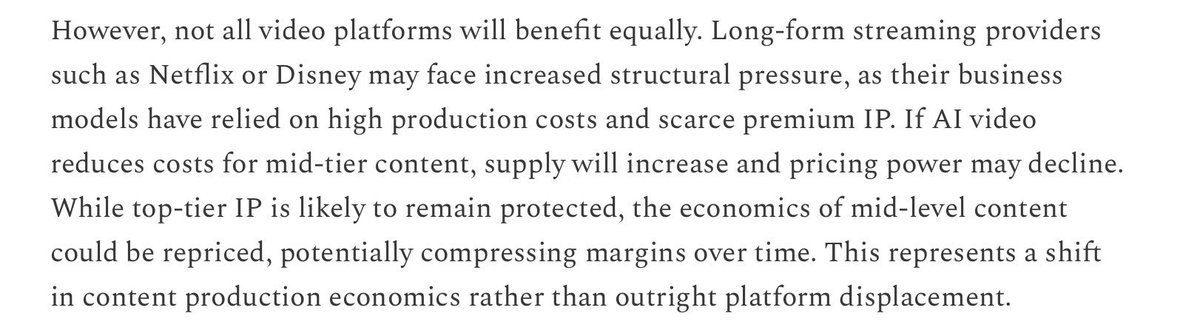
Have to push back on @fundaai. $NFLX is first and foremost a distribution platform. It buys content, so lower content costs are a tailwind. Netflix is not reselling individual titles, so there is no direct link between content costs and pricing power. It sells access to a library. The bigger the library, the stronger the pricing power, especially with great discovery that matches the right show to the right user. If you believe Netflix can buy and host AI generated shows, remember it started by buying Youtube shows too, then it is bullish for Netflix. The only bear case is a newcomer using AI to build a library Netflix cannot and also scaling to a 325M user base in a world where CAC is far higher than when Netflix did it. If you do not buy that, sleep well.

English