
T-Jones retweetledi
T-Jones
14.8K posts

T-Jones
@TreyJones_
#UL Alumni
iPhone: 30.207537,-92.018 Katılım Eylül 2009
4.3K Takip Edilen891 Takipçiler

T-Jones retweetledi

T-Jones retweetledi
T-Jones retweetledi

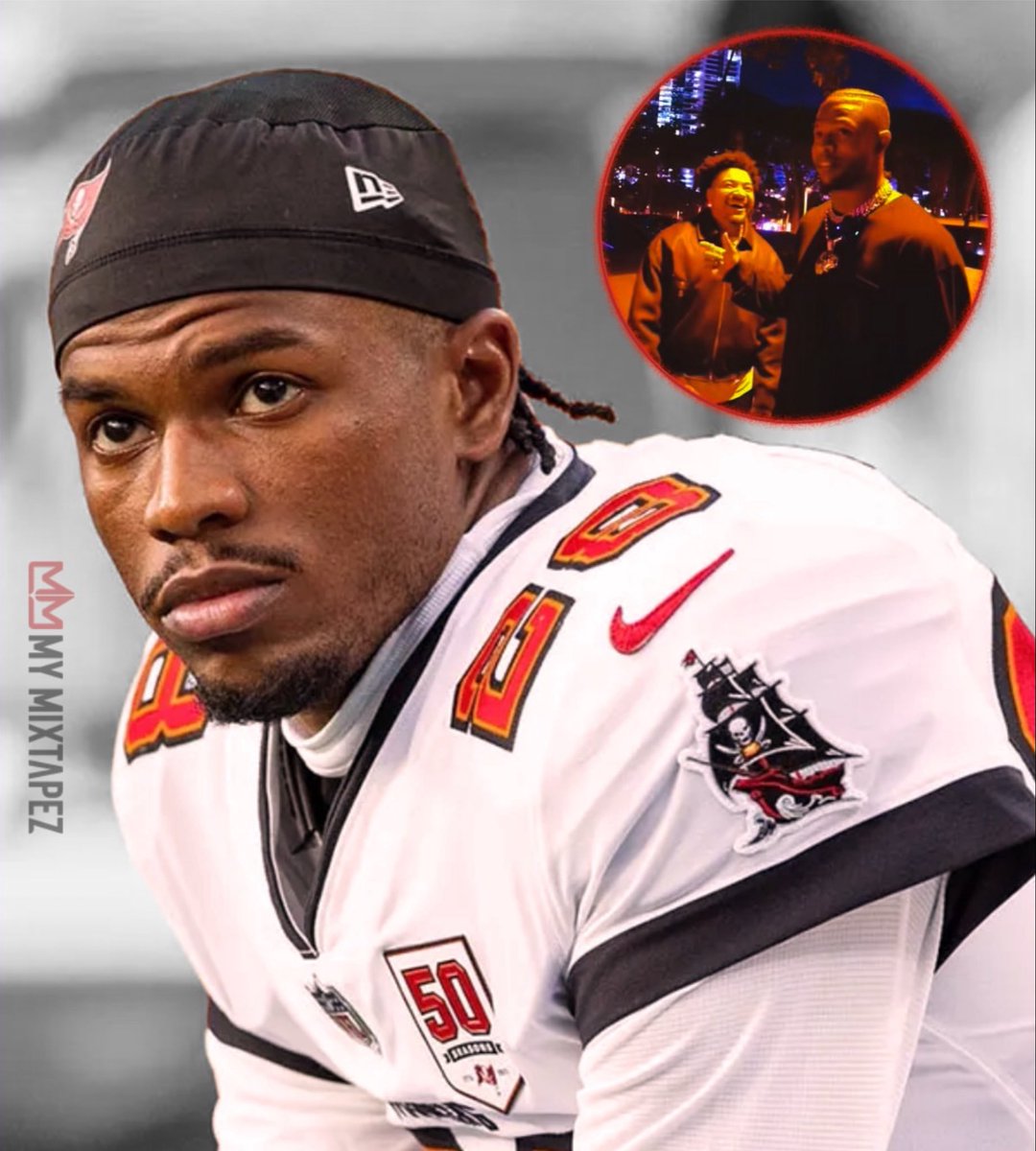
Shilo Sanders says he's no longer training for the NFL & content with focusing on other career avenues. 👀
English
T-Jones retweetledi

T-Jones retweetledi

Tens of thousands of slabs of reinforced concrete weighing up to 1,000 tonnes are being abandoned in the ground as turbines hit the end of their working lives.
The reinforced concrete base of a typical 2-3 MW wind turbine can weigh anywhere from 400 to 800 tonnes. But the concrete foundations of even bigger turbines (5 MW+) can exceed 1,000 tonnes. As lifespans end these massive concrete monoliths are abandoned where they lie. This is an issue of significant contention.
In many jurisdictions, including Australia and the US, decommissioning regulations only require the operator to ensure the concrete foundation stays at a depth of 1 meter (approx. 3.3 feet) below the surface.
The remaining 3-plus metres of these steel-reinforced concrete fossils are typically left in the ground indefinitely. Over the decades, they can interfere with deep-soil hydrology or remain as a permanent industrial remnant in rural landscapes.
Contracts usually say operators are responsible for decommissioning. But the financial reality is complex. Bank guarantees or bonds set aside for removal (around €50,000 or $100,000 per turbine) are frequently far too low. Real-world estimates for total removal and site restoration can exceed $200,000 to $400,000 per unit.
If the cost of total removal ($200k–$400k) exceeds the bond set aside by the operator ($50k–$100k), there is a strong financial incentive for companies to declare bankruptcy . Or they sell the asset to a shell company as the turbine nears its end-of-life, leaving a landowner with the bill.
While the steel towers are more easily recyclable, their triple fibreglass blades are notoriously difficult to process and often end up in turbines blade graveyards.
The theoretical benefits from renewable technology are meaningless compared with the staggering environmental costs.

English
T-Jones retweetledi

T-Jones retweetledi
In 1998 Shaquille O'Neal had a $40 million deal with Reebok.
Then a mother stopped him outside an arena and changed everything. She was furious. Told him he was charging kids too much for his shoes. Shag pulled $2,000 from his pocket and tried to hand it to her.
She smacked it away. "Why don't you make a shoe that's affordable?" That same day Shaq called Reebok. Told them to keep the $40 million. Walked away completely.
Then he went to Walmart and created his own shoe line priced at $19 to $29. Everyone said it would never work.
He has now sold over $10 billion worth of affordable shoes. Roughly one million pairs every single month. But the story doesn't end there. While building his shoe empire Shaq became the second largest individual shareholder in Authentic Brands Group, the company that owns Reebok, Forever 21, Brooks Brothers, Sports Illustrated and over 50 other global brands valued at $20 billion. In 2022 ABG bought Reebok for $2.5 billion. Shaq came back as President of Basketball Operations. Since his return Reebok revenue has grown from $1.6 billion to $5 billion.
He didn't just walk away from Reebok.
He came back 25 years later and helped rebuild it into a $5 billion brand.
Net worth today, $500 million. Annual income in retirement $95 million a year. More than triple what he made at the peak of his playing career.
English
T-Jones retweetledi

An unusually orange snowy owl spotted in Michigan has left scientists puzzled over its rare coloring.
Wildlife photographer Julie Maggert captured the bird, nicknamed “Rusty” by locals. While snowy owls are normally known for their white feathers, experts believe the owl’s unusual reddish-orange color may have been caused by dye, de-icing fluid, or a rare genetic mutation.


English
T-Jones retweetledi

T-Jones retweetledi

LeBron James says he isn't a billionaire. Forbes has him at $1.4 billion. He's right.
He went on Complex this week, held up a $405,040 Richard Mille, and said the watch was free. He said his bank account holds a couple thousand. He said his kids have all the money now.
Every line is accurate.
The Lakers paid him $48.7 million this season. His off-court income runs around $80 million annually from Nike, PepsiCo, Beats, and a dozen other brands. None of that sits in a checking account at age 41. It moves into investment vehicles the same week it clears.
The Richard Mille is the RM 65-01 LeBron edition, limited to 150 pieces globally. He didn't buy it. He co-designed it. Richard Mille gave him 001/150 because every paparazzi photo of his wrist sells the next 20 to oil magnates and tech founders. The watch is technically free in the same way the MacBook Tim Cook holds at a keynote is technically free. The brand pays the principal to wear the product.
The 2011 Fenway Sports Group deal is the textbook version of the trade. LeBron got Liverpool FC equity for marketing services, zero cash out of pocket. Liverpool was valued around $300 million at the time. The club sits above $5 billion today. He converted that stake into a broader FSG position in 2021, which now also includes the Red Sox and Pittsburgh Penguins. FSG itself runs north of $12 billion. He paid nothing for any of it.
SpringHill is the bigger one. RedBird Capital led a 2021 round at a $725 million valuation, with Nike and FSG also putting capital in. LeBron remained the largest single shareholder. The company just merged with Fulwell 73, which extends the slate without diluting his control. None of that equity is liquid. It compounds inside a holding structure that does not show up on a bank statement.
Now the kids. "They got all the money now. They take care of dad." Read that as an estate plan said out loud. Move appreciating assets into trusts in your heirs' names while the assets are still small. Pay gift tax on the original valuation. The S&P doubles, the trust doubles, the IRS already saw its slice. The Walton family ran this on Walmart in the 1980s. The Mars family ran it on candy.
The Complex headline is "LeBron reveals he's not a billionaire."
$1.4 billion is the entity. Couple thousand is the man.
English
T-Jones retweetledi

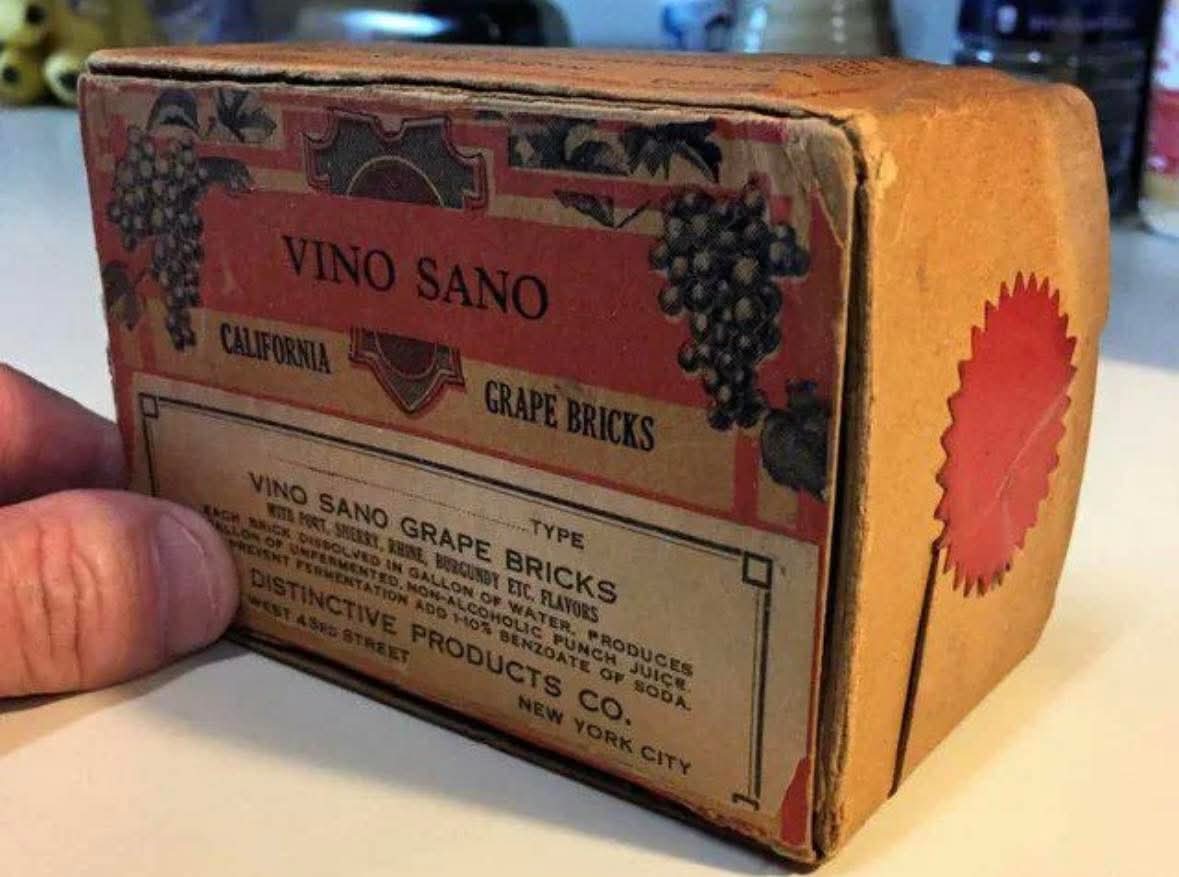
During Prohibition, grape farmers were hit hard because the 18th Amendment wiped out the legal wine industry overnight. To survive, they pivoted to selling “wine bricks,” semi‑solid blocks of concentrated grape juice that were perfectly legal for making non‑alcoholic juice. But everyone understood the wink behind the product.
Labels included playful warnings telling customers not to dissolve the brick in water and leave it in a dark cupboard for twenty days, because that would cause fermentation and turn it into wine. This allowed farmers to obey the letter of the law while giving consumers a roadmap to quietly make wine at home.
As demand grew, some companies even added herbs and flavorings to mimic varieties like Burgundy or port, making the bricks even more appealing to Americans who weren’t ready to give up their wine culture.
Despite federal crackdowns on illegal alcohol, wine bricks became one of the most widespread and humorous loopholes of the era, helping families maintain old traditions behind closed doors. This is how Americans used creativity and a bit of mischief to outsmart one of the most unpopular laws in U.S. history.
The wine bricks didn’t just save grape farmers, they reshaped the entire California wine industry. Before Prohibition, most vineyards grew delicate European varietals meant for fine wine. But those grapes couldn’t survive long train rides to the East Coast, where most wine‑brick buyers lived. So farmers ripped out huge sections of premium vineyards and replanted thick‑skinned, tough grapes like Alicante Bouschet, which could handle cross‑country shipping without rotting.
The result was a massive, lasting shift in American viticulture: Prohibition accidentally created a nationwide demand for hardy, deeply colored grapes, and when the ban ended, California’s vineyards were full of varieties chosen not for taste, but for survival.
#archaeohistories
English
T-Jones retweetledi


T-Jones retweetledi

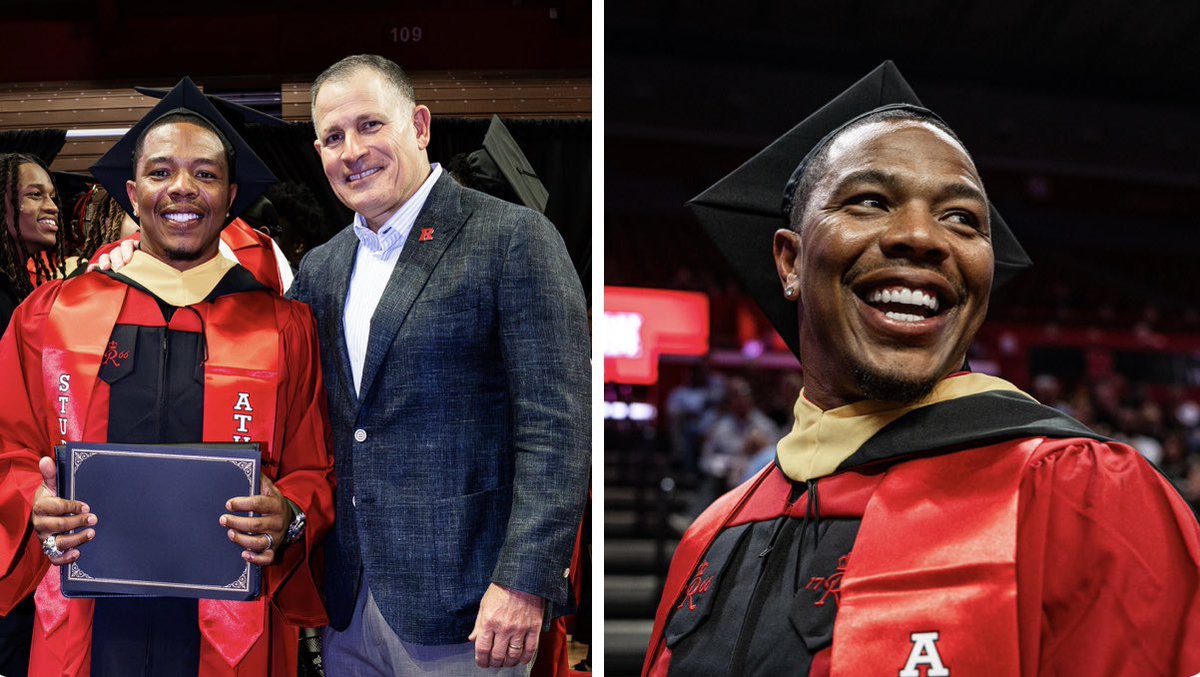
Former #Ravens All-Pro RB Ray Rice returned to Rutgers to earn his degree and has now officially graduated. 🎓
(📸 @RFootball)
English