Trisha Mohring

1.9K posts

Trisha Mohring banner
Trisha Mohring

Trisha Mohring

@TrishaMohring

MS, Medical Sciences @UFMedicine | PG Adv Dip Counseling & Psychology | BA, Psychology | Songwriter w/ songs on #CBS • #HBOMax • #FreeformTV • #Netflix

Naples, FL / NY / MI Katılım Eylül 2012
484 Takip Edilen1K Takipçiler
Sabitlenmiş Tweet
Trisha Mohring
Trisha Mohring@TrishaMohring·
“Difficult patients may be intersubjectively created. We are usually doing something that makes them more difficult. We have our role in this.” — Glen Gabbard, M.D.
English
3
23
172
30.4K
Rob Henderson
Rob Henderson@robkhenderson·
"The most perfidious way of harming a cause consists of defending it deliberately with faulty arguments." -Nietzsche (The Gay Science) You're too dumb to understand what perfidious means but after you look it up you will realize how perceptive this quote is.
English
12
23
301
20.1K
Trisha Mohring
Trisha Mohring@TrishaMohring·
@BeReasonable01 Yep. Passed a breathalyzer test (0.000 alcohol) but refused a urine test so it’s possible you’re correct.
English
1
0
1
33
Trisha Mohring
Trisha Mohring@TrishaMohring·
@BeReasonable01 Can’t speak to that, but the other driver involved saw Woods in his rearview mirror attempting to overtake him, which is super reckless on that particular stretch of road.
English
1
0
1
28
Trisha Mohring retweetledi
#WOMENSART
#WOMENSART@womensart1·
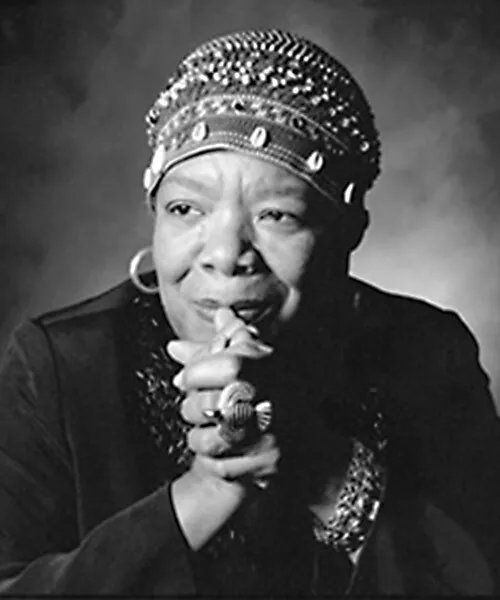
“Each time a woman stands up for herself.... she stands up for all women.” - Maya Angelou #WomensArt
#WOMENSART tweet media
English
22
612
2.3K
24.9K
Trisha Mohring retweetledi
Joshua D Phillips
Joshua D Phillips@JoshPhillipsPhD·
I would say that @Chik_Fil_A should be in charge of TSA lines, but then the airports would be closed on Sundays.
English
6
5
66
1.6K
Big Brain Psychology
Big Brain Psychology@BigBrainPsych·
Yale's most popular course in history has 3.7M students and its core lesson is about why you're exhausted: Dr. Laurie Santos, Yale Professor of Psychology and creator of "Psychology and the Good Life," the most enrolled course in Yale's history, says the biggest obstacle to happiness at work isn't stress. It's that almost nobody understands what burnout actually is ↓ Burnout isn't stress, overwork or just being tired. It's a clinical syndrome with 3 precise symptoms. Symptom 1: Emotional Exhaustion Not physical tiredness. One more thing on the plate and everything collapses. A full week of rest and they're still depleted on Monday. Rest doesn't restore them anymore. Symptom 2: Depersonalization A permanent short fuse. Every request quietly irritates. Compassion fatigue sets in for people they used to genuinely care about. This isn't a personality change. Symptom 3: Personal Ineffectiveness The work is getting done but it feels pointless. Even a perfect performance feels hollow. Here's where Santos' happiness research gets relevant ↓ Researcher Christina Maslach spent the 1980s–1990s mapping what creates burnout. Santos says her findings feel written about 2025: • Overwhelming workload Always-on culture with no room to decompress. • Values mismatch People join for one thing, the job becomes another. • Unfairness Unequal pay, invisible labor and recognition that never arrives • Broken reward systems Intrinsic meaning replaced by metrics That last one sits at the heart of Santos' happiness research. When COVID stripped intrinsic meaning from work, wellbeing collapsed for millions. Missions evaporated and jobs became unrecognizable. A values mismatch and it hits harder than any workload ever could. Santos offers 3 questions to self-diagnose: 1) Still emotionally depleted after a full weekend off? 2) Embarrassed by how short your fuse has gotten? 3) Feel like even doing your job perfectly wouldn't matter? If yes, you're not just stressed. You may be burning out. The fix has two sides ↓ Organizationally: workloads, values alignment, and fairness need to change. No amount of self-care fixes a broken system. Personally: Santos' research reveals one overlooked pattern. People give their best to work and leave scraps for everything else. When identity lives inside a job title and the job shifts, there's nothing left to stand on. Rebuilding outside of work matters: • Reengage with hobbies and movement • Invest in relationships outside your career • Build an identity beyond what you produce Burnout isn't the opposite of productivity. It's the opposite of happiness. And Santos has spent her career proving both can be deliberately rebuilt. — Thanks for reading! Enjoyed this post? Follow @BigBrainPsych for more content like this.
Big Brain Psychology tweet media
English
2
13
34
3.3K
Trisha Mohring retweetledi
Daniel C. Potts, MD, FAAN
Daniel C. Potts, MD, FAAN@DanielCPotts·
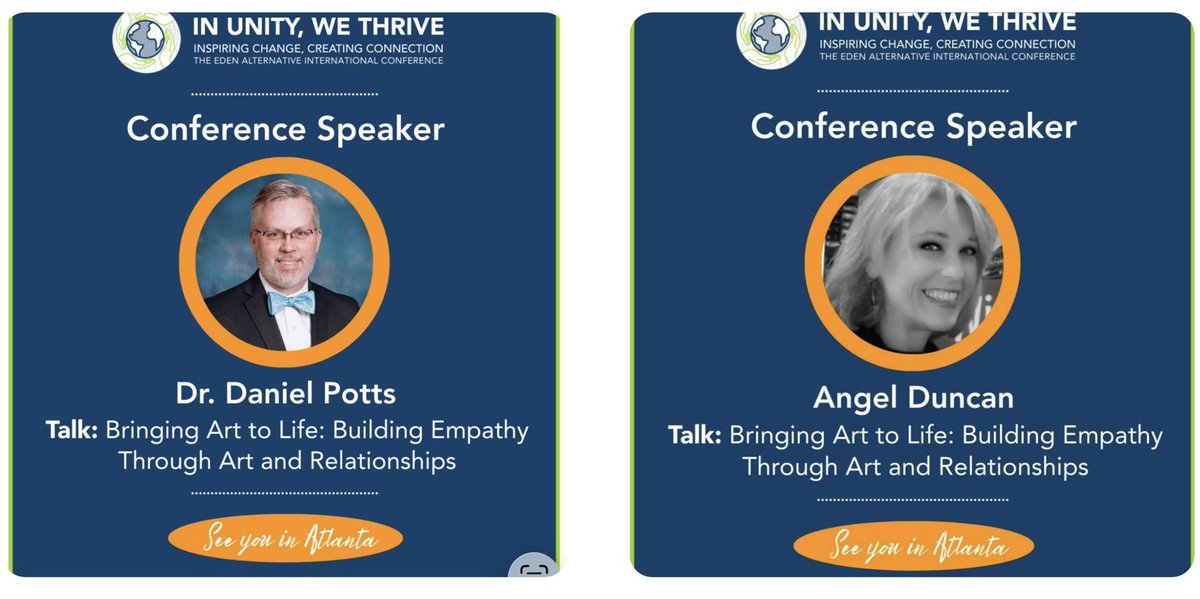
It’s an honor to present at the Eden Alternative International Conference in Atlanta today with my friend and colleague, Dr. Angel C. Duncan, PhD, MA-MFT, ATR. We will be highlighting our empathy-building, intergenerational, expressive arts/life story program, Bringing Art to Life, from Cognitive Dynamics Foundation. #arttherapy #expressivearts #neuroarts #alzheimers #dementia #BATL #lesterslegacy #bringingarttolife #empathy #research #cultureofcompassion
Daniel C. Potts, MD, FAAN tweet media
English
0
2
3
145
Trisha Mohring
Trisha Mohring@TrishaMohring·
Day 2 at the Eden Alternative 2026 International Conference in Atlanta. A compelling keynote from Jean Hartnett: “From the Research to the Me-search”—understanding trauma and how awareness transforms care. #dementiaactionalliance
Trisha Mohring tweet media
English
0
0
4
164
Trisha Mohring retweetledi
Dr. Linda Berman
Dr. Linda Berman@LindaBerman4·
“In three words I can sum up everything I’ve learned about life: It goes on.” Robert Frost
English
1
1
15
593
Trisha Mohring retweetledi
The Nobel Prize
The Nobel Prize@NobelPrize·
Happy International Women’s Day! We’re celebrating women who have changed the world. Here are all of the amazing women who have received the #NobelPrize and their remarkable achievements at the time of the award. Tell us about the women who inspire you the most – and why. #InternationalWomensDay
English
101
1.7K
3.5K
109.2K
Mel
Mel@the_mel_jar·
Good morning, how is everyone here doing with their repressed bisexuality today?
English
8
0
20
1.2K
Trisha Mohring retweetledi
DaVinci
DaVinci@BiancoDavinci·
View from a window at the Mill Valley Public Library in California.
DaVinci tweet media
English
246
2.1K
22.2K
743.2K
lorenzomega
lorenzomega@lorenzomega_·
tutti ti dicono vai in terapia, vai in terapia. nessuno ti dice come capire se il terapeuta sbagliato ti sta rubando anni
Italiano
43
33
1.4K
97.6K
Trisha Mohring retweetledi
Dr. Dominic Ng
Dr. Dominic Ng@DrDominicNg·
i regret to inform you that personal growth rarely comes from acquiring new knowledge and almost always from: - getting humiliated - showing up terrified and doing it anyway - admitting you might be the problem
English
290
11.9K
83.4K
1.2M
Trisha Mohring retweetledi
Big Brain Psychology
Big Brain Psychology@BigBrainPsych·
Otto Kernberg explains narcissistic personality disorder as a defense mechanism: Kernberg is a 96-year-old Austrian-born American psychoanalyst, professor of psychiatry at Weill Cornell Medicine, and the most-cited psychoanalyst in the world. His work helped shape how narcissistic personality disorder is defined in the DSM. He describes narcissistic personality disorder as one of the severe personality disorders—but one that operates differently from the others. Beneath the surface, these individuals have a borderline personality organization: a fragmented self-concept, unstable views of others, and an internal struggle between idealized and persecutory experiences. But rather than live in that chaos, they construct what Kernberg calls a "pathological grandiose self." "It is constituted by a combination of ideal aspects of the self, ideal aspects of others that have been incorporated as if one possessed them, and ideal aspirations of the self as if one had achieved them." In other words, the person absorbs the qualities they admire in others and treats their own aspirations as already achieved—building an internal world of grandiosity and self-sufficiency. The cost? Everyone else gets devalued. "Others are devalued; 'we don't need them, we are fine, I'm just great by myself, I don't need anybody else.'" Kernberg explains that the outside world then gets divided into three categories: depreciated, worthless people; those who are great and must be admired so their qualities can be absorbed; and potential enemies who must be fought off. This structure creates an illusion of stability. On the surface, the person appears integrated and secure—far more composed than others with severe personality disorders. But underneath the self-satisfaction and grandiosity lies "an incapacity to love others, and an internal sense of grandiosity and emptiness at the same time." There is no genuine mutuality in their relationships. They need admiration constantly but cannot reciprocate. In therapy, this dynamic plays out directly with the therapist. Kernberg describes a long-term power struggle: "They have to show their superiority to the therapist and keep themselves superior to the therapist because the only alternative is then if they would need the therapist, it means that the therapist is superior to them and they would feel immediately inferiorized and humiliated." The therapeutic work involves gradually clarifying and resolving this superiority-inferiority battle, which then reveals what was always underneath: "the underlying borderline structure against which the narcissistic structure was a defense"—the severe splits between idealized and persecutory relationships that the grandiose self was built to hide. The narcissistic personality, in Kernberg's framework, is not the core problem. It is the solution the psyche constructed to avoid an even more painful one.
English
76
591
2.7K
291.5K