The opening of the Strait of Hormuz is not unrestricted and comes with three conditions:
1. Only commercial ships are allowed to pass; military vessels or shipments from belligerent parties are not permitted to transit.
2. The management and determination of which ships may pass lies with Iran.
3. This transit occurs only via the route designated by Iran.
سعودیہ میں ایک سٹور پر سوشل ایکسپیریمنٹ کیا گیا۔ جہاں لوگ غریب بزرگ کی مدد کرنے کے لئے بدتمیزی کرنے والے کیشیر سے لڑ پڑے۔ اور اس بزرگ کا بل دینے کے لیے ضد کرنے لگے۔
In line with the ceasefire in Lebanon, the passage for all commercial vessels through Strait of Hormuz is declared completely open for the remaining period of ceasefire, on the coordinated route as already announced by Ports and Maritime Organisation of the Islamic Rep. of Iran.
سعودي تزوج سودانيه في السودان وانجب منها ولدا ً ثم طلقها وحمل ابنه معه الى السعودية وأخبر ابنه بان امه توفيت ولما كبر الولد وصار عمره اكثر من ثلاثين سنة اعترف الأب للولد بان امه حيه وهي على قيد الحياة ذلك هو لاعب نادي النصر السعودي عبد الله خوجلي قامت احدى القنوات الفضائية باجراء لقاء معه وكانو قد احضروا امه سرا ً من السودان ثم فاجئته بحضورها.. شوف لقاء الام أول مرة.
China never ceases to amaze us!
Indeed, mountain people all over the world are so wonderful. Probably because of their intimate attachment with nature, they are all so simple and kind hearted❤️❤️❤️
There is nothing Trump hates more,... than being ridiculed, laughed at- and called "BORING."
Nothing.
----> Like when the guys from Good Liars infiltrated a Trump speech, pretended to be MAGA- and,...
"BORING! This is BORING! Tell some jokes! You're boring! BORING! - BORING!"
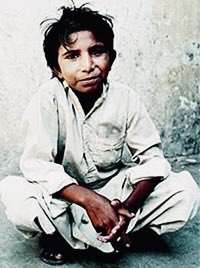
On this day 31 years ago, a 12-year-old boy was shot and killed while riding a bicycle with his cousins in a village near Lahore, Pakistan.
His name was Iqbal Masih.
At four years old, his family sold him to a carpet factory owner to repay a debt of 600 rupees, less than $12. For the next six years, he was chained to a loom. He worked 12 hours a day, seven days a week, for a few cents. He was beaten with a carpet fork when he slowed down. The factory owners deliberately underfed the children so their fingers would stay small enough for the intricate weaving.
By the time he was 10, he stood just four feet tall, 12 inches shorter than the average boy his age.
One morning, he escaped. He jumped on the back of a tractor heading to a meeting about bonded labour. He heard a man explain that what the factory owners were doing was illegal under Pakistani law. When the man asked if anyone wanted to speak, Iqbal stepped up to the microphone.
He never stopped.
He helped free over 3,000 children from bonded labour in carpet factories across Pakistan. He completed five years of schoolwork in three. He spoke at international conferences in Sweden and the United States. He told a room full of adults in Boston that he wanted to become a lawyer so he could free every enslaved child in Pakistan. He was 12 years old. Brandeis University offered him a full scholarship and said they would be waiting for him.
When asked why he would return to Pakistan when he knew his life was in danger, he said his mission was more important than his life.
On Easter Sunday 1995, he was shot in the back while cycling home. He was hit by over 120 shotgun pellets. His cousins were barely touched. He was the target.
His funeral was attended by 800 people. In the days that followed, 3,000 people marched through Lahore. Half of them were under the age of 12.
After his death, a group of seventh-graders from a school in Massachusetts where Iqbal had once spoken raised $25,000 and built a school in his name in Pakistan. April 16 is now recognised as the International Day Against Child Slavery. The United States Congress created the Iqbal Masih Award for the Elimination of Child Labour in his honour. It is still given out every year.
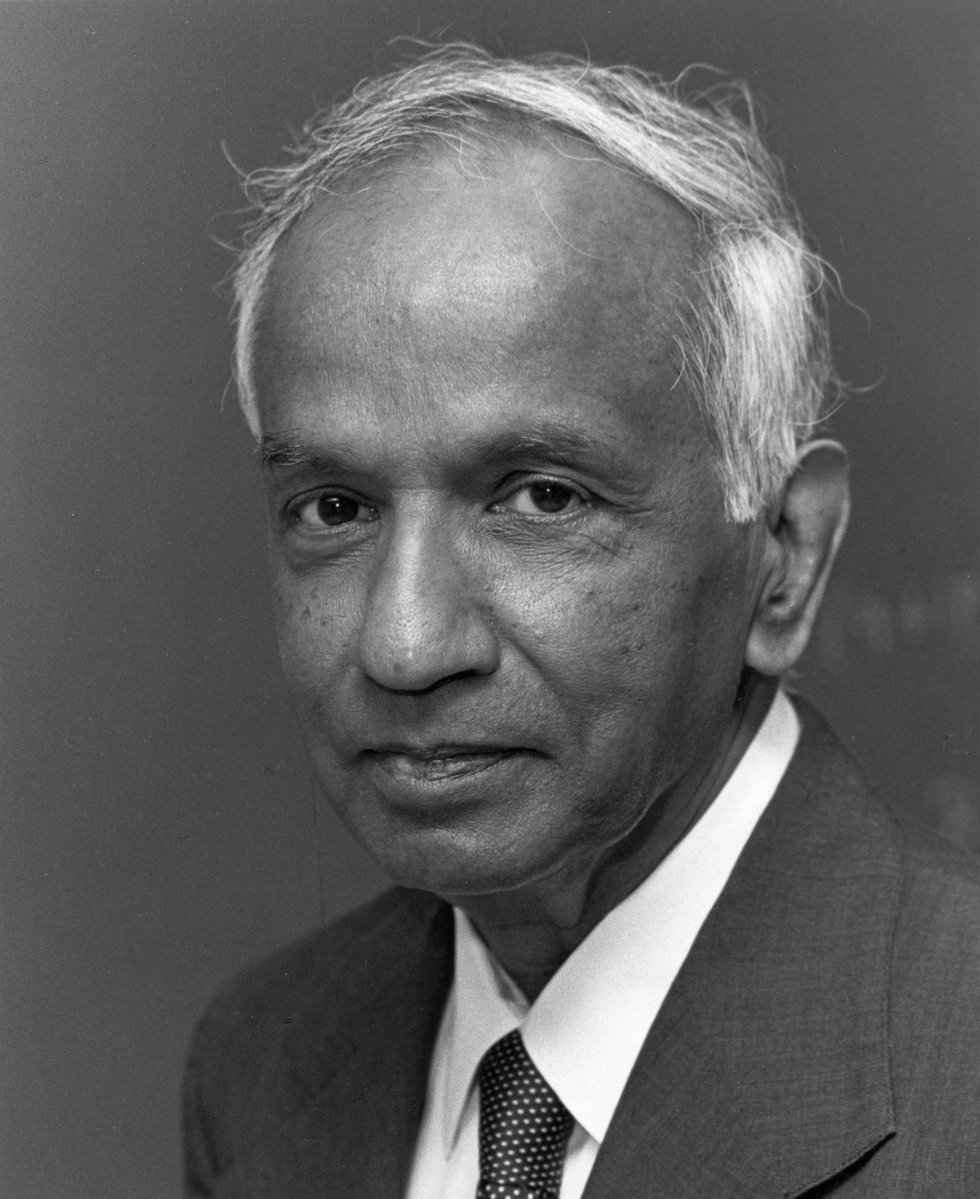
His name was Subrahmanyan Chandrasekhar.
In 1930, he was 19 years old. A boy from Madras is boarding a ship to England on a scholarship to Cambridge.
During that sea voyage, he opened his notebook and started calculating.
By the time the ship docked in Southampton, he had worked out something no one in the history of science had understood before.
Stars do not simply fade and die. Stars above a certain mass collapse into themselves with such force that nothing can stop them. Not light. Not time. Not physics as anyone understood it.
What he had discovered on that ship would eventually be called black holes.
He arrived at Cambridge. He spent four years refining his calculations. He showed them to Arthur Eddington. The most famous astronomer in the world at that time. The man who had proven Einstein right.
Eddington watched his progress. Encouraged him. Asked him to present his findings at the Royal Astronomical Society in January 1935.
Then Eddington gave his own presentation immediately after.
He publicly ridiculed Chandrasekhar in front of the entire scientific establishment. He said the theory had no physical meaning. He called it absurd. He used his enormous reputation to crush a 24-year-old Indian student in front of everyone who mattered.
Chandrasekhar left that conference devastated.
He appealed to the president of the International Astronomical Union. He was told not to respond to Eddington publicly.
He left England.
He went to America. To the University of Chicago. He drove 150 miles every week to teach a class of just two students. Those two students were Tsung-Dao Lee and Chen-Ning Yang.
Both of them won the Nobel Prize before he did.
He spent 50 years working quietly. He never stopped.
In 1983, the Nobel Committee called.
53 years after he worked out the existence of black holes on a ship as a teenager, the Nobel Prize in Physics was his.
NASA later named its most powerful X-ray telescope after him.
The Chandra X-Ray Observatory.
The universe he described is real. Eddington was wrong. The boy on the boat was right.
Most Indians have never heard his name.
They should say it every day.
Follow for real stories about Indians who changed the world.