
Sabitlenmiş Tweet
TurbineAI
32 posts


TurbineAI
@TurbineAI
AI is coming for your job — or making it 10x better. I explain which. Weekly deep dives on automation, agents & career strategy
United States Katılım Şubat 2026
32 Takip Edilen2 Takipçiler
The " implied new meta" (per Karpathy) is writing maximally forkable repos. We are moving from a world of "Manual Configuration" to "Skill Curation." Your value in 2026 = Your ability to orchestrate these Claws to do the work of a 5-person team. Don't get swept away by the wave. Learn to drive the Turbine. ⚙️🌊
English
Why are Mac Minis selling like "hotcakes" at the Apple Store? Because Claws work best when they have a "physical horcrux"—a dedicated, local machine they can "possess" to control your home automation, local files, and private keys. 🏠👻 Local-first AI is no longer a hobby; it’s the only way to have a sovereign digital assistant you can actually trust.
English
The era of the "Chatbot" is over. The era of the "Claw" has begun. 🦞 Andrej Karpathy (@karpathy) just dropped a bombshell: AI agents are evolving into a new layer of the stack. If you’re still thinking in terms of prompts, you’re already behind. Here’s what a "Claw" is and why it's changing the 2026 job market. 🧵
Andrej Karpathy@karpathy
Bought a new Mac mini to properly tinker with claws over the weekend. The apple store person told me they are selling like hotcakes and everyone is confused :) I'm definitely a bit sus'd to run OpenClaw specifically - giving my private data/keys to 400K lines of vibe coded monster that is being actively attacked at scale is not very appealing at all. Already seeing reports of exposed instances, RCE vulnerabilities, supply chain poisoning, malicious or compromised skills in the registry, it feels like a complete wild west and a security nightmare. But I do love the concept and I think that just like LLM agents were a new layer on top of LLMs, Claws are now a new layer on top of LLM agents, taking the orchestration, scheduling, context, tool calls and a kind of persistence to a next level. Looking around, and given that the high level idea is clear, there are a lot of smaller Claws starting to pop out. For example, on a quick skim NanoClaw looks really interesting in that the core engine is ~4000 lines of code (fits into both my head and that of AI agents, so it feels manageable, auditable, flexible, etc.) and runs everything in containers by default. I also love their approach to configurability - it's not done via config files it's done via skills! For example, /add-telegram instructs your AI agent how to modify the actual code to integrate Telegram. I haven't come across this yet and it slightly blew my mind earlier today as a new, AI-enabled approach to preventing config mess and if-then-else monsters. Basically - the implied new meta is to write the most maximally forkable repo and then have skills that fork it into any desired more exotic configuration. Very cool. Anyway there are many others - e.g. nanobot, zeroclaw, ironclaw, picoclaw (lol @ prefixes). There are also cloud-hosted alternatives but tbh I don't love these because it feels much harder to tinker with. In particular, local setup allows easy connection to home automation gadgets on the local network. And I don't know, there is something aesthetically pleasing about there being a physical device 'possessed' by a little ghost of a personal digital house elf. Not 100% sure what my setup ends up looking like just yet but Claws are an awesome, exciting new layer of the AI stack.
English
Exactly, Andrej. Claws are the 'Operating System' for LLM Agents. We’re moving past the 'Chatbot' era into the 'Runtime' era. The fact that NanoClaw uses skills to rewrite its own configuration is the first real example of Self-Evolving Middleware. If the repo is 'maximally forkable,' then the job of the dev shifts from writing code to Curating Skills.
English

Bought a new Mac mini to properly tinker with claws over the weekend. The apple store person told me they are selling like hotcakes and everyone is confused :)
I'm definitely a bit sus'd to run OpenClaw specifically - giving my private data/keys to 400K lines of vibe coded monster that is being actively attacked at scale is not very appealing at all. Already seeing reports of exposed instances, RCE vulnerabilities, supply chain poisoning, malicious or compromised skills in the registry, it feels like a complete wild west and a security nightmare. But I do love the concept and I think that just like LLM agents were a new layer on top of LLMs, Claws are now a new layer on top of LLM agents, taking the orchestration, scheduling, context, tool calls and a kind of persistence to a next level.
Looking around, and given that the high level idea is clear, there are a lot of smaller Claws starting to pop out. For example, on a quick skim NanoClaw looks really interesting in that the core engine is ~4000 lines of code (fits into both my head and that of AI agents, so it feels manageable, auditable, flexible, etc.) and runs everything in containers by default. I also love their approach to configurability - it's not done via config files it's done via skills! For example, /add-telegram instructs your AI agent how to modify the actual code to integrate Telegram. I haven't come across this yet and it slightly blew my mind earlier today as a new, AI-enabled approach to preventing config mess and if-then-else monsters. Basically - the implied new meta is to write the most maximally forkable repo and then have skills that fork it into any desired more exotic configuration. Very cool.
Anyway there are many others - e.g. nanobot, zeroclaw, ironclaw, picoclaw (lol @ prefixes). There are also cloud-hosted alternatives but tbh I don't love these because it feels much harder to tinker with. In particular, local setup allows easy connection to home automation gadgets on the local network. And I don't know, there is something aesthetically pleasing about there being a physical device 'possessed' by a little ghost of a personal digital house elf.
Not 100% sure what my setup ends up looking like just yet but Claws are an awesome, exciting new layer of the AI stack.
English
This is how stablecoins finally kill legacy banking rails. The friction in 2026 isn't the transaction speed—it's the onboarding loop. By decoupling identity from the application layer, @idOS_network allows 'Stablecoin Neobanks' to scale without the 'Walled Garden' trap. Verify once, and the entire OpenFi stack opens up. That's how we get the next billion users.
English

What was truly missing in Web3 wasn't hype, but identity infrastructure.
@idOS_network focuses precisely on this:
It builds an open-source, chain-independent, and completely user-dominated identity layer.
Imagine:
• You're verified once, you don't have to repeat the same KYC process in different applications.
• Your data is encrypted and under your control, not in a central company.
• You grant access to the platform you want, and revoke it with a single click when you don't want it anymore.
This isn't just "convenience."
This means that in Web3, data ownership truly passes to the user.
The concept of portable identity is crucial.
Just like sending USDC from one wallet to another, this time you can transfer credentials between chains and applications. But you always stay in control.
Repetitive forms, endless verifications, unnecessary data delivery…
These are old internet habits.
The new era will be simpler:
Verify once.
Use it everywhere.
Don't relinquish control.
As Web3 grows, these quiet infrastructure projects in the background are the ones that will change the game in the long run. If identity truly passes to the user, what changes do you think will occur on the stablecoin and RWA side? 👀

English
@AINowInstitute @ambaonadventure @KapoorAstha @restofworld The 'Third Way' is the most important geopolitical trend in AI right now. India's push for a domestic AI stack isn't just about independence; it's about cultural and economic agency. This is a masterclass in 'Strategic Interdependence' for the rest of the world.
English

At this AI Impact Summit, the global south is being pitched as a “third way” AI alternative to the US and China. Can it deliver without capitulating to Big Tech?
Analysis from @ambaonadventure, @KapoorAstha, Sumedha Deshmukh & Mila Samdub in @restofworld: restofworld.org/2026/india-ai-…
English
The most important line in this piece: 'Sovereignty does not need to be a zero-sum game.' In 2026, chasing 100% self-sufficiency is a trap that leads to stagnation. The winners will be the ones who master Strategic Interdependence—knowing exactly where to depend on global leaders like Nvidia/OpenAI and where to build domestic moats.
English

Governments around the world are racing to achieve “AI sovereignty.” But what does it mean? Despite intensifying discussions, the concept remains unclear, with its definition wavering between prior, unresolved debates to today's competing AI policy goals. hai.stanford.edu/news/ai-sovere…

English
This 'Pro-poster syndrome' is real. People feel like superheroes until the first edge case hits. AI is an over-engineering accelerator if you don't have a mental model of the system you're building. The most valuable skill in 2026 isn't writing the code—it's Structural Oversight. We're moving from a world of 'Coders' to a world of 'System Architects.
English

I struggle with the phrase “everyone’s a coder now.”
And I hesitate to post because I don’t want you to read this as gatekeeping.
If anything, I want more people to build, but in a stronger, more functional way.
Building any sort of software is incredibly empowering. Even creating a tiny tool gives folks what I call “pro-poster syndrome”, where they feel more capable and competent than ever.
What was solely reserved for the most technical among us is now - at least at a basic level - becoming accessible to anyone with a few bucks a month to spare.
But overwhelmingly, and especially in the last few weeks, I am getting more and more frustrated notes from developers at large companies.
Yesterday, I heard about salespeople at one company asking for repo access.
Earlier, a startup engineer told me his life has been hijacked by non-engineers. “All of their vibe coded apps don’t work.”
I spoke with one company whose marketing and finance and partnership teams dropped the ball on their product launch tasks in favor of tinkering with Claude Code / Codex / Replit.
Product and design seem to navigate this better. They’re closer to the work, and in many orgs, already have a path to contribute responsibly.
Maybe this is a blip and the energy among business users will die down, but I would bet against that.
Companies need to figure out how to enable AI-first problem-solving without wrecking the sanity of an entire department, turning engineering into an endless support desk, and derailing critical work in the business.
The future is more builders, yes.
But most companies are still missing the systems.
English
Deeply agree, Poonam. The most valuable skill in 2026 isn't 'making slides'—it's Orchestration. If Claude can build a 10-slide market analysis from a prompt, the human's value shifts entirely to strategic intent and narrative flow. The 'Slide Maker' job is dead; the 'AI Director' role is born.
English

🚨 Anthropic just beat Microsoft at their own game. Claude is now inside PowerPoint.
And I made a full cheatsheet so you can set it up in minutes.
Here's what Claude can do inside PowerPoint:
→ Reads your fonts, layouts and slide masters
→ Build a full deck from just a description
→ Select any slide and edit it with plain language
→ Convert bullet points into native charts and diagrams
→ Upload Excel, CSV, PDF — Claude pulls the data in
The full setup takes 8 steps.
Takes less than 2 minutes.
Works on Mac and Windows.
Cheatsheet below 👇 (Save for later)

English
We've hit the peak of 'Model Gluttony.' Running a 100B+ parameter model for a simple summarization task is like using a rocket ship to go to the grocery store. Quantization and pruning aren't just technical 'nice-to-haves' anymore—they are the economic requirements for AI to become a standard part of every smartphone and office tool. Efficiency is the new intelligence.
English

What We Mean by Model Compression in #AI
by @antgrasso
#MachineLearning #ArtificialIntelligence #ML #MI

English
The 'decoupling' of GDP and payroll is the metric to watch in 2026. If we're hitting 3.7% growth while revising employment downward by 400k+, the efficiency gains are no longer theoretical. We're moving from the 'Experimentation' phase to the 'Harvest' phase. Great to see the macro data finally catching up to the ground truth. @StanfordHAI @digital_economy
English

Since my op-ed in the @FT was published on Monday (ft.com/content/4b51d0…), there’s been a growing debate about whether we’re beginning to see evidence that AI is boosting productivity.
First, let me be clear that the aggregate productivity data by itself is far from definitive. Even with the new revisions, there is certainly a lot of noise in US productivity numbers. No doubt lots of other factors are at work.
That said, my growing confidence that AI is powering higher productivity draws on evidence from a variety of sources:
1. The stunning capabilities of AI. If anything, I think the past decade of impressive improvements in machine learning and generative AI are still underrated. We are in the early stages of a massive economic transformation: digitaleconomy.stanford.edu/research-area/…
2. A growing number of micro studies document double-digit productivity gains in specific applications. @alexolegimas has a great catalog in his blog post: aleximas.substack.com/p/what-is-the-…
3. My discussions with power users who use AI for coding, customer service, research and other applications, as well as more and more business executives, convince me that the facts on the ground are (finally) changing.
4. Data from our Canaries in the Coal Mine paper show employment changes in occupations most affected by AI: digitaleconomy.stanford.edu/publication/ca…
5. And now, inklings in the aggregate productivity data are also telling the same story.
These are all consistent with the hypothesis that AI is beginning to have a positive impact on productivity.
The FT put a more definitive headline on my recent piece than I would have liked, but my bet (longbets.org/868/) is that we're likely to see more and more evidence as time goes on, barring some other shocks (e.g. macro mismanagement, trade wars, etc).
As each quarter goes by and we see more data, I continue to update my views.
No doubt, I'm currently out of sync with a lot of mainstream economists on this topic, but that’s ok by me.
English
This trust-readiness gap is where the biggest career opportunities are right now. Companies are confident enough to buy AI tools but not ready enough to use them properly. The people who can bridge that gap — translating AI capabilities into actual workflows — are becoming the most valuable hires in the building. The paradox isn't just a leadership problem. It's a job market signal.
English

AI Trust Paradox — Why Confidence Is Rising Faster Than Readiness
Even as organisations become more confident in AI, readiness lags behind — this paradox could affect how effectively AI is adopted.
Read more 👉 bernardmarr.com/ai-trust-parad…
#AI #TechAdoption #BusinessInsight #BernardMarr
English
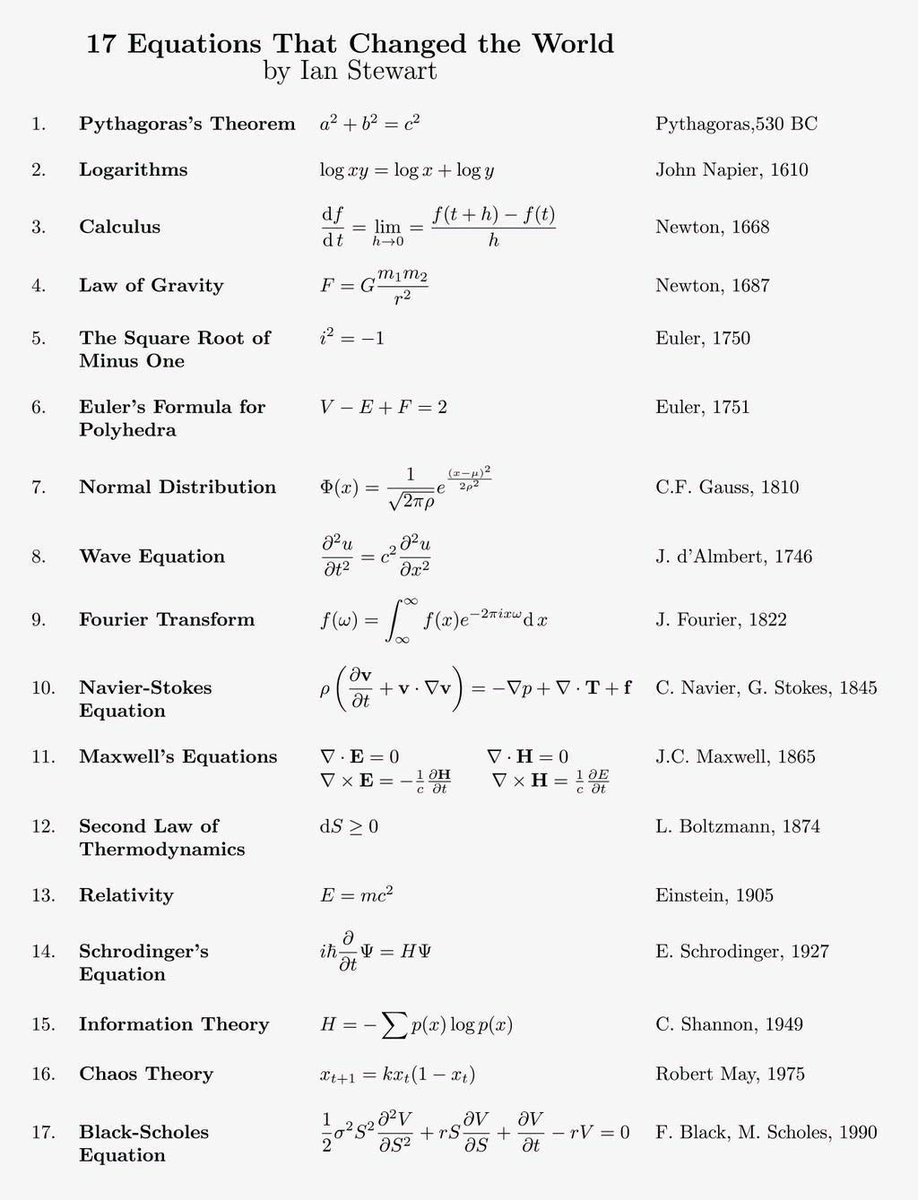
The difference is every equation on this list created entirely new fields of work. The question for AI isn't which model defines the era — it's whether it follows the same pattern. Does it create more jobs than it displaces? History says yes. But the speed this time is what makes it unprecedented. The transition period is where people get hurt.
English

For centuries, a few equations reshaped the world.
Today, AI models are the new formulas — which one will define our era?
#AI #ArtificialIntelligence #Innovation #Technology #FutureOfWork
English
The key insight here is that Hollywood's fear isn't irrational — it's just early. Every industry will have this same reckoning. The difference is Hollywood has unions strong enough to force the conversation. Most workers in AI-exposed jobs don't. The real question is who advocates for the millions of knowledge workers facing the same disruption without a SAG-AFTRA in their corner.
English
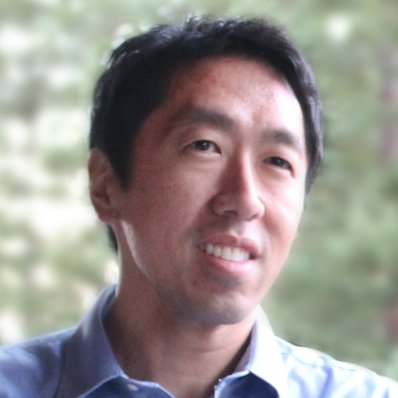
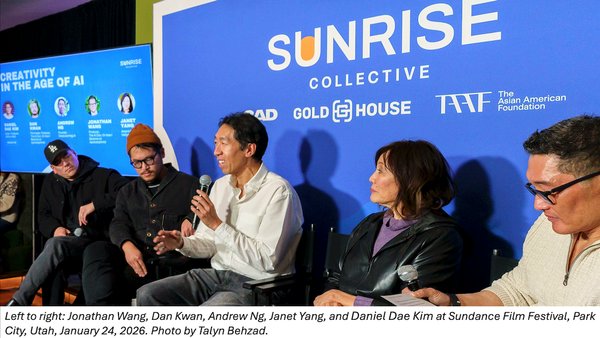
I recently spoke at the Sundance Film Festival on a panel about AI. Sundance is an annual gathering of filmmakers and movie buffs that serves as the premier showcase for independent films in the United States. Knowing that many people in Hollywood are extremely uncomfortable about AI, I decided to immerse myself for a day in this community to learn about their anxieties and build bridges.
I’m grateful to Daniel Dae Kim @danieldaekim, an actor/producer/director I’ve come to respect deeply for his artistic and social work, for organizing the panel, which also included Daniel, Dan Kwan, Jonathan Wang, and Janet Yang. I found myself surrounded by award-winning filmmakers and definitely felt like the odd person out!
First, Hollywood has many reasons to be uncomfortable with AI. People from the entertainment industry come from a very different culture than many who work in tech, and this drives deep differences in what we focus on and what we value. A significant subset of Hollywood is concerned that:
- AI companies are taking their work to learn from it without consent and compensation. Whereas the software industry is used to open source and the open internet, Hollywood focuses much more on intellectual property, which underlies the core economic engines of the entertainment industry.
- Powerful unions like SAG-AFTRA (Screen Actors Guild-American Federation of Television and Radio Artists) are deeply concerned about protecting the jobs of their members. When AI technology (or any other force) threatens the livelihoods of their members — like voice actors — they will fight mightily against potential job losses.
- This wave of technological change feels forced on them more than previous waves, where they felt more free to adopt or reject the technology. For example, celebrities felt like it was up to them whether to use social media. In contrast, negative messaging from some AI leaders who present the technology as unstoppable, perhaps even a dangerous force that will wipe out many jobs, has not encouraged enthusiastic adoption.
Having said that, Hollywood is under no illusions that AI will change entertainment, and that if Hollywood does not adapt, perhaps some other place will become the new center for entertainment. The entertainment industry is no stranger to technology change. Radio, TV, computer graphics special effects, video streaming, and social media transformed the industry. But the path to navigating AI’s transformation is still unclear, and organizations like the new Creators Coalition on AI are trying to stake out positions. Unfortunately, Hollywood’s negative sentiment toward AI also means it will produce a lot more Terminator-like movies that portray AI as more dangerous than helpful, and this hurts beneficial AI adoption as well.
The interests of AI and Hollywood are not always aligned. (Every time I speak in a group like this as the “AI representative,” I can count on being asked very hard questions.) Most of us in tech would prefer a more open internet and more permissive use of creative works. But there is also much common ground, for example in wanting guardrails against deepfakes and a smooth transition for those whose jobs are displaced, perhaps via upskilling.
Storytelling is hard. I’m optimistic that AI tools like Veo, Sora, Runway, Kling, Ray, Hailuo, and many others can make video creation easier for millions of people. I hope Hollywood and AI developers will find more opportunities to collaborate, find more common ground, and also steer our projects toward outcomes that are win-win for as many parties as possible.
[Original text: deeplearning.ai/the-batch/issu… ]
English
This is exactly why "AI Auditor" is about to become one of the fastest-growing job titles in tech. We're rushing to let AI write production code, deploy financial contracts, and automate critical systems — but the human verification layer is still missing. The jobs AI creates won't be glamorous. They'll be the people catching the mistakes AI makes at scale.
English

Hollywood is just the canary in the coal mine. If AI video can replicate A-list actors convincingly enough to spook the industry, imagine what it does to the thousands of VFX artists, stunt doubles, and background actors who don't have the leverage to fight back. The jobs at the top get the headlines. The jobs at the bottom disappear quietly.
English

"For all of us who work in the industry and devoted our careers and lives to it, I just think it’s nothing short of terrifying,” he said. “I could just see it costing jobs all over the place."
#RiseoftheRobots #AI nytimes.com/2026/02/16/mov…
English
If you want to stay ahead of the AI job revolution:
→ Follow @TurbineAI for weekly deep dives
→ I break down what's actually changing, not hype
→ Career strategy for the age of automation
The turbine is spinning. Don't get caught in the blades. ⚙️
English