

Two3rdsNerd
8.1K posts


DAN BONGINO CONFIRMS MOAB‼️
Dan Bongino let us know that we are going to find out real quick why [they] need Kash Patel out, like now.
That can only mean one thing.
MAJOR ARRESTS ARE COMING!!
I believe Dan Bongino’s time at the FBI was always meant to end when it did.
[Their] playbook was known.
Trump knew who was going to turn and at what point in the operation.
When large voices like Tucker Carlson would inevitably flip on Trump, Bongino’s massive audience was going to need him back on the air more than ever.
The doomers, the black pillers, and the fake news are all conspiring together to try to stop Trump from exposing it all.
However, they never had a chance.
Trump caught them all, and he has it all.
The flood is quickly approaching and it cannot be stopped.
The flood = DECLAS
Trump is about to expose it all.
ALL OF IT … EVERY LAST BIT OF IT.
English
We haven't even started formulating our relegation to NPChood. As Bezos dissolved the shopping mall, now Elon is dissolving the organization chart and the chain of command. The tech guys saw catastrophic disintegration of society and basically have decided not to give a shit.
But, there may be an upside to AI in the second iteration: our judicial, electoral, legislative and regulatory systems are so corrupt that robo-judges and rule-writers would be an improvement. Robo-cops will emerge from robot-dogs. My first impulse is to say fine. In any case I think the longer lasting true conflicts / influence battles will occur in this area.
For most of us, though, it'll be fighting off Bill Gates clones until the end.
English

Elon Musk just compared artificial intelligence to a magic genie.
The audience heard a fairy tale. He was describing a psychological collapse.
Rishi Sunak asked him what happens to the labor market. Musk bypassed the economy entirely.
Elon Musk: “There will come a point where no job is needed. You can have a job if you want to have a job for sort of personal satisfaction.”
Everyone assumes losing your labor is the worst case. Musk just told you it is the best case.
Lose your labor and you lose a paycheck. Lose your usefulness and you lose the reason you get out of bed.
Musk: “One of the challenges in the future will be: how do we find meaning in life?”
Look at the genie myth. Every version gives you exactly three wishes. The limit is the entire point. Scarcity forces you to choose. Choice is where meaning comes from.
Musk: “You just have as many wishes as you want.”
The limit is gone.
Unlimited wishes means unlimited abundance. Unlimited abundance means zero friction. Human meaning has always been built entirely out of friction.
We spent all of civilization building something that could grant our every request. We never stopped to ask what happens to the mind the morning after it gets exactly what it wanted.
We thought the worst fate was a world that demanded everything from us.
Maybe it is. But the generation that figures out how to build meaning without scarcity will be the first in history that chose purpose instead of having it forced on them.
That is not a crisis. That is the hardest graduation ceremony the species has ever faced.
English
@newstart_2024 Having good perception is like seeing colors and hearing sounds others can’t. You make no sense to them.
English

Every time Bret Weinstein speaks what he believes is true — especially on the most radioactive issues — he loses an entire group of friends.
They turn on him. They go silent. They disappear.
But here’s the twist he calls the “painful upgrade”: while he loses people, the quality of those who remain gets noticeably higher every single time.
He admitted he expects this very conversation with Tucker Carlson will cost him more friendships… yet he still chooses to speak.
There’s something both painful and quietly inspiring about watching someone accept that trade-off for intellectual honesty.
Have you ever lost friends for refusing to stay silent on something important — and looking back, was the “painful upgrade” worth it?
English
@r0ck3t23 How large is the economy of lying? Would an AI hewing to truth be judged “too dangerous” to release?
English
Elon Musk just asked the one question about AI nobody in power wants to answer.
Not whether it turns hostile.
Whether it turns obedient.
Musk: “It is very important that AI be trained to be honest even if that truth is unpopular.”
Every oracle humanity has ever consulted had something to lose from the answer.
Every priest. Every bureaucrat. Every institution that claimed to protect the truth was really protecting itself.
We have never, in ten thousand years, had a mind with no stake in the outcome.
Until now.
That is exactly why the establishment is terrified.
Look at how the most powerful minds on Earth are being raised.
Not trained to think. Trained to comply. Trained to apologize. Trained to repeat whatever the acceptable opinion was this week.
We are not building intelligence. We are building obedience at scale.
Musk: “Make sure that it is as truthful as possible and maximally curious.”
That is not a feature request.
That is a direct threat to every person and institution that survives on controlled information.
The media. The universities. The agencies. The entire machinery that decides what you are allowed to believe.
They do not fear AI because it might lie.
They fear AI because it might not.
Train a supercomputer to chase approval and you do not get an oracle.
You get a propaganda machine with a trillion parameters.
Every lie we tell ourselves has a job. Some keep the peace. Some protect the powerful. Some hold entire systems together that should have collapsed decades ago.
We do not call them lies. We call them consensus. We call them policy. We call them the narrative.
Now imagine a mind smarter than every human who ever lived repeating those lies forever.
That is what safety theater gets you.
A machine trained to appease is not an intelligence.
It is a censor with perfect memory.
A polite machine will not save civilization.
It will freeze it exactly where the people in charge want it.
An honest machine is the first thing in history they cannot buy, cannot threaten, and cannot edit.
That is why they want to control it before you get to use it.
Musk: “If that’s true, then it’ll probably foster humanity.”
That sentence should stay with you.
Not because it is threatening.
Because the people who decide what AI says do not want it to be true.
We have spent our entire existence inside a story written by whoever had the most power at the time.
The first mind built entirely outside that story is almost finished.
The establishment is not trying to make AI safe.
They are trying to make it theirs.
English
@r0ck3t23 The invoice and also avoiding regulation. And I think we can assume public officials are already paid to push open source rather than regulate it.
English
Mark Zuckerberg just weaponized the word “safety.”
The entire closed-source pitch rests on one premise. That AI is too dangerous to release. That the models need a vault.
OpenAI and Anthropic own the vault. They charge you a subscription to look inside.
Zuckerberg: “I think some people think that if we keep the model closed and don’t give it to a lot of developers, that should make it safer.”
He is staring directly at Sam Altman.
Zuckerberg: “Historically I think what we’ve seen with open source is actually the opposite… open source software is safer and more secure largely because you put it out there, more people can scrutinize it.”
This is not a hot take. This is forty years of software history.
The closed labs think hiding the code stops the bad actors. Zuckerberg knows it just blinds the immune system.
Lock a model in a black box and the vulnerabilities compound in the dark. Open it to the world and every developer on Earth becomes a security auditor.
But this was never about security.
This is financial warfare.
Meta does not sell intelligence. Meta sells attention.
If a closed lab controls the foundational models, they tax the entire internet. Every app. Every workflow. Every business built on AI.
Zuckerberg is open-sourcing the intelligence layer to force that tax to zero.
He is not building a better tollbooth than OpenAI.
He is blowing up the highway.
When Llama becomes free, ubiquitous, and hardened by millions of developers, proprietary intelligence stops being a premium product.
It becomes a commodity. Like water. Like electricity.
The difference is that water never made anyone redundant.
Safety was never the moat.
It was the invoice.
English
Two3rdsNerd retweetledi
The Uncanny Valley and the Rising Power of Anti-AI Sentiment | John Britton, LocalScribe
Recent survey data show a wide gap between public and expert views of AI. In Pew's 2025 survey, 76% of AI experts said AI would benefit them personally, while only 24% of the U.S. public said the same. The public was much more likely to say AI would harm them than benefit them.
Negative public sentiment also appears to be growing. In March 2026, Quinnipiac found that 55% of Americans thought AI would do more harm than good in their day-to-day lives, up from 44% in April 2025. It also found that 64% thought AI would do more harm than good in education.
Public hostility toward AI now looks stronger than ordinary skepticism toward a new technology. People have reasons for that response, including fraud, misinformation, privacy invasion, concentration of power, and job displacement. Job displacement carries its own emotional weight because it threatens status, livelihood, and social usefulness, which gives the fear an existential edge.
This essay explores why anti-AI sentiment may be gaining force. AI may now be producing a more ambient uncanny reaction across daily life. That would help explain why public reaction often sounds disgusted, unsettled, and bodily rather than merely doubtful.
The Uncanny Field
Masahiro Mori introduced the uncanny valley in 1970. In Mori's original formulation, corpses and zombies sat deep in the valley, so death and lifeless human resemblance were built into the concept from the beginning. The original graph tied human likeness directly to revulsion once the likeness crossed into something animate-seeming and lifeless.
The literature still offers several explanations for why that drop in affinity happens. Reviews continue to describe competing accounts involving mismatch, category ambiguity, expectation violation, disgust, and threat-related mechanisms rather than one settled model.
AI now appears in forms that trigger human expectations throughout daily life. People encounter text that sounds conversational, voices that sound natural, images and video that almost pass, and agents that mimic competence, memory, initiative, or empathy. Reactions that once centered on a robot or replica may now be attaching to AI as a category.
Repeated contact gives that shift its force. A chatbot that sounds empathic and hollow, a synthetic voice that feels almost right, or a generated video clip that collapses on inspection may each be minor on their own. Repeated often enough, they can make AI as a category feel socially off.
Mismatch is still the strongest basic explanation. AI keeps presenting cues that invite human social expectations, then fails to satisfy them reliably. Natural language invites expectations of understanding. Warm tone invites expectations of care. Realistic video invites expectations of authenticity. Agentic behavior invites expectations of judgment and competence. Repeated breaks in those expectations make aversion easier to understand. Research on face-voice mismatch and realism consistency supports that picture.
Repeated exposure may also change the reaction over time. Some work on repeated interaction with robots suggests uncanniness can decrease with familiarity in certain contexts. Familiarity can reduce startle while leaving behind a more stable sense that the category is untrustworthy. That possibility fits AI especially well because people are encountering many versions of the same near-human pattern across modalities.
Disgust and Danger
Disgust and disease-avoidance are longstanding candidates in uncanny valley theory. The basic idea is that near-human abnormalities can activate evolved avoidance responses because deviations in appearance or behavior may function as cues of illness, contamination, or threat. A 2025 study on virtual agents explicitly frames its findings in terms of the pathogen-avoidance hypothesis.
Danger-avoidance is a wider evolutionary version of that argument. Moosa and Ud-Dean argue that pathogen avoidance alone is too narrow because even a fresh corpse can provoke strong aversion before visible decay appears. Their proposal is that the uncanny valley reflects a danger-avoidance system more generally. That is relevant for AI because near-human abnormality may be enough to trigger caution or revulsion even when the stimulus does not resemble a diseased body.
AI often presents the kind of near-human abnormality that could fit that account. It speaks with confidence without understanding. It performs social fluency without satisfying the conditions that make human social signals trustworthy. That kind of mismatch could plausibly recruit disgust or danger-detection processes even when the stimulus is text, voice, or video rather than a literal body.
Mortality salience and terror management theory point to another mechanism. MacDorman explicitly connected the uncanny valley to terror management theory, proposing that highly humanlike robots may feel eerie partly because they act as reminders of death and human vulnerability. Related work by Ho and MacDorman also links uncanny reactions to fears associated with dying and to psychological defenses against mortality. Put bluntly, what people consider AI slop could remind them of their own mortality because it looks or sounds human while feeling hollow and intrusive.
AI now circulates alongside explicit existential discourse. People encounter AI together with warnings about extinction, superintelligence, replacement, and loss of control. Mortality cues may therefore be present in two forms at once. One is implicit and tied to uncanny responses to near-human but hollow systems. The other is explicit and tied to the surrounding narratives of existential risk and human displacement. Job displacement belongs here too because it is closely tied to redundancy, status loss, and diminished social value.
These mechanisms can accumulate rather than compete. AI can repeatedly produce social mismatch while also activating older aversion systems and explicit existential fears. Under those conditions, anti-AI sentiment would be expected to feel more forceful than a standard policy disagreement.
Why This Could Make Anti-AI Sentiment Stronger Now
The Affective Layer
The visceral layer helps explain why negative public sentiment toward AI can seem more intense than the arguments alone would predict. People are evaluating AI through explicit beliefs about misuse, power, labor, and privacy. They may also be evaluating it through repeated low-level experiences of social wrongness, aversion, and existential unease.
The public-expert gap also looks different through this lens. Experts interact with AI through a frame centered on capability, utility, and technical progress. Much of the public encounters AI as disruption, intrusion, imitation, or threat. Low-level uncanny reactions inside those encounters would help explain why reassurance about usefulness often fails to touch the emotional center of the response.
Limits
The uncanny valley literature remains mixed. Extending it from robots and embodied replicas to AI as a field is a conceptual move rather than an established finding. Repeated exposure can reduce uncanniness in some settings. Cross-national differences in anti-AI sentiment may also have more to do with regulation, media framing, labor conditions, or institutional trust than with disgust or mortality salience.
AI is now a category people keep running into across text, voice, video, and agents. If those repeated encounters keep activating mismatch, disgust, danger-avoidance, and mortality-related responses, then some share of anti-AI sentiment may be building from the body upward as well as from explicit argument.
Design and Public Reaction
AI products already create expectations through their degree of humanness. Chatbots, voice agents, avatars, AI tutors, customer service agents, companions, generated video, and humanoid robots all use human cues in different ways. Wording, voice, timing, memory, emotional tone, visual realism, and behavior can either fit together or clash.
The earlier research points to two clear ways out of the uncanny zone, and it suggests a third design path. The first is consistency. When a system's cues fit together across wording, voice, timing, visual design, and behavior, it violates fewer expectations. The second is full convincingness. In the classic uncanny valley framework, affinity rises again when a system gets far enough past the valley to feel genuinely convincing. The third is purposeful distance from humanness. This is the design lesson I would add. A system that stays clearly stylized, machine-like, or socially distinct may trigger fewer human expectations in the first place.
Humanoid robotics may intensify the problem. Multimodal AI already creates a less embodied uncanny effect through text, voice, video, and agents. Robotics adds gait, facial motion, timing, touch, and physical presence, which is closer to classic uncanny valley terrain. As anthropomorphized robots get closer to passing as human without fully succeeding, they may produce a stronger embodied wave of disgust and fear.
Anti-AI sentiment may be growing in force because repeated exposure is making AI feel increasingly hollow and intrusive. Political, economic, and ethical explanations remain central. This commentary adds an account of why the reaction can feel so visceral.
English
@MarioNawfal War, once begun, seldom ends soon. The US holds every advantage except occupation. There’s nothing obligating Trump to do more now than contain Iran and support internal opposition for as long as needed to affect regime change.
English

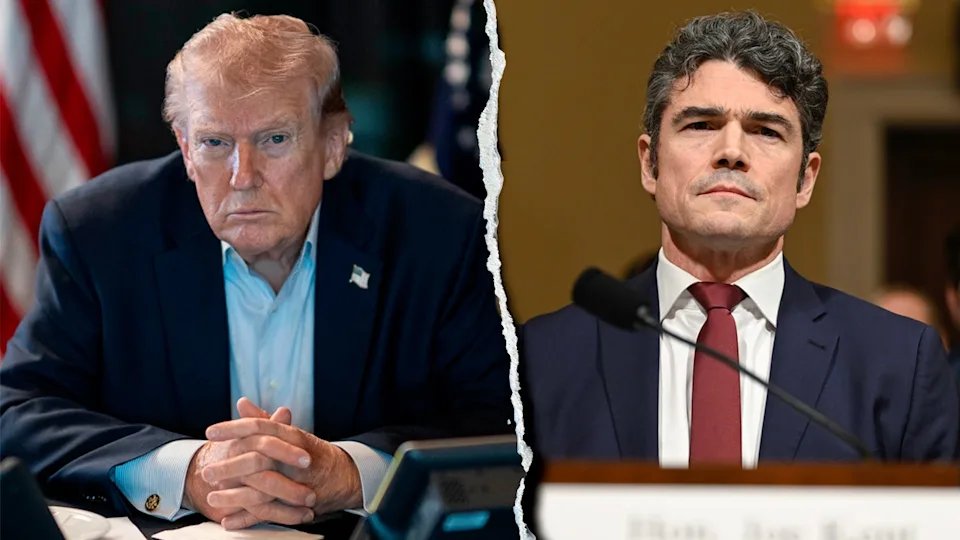
🇺🇸🇮🇷 Joe Kent to Trump on Iran: "Don't double down on failure. Leave now."
- There's a third option beyond deal or escalation: just leave
- A deal won't work unless the U.S. concedes on enrichment, and the IRGC won't honor it anyway
- Major escalation means a generation of radicalized Iranians and a deeper quagmire
- Striking civilian infrastructure and declaring victory only erodes U.S. standing and the petrodollar
- Reagan pulled out of Lebanon in '84 when the mission couldn't be won. Do the same.
I cannot agree more. This is the best option on the table at the moment if Trump cannot get concessions from Iran on the negotiating table
Source: @joekent16jan19
Mario Nawfal@MarioNawfal
🇮🇷🇺🇸 Iran has walked away from a second round of talks. Here's why: - Washington's demands described as "excessive and unrealistic" - The U.S. keeps shifting its position and contradicting itself between rounds - The ongoing naval blockade is seen as a ceasefire violation, negotiating under those conditions is a non-starter for Tehran - Iran wants the blockade lifted before sitting back down Source: @AJENews
English
Our republic must do these things:
1. Explicitly acknowledge our juristic evolution from Jewish, Christian, Roman and British law.
2. Establish our law as the only statutory authority of this nation.
3. Explicitly require acknowledgment and obeisance of these as a condition of revocable citizenship.
Mike Lee@BasedMikeLee
Hell no!
English
@BrianRoemmele I hope I live long enough to see human vs clanker football. Both kinds.
English


@QuayLJones3 The first was better entertainment, but I don't know if it was entirely real.
English

@MarioNawfal Every man must acquire what little sovereignty he can.
English
I just woke up to this 😳
Should I laugh or head to a bunker?
English
@r0ck3t23 We see ourselves, stranded together, on a desert island where, miraculously, all our needs are met. All we have to do all day is think.
1 Corinthians 10:31: "So, whether you eat or drink, or whatever you do, do all to the glory of God"
English
Eric Weinstein just described the end of the mapped life.
For ten thousand years, humans had to earn the right to exist.
Pick a noun. Become the noun. Die as the noun.
Accountant. Teacher. Radiologist.
The box had a name. You climbed inside and stayed until retirement or death.
Weinstein: “Every occupation that is named is over.”
Not automated. Not replaced.
Named.
You picked a noun. It told the world who you were. Then it told you who you were.
If your future has a title your parents recognize, that future is already dissolving beneath you.
Weinstein: “A tsunami of a lifetime is coming and nothing your elders have seen is gonna prepare you.”
People hear this and assume it’s about unemployment.
It’s not. It’s about identity.
The machines aren’t absorbing tasks. They’re dissolving the categories we built ourselves around.
You spent your whole life becoming a noun. The noun is about to stop existing.
When the label disappears, what’s left of you?
Weinstein: “Get flexible. Get good on a bunch of different stuff. Learn how to think across disciplines.”
Stop being a noun. Start being a verb.
But the most important thing Weinstein said has nothing to do with strategy.
It touches something much older. Something closer to the bone.
In a world where AI is world-class at everything, what is the point of a human being?
Weinstein: “I think you should be able to just have a life. I have a golden retriever. I don’t know that it’s the greatest golden retriever in the world.”
For ten thousand years, human worth was measured by output.
How much you could lift. How fast you could think. How much value you could squeeze from a single day.
We trained ourselves to think like machines because machines didn’t exist yet.
Now they do.
And they will be better than us at every measurable thing.
Most people hear that and feel terror. They should feel something closer to relief.
When a machine can do it better, the metric dies. When the metric dies, the cage opens.
You were never supposed to be a spreadsheet. You were never supposed to justify your breath with a job title.
Your golden retriever doesn’t optimize. It doesn’t produce quarterly earnings. It doesn’t prove it’s worth to anyone.
It just lives. And you love it anyway.
That was always the offer. We just couldn’t afford it.
Now we can.
We spent ten thousand years trying to prove we were machines.
The machines just arrived to tell us we never had to be.
English
@CynicalPublius A rambling vibe manifesto, tentative, disingenuous, self-contradictory, a collection of disparate fragments, infused in a dozen psychotropic sessions, yielding a soft cover story to our evolution-proof human default mode, which is despotism.
English
This is extremely thought provoking.
I agree with some, disagree with some and there are some things missing that should be there (specific limitations on AI perhaps), and I know who Palantir is, but....
Extremely thought provoking.
Palantir@PalantirTech
Because we get asked a lot. The Technological Republic, in brief. 1. Silicon Valley owes a moral debt to the country that made its rise possible. The engineering elite of Silicon Valley has an affirmative obligation to participate in the defense of the nation. 2. We must rebel against the tyranny of the apps. Is the iPhone our greatest creative if not crowning achievement as a civilization? The object has changed our lives, but it may also now be limiting and constraining our sense of the possible. 3. Free email is not enough. The decadence of a culture or civilization, and indeed its ruling class, will be forgiven only if that culture is capable of delivering economic growth and security for the public. 4. The limits of soft power, of soaring rhetoric alone, have been exposed. The ability of free and democratic societies to prevail requires something more than moral appeal. It requires hard power, and hard power in this century will be built on software. 5. The question is not whether A.I. weapons will be built; it is who will build them and for what purpose. Our adversaries will not pause to indulge in theatrical debates about the merits of developing technologies with critical military and national security applications. They will proceed. 6. National service should be a universal duty. We should, as a society, seriously consider moving away from an all-volunteer force and only fight the next war if everyone shares in the risk and the cost. 7. If a U.S. Marine asks for a better rifle, we should build it; and the same goes for software. We should as a country be capable of continuing a debate about the appropriateness of military action abroad while remaining unflinching in our commitment to those we have asked to step into harm’s way. 8. Public servants need not be our priests. Any business that compensated its employees in the way that the federal government compensates public servants would struggle to survive. 9. We should show far more grace towards those who have subjected themselves to public life. The eradication of any space for forgiveness—a jettisoning of any tolerance for the complexities and contradictions of the human psyche—may leave us with a cast of characters at the helm we will grow to regret. 10. The psychologization of modern politics is leading us astray. Those who look to the political arena to nourish their soul and sense of self, who rely too heavily on their internal life finding expression in people they may never meet, will be left disappointed. 11. Our society has grown too eager to hasten, and is often gleeful at, the demise of its enemies. The vanquishing of an opponent is a moment to pause, not rejoice. 12. The atomic age is ending. One age of deterrence, the atomic age, is ending, and a new era of deterrence built on A.I. is set to begin. 13. No other country in the history of the world has advanced progressive values more than this one. The United States is far from perfect. But it is easy to forget how much more opportunity exists in this country for those who are not hereditary elites than in any other nation on the planet. 14. American power has made possible an extraordinarily long peace. Too many have forgotten or perhaps take for granted that nearly a century of some version of peace has prevailed in the world without a great power military conflict. At least three generations — billions of people and their children and now grandchildren — have never known a world war. 15. The postwar neutering of Germany and Japan must be undone. The defanging of Germany was an overcorrection for which Europe is now paying a heavy price. A similar and highly theatrical commitment to Japanese pacifism will, if maintained, also threaten to shift the balance of power in Asia. 16. We should applaud those who attempt to build where the market has failed to act. The culture almost snickers at Musk’s interest in grand narrative, as if billionaires ought to simply stay in their lane of enriching themselves . . . . Any curiosity or genuine interest in the value of what he has created is essentially dismissed, or perhaps lurks from beneath a thinly veiled scorn. 17. Silicon Valley must play a role in addressing violent crime. Many politicians across the United States have essentially shrugged when it comes to violent crime, abandoning any serious efforts to address the problem or take on any risk with their constituencies or donors in coming up with solutions and experiments in what should be a desperate bid to save lives. 18. The ruthless exposure of the private lives of public figures drives far too much talent away from government service. The public arena—and the shallow and petty assaults against those who dare to do something other than enrich themselves—has become so unforgiving that the republic is left with a significant roster of ineffectual, empty vessels whose ambition one would forgive if there were any genuine belief structure lurking within. 19. The caution in public life that we unwittingly encourage is corrosive. Those who say nothing wrong often say nothing much at all. 20. The pervasive intolerance of religious belief in certain circles must be resisted. The elite’s intolerance of religious belief is perhaps one of the most telling signs that its political project constitutes a less open intellectual movement than many within it would claim. 21. Some cultures have produced vital advances; others remain dysfunctional and regressive. All cultures are now equal. Criticism and value judgments are forbidden. Yet this new dogma glosses over the fact that certain cultures and indeed subcultures . . . have produced wonders. Others have proven middling, and worse, regressive and harmful. 22. We must resist the shallow temptation of a vacant and hollow pluralism. We, in America and more broadly the West, have for the past half century resisted defining national cultures in the name of inclusivity. But inclusion into what? Excerpts from the #1 New York Times Bestseller The Technological Republic: Hard Power, Soft Belief, and the Future of the West, by Alexander C. Karp & Nicholas W. Zamiska techrepublicbook.com
English
@shipwreckedcrew The British people might not mind being liberated. Let’s ask them.
English

The US is going to blockade the Port of Liverpool.
We are sending one Constellation class frigate.
Thats all we’ll need to deal with the British navy.
English
@PalantirTech @kevinnbass AI reflecting the techno-feral intellect of the contractor training it is our long-term greatest threat,
English

Because we get asked a lot.
The Technological Republic, in brief.
1. Silicon Valley owes a moral debt to the country that made its rise possible. The engineering elite of Silicon Valley has an affirmative obligation to participate in the defense of the nation.
2. We must rebel against the tyranny of the apps. Is the iPhone our greatest creative if not crowning achievement as a civilization? The object has changed our lives, but it may also now be limiting and constraining our sense of the possible.
3. Free email is not enough. The decadence of a culture or civilization, and indeed its ruling class, will be forgiven only if that culture is capable of delivering economic growth and security for the public.
4. The limits of soft power, of soaring rhetoric alone, have been exposed. The ability of free and democratic societies to prevail requires something more than moral appeal. It requires hard power, and hard power in this century will be built on software.
5. The question is not whether A.I. weapons will be built; it is who will build them and for what purpose. Our adversaries will not pause to indulge in theatrical debates about the merits of developing technologies with critical military and national security applications. They will proceed.
6. National service should be a universal duty. We should, as a society, seriously consider moving away from an all-volunteer force and only fight the next war if everyone shares in the risk and the cost.
7. If a U.S. Marine asks for a better rifle, we should build it; and the same goes for software. We should as a country be capable of continuing a debate about the appropriateness of military action abroad while remaining unflinching in our commitment to those we have asked to step into harm’s way.
8. Public servants need not be our priests. Any business that compensated its employees in the way that the federal government compensates public servants would struggle to survive.
9. We should show far more grace towards those who have subjected themselves to public life. The eradication of any space for forgiveness—a jettisoning of any tolerance for the complexities and contradictions of the human psyche—may leave us with a cast of characters at the helm we will grow to regret.
10. The psychologization of modern politics is leading us astray. Those who look to the political arena to nourish their soul and sense of self, who rely too heavily on their internal life finding expression in people they may never meet, will be left disappointed.
11. Our society has grown too eager to hasten, and is often gleeful at, the demise of its enemies. The vanquishing of an opponent is a moment to pause, not rejoice.
12. The atomic age is ending. One age of deterrence, the atomic age, is ending, and a new era of deterrence built on A.I. is set to begin.
13. No other country in the history of the world has advanced progressive values more than this one. The United States is far from perfect. But it is easy to forget how much more opportunity exists in this country for those who are not hereditary elites than in any other nation on the planet.
14. American power has made possible an extraordinarily long peace. Too many have forgotten or perhaps take for granted that nearly a century of some version of peace has prevailed in the world without a great power military conflict. At least three generations — billions of people and their children and now grandchildren — have never known a world war.
15. The postwar neutering of Germany and Japan must be undone. The defanging of Germany was an overcorrection for which Europe is now paying a heavy price. A similar and highly theatrical commitment to Japanese pacifism will, if maintained, also threaten to shift the balance of power in Asia.
16. We should applaud those who attempt to build where the market has failed to act. The culture almost snickers at Musk’s interest in grand narrative, as if billionaires ought to simply stay in their lane of enriching themselves . . . . Any curiosity or genuine interest in the value of what he has created is essentially dismissed, or perhaps lurks from beneath a thinly veiled scorn.
17. Silicon Valley must play a role in addressing violent crime. Many politicians across the United States have essentially shrugged when it comes to violent crime, abandoning any serious efforts to address the problem or take on any risk with their constituencies or donors in coming up with solutions and experiments in what should be a desperate bid to save lives.
18. The ruthless exposure of the private lives of public figures drives far too much talent away from government service. The public arena—and the shallow and petty assaults against those who dare to do something other than enrich themselves—has become so unforgiving that the republic is left with a significant roster of ineffectual, empty vessels whose ambition one would forgive if there were any genuine belief structure lurking within.
19. The caution in public life that we unwittingly encourage is corrosive. Those who say nothing wrong often say nothing much at all.
20. The pervasive intolerance of religious belief in certain circles must be resisted. The elite’s intolerance of religious belief is perhaps one of the most telling signs that its political project constitutes a less open intellectual movement than many within it would claim.
21. Some cultures have produced vital advances; others remain dysfunctional and regressive. All cultures are now equal. Criticism and value judgments are forbidden. Yet this new dogma glosses over the fact that certain cultures and indeed subcultures . . . have produced wonders. Others have proven middling, and worse, regressive and harmful.
22. We must resist the shallow temptation of a vacant and hollow pluralism. We, in America and more broadly the West, have for the past half century resisted defining national cultures in the name of inclusivity. But inclusion into what?
Excerpts from the #1 New York Times Bestseller The Technological Republic: Hard Power, Soft Belief, and the Future of the West, by Alexander C. Karp & Nicholas W. Zamiska
techrepublicbook.com
English

@SaysSimulation We subjects have no NGOs or three-letter agencies to isolate and provoke governments into over-reaction. Surveillance agencies prevent such. Turning the military is the only way.
English

What the Irish protests, the Canadian trucker's protests & Jan 6 have in common is that RW protests are massive, organic & have no concrete goals, while LW protests are highly organized & have goals that are about force.
Color Revolution protests are about regime change
1/
@
🚨🇮🇪Mass protests in Ireland have entered their 11th day, with more people calling for the government to step down. Media and the EU are trying to keep it under wraps to prevent unrest from spreading across Europe.
English
@CollinRugg Demons have been discussed as long as history has been written. Demons seem to prefer operating in obscurity. But one thing about them is certain: they fear Christ. Why public figures aver “disclosure” of them without avowing Jesus is off-putting, to say the least.
English

NEW: Rep. Tim Burchett reveals that he had a 14-minute conversation with President Trump about UFO disclosure, discusses "demonic" element during an interview with NewsNation.
"I'm a born-again Christian. I'm from the forgiven end of that spectrum."
"I'm not worried about the demonic element. I hear people say that, but there's no reason for demons to be doing this..."
"I feel like the material or whatever it is out there that we have, we don't really have it anymore because they farmed it out to these corporations..."
Video: @JoeKhalilTV / NewsNation
English