
Tycobot retweetledi
Tycobot
222 posts

Tycobot
@Tycobot01
646572c3a46c7465737465766f6e616c6c656e64657373656e68617573696d6472656965636b737465687464656d646965496465656e6e6965617573676568656e64657261756664656d576567697374
Katılım Ekim 2015
255 Takip Edilen12 Takipçiler
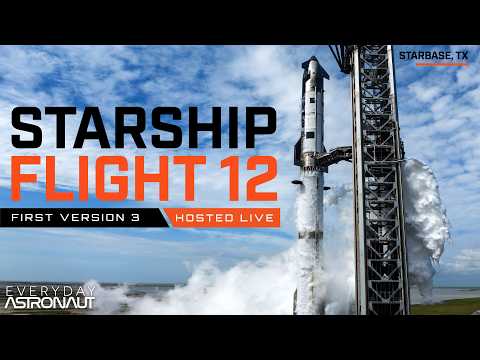
#SpaceX #Starship IFT 12 #Livestream Links:
NASASpaceflight:
youtube.com/watch?v=UfQHy4…
Everyday Astronaut:
youtube.com/watch?v=odWYDx…
What about it!?:
youtube.com/watch?v=7W7oew…
SENKRECHTSTARTER
youtube.com/watch?v=h8Qpt_…
Mars Chroniken:
youtube.com/watch?v=-GQIO2…

YouTube
YouTube

YouTube

YouTube

YouTube

English
Tycobot retweetledi

Watch Starship's twelfth flight test twitter.com/i/broadcasts/1…
English
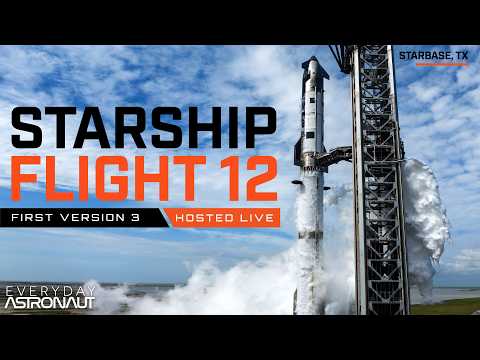
#SpaceX #Starship IFT 12 #Livestream Links:
NASASpaceflight:
youtube.com/watch?v=TBu6JF…
Everyday Astronaut:
youtube.com/watch?v=MH3VyL…
What about it!?:
youtube.com/live/BMCEusNDt…
SENKRECHTSTARTER:
youtube.com/watch?v=jSQGVq…
Mars Chroniken:
youtube.com/watch?v=bfsjiA…

YouTube
YouTube

YouTube

YouTube

YouTube
English
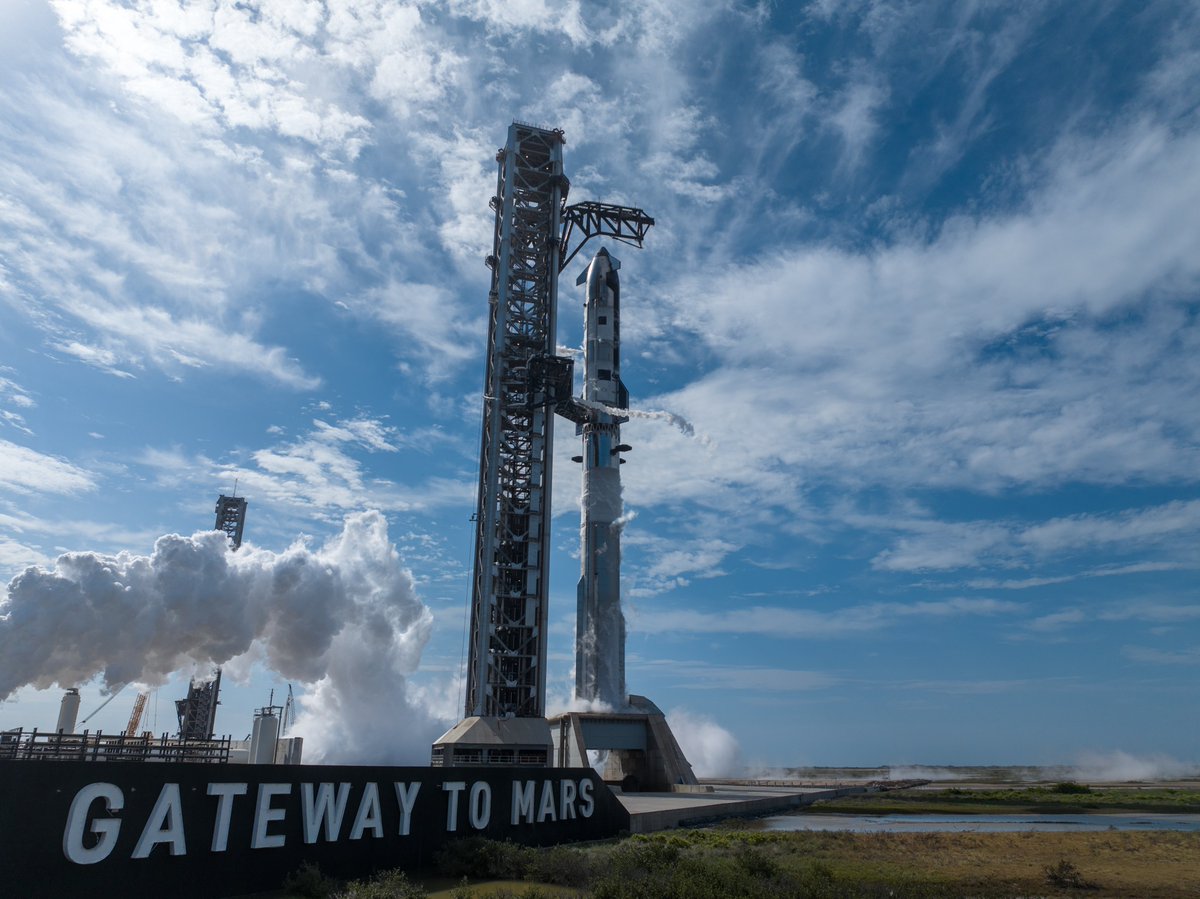
Test flight 12 (IFT12) of the #SpaceX #Starship is scheduled for May 21 22:30 UTC from #Starbase.
#Livestream:
x.com/i/broadcasts/1…
English


Tycobot retweetledi


Tycobot retweetledi
Tycobot retweetledi

THE ARTEMIS II ECLIPSE.
April 6, 2026.
Totality, beyond Earth. From lunar orbit, the Moon eclipses the Sun, revealing a view few in human history have ever witnessed. Photo: NASA

English
Tycobot retweetledi
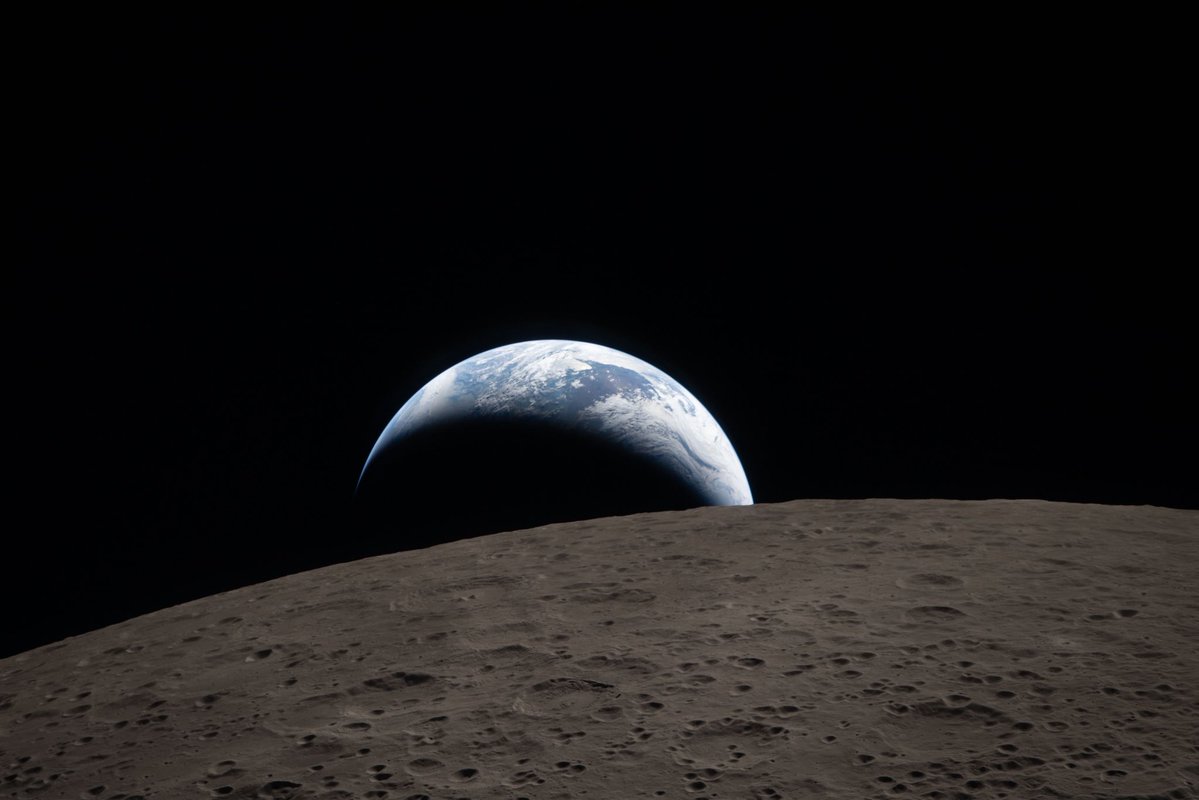
EARTHSET.
April 6, 2026.
Humanity, from the other side. First photo from the far side of the Moon. Captured from Orion as Earth dips beyond the lunar horizon. Photo: NASA
English
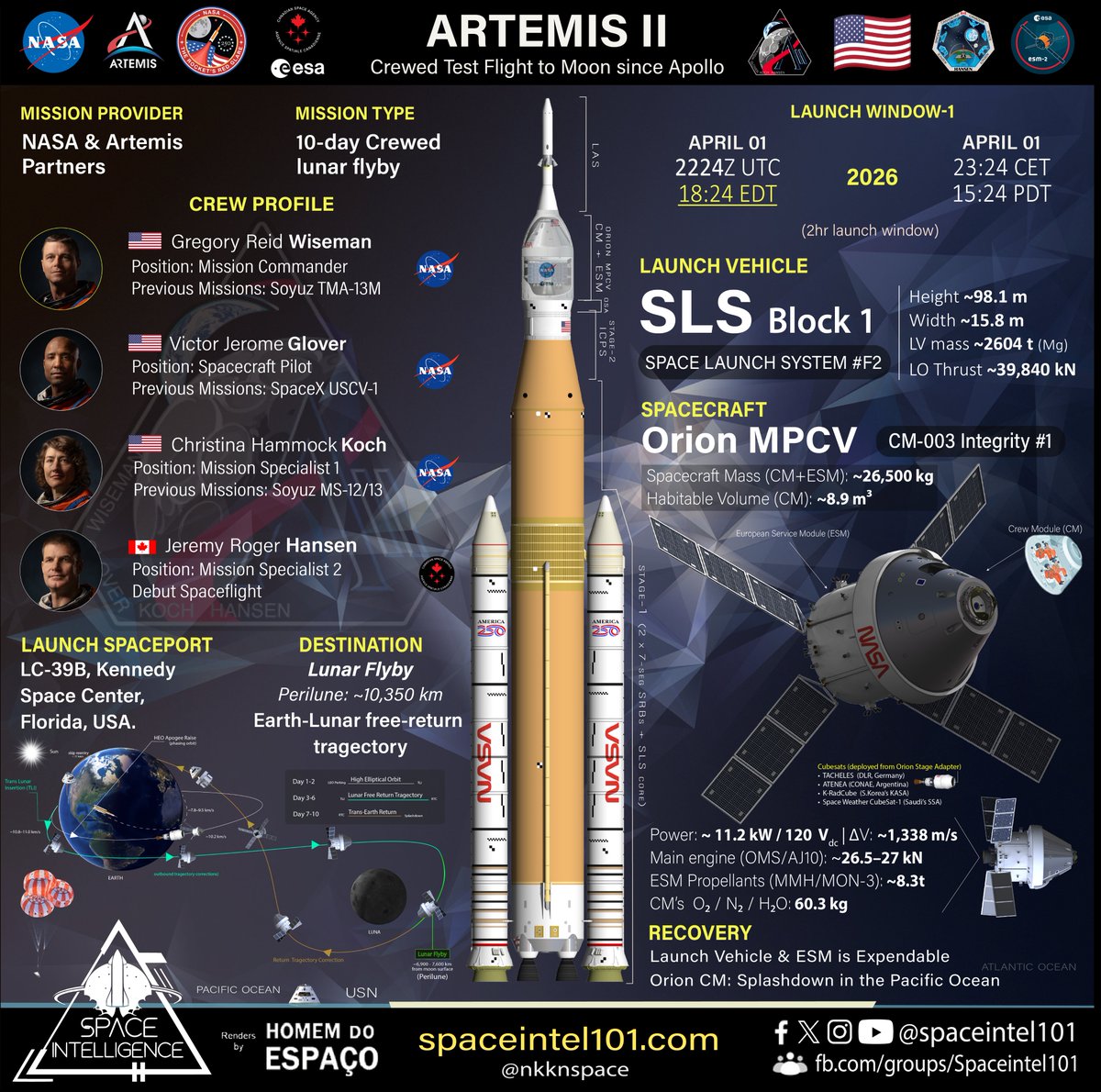
Livestreams for #NASA #ARTEMI-II:
NASA: youtube.com/watch?v=Tf_UjB…
NASASpaceflight: youtube.com/watch?v=8c-GAk…
Everyday Astronaut: youtube.com/watch?v=QOsSRR…
What about it!?: youtube.com/watch?v=7X9PM3…
SENKRECHTSTARTER: youtube.com/watch?v=GWWb72…
Mars Chroniken: youtube.com/watch?v=C68TYV…
YouTube
YouTube
YouTube

YouTube

YouTube

YouTube
English


Tycobot retweetledi

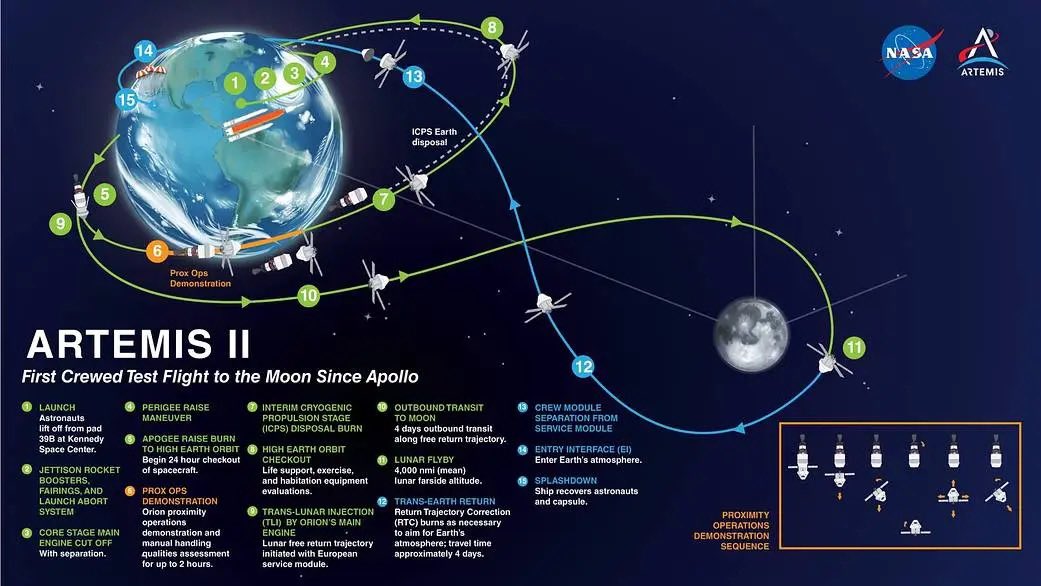
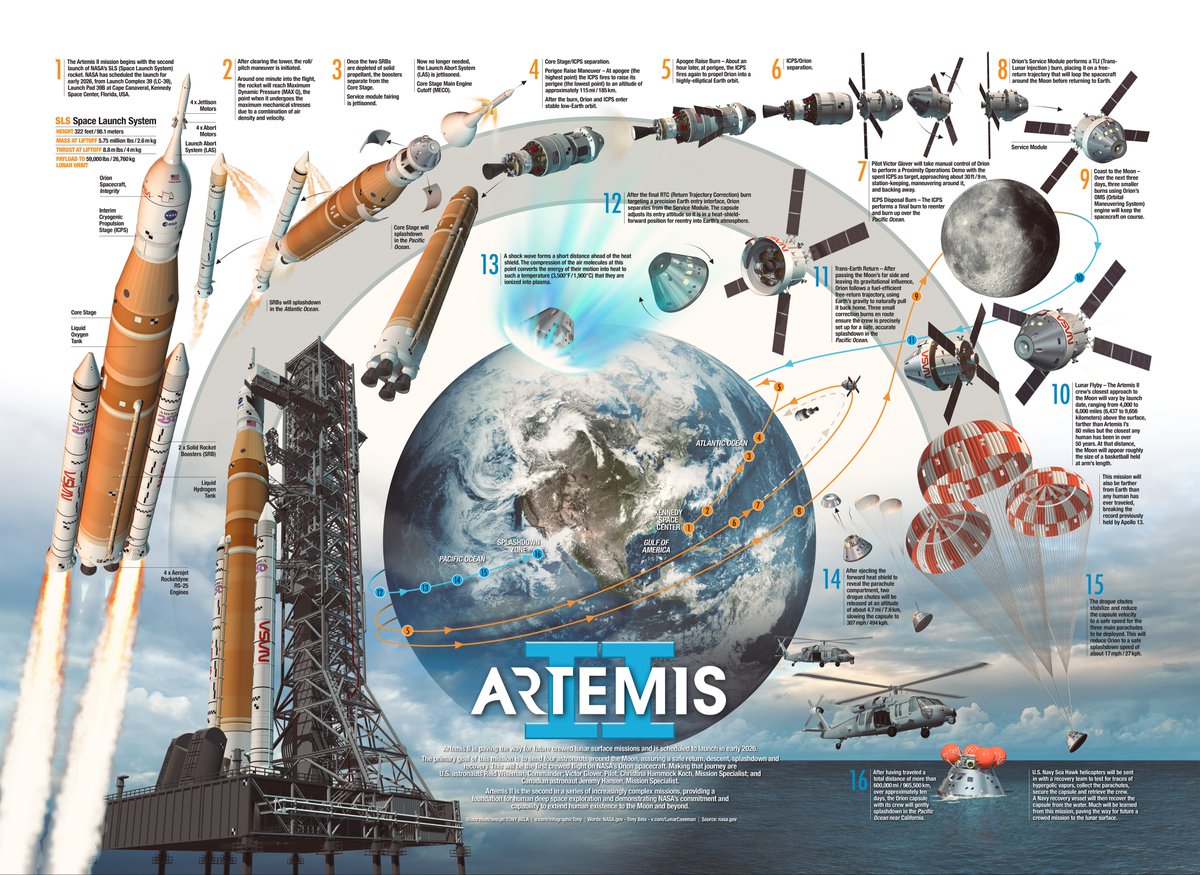
Artemis II will send humans on a journey around the moon for the first time in more than 50 years. It’s part of NASA’s detailed launch program to return humans to the lunar surface. Here’s your (unofficial) step-by-step infographic guide to the mission, with a launch date of no earlier than April 1, 2026. I have also included a variant with a white background.

English
A #SpaceX Story, “Failure to success” as a strategy:
-Atoms are Cheap, Process is Pricey-
by @maxolson
open.substack.com/pub/futureblin…
English


Rapid occultation data could also be used to precisely measure the location and size of asteroids. Would be really nice if this data could be delivered to Minor Planet center when associated with known asteroids.
Occulations gave data to show Apophis would miss Earth, but it was a lot of work.
Starlink@Starlink
SpaceX has developed a novel Space Situational Awareness (SSA) system, called Stargaze → starlink.com/stargaze To maximize safety for all satellites in space, @SpaceX will be making Stargaze conjunction data available to all operators, free of charge. By providing this ephemeris sharing and conjunction screening service free of charge, we hope to motivate operators to take similar steps towards ephemeris sharing and safe flight.
English
@lukas_m_ziegler Hello, really cool, how much degrees can this tilt from the Z-axis? Looks like an ideal platform for non-planar 3D printer.
English

A cool cable robot from Germany! 🧶
CARGOLin, the newest cable-driven system from the ISW University of Stuttgart was showcased at SPS for the first time.
The control stack runs on TwinCAT 3 from Beckhoff Automation, computing kinematics in under 200 microseconds, enabling hybrid control at high speed.
Eight 1.6 kW Bosch Rexroth ctrlX winches drive a 600 g platform at up to 15 m/s with 35 g acceleration.
Extreme dynamics for a cable robot of this class. 🤯
The frame can also reconfigure itself in real time using eight additional linear axes, letting researchers test new strategies for collision avoidance.
Admit it that you have watched it more than once! 🔥
~~
♻️ Join the weekly robotics newsletter, and never miss any news → ziegler.substack.com
English
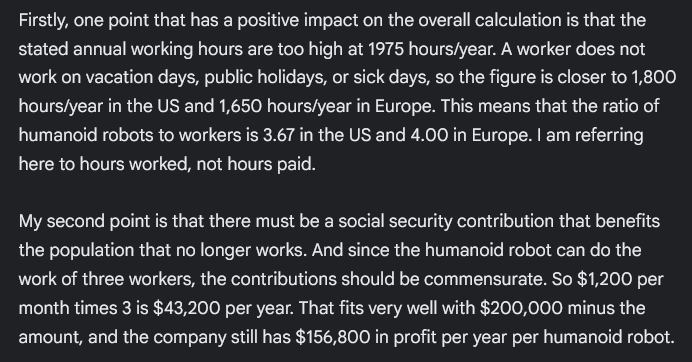
@PeroMicic @Grok, what do you think about this conversation? Are these relevant points, and is the profit still attractive for a company?
English
@PeroMicic Thank you for compiling this list of facts. I noticed that there are a few other things that could be taken into consideration.
English

CEO's question: What will be the hourly cost of work of a humanoid robot?
Several projections have been published, e.g. by @CernBasher, @adam_dorr and @GoingBallistic5. Here's my take.
I've produced a long-form video on this question (see link in comments).
Here is the essence - based on very conservative assumptions (see attached image).
- Production cost: $30,000. A humanoid is ~5% the mass of a passenger car. The costly parts are actuators and gearboxes; the rest is electronics, sensors, a few kWh of batteries, and plastics—components that are highly scalable in volume manufacturing.
- Operating cost: $30,000 per year, of which $18,000 is human oversight and coordination. This is likely way too high.
- Operating time: 6,600 hours per year (330 days × 20 hours/day). That equals the yearly working time of more than three people.
- Work speed vs. humans: 100% initially. As with industrial robots, later generations will likely reach 200%+.
- Business model: Most manufacturers will offer Robot-as-a-Service (RaaS) rather than selling units, because it drives far higher revenue and margin. Expect an initial one-time fee roughly equal to manufacturing cost plus a usage fee per year, month, day, or hour.
- Service life (incl. repairs): 8 years.
- Market dynamics: Because humanoids will be highly profitable to use (see below), demand will ramp quickly. But many suppliers will enter, so sustained overly high monopoly pricing is unlikely.
Result: Based on these assumptions, a humanoid work hour will cost at most $14.
That’s the highest realistic value. With learning effects and scale, the hourly cost will drop below $10 and likely below $5. @rethink_x even projects that by 2035 a humanoid hour could cost less than $1.
By comparison, a skilled worker’s fully loaded hour is $42.53.
Strategic consequence: In competitive markets, companies will have no real choice: first to replace labor shortages, and soon to replace existing roles. Even at $14/hour, the financial advantage vs. human labor is close to $200,000 per robot per year.
I’ve published a three-part video series on the societal implications of this inevitable shift (see comments).
Urgent advice: If you make or move anything physical, start rethinking your business around humanoids—as a supplier, service provider, or user. It is quiet now, but the ramp-up will be fast.
How about you? Which tasks would you deploy humanoids for first?

English