Deepak Prabhu

120 posts

Deepak Prabhu

Deepak Prabhu

@utthan

Architect, generalist, listener. Interested in materials & process, sustainability.

Bengaluru, India Katılım Ekim 2007
178 Takip Edilen29 Takipçiler
Deepak Prabhu retweetledi
Harsh Goenka
Harsh Goenka@hvgoenka·
On the one hand billions spent on war, on the other, people queuing up for food. The world has such misplaced priorities! 😢
English
258
638
2.4K
76.8K
Deepak Prabhu retweetledi
Ritesh Jain
Ritesh Jain@riteshmjn·
Every Empire Dies the Same Way They miss the next technology. Most civilizations do not disappear because they are weak. They disappear because the technology that once made them powerful becomes obsolete. History is filled with empires that looked permanent—until the rules of power changed. When those rules changed, their decline was often swift and irreversible. Egypt ruled the ancient world for nearly two thousand years. Long before Greece rose or Rome existed, Egypt possessed the most advanced state in the Mediterranean world. Its bureaucracy, agriculture, and armies were unmatched. During the Bronze Age, bronze weapons and chariots defined military power, and Egypt mastered both. But bronze had a hidden weakness. It required copper and tin—metals that had to be imported through fragile trade networks. Then came iron. Iron weapons were not just stronger; they were dramatically cheaper and far more abundant. But iron required extremely high temperatures to smelt, which meant vast quantities of charcoal. Charcoal meant forests. Forests meant geography. Egypt was a river civilization surrounded by desert. It simply did not have the forests needed to produce iron at scale. Assyria did. Situated near the wooded hills of Anatolia and the Levant, Assyria mastered iron metallurgy and equipped its armies accordingly. Within a few centuries Assyria dominated the Near East with iron-equipped forces. Egypt survived, but it never again returned to the center of global power. A civilization that had ruled for millennia missed the next technological age. The pattern would repeat across centuries. In medieval Europe the armored knight was the ultimate weapon of war. A knight was a walking fortress—encased in steel, mounted on a powerful warhorse, and supported by an entire feudal economy. Training one took decades. Equipping one cost enormous wealth. Society itself was organized around sustaining this elite warrior class. Then came a weapon made largely from wood. The English longbow could be wielded by commoners. A skilled archer could release ten arrows in the time it took a knight to cross the battlefield. At battles such as Agincourt in 1415, thousands of English archers faced a much larger French army filled with heavily armored nobles. The result was devastating. The economics of war had changed. A weapon that cost almost nothing could neutralize a system that required immense wealth to maintain. The knight did not vanish overnight, but its dominance ended. Technology had quietly rewritten the cost structure of power. The same dynamic unfolded in South Asia. For centuries Indian armies relied on war elephants as their ultimate battlefield weapon. Elephants towered over infantry formations, crushed cavalry charges, and carried commanders above the battlefield. They were symbols of royal authority and instruments of shock warfare. But elephants belonged to an older military age. In 1526 at the First Battle of Panipat, the Central Asian warlord Babur faced the much larger army of the Delhi Sultan Ibrahim Lodi. Lodi possessed tens of thousands of troops and hundreds of war elephants. Babur’s force was far smaller. But Babur brought gunpowder artillery. When the cannons fired, the explosions terrified the elephants. The animals turned and stampeded through their own ranks. Within hours the Delhi Sultanate collapsed and the Mughal Empire was born. A military system that had dominated the subcontinent for centuries was undone in a single afternoon. Numbers had not changed. Technology had. Even more dramatic was the rise of the Mongols. To the sophisticated civilizations of the thirteenth century, the Mongols appeared primitive. China had cities and advanced engineering. Persia had wealth and scholarship. Europe had castles and armored knights. The Mongols had horses. But their system of warfare was revolutionary. Each warrior rode multiple ponies, allowing Mongol armies to travel extraordinary distances without exhausting their mounts. Their composite bows could penetrate armor at long range, and their decentralized command structure allowed rapid maneuver warfare that stunned slower armies. Mobility became the decisive advantage. Within a few decades the Mongols built the largest contiguous empire in human history, stretching from Korea to Eastern Europe. Civilization had been defeated by adaptation. Modern history offers an even clearer example. At the beginning of the Second World War the most powerful warships ever built were battleships—massive floating fortresses armed with gigantic guns capable of firing shells across vast distances. Nations poured immense resources into these symbols of naval supremacy. Then aircraft carriers arrived. Aircraft launched from carriers could strike ships from hundreds of kilometers away—far beyond the range of battleship guns. In the Pacific War carriers destroyed battleships without ever entering their range. Within a few years the battleship became obsolete. Aircraft had replaced armor. Every military revolution follows the same pattern. A cheaper or more effective technology suddenly destroys the expensive system that once defined power. Iron replaced bronze. Longbows humbled knights. Cannons broke elephant armies. Aircraft replaced battleships. Each time the global balance of power shifted. Today we may be entering another such moment. For five centuries global dominance belonged to maritime powers that controlled the oceans. The Portuguese began the era of oceanic empires. The Spanish expanded it. The Dutch perfected global trade networks. Britain built a navy so powerful that at one point it exceeded the combined fleets of its rivals. In the twentieth century the United States inherited this system. Aircraft carriers became the ultimate instruments of global power projection. Control of the sea meant control of trade. Control of trade meant control of wealth. But the technologies shaping warfare are changing again. Drones, artificial intelligence, autonomous systems, and precision missiles are altering the economics of conflict. In modern battlefields inexpensive drones have destroyed tanks worth millions of dollars. A device costing a few hundred dollars can destroy equipment thousands of times more expensive. When such asymmetries scale, entire military doctrines become unstable. Even the aircraft carrier—the crown jewel of naval power—faces new vulnerabilities. A single carrier costs more than thirteen billion dollars, yet missiles capable of threatening such ships may cost a tiny fraction of that. But the deeper shift may not be destruction. It may be denial. In the twentieth century dominance meant the ability to project power anywhere in the world. In the twenty-first century victory may simply mean preventing your rival from reaching you. Access denial can be as powerful as conquest. Consider the Strait of Hormuz, through which roughly a fifth of the world’s oil supply flows. If even a regional power could credibly deny access to that narrow corridor using missiles, drones, mines, and autonomous systems, the consequences for global trade would be immense. To challenge a superpower no longer requires conquering its cities. It may only require making key strategic routes too dangerous to enter. If a navy cannot guarantee safe passage through critical chokepoints, its ability to operate near heavily defended regions becomes far more uncertain. And that raises an uncomfortable question. If access to a narrow waterway like Hormuz can be contested, what does that imply about operating near Taiwan—surrounded by dense missile networks and advanced defenses? The balance between offense and defense may be shifting again. Whenever that happens, the global hierarchy begins to move. China appears determined not to miss this moment. It is investing heavily in artificial intelligence, robotics, autonomous systems, and advanced manufacturing. It already produces a dominant share of the world’s industrial robots and graduates enormous numbers of engineers every year. The United States still possesses immense advantages—its universities, capital markets, and technological ecosystem remain powerful. Old powers rarely fade quietly. But technological transitions are rarely gentle. Which brings us to India. Every technological shift divides nations into two groups: those who build the future and those who live inside it. Egypt missed iron. Knights missed the longbow. Elephant armies missed gunpowder. Battleships missed aircraft. The twenty-first century will be defined by artificial intelligence, robotics, autonomous warfare, and advanced manufacturing. The question is simple: who will build it? India has the population, the talent, and the intellectual capacity to be one of the defining powers of this age. But technological leadership demands long-term focus—investment in science, engineering, industry, and strategic capability. Yet too often the national conversation revolves around something else entirely. Instead of debating how to dominate artificial intelligence or robotics, political energy is consumed by the next election cycle and the next round of handouts. Welfare schemes designed to win votes—cash transfers, subsidies, and programs such as “Ladli Behna”—may bring short-term political victories. But they do little to build the scientific, technological, and industrial foundations that determine long-term power. History offers a harsh lesson: civilizations that focus on distributing wealth before creating it eventually fall behind those that invest relentlessly in capability. Empires are not lost only on battlefields. Sometimes they are lost in budgets. A society obsessed with the next election rarely prepares for the next technological revolution. The countries that dominate the coming century will be those that build laboratories, factories, engineers, and machines—not just welfare rolls. India therefore faces a choice that will define its future. It can commit to the hard path of technological leadership—massive investment in research, robotics, AI, manufacturing, and military innovation. Or it can remain trapped in a narrow cycle of electoral politics and populist giveaways, slowly drifting toward the margins of global power. Egypt missed iron. Others missed gunpowder. Still others missed aircraft. The question of this century is simple. Will India seize the age of AI and robotics—or miss it? Because every empire that misses the next technology eventually learns the same lesson. It becomes a spectator in a world shaped by others. (Written by Vikas Sehgal. He is an investor with @PineTreeMacro )
English
78
301
1.2K
85K
Deepak Prabhu retweetledi
Sridhar Vembu
Sridhar Vembu@svembu·
Examples are now pouring in about AI-assisted Code Engineering productivity. The quoted post is a Bhagwad Gita app. Anthropic has built an entire C compiler with their Claude AI. That is not an easy engineering feat at all. At this point, it is best for those of us who depend on writing code for a living to start considering alternative livelihoods. I include myself in this. I don't say this in panic, but with calm acceptance and embrace. As a matter of fact, I did a detailed session with Gemini Pro on how the economy will be shaped by the AI revolution. It was like having an extremely intelligent economic philosopher debating you. I asked it to critique its own work and it did a fantastic job too. As Gemini and I developed see this, the future could unfold in two ways, depending on who owns and collects rent on this technology. The optimist in me thinks that this technology will make most technological prowess by humans redundant and that would push tech to the background (all tech become trivial, like digital watches today) and we then get to focus on life, family, soil, water, nature, art, music, culture, sports, festivals and faith (faith is important), and that is best done in small close-knit rural communities. I live a life like this today and if we solve rural poverty, I consider this a very good life. The pessimistic dystopian vision is centralized control. Here is my Gemini chat session on this. You can continue the session on Gemini and see where it all goes. g.co/gemini/share/6…
Anish Moonka@anishmoonka

Started a week ago, not knowing how to write a single line of code I wanted to read the Bhagavad Gita daily, but couldn't find an app that felt right. So I built one. Ended with a full iOS app live @10minutegita on the App Store: → 239 daily readings of the Bhagavad Gita → Original Sanskrit shlokas + transliteration → Verse-by-verse translations & commentary → Personal daily reflections → Streak tracking with calendar heatmap → Shareable verse cards with 8 gradient themes → Hindi & English bilingual support → Light/dark mode, adjustable fonts → Completely offline after download Total cost: $200 Claude Max Subscription + $20 ChatGPT Pro Subscription + $99 Apple Developer fee Lines of code I wrote: 0 Claude Code wrote everything. I just described what I wanted in plain English (non-technical background). Codex reviewed it. Now it's live on the App Store. The barrier to building isn't coding anymore. It's just knowing what problem you want solved. Links & Full Process in 🧵↓ Built with @AnthropicAI's Claude Code

English
345
726
4K
1.2M
Deepak Prabhu retweetledi
Mahesh.BR
Mahesh.BR@Maheshbr4U·
■In #Budget2026 , #Karnataka has got , 2 HSR/#Bullettrain routes, #Bengaluru- #Chennai & BLR- #Hyderabad. ■As per Railway Min @AshwiniVaishnaw , Travel time will be 2 hrs for BLR-HYD & 1 hr 13 mins for BLR-CHN. ■ However, Karnataka wanted High density , BLR-#Pune-#Mumbai line. ■ Request Railway minister to replace, Low density BLR-Chennai (about 2.5 Lac travelers per month), with #Bengaluru-#Pune-#Mumbai line, which is a high density Corridor with a potential of 14 Lac Travellers per month & which also covers most of Karnataka. ■ @CMofKarnataka , @DKShivakumar , Railway Mos @VSOMANNA_BJP , Min @JoshiPralhad , @Tejasvi_Surya , @PCMohanMP , @ShobhaBJP @JagadishShettar @BSBommai are requested to take up this on priority. ■Note : Potential is calculated on the switch over Travellers from Normal Trains & Flights within these cities 📷: @moneycontrolcom
Mahesh.BR tweet media
English
8
16
144
15.4K
Deepak Prabhu retweetledi
Harsh Goenka
Harsh Goenka@hvgoenka·
For centuries, the Japanese valued freshness above all. Even freezing or keeping fish alive in tanks wasn’t enough- they lost taste, grew sluggish. The solution? Put a small shark in the tank. The fish stayed alert, alive, vibrant. India too faces its “shark” moment when Trump slapped 50% tariffs. It’s an opportunity to push Make in India, diversified trade, and turn pressure into strength. Comfort zones make us stale. Sharks- tariffs, competition, setbacks- keep us sharp. Let’s not fear them. They will keep us alive, fresh, and strong.
English
94
125
1.2K
58.4K
Deepak Prabhu retweetledi
Vala Afshar
Vala Afshar@ValaAfshar·
“If you only walk on sunny days, you will never reach your destination.”
English
12
34
189
21.8K
Deepak Prabhu
Deepak Prabhu@utthan·
@orient_electric 28 days & no response to complaints. Service center people talk with arrogance. Please share escalation matrix numbers
English
0
1
0
23
Deepak Prabhu
Deepak Prabhu@utthan·
@orient_electric 2 weeks & still waiting for service technicians to respond in Bangalore. Call center people asks us to follow up with technicians directly. Very poor experience.
English
0
0
0
16
Deepak Prabhu retweetledi
Harsh Goenka
Harsh Goenka@hvgoenka·
The world falls silent as the tabla loses its maestro. Ustad Zakir Hussain, a rhythmic genius who brought the soul of India to global stages, has left us. I was privileged to know him because of his connection with HMV and hear him perform at our home. His beats will echo eternally.
English
202
291
1.7K
111.5K
Deepak Prabhu retweetledi
Vala Afshar
Vala Afshar@ValaAfshar·
In 1985, 8 years before the launch of the worldwide web, James Burke spoke about the impact of technology on businesses, politics and society. This short video is simply stunning
English
3
16
60
9.2K
Deepak Prabhu retweetledi
jss
jss@jsensarma·
Watching this video of Lee Kuan from start. Goosebumps. Fought Communist ideology for years. Had an immaculate world model in his head, understood human psychology, great orator and a patriot (in a good way). Needs to be reel-ified for social media 😀 youtu.be/DdUcKBkYRzM
YouTube video
YouTube
English
4
2
36
2.4K
Deepak Prabhu retweetledi
Elon Musk
Elon Musk@elonmusk·
At some point, there needs to be a revision of the UN bodies. Problem is that those with excess power don’t want to give it up. India not having a permanent seat on the Security Council, despite being the most populous country on Earth, is absurd. Africa collectively should also have a permanent seat imo.
English
881
7.9K
25K
1.2M
Deepak Prabhu retweetledi
Vivek
Vivek@Vivek_Investor·
A useful piece of information.
Vivek tweet media
English
67
371
1.8K
178.4K
Deepak Prabhu retweetledi
Sridhar Vembu
Sridhar Vembu@svembu·
Deep borewells are not a good solution anywhere, not California & not India. We have to rely on surface water and learn to live within the annual rain water budget or use desalinated water. I use the thumb rule of 10-15% of land area dedicated for ponds. Cooler microclimate too.
Sam Knowlton@samdknowlton

Farmers in the drier areas of the valley rely almost exclusively on water pumped from the aquifer instead of river water. The ground in these areas has sunken by as much as 30 feet in the last 50 years and continues to drop a foot per year This is called soil subsidence.


English
33
178
963
74.5K
Deepak Prabhu retweetledi
Harsh Goenka
Harsh Goenka@hvgoenka·
Marketing lesson: Be distinct or be extinct!
English
44
56
481
50K
Deepak Prabhu retweetledi
Harsh Goenka
Harsh Goenka@hvgoenka·
I thought the main agenda of the recent elections would be a) poverty alleviation b) economic growth c) better infrastructure, education and health services Unfortunately they continue to be: a) religion b) caste c) and the most dangerous, freebies So sad 😞!
English
396
309
1.9K
201.9K
Deepak Prabhu retweetledi
Balaji
Balaji@balajis·
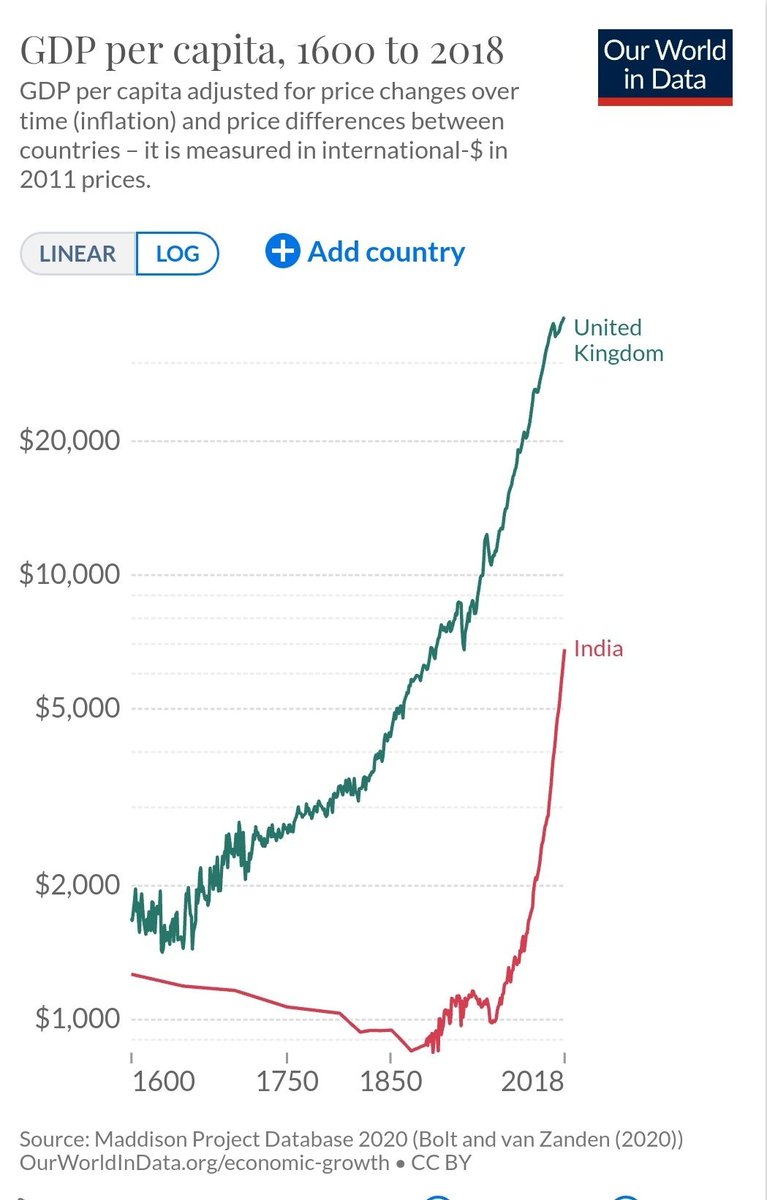
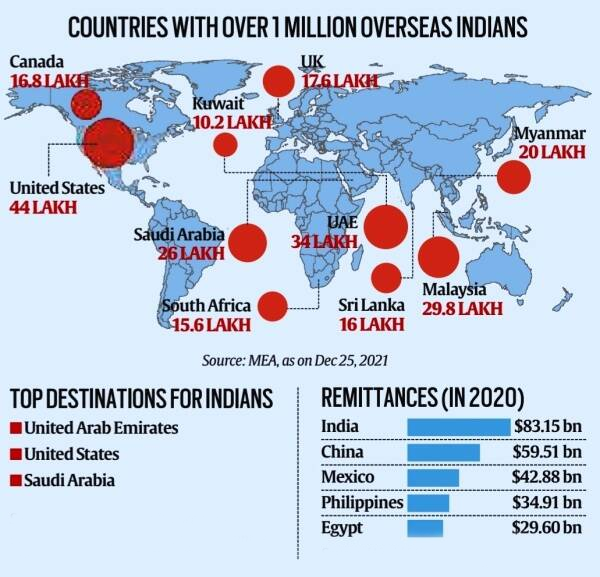
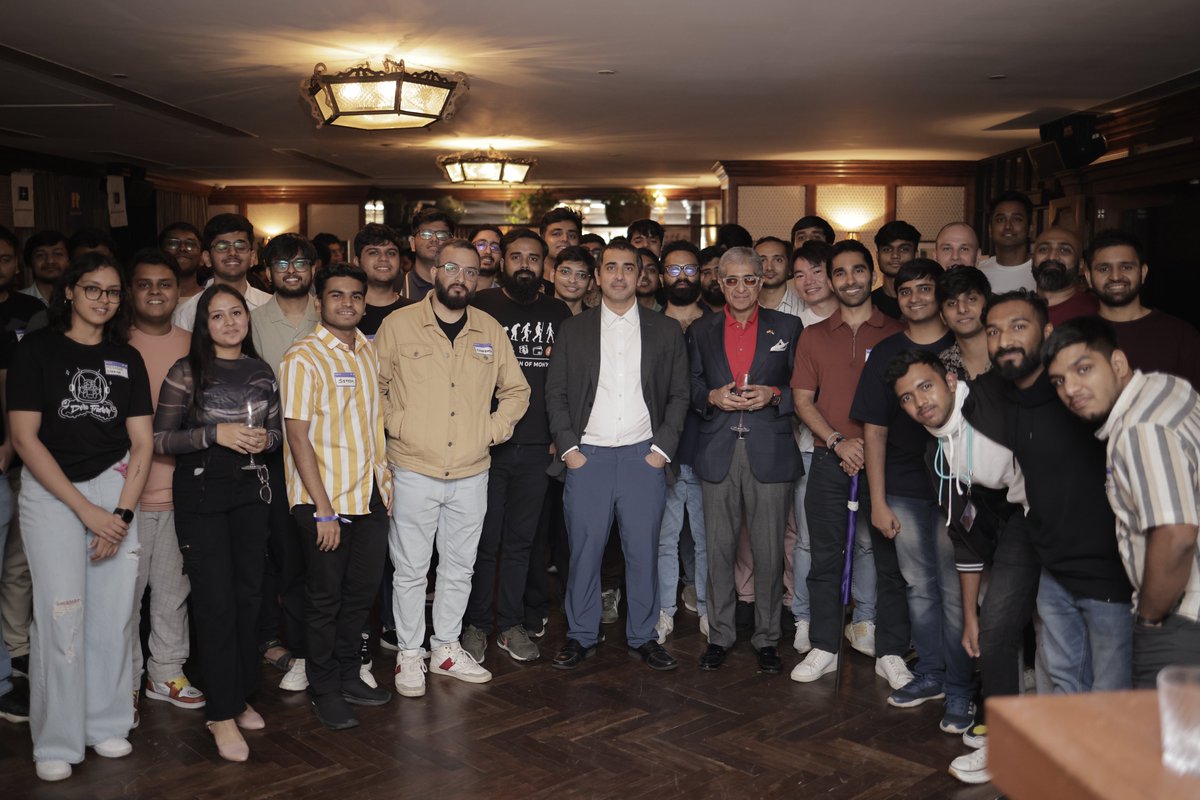
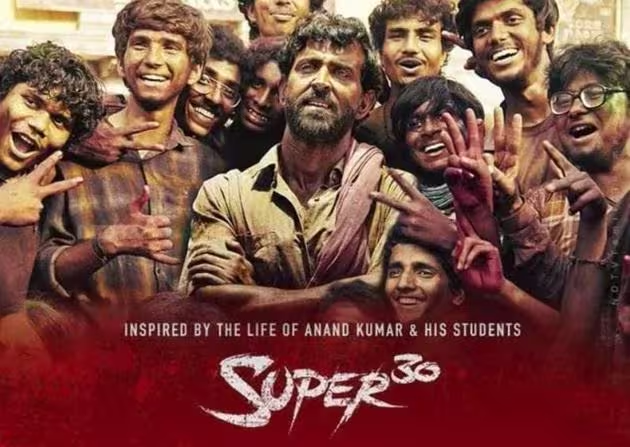
INVESTING IN INDIA IS IMPROVING INDIA If you see a startup growing, does that mean it doesn't have any flaws? That it's the best in the world? That you're going to use it for everything right away? No, of course not. But you might start using it, and putting money into it, and talking about it to your friends. And that's how I think about India — an ancient civilization that's simultaneously like a startup country, as you can see from the graph below. That's why I'm investing in India and Indians: because I see the growth potential, because it helps build up Bharat, and because a strong and self-sufficient India is good for the world. Now, let me address a few common arguments. 1) Civilizational Reincarnation. First, note that I used the phrase "ancient civilization" above. Of course I'm well aware that the Indus Valley civilization is one of the oldest in human history. But India is still analogous to a tech startup, because the country experienced a civilizational rebirth in 1991 after liberalization, just as China did in 1978. Whenever we use the term "leapfrogging" we acknowledge this. Why could India jump straight over landlines straight to mobile, or from cash to UPI? Because it was reborn recently, after centuries of colonialism and occupation. And reincarnation is something we are familiar with. 2) Underdog Millionaire. Second, observing that something is improving doesn't mean saying that it's already number one. In fact, one of the most important things about India is that Indians think of themselves as underdogs. Not starving "slumdogs" like the regrettable epithet, nor overconfident overdogs, but underrated underdogs — with a chance to win but certainly no guarantee. That's the message of movies like Super 30 (youtube.com/watch?v=QpvEWV…), which couldn't be more different than Black Mirror. Indians know they aren't #1, or even #2, because they aren't. But the diaspora helps show that Indians can be world class, and that India itself could become world class, which is part of why India is now rising to the occasion. 3) Decentralized Diaspora. Third, that brings us to one of India's greatest strengths: its diaspora. In this century China may end up playing the world's best home game, but India is on track to play the world's best away game. So India's development will look different than China's. For one thing, Indians are willing and able to move anywhere. Westerners mostly aren't willing to move, because they still think their societies are the only places that are "First World". And the Chinese increasingly aren't able to move, because they're restricted from any countries where the Chinese state lacks hard power. That leaves Indians to fill the gap. As Chinese emigration drops off, Indian emigration picks up to fill the holes in tech talent. As individual Indians become wealthier, more are financially able to emigrate. And as India as a whole becomes stronger, the passport improves, and more people are diplomatically able to emigrate. All this means the age of Indian emigration is just beginning. If China is the centralized state, India is the decentralized diaspora. 4) Special Economic Zones. Putting that all together, that means (a) India is reborn, (b) Indians know they are rising-yet-underdogs, and (c) Indian development is going to be quite different from Chinese development, with much more focus on the diaspora. So, that's one of the reasons I think so much about special economic zones. Indians thrived in Dubai and Delaware, in Singapore and the Anglosphere — once they got out into a different economic system. And they're now starting to thrive in India itself — once India itself changed its economic system in 1991. So, it's all about changes to the economic system. And with every investment we make in India or Indians, we build up a feature list of things to change. Because there are a series of conceptually simple things India can do to be as good a place to do business as Dubai or Singapore. For example, you need to be able to send money into and out of the country for investment without hassle. You need to get a better passport so Indians can attend conferences. You need to rank higher on the economic freedom index (heritage.org/index/country/…). And so on. At India's current rate of improvement, I think much of that will eventually be possible in a place like GIFT City, as a kind of special economic zone, even if not for all of India at once. Put another way: India's internet connectivity, digital payments, and basic infrastructure has dramatically and visibly improved in the last 10 years. But while it's improving, it doesn't yet have certain "power user" features for international business that Singapore, Dubai, and Delaware do. Once it does, it'll get even more of my business — and more importantly the world's. But it's already investable, and improving — which is why I'm writing about India, putting money into Indians, and regularly meeting founders on the ground. 5) Investor, not cheerleader. In summary, that's what the quoted tweet gets wrong. It's not about being a "cheerleader" who has to "stay" in a place to invest in it — imagine if every business had to be funded solely by neighbors down the street. Instead, it's about being an international investor looking for the best talent around the world — and finding quite a lot of it in India. Maybe I'll find one of you at the next meetup!
YouTube video
YouTube
Balaji tweet mediaBalaji tweet mediaBalaji tweet mediaBalaji tweet media
English
197
1.3K
5.9K
5.1M