...above all, human ®

5K posts

...above all, human ® banner
...above all, human ®

...above all, human ®

@VOC1628

Passionate about investing, crypto and macro-economics. Learning daily to make smarter decisions. Join me on this journey of discovery and growth!

Land of the Free Katılım Mayıs 2010
1.1K Takip Edilen213 Takipçiler
...above all, human ® retweetledi
Titan of Crypto
Titan of Crypto@Washigorira·
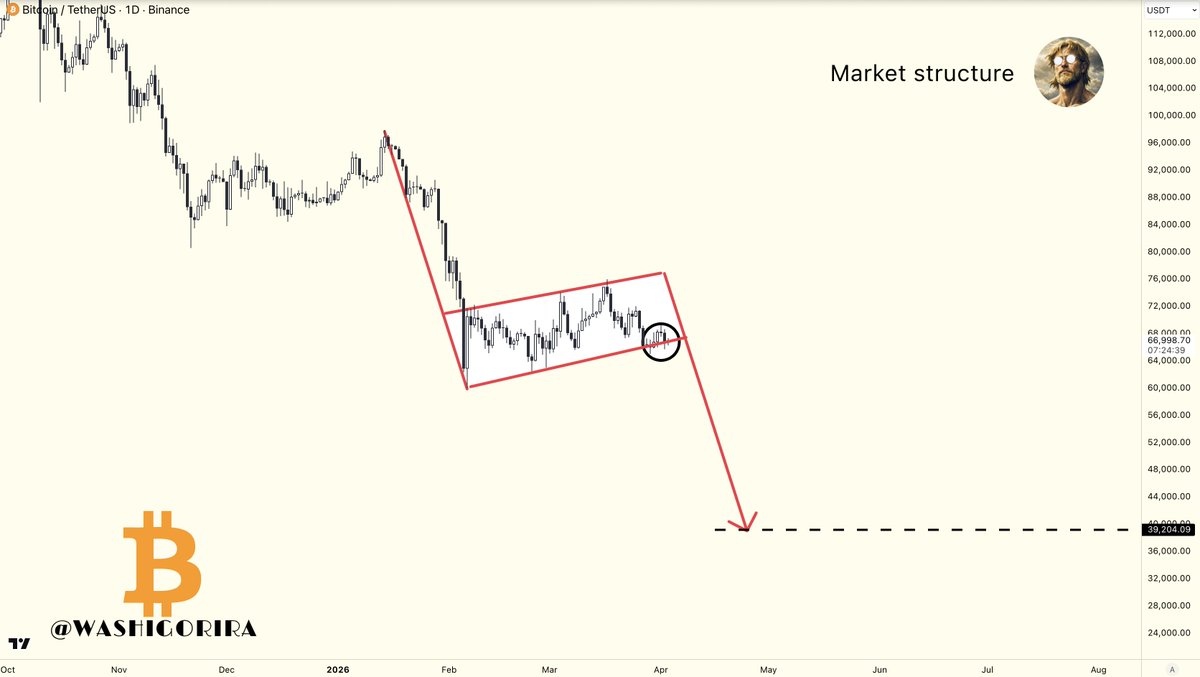
#Bitcoin Bear flag No breakdown yet. Structure still holding.
Titan of Crypto tweet media
English
173
121
674
34.1K
...above all, human ® retweetledi
JDB
JDB@JDB_trading·
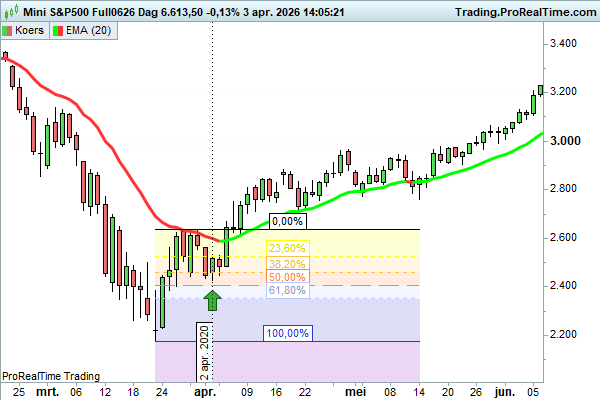
$CL $MCL #olie $oil #oil $USO #crude $WTI #WTI #Brent Ja, dat klopt. Maar vergeet niet dat de markt een mega signaal afgeeft op dit moment. Dit alles lijkt inderdaad op een omgedraaide 2020 situatie. De korte termijn oliefuture bodemde pas op 21 april 2020, terwijl de lange oliefutures al op 2 april 2020 bodemden. En vanaf dat moment gingen de beurzen definitief omhoog. Nu is het andersom! Gisteren steeg de korte termijn future fors, terwijl de lange futures redelijk vlak bleven. En dit allemaal ook op 2 april net als in 2020 vanuit exact dezelfde set-up voor de #SP500 (toeval bestaat niet?!). Het zou mij niet verbazen als de korte oliefuture de komende weken nog verder stijgt. Misschien zelfs 150!!, maar zolang de lange futures nauwelijks reageren zegt de markt dat dit een tijdelijk probleem is, net als in 2020! Iedereen die wat roept over olieprijzen maar geen enkele kennis van de termijnstructuur op de futuremarkt heeft kan beter zwijgen 😉
JDB tweet mediaJDB tweet media
Pierre Andurand 🇺🇦🇫🇷🇪🇺🕊️@AndurandPierre

The oil market now reminds me of when prices were around $30 in March 2020. Plenty of people who never looked at oil were going long oil futures, not realising what could happen to the roll. A few weeks later prices traded negative, with a $50+ contango for WTI a day before expiry. They looked at oil futures like equity, not understanding the impact of futures roll. This time is similar, plenty of people shorting the oil market thinking the Strait of Hormuz will eventually reopen and things will go back to normal. Many are trying to call the top. Without realising they might have to roll their shorts at $30, $50, $70+ backwardation?

Nederlands
6
6
129
15.6K
...above all, human ® retweetledi
JDB
JDB@JDB_trading·
De MOVE Index is de laatste dagen ingestort. Nog een signaal dat we de bodem mogelijk al hebben gezien. Soortgelijke blow-off top in de MOVE index als begin april vorig jaar!
WALL ST JESUS@WallStJesus

#MOVE INDEX

Nederlands
5
2
87
11.8K
...above all, human ®
@jsblokland It’s all about the Worst Bank Scenerio x.com/wftproof/statu…
Hester Bais@Wftproof

Herinner je de Nixon Shock in 1971? Vlak daarna de energiecrisis van 1973 die resulteerde in petrodollar (structurele, kunstmatige vraag naar dollars)? Dat was geen toeval; het was het startschot voor het Worst Bank Scenario dat ik al jaren blootleg: de systematische bankenfraude met derivaten en collateral die de macht centraliseert bij een paar elites. En nu? We zitten wéér midden in een nieuwe energiecrisis. Maar dit komt NIET onverwachts. Dit is geen reeks ongelukken. Dit is het logische vervolg van het trans-Atlantische plan uit 2007/2008 van VS en EU, het Verdrag van Lissabon en het strategisch concept van de NAVO: Klimaatagenda + energietransitie + pandemiebestrijding + de oorlog in Oekraïne + de push voor een onafhankelijke Palestijnse staat… het hangt allemaal samen. Het is geen redding voor het klimaat. Het is een blauwdruk voor controle: • Hogere energieprijzen om afhankelijkheid te creëren • Pandemiemaatregelen om burgers te laten wennen aan beperkingen • Oekraïne om Rusland te isoleren en de transitie te forceren • Midden-Oostenplan om de energiekaarten opnieuw te schudden Alles dient één doel: de vervolmaking van de Verenigde Staten van Europa en de band met de NAVO te versterken om de multipolaire orde te vervolmaken (dedollarisatie). Terwijl wij de prijs betalen, bouwt de elite het nieuwe financieel-geopolitieke systeem. Het Worst Bank Scenario ontvouwt zich voor onze ogen. Tijd om wakker te worden. Dit is geen samenzweringstheorie. Dit is het plan. Samenzwering in de praktijk. #WorstBankScenario #Energietransitie #TransAtlantischPlan #VerenigdeStatenVanEuropa #KlimaatAgenda #NixonShock

English
0
0
0
48
jeroen blokland
jeroen blokland@jsblokland·
I am kind of lost here. Trump sees an end to the war in Iran within two or three weeks. It does not require the Straight of Hormuz to be open, and if Europe runs out of energy, it should go there and get it itself. So what will the US be doing in those next two to three weeks? If this is the accurate stance of the US president, why not stop NOW?
jeroen blokland tweet media
jeroen blokland@jsblokland

So let us assume Trump does wind down the US military campaign (even as it would raise the obvious question of why he has just sent thousands of American troops into the region), while the Strait of Hormuz remains closed. What, then, did those additional three or four weeks of war actually achieve? - The bulk of the nuclear threat has been neutralised in the first few days. - Iran’s Supreme Leader was killed within the opening phase of the conflict. - The Strait of Hormuz was not (effectively) closed until only a couple of weeks ago. - There is still no meaningful sign of regime change, let alone of the Iranian people being lifted out of the shadows. - Persistently high energy prices will push inflation higher and send consumer spending lower. - Central banks, now myopically focused on raising interest rates because they (deliberately?) failed during the post-COVID inflation surge, are likely to make matters worse. - Energy supplies from the Middle East will take months, if not longer, to normalise. - Tensions surrounding Israel will remain exceptionally high for years. - And Trump cannot return home claiming a clear victory that helps him ahead of the midterm elections. I'm sure a lot of people think differently, so help me out here.

English
20
3
56
28.4K
...above all, human ® retweetledi
Hester Bais
Hester Bais@Wftproof·
Herinner je de Nixon Shock in 1971? Vlak daarna de energiecrisis van 1973 die resulteerde in petrodollar (structurele, kunstmatige vraag naar dollars)? Dat was geen toeval; het was het startschot voor het Worst Bank Scenario dat ik al jaren blootleg: de systematische bankenfraude met derivaten en collateral die de macht centraliseert bij een paar elites. En nu? We zitten wéér midden in een nieuwe energiecrisis. Maar dit komt NIET onverwachts. Dit is geen reeks ongelukken. Dit is het logische vervolg van het trans-Atlantische plan uit 2007/2008 van VS en EU, het Verdrag van Lissabon en het strategisch concept van de NAVO: Klimaatagenda + energietransitie + pandemiebestrijding + de oorlog in Oekraïne + de push voor een onafhankelijke Palestijnse staat… het hangt allemaal samen. Het is geen redding voor het klimaat. Het is een blauwdruk voor controle: • Hogere energieprijzen om afhankelijkheid te creëren • Pandemiemaatregelen om burgers te laten wennen aan beperkingen • Oekraïne om Rusland te isoleren en de transitie te forceren • Midden-Oostenplan om de energiekaarten opnieuw te schudden Alles dient één doel: de vervolmaking van de Verenigde Staten van Europa en de band met de NAVO te versterken om de multipolaire orde te vervolmaken (dedollarisatie). Terwijl wij de prijs betalen, bouwt de elite het nieuwe financieel-geopolitieke systeem. Het Worst Bank Scenario ontvouwt zich voor onze ogen. Tijd om wakker te worden. Dit is geen samenzweringstheorie. Dit is het plan. Samenzwering in de praktijk. #WorstBankScenario #Energietransitie #TransAtlantischPlan #VerenigdeStatenVanEuropa #KlimaatAgenda #NixonShock
Hester Bais@Wftproof

One of the most influential actions of the Nixon Shock in 1971 was ending the dollar's direct convertibility into gold, leading to a free float of currencies. This caused greater exchange rate volatility, increasing the demand for repos (simply put: borrowing against collateral) as a means of managing liquidity. Simultaneously, book-entry securities trading was developed, allowing securities to be transferred via book entry. During the same period, book-entry (digital) securities trading emerged (in the Netherlands, the Dutch Book-Entry Securities Act was introduced in 1977 by Wim Duisenberg—the man who also became the first president of the ECB at the beginning of the century). In 1968, Ginnie Mae was founded, and in 1970, the first securitization (the packaging and sale of large bundles of mortgage loans) took place. Trading in book-entry (digital) securities was "born." Collateral no longer consisted of gold, but of (government) debts. Banks and other financial institutions used repos (borrowing against collateral) to manage their short-term liquidity in an environment of less predictable currency values. Central banks, including the Federal Reserve, increasingly used open market operations, including repos, to influence the money supply and interest rates. This meant that repos were not only a tool for financial institutions to manage liquidity but also became a crucial component of monetary policy. With increased volatility, managing counterparty risk in repo transactions became more important. This led to further developments in the way repos were structured, with greater attention paid to the quality of the collateral and the terms of the agreements. Swap lines (repos) were established between the Fed and the ECB starting on 9/11. In 2002, the European Collateral Directive was enacted to enable the trading of collateral within the EU. It took years for this directive to be implemented into law. The credit crisis was not unexpected and was "resolved" (disguised) by central bank repo transactions (buy-back programs) to provide liquidity to banks, which in turn used these banks as collateral for their over-the-counter derivatives (collateral upgrading). In the EU, a guarantee scheme was established in 2008 by the EC on the advice of the ECB to conceal the banks' enormous collateral shortages in over-the-counter derivatives. However, Dutch banks did not avail themselves of this state aid (the Dutch State was advised by Rothschild) at the last minute because they had secretly arranged these guarantees from the pension funds via ABP/APG and PFZW/PGGM. Through an illegal collateral carousel, the Dutch banks ABN AMRO, ING, and Rabobank were bailed out by the pension funds. Since the credit crisis, swap lines between G7 central banks have served as the foundation for the G7's developed multipolar financial (blockchain) system (as a counterpart to the BRICs and the rest). In 2022, the Securitized Overnight Finance Rate (repo rate) was introduced in the US as part of the Worst Bank Scenario. The Euribor and LIBOR frauds were as of 2008 orchestrated to trigger the transition to this repo rate. The ECB's transmission protection instrument, the TPI, was also introduced in 2022. In the Worst Bank Scenario, this is called the "Draghi Collateral Discount Window." Read Worst Bank Scenario and discover how the G20 rolled out a new Bretton Woods 2.0 with this repo market in 2008 (the pilot for the new multipolar crypto/wholesale CBDC system has been running at the Bank of England since 2021) and how our pension funds were abused for this purpose. The pension transition is part of this scenario. Gold has been purchased again by (central) banks since 2008 because it is included in the OTC and repo regulations as "eligible" collateral and is in practice used as hedge for the losses in value of the purchased bonds/packaged loans (liquidity management). The English version is available abroad via Amazon, among others.


Nederlands
33
359
697
19.8K
...above all, human ® retweetledi
PlanB
PlanB@100trillionUSD·
Bitcoin closed March at $68,215 (RSI 44🔵) As said before, I would not be surprised if BTC dips below 200w moving average ($59k) and realized price ($54k) before next leg up towards S2F $500k levels ($250k-$1m range). Interesting times head.
PlanB tweet media
English
220
417
3.3K
213.6K
...above all, human ® retweetledi
Titan of Crypto
Titan of Crypto@Washigorira·
#Bitcoin It’s not about catching the exact bottom. It’s about positioning early for the next move.
Titan of Crypto tweet media
English
43
101
514
21.3K
...above all, human ® retweetledi
Bob Loukas 🗽
Bob Loukas 🗽@BobLoukas·
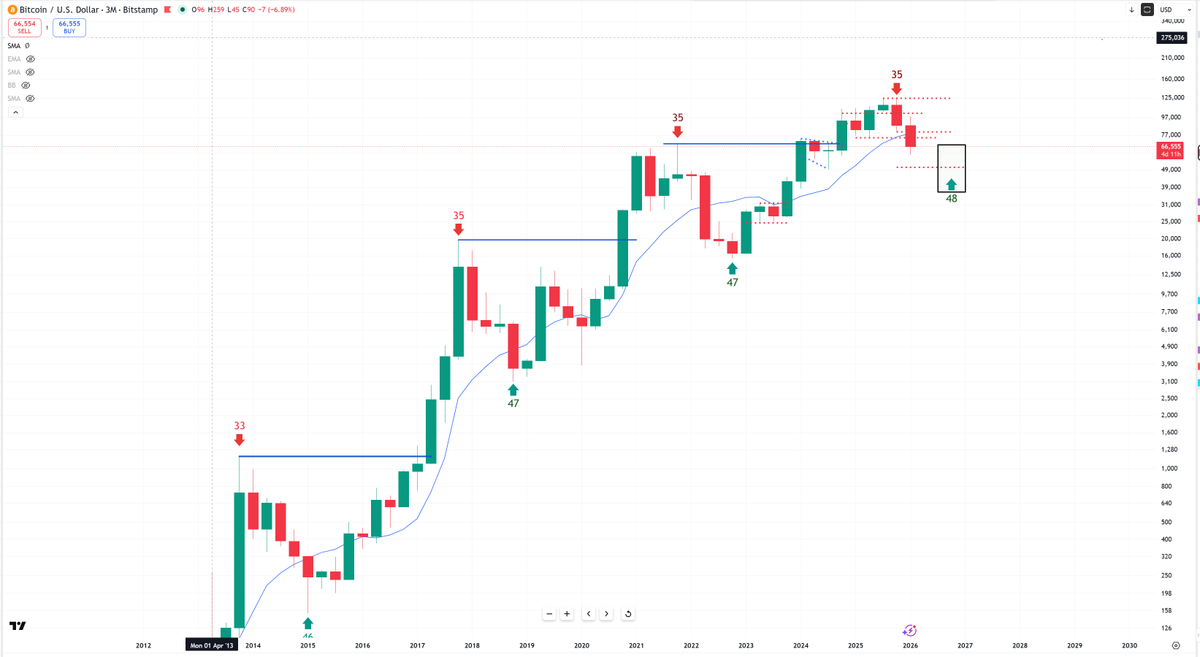
Quarterly candle view of the Bitcoin 4 Year Cycle. Just like all prior Cycles, despite the relentless narrative changes you hear. Don't get hung up on price. Time matters more than Price. Time gives structure.
Bob Loukas 🗽 tweet media
English
76
114
1.3K
91.7K
...above all, human ® retweetledi
jeroen blokland
jeroen blokland@jsblokland·
Is de grens bereikt? Noorwegen verhoogde de vermogensbelasting → 50 miljard dollar aan vermogen vertrok naar Zwitserland → de staatskas werd 450 miljoen dollar armer. Californië wil miljardairs zwaarder belasten → 30% van de belastingplichtigen is al vertrokken → verwacht verlies: 25 miljard dollar. Nederland schroeft box 3 verder op → mensen vertrekken → 4 miljard euro binnenhalen wordt een illusie. Dit is de Laffercurve in actie. Een economische wet die al 50 jaar bestaat, en nog steeds wordt genegeerd. Daarom aan belastingplichtigen, beleidsmakers, beleggers en politici: lees je tenminste in, voor je beslist. Lees onze laatste nieuwsbrief en schrijf je meteen in: bloklandfund.substack.com/p/de-grens-is-…
jeroen blokland tweet media
Nederlands
106
558
1.7K
95.1K
...above all, human ® retweetledi
Arno Wellens
Arno Wellens@arnowellens·
Mark Rutte moest een intern zedenschandaal bij de VVD verbergen voor de politie en begon de boel bij elkaar te liegen. Zo ontstond de mythe van de aanstaande Russische invasie. Die paniek maakt wel interne repressie mogelijk, dus houd het hoofd koel. arnowellens.nl/p/een-bange-be…
Nederlands
14
309
694
13.1K
...above all, human ® retweetledi
Titan of Crypto
Titan of Crypto@Washigorira·
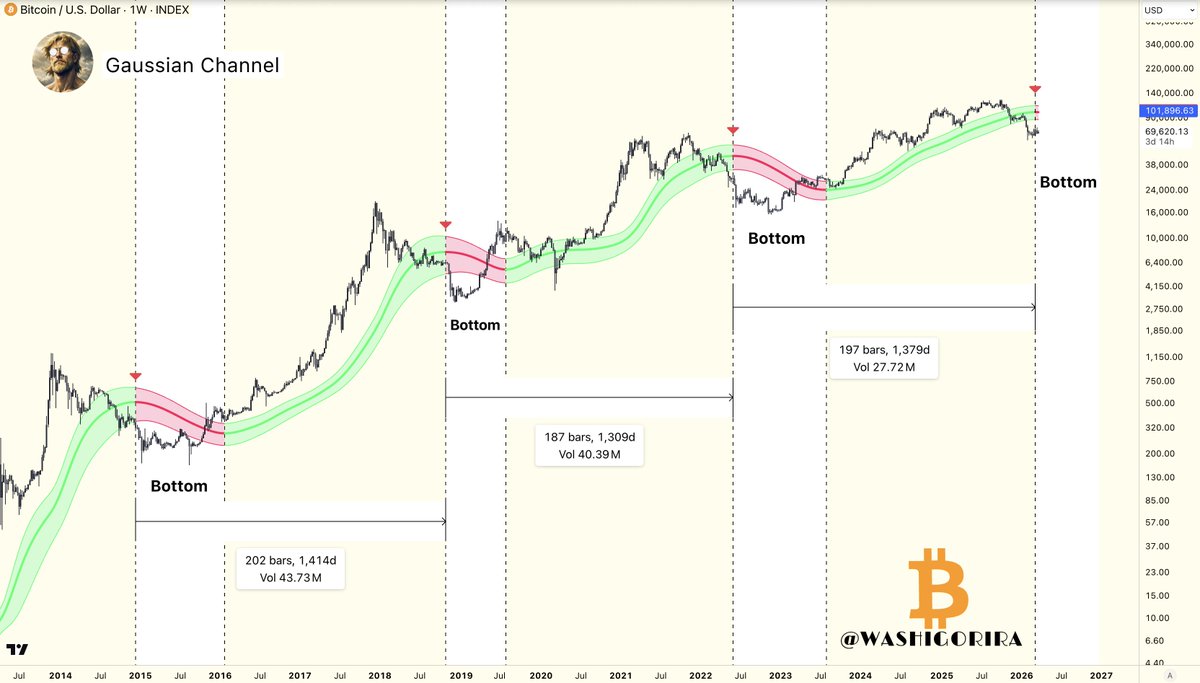
#Bitcoin is entering a familiar phase of the cycle. The weekly Gaussian Channel has turned red again. Not long ago, consensus was calling for a structural regime change. Cycles keep repeating, whether we like it or not.
Titan of Crypto tweet media
English
52
102
528
25.7K
...above all, human ® retweetledi
Titan of Crypto
Titan of Crypto@Washigorira·
#Silver Potential double top. Neckline test in progress. Break = lower.
Titan of Crypto tweet media
English
16
37
197
13.1K
CarpeNoctom
CarpeNoctom@CarpeNoctom·
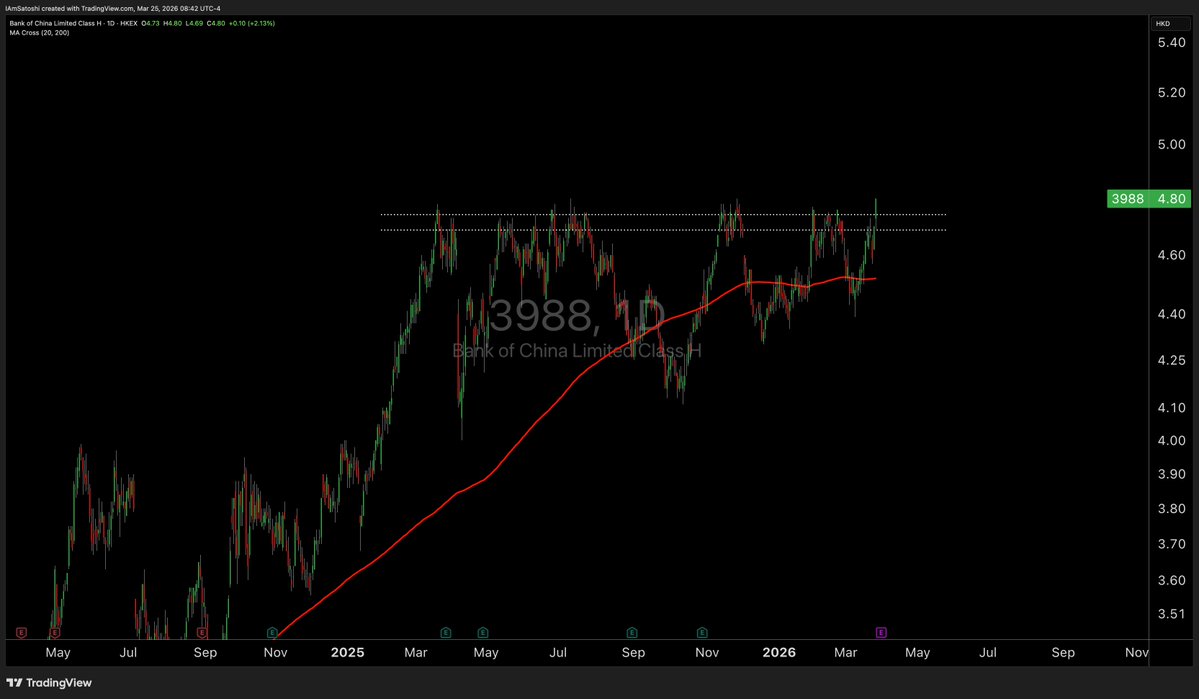
how do we feel about Chinese banks here?
CarpeNoctom tweet media
English
4
1
14
3.6K
...above all, human ® retweetledi
Henrik Zeberg
Henrik Zeberg@HenrikZeberg·
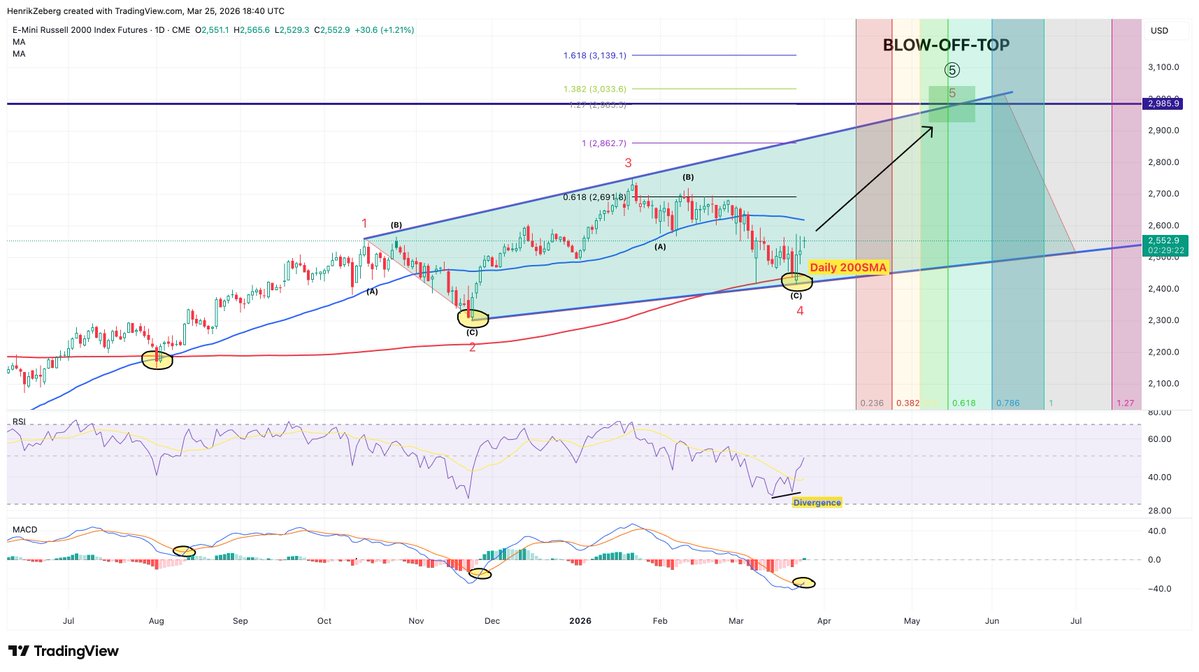
If you are BEARISH US Equities here ... You are on the wrong side of the Market. Strong Bullish Move coming! Here is #Russell2000 Enjoy the Final Rally into Long-term Top!
Henrik Zeberg tweet media
English
22
101
914
98.6K
...above all, human ® retweetledi
Benjamin Cowen
Benjamin Cowen@intocryptoverse·
The reason this four year cycle top for Bitcoin "feels different" is because this is the first major top BTC has had during a late business cycle environment. It explains why there was no alt season, why BTC has been bleeding to SPX, and why SPX has been bleeding to Gold. We got a glimpse of this type of environment in 2019 but then the pandemic causes a crisis which reset the business cycle. It also happened during the middle of a four year cycle for BTC, rather than at the end of one. This cycle has been more brutal because there has not been a crisis to allow the business cycle to end and for things to reset. So the business cycle keeps on limping along while high risk assets continue to bleed out to lower risk assets. And realistically we should not expect that trend to change until the business cycle ends.
Benjamin Cowen tweet media
English
204
181
1.9K
137K
...above all, human ® retweetledi
Milton Friedman Quotes
Milton Friedman Quotes@MiltonFriedmanW·
Milton Friedman 🗣️ “Inflation is just like alcoholism. In both cases when you start drinking or when you start printing too much money, the good effects come first. The bad effects only come later.” “That’s why in both cases there is a strong temptation to overdo it: to drink too much and to print too much money.” “When it comes to the cure, it’s the other way around. When you stop drinking or when you stop printing money, the bad effects come first and the good effects only come later.” “That’s why it’s so hard to persist with the cure.”
English
12
335
1.3K
36.4K
Thom Derks 🖊
Thom Derks 🖊@_Thom_Derks_·
Hoop doet leven! De markten lijken vandaag een beetje vooruit te lopen op de hoopvolle kop -- het 15-puntenplan voor vrede met Iran -- terwijl de uitkomst nog allesbehalve zeker is. Aziatische aandelen begonnen sterk, Europa stijgt, de Amerikaanse futures staan hoger, bitcoin plust en ook goud springt omhoog, terwijl Brent-olie terugzakt onder de $100 en de dollar verzwakt. Washington zet in op vrede, terwijl Iran nog steeds (!) ontkent dat er sprake is van serieuze onderhandelingen. Dit voelt dan ook eerder als opluchting dan als overtuiging. De belangrijkste verschuiving is dat de markt iets meer oog krijgt voor groeischade, in plaats van alleen voor inflatiepaniek. Toen de olieprijs dagelijks verder opliep, draaide alles om hogere inflatie, centrale banken die klem zaten en de economische schade van duurdere energie-import. Nu Brent-olie scherp is gedaald, neemt die acute inflatievrees iets af. Maar de onderliggende economische schade is niet verdwenen. Sterker nog: de recente inkoopmanagersindices voor de Verenigde Staten, de eurozone en het Verenigd Koninkrijk wijzen al op afzwakkende activiteit, terwijl de prijsdruk opnieuw oploopt. Juist daarom is het te vroeg om dit een keerpunt te noemen. De markt kan best oplopen op berichten over een 15-puntenplan en op de gedachte dat de Straat van Hormuz weer deels bruikbaar wordt. Maar bevestiging ontbreekt nog. Wat nu telt, is dat de markt geen nieuwe stijging van de olieprijs meer nodig heeft om nerveus te blijven. De eerste schade is al zichtbaar in het sentiment van bedrijven, in hogere inputkosten en in verzwakkende groeimomentum. Zelfs een echt staakt-het-vuren zou dat niet meteen uitwissen. Het zou de schok waarschijnlijk stoppen, maar economieën niet direct terugbrengen naar het niveau van vóór weken van oorlog en energiestoringen. Precies dat begint de markt nu langzaam te beseffen. Mijn lezing van vanochtend: dit is een opluchtingsrally met veel littekenweefsel eronder. De markt krijgt weer wat ademruimte, maar nog niet genoeg om echt te ontspannen. Zolang onderhandelingen niet zijn bevestigd en de Straat van Hormuz niet daadwerkelijk normaal functioneert, zou ik herstel vooral als tactisch zien, niet als duurzaam.
Thom Derks 🖊 tweet media
Nederlands
2
1
18
563