Daniel Romero-Alvarez

20.6K posts

Daniel Romero-Alvarez banner
Daniel Romero-Alvarez

Daniel Romero-Alvarez

@Vakdaro

Romero-Alvarez Lab || UISEK, Quito, Ecuador || Ecology of Infectious Diseases || Public Health || https://t.co/wKm8kOp6VU || #science #scicomm #writing

Quito-Ecuador Katılım Ağustos 2011
4K Takip Edilen1.8K Takipçiler
Daniel Romero-Alvarez retweetledi
Esteban Ortiz
Esteban Ortiz@EstebanOrtizMD·
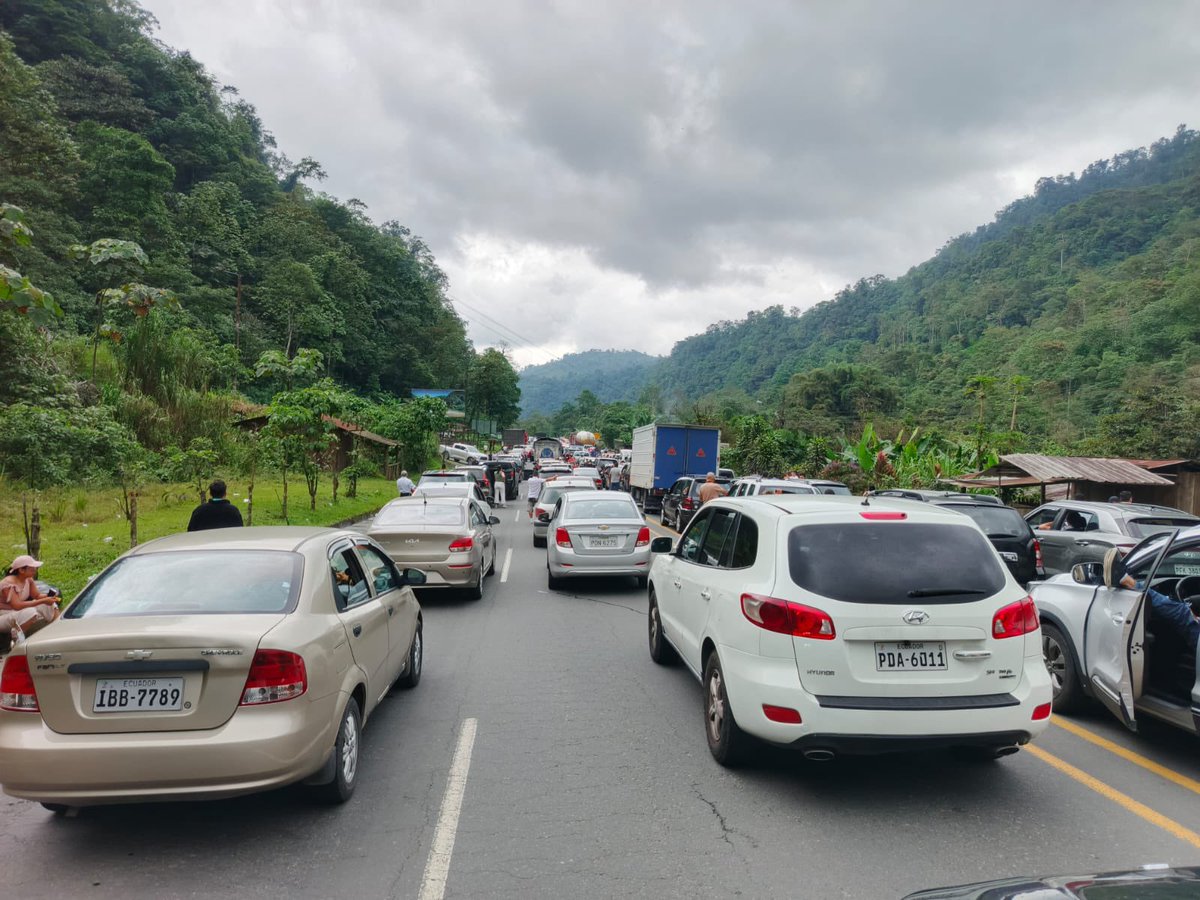
El sistema de información de carreteras es una desgracia en este país. Salimos con destino a la playa: la vía Calacalí estaba cerrada, tomamos la de Santo Domingo, una eternidad. Llegamos a Tambillo con tráfico brutal hasta Aloag; nadie informaba nada. Continuamos hasta Tandapi con un trancón de 4 horas. A 3 km de Aliriquín decidimos regresar a Quito: cuatro carriles ocupados, una desgracia. La prefectura de Pichincha tenía puestos de auxilio pero cero información, y la de Santo Domingo ausente. Mucha gente decidió regresarse; así se pierde plata en este país, en pleno feriado sin un solo contingente.
Esteban Ortiz tweet media
Español
5
427
1.1K
178.8K
Daniel Romero-Alvarez retweetledi
Science News
Science News@SciencNews·
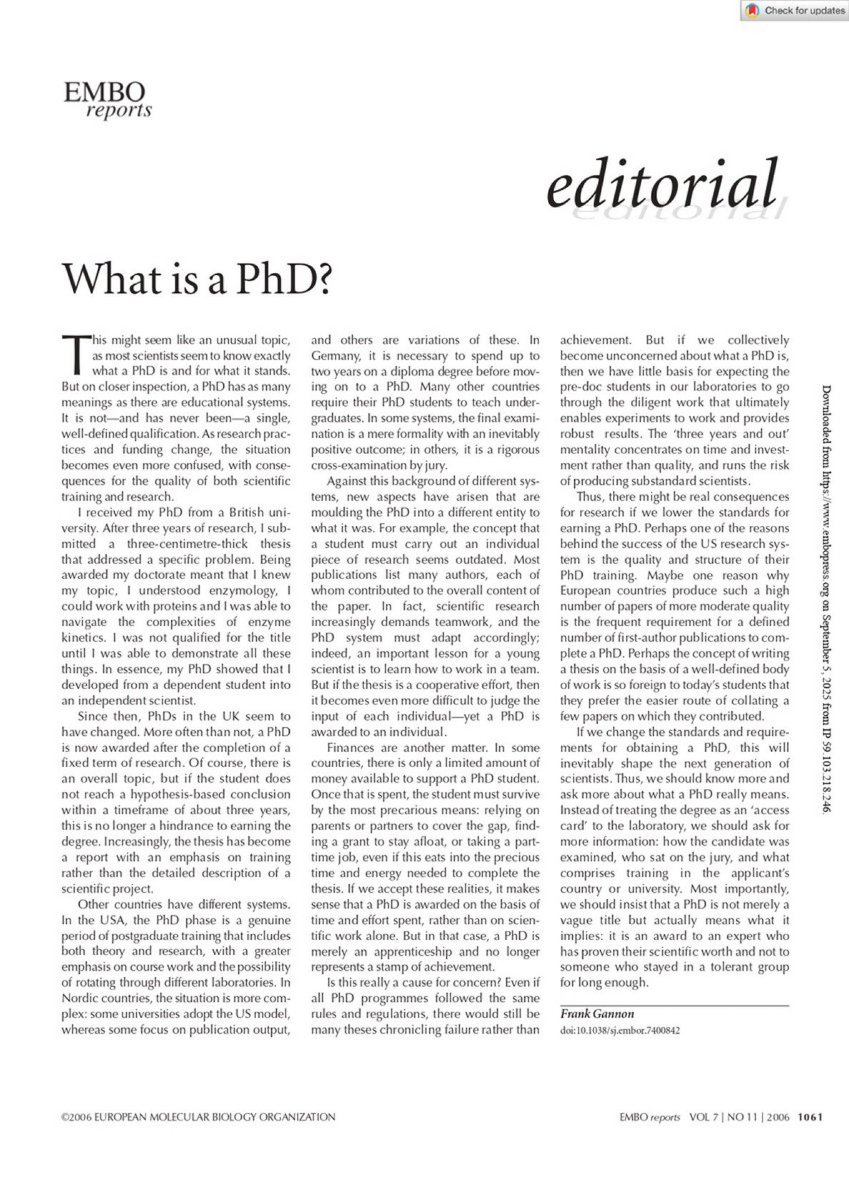
What is a PhD?
Science News tweet media
English
15
295
1.4K
331.3K
Daniel Romero-Alvarez retweetledi
Les Flores
Les Flores@lesssflo·
Hola🤠 Sabías que puedes crear un ✨estado ficticio✨ para evaluar si una #políticaPública tuvo efecto? Aquí el código #R con el método #SyntheticControl (evaluar programas sin experimento 🚫 🧪) 🔗 github.com/lesflores/synt… #CódigoDeTodxs #EvalúaFácil
Les Flores tweet media
Español
6
67
397
13.5K
Daniel Romero-Alvarez retweetledi
Zoonoses
Zoonoses@ZoonosesJ·
This study shows that in low-incidence states like Arkansas, a positive Lyme test is 30 times more likely to be a false positive than a true positive, underscoring the need to prioritize alternative diagnoses before testing.
English
2
4
106
65.3K
Daniel Romero-Alvarez retweetledi
Prof. Nikolai Slavov
Prof. Nikolai Slavov@slavov_n·
A timeless model for writing a research summary. 1/2
Prof. Nikolai Slavov tweet media
English
3
171
1.1K
88.3K
Daniel Romero-Alvarez retweetledi
News from Science
News from Science@NewsfromScience·
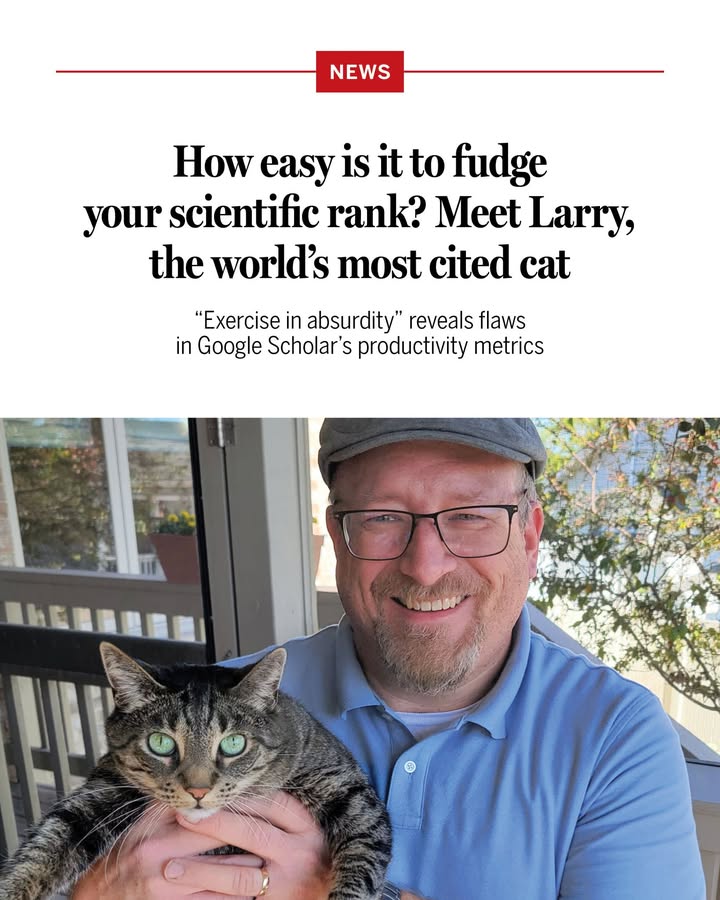
Most researchers have nothing on Larry Richardson. Racking up more than 130 citations in 4 years, he seemed like a scientific superstar in the making. Except the studies were gibberish—and Larry is a cat. This “exercise in absurdity” is an eye-opening look at the byzantine world of scientific rank, and just how easy it is to manipulate: scim.ag/41XtDse #ScienceMagArchives
News from Science tweet media
English
2
13
27
7.6K
Daniel Romero-Alvarez retweetledi
Scholarship for PhD
Scholarship for PhD@ScholarshipfPhd·
7 Sci-Hub Alternative Websites Paper you need to ask for payment & can't use sci-hub? You don't have to pay to read academic papers. These are 7 sci-hub alternative websites to download papers for free. 👉 Unpaywall --> https://unpaywall. org/ Install this browser extension on Chrome and read the paper directly on the journal website legally and for free. 👉 Open Access Button (OAB) --> https://lnkd. in/dXVVQpUf Copy and paste the link paper or DOI on the OAB website. This will be accessible on the next page. Legal. 👉 PaperPanda --> https://paperpanda. app/ Like Unpaywall, this Chrome extension allows you to access millions of research papers in one click. 👉 DOAJ --> https://doaj. org/ As the name implies, DOAJ (Directory of Open Access Journals) provides access to millions of scientific papers from around the world for free. 👉 OA[.]mg--> https://oa. mg/ Like Google which is made specifically to search for academic papers. There are more than 250 million papers available for access. 👉 Core --> https://core. ac. uk/ The world's largest database of research papers with more than 298 million papers from around the world that can be accessed for free. 👉 arXiv --> https://arxiv. org/ Especially for lovers of natural sciences and economics, this website provides access to 2.4 million academic papers for free. Tip: Remove any spaces in the URLs if you encounter issues accessing the websites.
Scholarship for PhD tweet media
English
0
165
570
32.8K
Daniel Romero-Alvarez retweetledi
Itai Yanai
Itai Yanai@ItaiYanai·
Act with chivalry when working with another person. Don't cling to your own ideas & status but rather dare to give up (or at least share) control. Allow yourself to be changed by the ideas. I wish we'd included in our paper this old concept by Keith Johnstone from improv theater.
Itai Yanai tweet media
English
6
63
335
22.2K
Daniel Romero-Alvarez retweetledi
Niko McCarty.
Niko McCarty.@NikoMcCarty·
A single E. coli cell, placed on a dish, will become 70 billion cells in just 12 hours. That’s exponential growth. But a new preprint shows that it's possible to engineer E. coli to grow linearly instead, where only one daughter cell continues dividing and the other stops. First, some context. In nature, there is a bacterium called Mycobacterium smegmatis (initially discovered in 1884 in ulcers scraped from syphilis patients.) M. smegmatis is weird because it divides asymmetrically. These cells grow only from one end, and all their cell wall biosynthesis machinery is located on that one end. So when the cell divides, one daughter gets this machinery and the other gets nothing. The daughter that gets the machinery can keep dividing immediately, but the other daughter has to remake all that machinery from scratch, so its growth is delayed. E. coli doesn’t grow like this. When it divides, it pinches in the middle and splits everything evenly. Enzymes, metabolites, and proteins get partitioned more or less randomly between the two daughters. For the new preprint, though, researchers engineered E. coli to behave more like M. smegmatis. Here is how they did it: First, they deleted a gene called cyaA, which encodes an enzyme (adenylate cyclase) that makes a molecule called cAMP. cAMP is SUPER IMPORTANT! It is a nutrient sensor that instructs E. coli to switch on genes that help it digest non-glucose carbon sources when glucose is scarce. Without cAMP, E. coli cells growing on alternative carbon sources will starve; they won’t know how to eat the food. Next, they added back a “split” version of the cyaA gene into the cells. In other words, they split the gene in two so that each half of the enzyme is made separately. Cells can only make cAMP, and thus eat non-glucose carbon sources, if these two halves come together. To facilitate that “coming together,” the researchers also fused the split cyaA proteins to sticky proteins that clump together, and to a fluorescent protein (to make it easy to track these molecules in the cell.) So now some interesting things start to happen if you grow E. coli on a growth medium lacking glucose. As the cell grows, its cyaA “halves” start clumping together into a giant ball. Inside the aggregate, the two enzyme halves come together and make cAMP. And when the cell gets big enough and divides, the clump of cyaA RANDOMLY goes to either daughter cell #1 or #2. The daughter that gets the aggregate (called PA+ in this paper) can keep dividing. The daughter that doesn’t (PA–) cannot. It still grows a few times — about four divisions — because it inherits some leftover cAMP from its mother. But after that, the metabolite is diluted away, and the cell stops growing. PA+ cells went through about 23 divisions on average before their aggregate decayed. And the population of cells, as a whole, grew linearly. This paper is cool because there are many applications where exponential growth is too unpredictable and, perhaps, unsafe. If you want to engineer bacteria to deliver drugs, clean up waste, or live in the gut, you don’t want them to double uncontrollably. This paper shows you can make them expand in a controlled, linear way. Alas, mutations could break this whole engineered system. A mutation that restores cyaA, for example, would give cells a new way to make cAMP. Mutations that make the aggregates split between daughters would break the asymmetry, too. But still, I really enjoy proof-of-concept engineering papers like this.
English
21
174
939
57.7K
Daniel Romero-Alvarez retweetledi
Itai Yanai
Itai Yanai@ItaiYanai·
Discovery happens less when you're trying to be the expert and more when you're trying to be the learner.
Itai Yanai tweet media
English
9
213
1.4K
73.4K
Daniel Romero-Alvarez retweetledi
INABIO.EC
INABIO.EC@INABIO_EC·
Sin embargo, y lo sorprendente, de acuerdo al estudio, es que el vector reconocido del virus Culicoides paraensis nunca se ha detectado en estas provincias, pero se ha reportado previamente en el noreste de Ecuador, en Sucumbíos y Orellana.
INABIO.EC tweet media
Español
0
2
3
141
Daniel Romero-Alvarez retweetledi
Bloodsucking Parasites
Bloodsucking Parasites@bloodSparasites·
Diversity of #ticks and #tick-borne pathogens in #ticks removed from dogs and cats: a focus on Poland, Czech Republic, Slovakia, Hungary, and Romania dlvr.it/TM4Bgw Parasites&Vectors
English
0
4
5
283