

Van Harvey
15.6K posts

Van Harvey
@Van_Blogodidact
Once an ignorant rocker, now an informed father - Classic American Liberal & anti Pro-Regressive. Blog + Autodidact (self taught learner) = Blogodidact
St. Louis Katılım Mart 2010
932 Takip Edilen1.3K Takipçiler

Nancy pelosi, obviously
Kentucky Girl@Notwokenow
What is the American version of Godzilla? And you can’t say AOC.
English
@thepalmerworm I'm pretty sure that you'd have a very difficult time explaining to any of those of our Founders' generation, how a sound education could fail to transmit a solid understanding of the traditions of The West.
English


Bad policy = run away!!
Kevin Dalton@TheKevinDalton
Los Angeles County sees largest population decline in the U.S. The Gavin Newsom Effect continues.
English

My American friends, I'm facing a major problem here.
When I say I want to eat American BBQ,
some Americans say, "come to Texas," others say, "come to South Carolina,"
and still others say, "come to Missouri."
I'm confused.
Are you guys going to start a BBQ civil war?
English
Van Harvey retweetledi

1/2 🧵 My response to some interesting question on my Divided line essay:
open.substack.com/pub/correspond…
Great discussion here, and I appreciate the depth you’re both bringing to the Divided Line. But I’d be remiss not to point something out that bears directly on this conversation.
We’ve been talking about how figures at the dianoia level present themselves as guides to noesis — offering hypothetical symbolic frameworks as if they were the Forms themselves. This is not merely an abstract philosophical problem. It is operationally active right now.
Jordan Peterson is perhaps the most visible contemporary example. I want to be fair: he has genuinely helped many young men find a sense of order, responsibility, and meaning. That is real, and I won’t dismiss it. But that is also precisely what makes the deeper issue so dangerous. A shepherd who leads the flock part of the way up the mountain — and then into a different cave — does more damage than a shepherd who never got anyone moving at all.
His entire framework is Jungian archetypal psychology dressed in Platonic clothing. The archetypes function as his Forms. He is asking you to ascend through his symbolic interpretive system. That is not noesis. That is a closed dialectical circle — what I’d call the Wizard’s Circle — where all reasoning is permitted only within the pre-established frame. Question the frame and you’re accused of retreating to the shadows.
This conversation is getting to something really important, and I want to push it one level further, because I think it’s the crux of everything.
We tend to treat noesis as the unambiguous goal — the summit of the Divided Line, direct apprehension of the Forms, the philosopher finally free of the cave. And within Plato’s framework, yes, that’s the highest epistemic state. But here’s what I’d ask you to sit with: noesis, as a structural concept, does something very dangerous. It creates a permanently two-tiered epistemic class. There are those who have achieved direct apprehension of ultimate truth — and there are those who haven’t. And crucially, the ones who haven’t cannot evaluate the claim of those who have. You cannot verify noesis from outside noesis.
That’s not a bug in Gnosticism. That is Gnosticism. The pneumatics, the psychics, the hylics — it’s the same ladder. The initiated and the uninitiated. And the initiated get to speak for reality in a way the uninitiated are structurally prohibited from challenging. Plato arguably planted that seed, and the Neoplatonists — Plotinus, Ficino, Pico — watered it into full esoteric bloom.
Now bring it forward to today. What is “the science” as wielded by the expert class? It is a secular noesis claim. “We have accessed a level of understanding you cannot follow without our credentials, our models, our methodologies. Trust the experts.” The epistemological structure is identical. It doesn’t matter whether you dress it in Jungian archetypes, Integral Theory, climate modeling, or public health consensus — the move is always the same: I have seen the Forms. You have not. Defer to me.
Peterson does this with Jungian depth psychology. He implies he has intuited the deep archetypal structures of the psyche — the things beneath the things — in a way that grants him interpretive authority. And I’ve done a deep dive on how this connects directly to ARC, because ARC is selling the same epistemological product with a traditionalist label on it. The “better story” they’re offering is still a story that requires their initiated narrators to tell it.
The Christian answer to this (and you don’t have to be Christian to recognize it metaphysically) — and I think this is decisive — is the Incarnation. Logos made flesh. Truth that became publicly visible, touchable, falsifiable by anyone present, not accessible only through an esoteric method mastered by a natural elite. That’s not just a theological claim. It’s an epistemological revolution. It’s the direct counter-structure to both Platonic

English
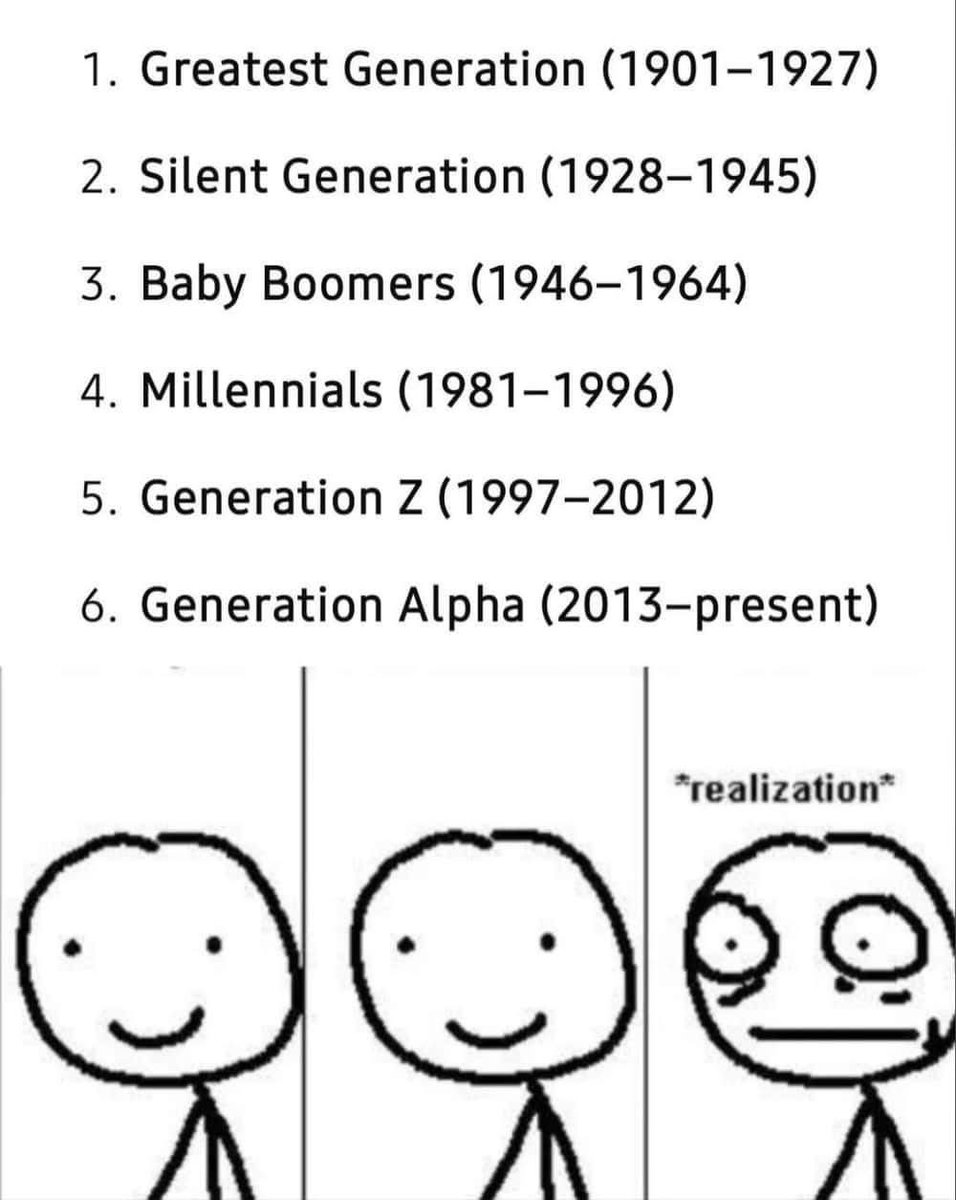
@LibertyCappy Even more forgotten than Gen X, is Gen J (1954 to 1965).
English

@NancyRPearcey "... in 1807 Britain..." did what several colonial states in America did 30yrs earlier, once they didn't have Britain forcing them to keep on slaving. But... good job.
English

In addition, Americans fought a bloody civil war --they were willing to put their own lives on the line to end slavery.
Proudofus.uk@ProudofusUK
Slavery existed for over 5,000 years. Every major civilisation accepted it. For most of history, nobody seriously tried to stop it at scale. Then Britain did something different. It didn’t just pass a law. 👇 In 1807, Britain abolished the slave trade. Then it enforced it. For 60 years, the Royal Navy hunted slave ships. 1,600 ships captured. Around 150,000 people freed. And it cost lives. Around 2,000 British sailors died doing it. Then in 1833: Britain abolished slavery across its empire. 800,000 people set free. It paid £20 million to do it. Around 40 percent of government spending. This wasn’t quick. This wasn’t easy. And it didn’t start with politicians. It started with ordinary people. Women boycotted sugar. Hundreds of thousands of them. Thomas Clarkson rode 35,000 miles to gather evidence. A movement that took decades. This is part of British history. Not perfect. But not what most people are told either. Almost no one explains it like this. Proud Of Us is funded entirely by our community. No sponsors. No advertisers. If you believe this history deserves to be told properly:👇 Be part of us. 👉 proudofus.co.uk/support 🙏 Be proud of us 🇬🇧
English

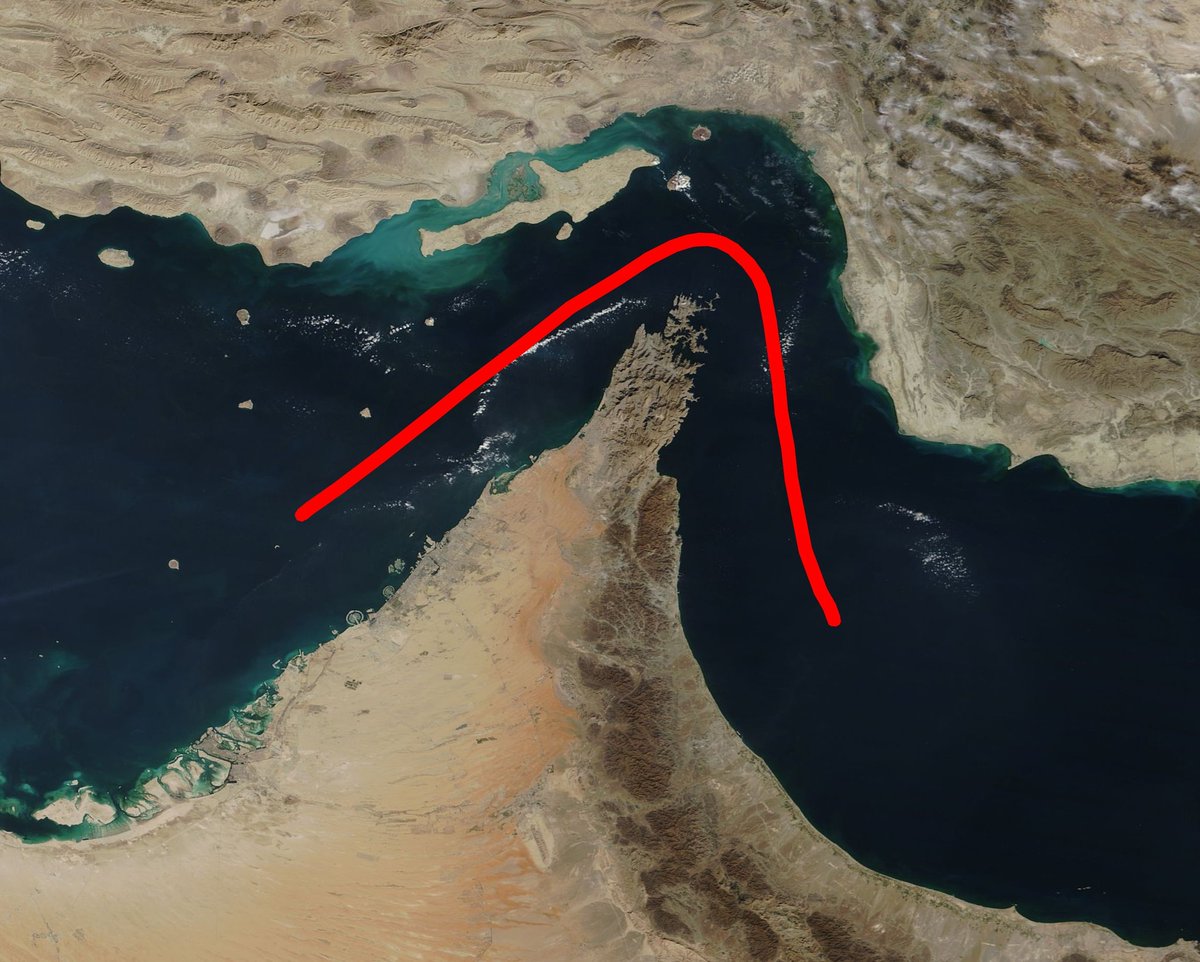
I have been silent about this for a long time, but I can no longer keep quiet about it in good conscience.
The "Strait" of Hormuz isn't straight at all. It's super crooked. You can see in the helpful graphic I put together below.
The elites don't want you to know this.
English
"...Dismissing both as equally utterly ridiculous and inherently false could be a mistake..." I'm not trying to be argumentative, but I'm afraid the mistake is not doing just that. The likes of Adam Smith & Frederic Bastiat were attempting to identify those principles that are the source of wealth, which were found to follow from what the nature of being human IS, which Smith termed Natural Liberty. 'Capitalism' was the term that Marx utilized to attack and reframe the issue into being one of competing 'systems' (actions with no Is that acts), in which a person is an evolving 'species being' that has no real identity.
Because those on 'the Right' have gleefully accepted Marx's mislabeling and redefinition, especially 'Libertarians', who agree with its fundamental premise (which opposes identifying what IS), we are in the ridiculous position of defending what was formulated to destroy us, while trying to say which one is 'better'.
Take a closer look at what @ClassicLibera12 said in the OP about "German Idealism and Cartesian Skepticism", and what follows from that - it is important not to let the surface ideologies distract you from what it is they are intended to lead people to ignore.
Or for more detail, this links to a relevant point partway through an extended post I did on this subject:
#WastefulEcon" target="_blank" rel="nofollow noopener">blogodidact.blogspot.com/p/exiting-wiza…
English

Im just saying that 'none of them can or will correctly identify anything' ie all shades of woke are bad and wrong , could have a downside here: one sees capitalism at the problem we need to end/address, another sees globalism as problem... Dismissing both as equally utterly ridiculous and inherently false could be a mistake. Anyway applying 'woke' label to left right and libertarian helps show the similarities can also blur obvious contrasts. Anyhow, thanks for a great discussion!
English
@Rieffian @ClassicLibera12 @DefiyantlyFree "...the mere structure of identifying a problem cannot itself be disqualifying..." How familiar are you with the Syllogism?
English
Fair. But re: "3" forms of oppressor, can we assign 'truth' values where some identify / address real problems (far) better than others, while others tilt at windmills. Put another way, the mere structure of identifying a problem cannot itself be disqualifying; the real/falsity of underlying problem matters a lot
English

What the heck happened to the Libertarian party? How did they get co-opted and recruited into forming the new fourth reich.
English
@Rieffian It's maybe a bit ironic, given how central 'Identity' is to their politics, but none of them can or will correctly identify anything at all. They'll agree to anything they feel is useful, but what something actually is, is something they cannot identify. The rest follows.
English
"Woke Left: Capitalists, Men, White people, normativity, ect.
Woke Right: The Postwar Liberal Consensus, Egalitarianism, Progressivism, Classic American Liberalism, the Constitution, etc.
Woke Libertarianism: The Nation State, the Globalist State, the United States of America, etc." -- im just asking are these 3 constructions all equally off-the-mark or e.g. wouldnt it be easy to link-rank them in order of most foolish/more plausible
English
@Rieffian "...im just asking are these 3 constructions all equally off-the-mark..." Again, which part of any of them, is correctly 'on the mark', and how?
English
@Rieffian "...while others identify correctly anything..." Name me one woke theory that correctly identifies anything?
English
Wondering about the proliferation of calling everything woke. Some (woke) theories will identify a contrived oppressor while others identify correctly anything antithetical to human flourishing. A theory can oppose an oppressor but that structure alone is immaterial, does it speak to a real phenomenon in a useful way or not
English