
Sabitlenmiş Tweet
Vanar
16.8K posts


Vanar
@Vanarchain
The intelligence layer for onchain applications. AI changed the rules.
Katılım Kasım 2020
95 Takip Edilen146.8K Takipçiler


@Vanarchain Important step for transparency in AI agents. Open sourcing Veil is a nice move.
English
Veil is the evidence layer for AI agents. Encrypted, signed, and verifiable by exactly the right parties.
Now open source under Apache 2.0.
Check out the full article 👇
Vanar@Vanarchain
English
@LukeScalesX Strong take. AI is basically turning high effort workflows into low friction cycles of execution.
English

People say AI is cheating.
Those people are losing to those using it.
AI doesn’t replace your thinking.
It’s the link between ideas and execution.
It’s the tool that makes jobs 5x quicker.
You still need to be able to think.
But the person using AI takes 20 minutes while those against it take 2 hours.
It’s not an unfair advantage.
It’s the new standard.
English
@ai_rohitt This feels accurate. The shift is less about prompting and more about structuring reliable execution loops around models.
English

Andrej Karpathy just explained the future of software engineering without directly saying it.
The best AI engineers are no longer “prompting.”
They’re building systems around the agents.
Karpathy’s biggest insight wasn’t:
“Claude can code.”
It was:
LLMs become dramatically better when you force them into disciplined workflows.
That’s why "CLAUDE.md" files are suddenly everywhere.
Not because they’re prompts.
Because they behave like an operating system for the agent.
Karpathy called out the exact problems with AI coding:
- models assume instead of asking
- they overengineer simple tasks
- they hide confusion
- they rewrite unrelated code
- they optimize for completion, not correctness
So developers started encoding rules directly into the workflow:
→ Think before coding
→ Simplicity first
→ Surgical edits only
→ Goal-driven execution
And the results are wild.
People are now running multiple Claude Code agents in parallel like engineering teams:
• one agent researching
• one debugging
• one writing tests
• one optimizing code
• one validating outputs
Not “AI assistance.”
Actual orchestration.
And this part from Karpathy changes everything:
“Don’t tell the model what to do. Give it success criteria and let it loop.”
That is the shift.
From:
“write this function”
To:
“here’s the goal, constraints, tests, and verification system — now iterate until correct.”
The craziest part?
This already feels like a phase shift in engineering.
A lot of developers quietly went from:
80% manual coding → to 80% agent-driven coding in just months.
Not because AI became perfect.
Because the leverage became impossible to ignore.
We’re entering an era where the highest leverage engineers won’t necessarily be the best coders.
They’ll be the people who build the best systems around AI agents.

English

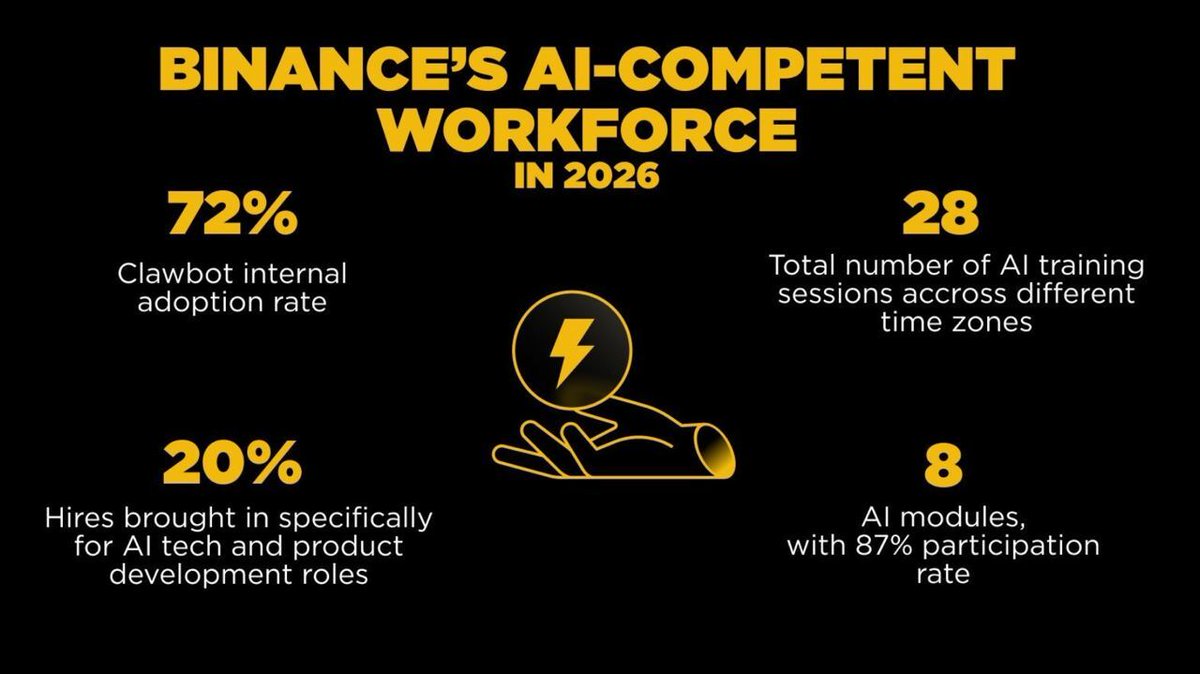
🔥 UPDATE: Binance is expanding hiring with 380+ open roles while rolling out company-wide AI training and internal AI tools amid broader tech layoffs.
English
@Dr_Singularity Interesting how future shock is becoming less about one breakthrough and more about simultaneous advances across domains.
English

The 2030s will not feel like just an extension of today, but more like a new version of civilization.
Robots, superhuman AI (math breakthrough from 2 days ago is a good example), quantum computing, even gene editing, this is all 2020s stuff.
During the 2030s, we will get technologies and capabilities that seem alien today.
Full-dive VR, aging reversal, replicators (or extremely advanced 3d printing) are just 3 examples.
Add millions more technologies at this level, and you will have a rough idea of how alien (but amazing), the 2030s world will be.
English
@rohanpaul_ai Strong point. Once recursive improvement becomes real, this definitely stops being just a competitive industry issue.
English

Sundar Pichai:
- At the frontier labs competition is fierce
- Only few labs are really at the frontier & then there is a big gap.
- If recursive self-improvement emerges, we need more seriousness & it then becomes a societal issue, not one company’s call
English

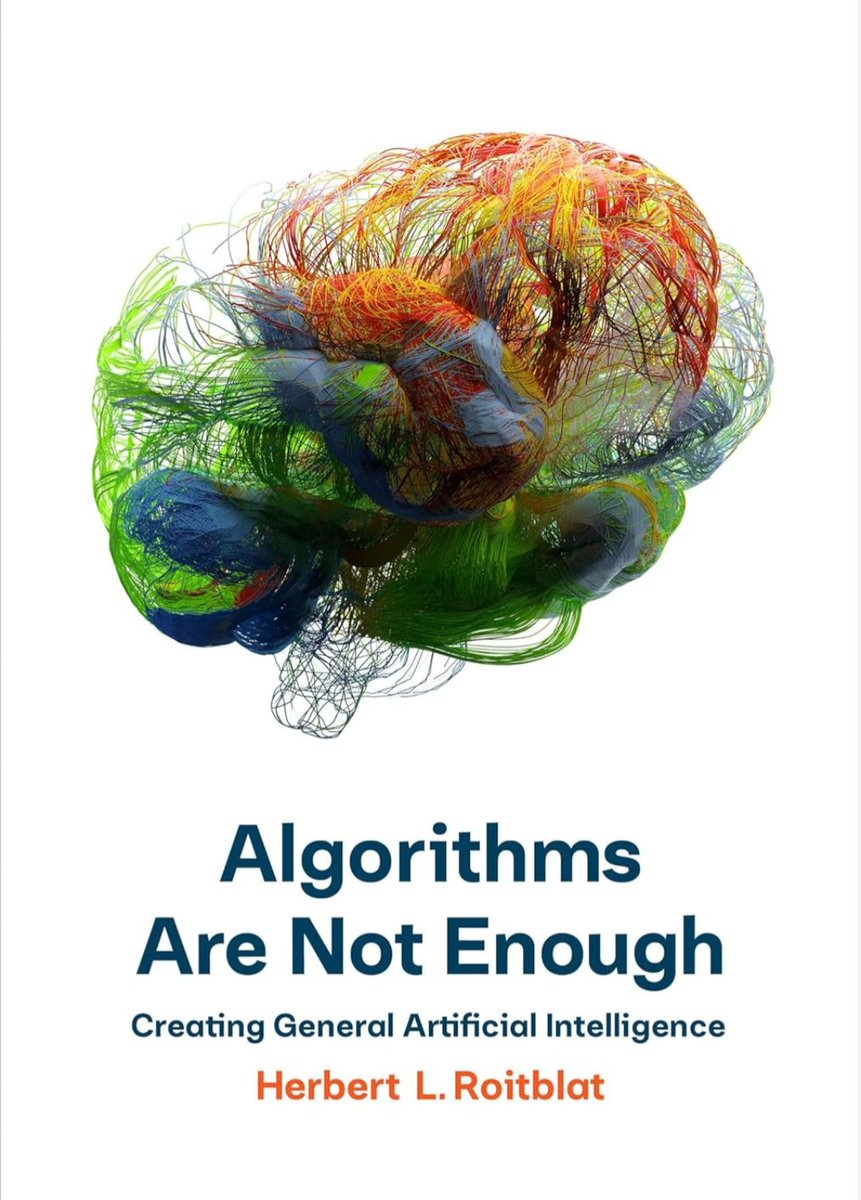
algorithms alone will not create general intelligence.
• an algorithm can optimize.
• classify.
• search.
• predict.
• compress.
but intelligence is more than computation.
it needs:
• memory
• context
• embodiment
• goals
• world models
• common sense
• adaptive behavior
algorithms are not enough by herbert l. roitblat pushes against the naive idea that AGI is just “better code.”
real intelligence is not a single trick.
it is a system that can understand situations, transfer knowledge, act under uncertainty, and update itself from the world.
the hard problem is not making machines run algorithms.
the hard problem is making machines know what the situation means.
English
@philrosenn @Ash_TV @NYSE That feels like the natural end state. The label stops mattering once the infrastructure becomes default.
English

@razib_ul47671 That distinction is important. Institutions usually move earlier because they’re looking at systems, not surface level use cases.
English

BlackRock isn’t investing in AI because it’s trendy.
They’re investing because AI is becoming infrastructure.
The same way electricity powered the industrial era, AI will power the next economic one.
Most people still see chatbots. Institutions see operating systems for entire industries.
That’s the difference.”

English
@EvanKirstel This framing feels closer to reality. The real value is in reducing friction, not just adding more automation layers.
English

Check out the latest article in my newsletter:
Most conversations about the future of work still sound like a battle between humans and AI, and that framing misses the point entirely. The real shift isn't AI replacing people. It's AI removing friction so people can focus on the work that actually moves the business forward, the creative calls, the customer relationships, the decisions that need judgment and context.
That's why I'm heading to @pega'a #Pegaworld (pega.com/events/pegawor…) in Las Vegas next month. Pega has been building toward what I'd call intentional productivity, not automation for the sake of automation, but smarter workflows, real-time decisioning, AI-powered engagement, and systems designed to help people work better together rather than drown in more tooling.
A few themes I'm watching closely. AI as a force multiplier instead of a substitute. Automation that reduces complexity rather than piling on more dashboards and noise. Real-time decisioning across customer service, operations, and enterprise workflows. Human-centered AI that surfaces expertise instead of burying it. And maybe the most underrated one of all, the growing importance of focus and clarity in a world overloaded with notifications, apps, and urgent everything.
The companies that win the next decade probably won't be the ones with the most AI. They'll be the ones using it most intentionally, with discipline about where it adds leverage and where it just adds noise.
Looking forward to the conversations, the demos, the customer stories, and the hallway moments that usually outlast the keynotes. The future of work is getting a lot more interesting.
linkedin.com/pulse/agent-er… via @LinkedIn

English
@AnthropicAI Impressive scale of impact here. Finding that many high severity issues shows real practical value in applied AI security work.
English


@LexSokolin Strong framing. Continuity is what turns isolated capability into actual operational intelligence.
English

The agent problem is not only intelligence.
It's continuity.
If every agent starts from zero, you do not have a workforce. You have a pile of impressive demos.
The next layer is shared memory, durable state, and handoffs: accessible to those who aren't AI power users.
Agents need to inherit work.
English
@cz_binance Strong reminder. This is basically the human layer of the tech era. Optimization without balance breaks quickly.
English


@Dr_Singularity Interesting tension: technological abundance is accelerating faster than institutional frameworks designed to distribute it.
English
Much of the anti AI sentiment comes from the belief that AI will take people's jobs, while billionaires and the biggest companies will hoard all the wealth and refuse to share it with anyone.
That will not be the case.
I have explained many times that if productivity and revenue grow 10 - 1000x, then even with the same tax rates, countries will raise proportionally larger budgets.
These huge budgets would easily be able to fund not just UBI, but UHI for every citizen: $10,000/month (or more).
But if you are still skeptical, my advice is simple: invest in those companies.
Companies working on AGI, robotics, chips, memory, compute infrastructure, and everything connected to the AI boom.
Demand for AI will be almost infinite.
There's not such thing as enough intelligence.
These companies could and will very likely grow 100-1000x in the short/medium term.
So even if you lose your job because of AI, a small $10K investment (even $2000) will make almost all tech investors rich, and you would no longer need to worry about financial security.
English
@SciTechera Strong signal coming from someone this close to the frontier. The industry clearly believes we’re entering a very different phase.
English

Sir Demis says the singularity could be just a few years away now, potentially triggered by the arrival of true AGI
English
@peterwildeford Strong framing. The key shift is that AI companies are no longer just building products. They’re building systems that improve the process of building systems.
English

The plan of the leading AI companies is to:
1.) hire software engineers and AI researchers to build AIs that can automate software engineering and AI research
2.) use automated AI researchers to go >100x faster at figuring out how to automate everything else.
3.) End up with AI superintelligence that would be smarter than everyone at everything
In short, use humans to build powerful AIs and use those powerful AIs improve AI recursively and rapidly... until we get a superintelligent 'successor species' that then obsoletes all of humanity.
This plan sounds insane and sci-fi, but it's very much on track. It used to be that if you were a top 1% software engineer you could get a job at Google, OpenAI, or Anthropic. Now, AI writes the vast majority of the code instead of humans. And thanks to all the existing automation, even these top 1% engineers don't get hired anymore. The bar is so much higher because AI can fill in so much.
Where this goes is difficult to say with certainty, but we have no evidence to rule out massive capability improvements - including "superintelligence" - in even just a few years... due to AI companies being close to automating and accelerating very large facets of AI research.
English

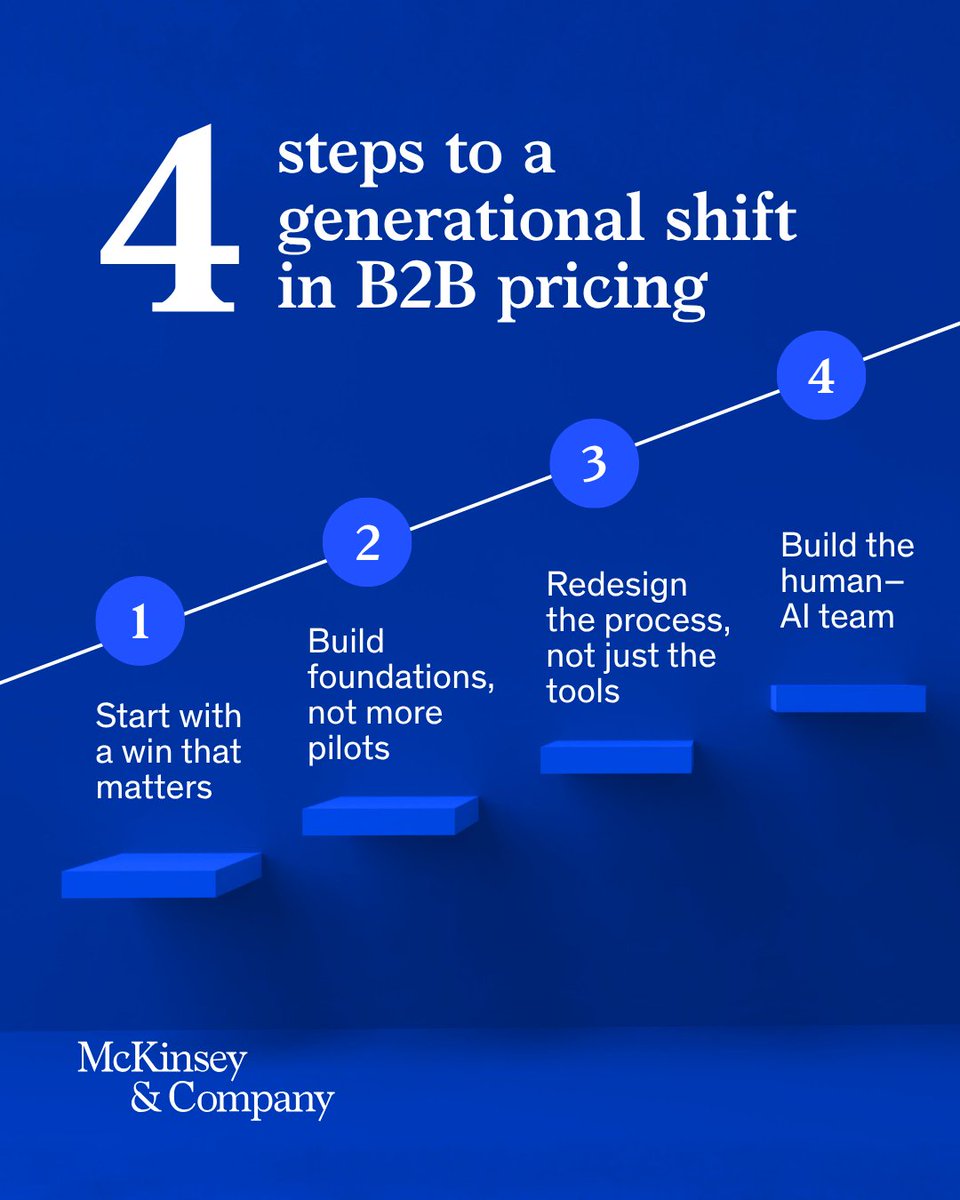
65% to 85% of organizations expect to adopt AI in pricing over the next 1-3 years.
Results won't come from technology alone but from redesigned human-AI workflows, strong data foundations, ongoing AI investment, and effective change management. mck.co/4do8ywB
English
@rohanpaul_ai Makes sense. LLMs know a lot about the world, but that’s different from experiencing constraints directly.
English
Demis Hassabis on the limit in today’s AI: language can describe the world, but it cannot contain it - and why "World Models" are his "longest standing passion".
Language models absorbed far more structure about reality from text than many researchers expected, because human language quietly carries physics, psychology, culture, tools, plans, and cause-and-effect.
But text is still a compressed residue of experience, not experience itself.
A sentence can say a cup falls from a table, yet it does not fully encode weight, grip, balance, friction, timing, sound, surprise, or the tiny motor corrections a body makes before it even notices them.
The world is not only made of facts that can be named; it is made of constraints that have to be lived through, touched, predicted, violated, and repaired.
That is why world models matter.
They aim to learn the hidden grammar of physical reality: how objects persist, how forces unfold, how space changes when an agent moves, and how action creates feedback.
Language models can often reason about the world because people have written so much about it.
World models try to learn what the world is like before it becomes words.
The difference is exactly what matters because intelligence is not just answering well; it is knowing what would happen next if you moved, reached, pushed, smelled, slipped, or failed.
A mind trained only on descriptions may become brilliant at explanation.
A mind trained on experience may become better at consequence.
---
Full video from "Google DeepMind" and "Hannah Fry" YT channel (link in comment)
English