
Vasja
1.5K posts

Vasja retweetledi

Vasja retweetledi

It got lost in the news firehose, but this is the craziest chart today, and maybe this decade

zerohedge@zerohedge
AI Takeover Complete: Data Center Construction Surpasses Office Construction For The First Time zerohedge.com/markets/ai-tak…
English
Vasja retweetledi

Vasja retweetledi

Did an asteroid filled with silver just slam into the earth?

English
Vasja retweetledi

Vasja retweetledi
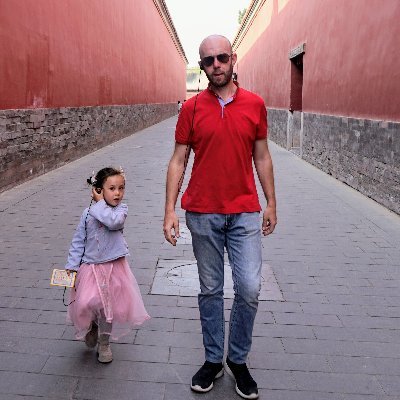
This is a genuinely incredible story.
The hottest term on Chinese social media right now is “kill-line”: if you go to Xiaohongshu, Bilibili or Douyin, everyone is speaking about it.
Why? It all has to do with the story of Alex, known as “牢A” (“Láo A”, literally “prison A” where A stands for Alex), a Chinese medical/biology student based in Seattle, USA, who worked part-time as a forensic assistant collecting unclaimed bodies (primarily homeless people).
You’ve doubtlessly never heard of him but he probably single-handedly shattered what remained of the “American Dream” myth for an entire generation of young Chinese.
In late 2025, Alex started going massively viral on Bilibili, a Chinese video platform, for videos where he described poverty in America. He coined the term “kill line” (“斩杀线”) - an expression borrowed from gaming describing when a game character's health is so low one hit will finish them. In Alex’s framing, the concept describes how a single shock (illness, job loss, accident) can push middle-class Americans into irreversible poverty.
It’s hard to overstate the cultural impact he’s had in China. In barely a few weeks, “kill line” became part of everyday lexicon. So much so that even Qiushi - the core theoretical journal of the Central Committee of the Communist Party of China - published a lengthy theoretical analysis using "kill line" as its central framework (qstheory.cn/20260104/0a091…).
This never happens. Gaming slang coined by a 22-year-old streamer based in the U.S. does not become the analytical framework for Qiushi, the CPC’s core theoretical journal, in just a handful of weeks. That’s normally not how Communist Party theory gets crafted, to put it mildly 😂. And yet here we are - which goes to show just how powerfully Alex resonated.
It didn’t take long for America to notice - and for Alex’s problems to start.
Due to the staggering resonance his content was having in China, Alex became the target of an extremely vicious doxxing campaign by Chinese dissidents.
He also got targeted by Western media with the New York Times, among others, publishing a piece (nytimes.com/2026/01/13/bus…) identifying him as the origin of the phenomenon which they described - unsurprisingly - as Communist propaganda meant to “deflect criticism of [Chinese] leaders.”
I just wrote an article telling the full story. It ends with Alex escaping to China in an extraction worthy of a Cold War spy novel. Think about how extraordinary this is: a Chinese student fleeing to China for safety, because he feared for his life after being harassed for describing poverty in America.
Full story here: open.substack.com/pub/arnaudbert…

English
Vasja retweetledi

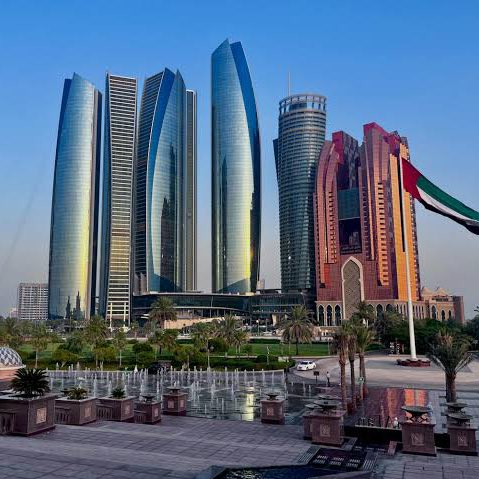
JUST IN: 🇦🇪 Abu Dhabi ranked world’s safest city for 10th consecutive year - Numbeo.

English
Vasja retweetledi
Vasja retweetledi

Vasja retweetledi
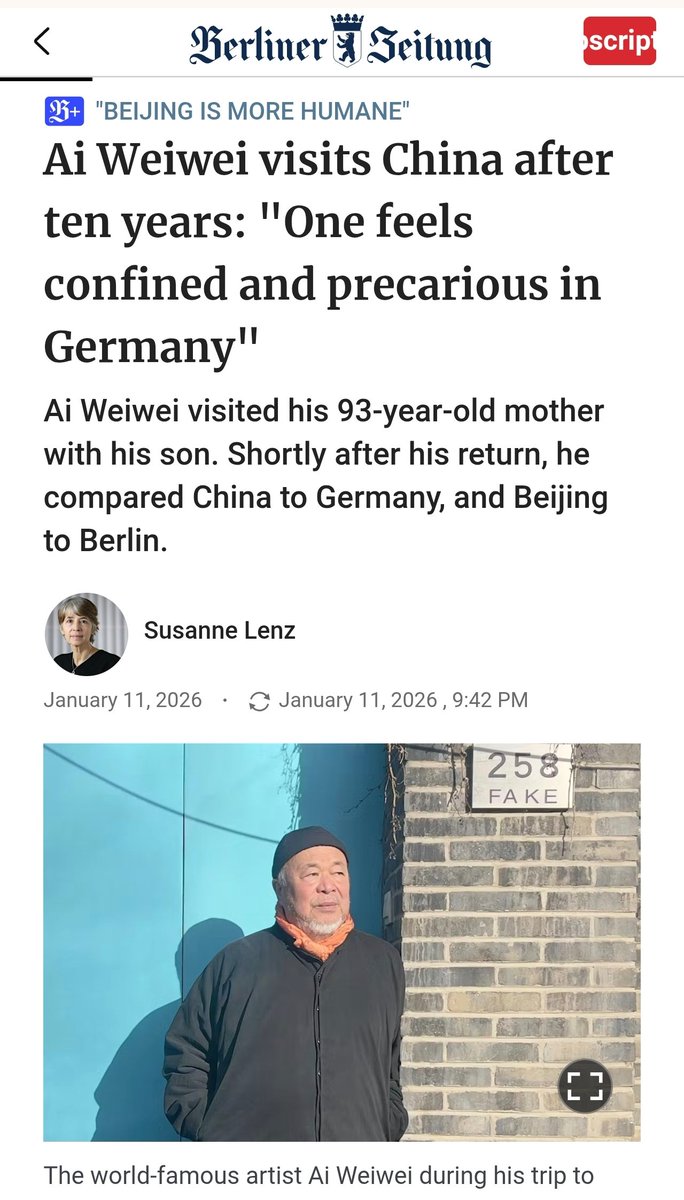
This is extraordinary and profoundly symbolic: Ai Weiwei has returned to China for the first time in 10 years and says he concluded that Beijing is "more humane" than Germany which he describes as "insecure and unfree".
He gave an interview to Germany's Berliner Zeitung after his trip (berliner-zeitung.de/kultur-vergnue…) and here is what he said:
- He described feeling that Beijing had become like "a broken jade being perfectly reassembled" and said he felt no fear returning to the country.
- He complained that daily life difficulties in Europe (where he's lived for the past 10 years) are "at least ten times" what they are in China, criticizing European bureaucracy.
- For instance he said he reactivated his dormant Chinese bank account in mere minutes (with "still had a considerable sum of money in it"). He contrasts this with his experience in Europe: "In Germany, my bank accounts were closed twice. And not just mine, but my girlfriend's as well. In Switzerland, I was refused an account at the country's largest bank, and another bank later closed my account there as well. There were other similar incidents, which I won't go into detail about here. These processes are extraordinarily complicated and often irrational."
- He says that "with regard to the political climate, daily life for ordinary people in Beijing feels more natural and humane" than in Germany which "feels cold, rational, and deeply bureaucratic. As an individual, one feels confined and precarious there."
- Stunningly he says that in Germany, over ten years, "almost no one has ever invited me to their home. Neighbors from above or below exchange at most a brief nod." He contrasts this with China where, immediately upon his return, "perfectly ordinary people from at least five different professions lined up, hoping to meet me."
- He concludes that Germany now "plays the role of an insecure and unfree country, struggling to find its position between history and future."
As a European who's lived 8 years in China, I couldn't agree more: life in China is an order of magnitude less cumbersome than in Europe and daily life feels much more humane and warm, contrary to popular belief.
But it's one thing for me to say it, and something else entirely for China's most famous dissident. The man once celebrated throughout the West as the very embodiment of opposition to his country has now concluded that it is in fact Europe that's inhumane and "unfree".
English
Vasja retweetledi


Vasja retweetledi

NEW: China is testing a megawatt-scale airborne wind system that captures stronger high-altitude winds, potentially producing up to 10× more energy with 40% less material and 30% lower costs. It could also be quickly deployed to supply emergency power after disasters.
English
Vasja retweetledi

Vasja retweetledi