Covnny🇵🇹🇪🇺🇺🇦✌️
17.5K posts

@VelSatys
Books Military Wild Life Cars Music History Movies.


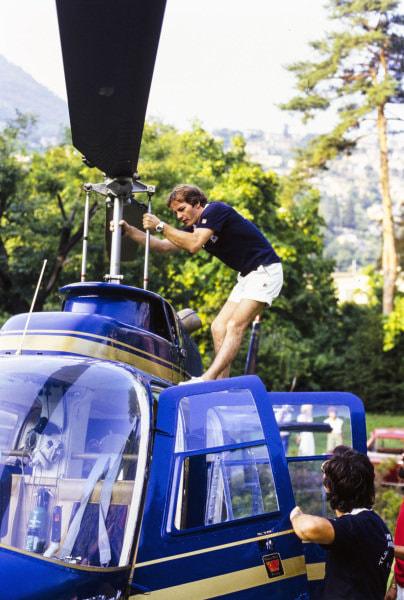
#F1 #OnThisDay, March 27th 1994. @schumacher (Benetton) lapped everyone else to win the #BrazilianGP ahead of @HillF1 (@WilliamsF1 ) & Jean Alesi (@ScuderiaFerrari ) From 5th, they were 2 laps down or more. youtube.com/watch?v=XfEwZE… #MsportXtra @UnracedF1 @frentzen_hh


🇮🇷 THE MISSILES IRAN ISN’T FIRING MAY MATTER MORE THAN THE ONES IT IS Despite the daily waves of strikes launched by Iran, its most advanced missiles are conspicuously absent. The Qassem Basir, unveiled with theatrical bravado, has yet to appear. The hypersonic-claimed Fattah-2? Missing. The Etemad, the Raad-500, no sign. In a conflict where both sides are showcasing capability, Iran’s restraint stands out, and restraint in war is never accidental. There are only three real explanations. The first is the simplest: they’re gone. U.S and Israeli strikes have taken out hundreds of launchers, and it’s entirely possible that some of Iran’s most sophisticated systems were destroyed before they could ever be used. The second is less flattering: they were never truly ready. Military parades and defense ministry unveilings are one thing. Operational deployment under pressure, under fire, under constant surveillance, is another. But the third explanation is the most dangerous: Iran is waiting. Not because it lacks capability, but because it understands timing. Right now, this war is not about delivering a knockout blow, it’s about exhaustion. Every night, Iran fires waves of older, cheaper missiles. Every night, Israel and its allies respond with interceptors that cost exponentially more. Israel’s Arrow and David’s Sling systems are extraordinarily effective, but they are not infinite. No defense system is. And that’s the quiet logic that may be underpinning Iran’s strategy: Why waste your best weapons when your opponent is still fully shielded? Instead, you wait. You chip away. You force your adversary to spend, to respond, to stay on constant alert. You turn defense into depletion. The real tipping point in this war may not come from a sudden escalation, but when one side finally runs low on interceptors or launchers. And if Iran’s most advanced missiles are still sitting in reserve when that moment arrives, what we have seen so far may be just the beginning. Source: FT

A guerra contra o irão é para abrir o estreito de Ormuz? Mas não estava aberto antes da guerra?


A como está o "curaçã", perguntam vocês?