Vivienne Hayes

31.4K posts

Vivienne Hayes banner
Vivienne Hayes

Vivienne Hayes

@VivHayes

CEO of WRC @Whywomen. Views here are my own.

London Katılım Şubat 2015
2K Takip Edilen2.1K Takipçiler
Vivienne Hayes retweetledi
Kehinde Andrews
Kehinde Andrews@kehinde_andrews·
Birmingham City University urged not to axe Black Studies MA and target 5 Black members of staff for redundancy. “In the US there is an attack on Black intellectual thought, in the UK there is so little in higher ed that the problem is erasure" theguardian.com/education/2026…
English
14
236
427
24.8K
Vivienne Hayes retweetledi
Dr. M.F. Khan
Dr. M.F. Khan@Dr_TheHistories·
In the late 1960s, Ann Oakley was a young sociologist working on her doctoral research. She wanted to study housework... Her field would not let her. Sociology in the 1960s did not consider what happened inside the home to be work. There were studies of factory labor, office labor, professional careers, and labor union politics. There were almost no serious academic studies of the unpaid domestic labor that more than half the adult population of Britain performed every day. Oakley would later write that the absence was not an oversight. It was, in her phrase, "the inbuilt sexism of sociology." So she did the research anyway. She interviewed forty London women. Working-class and middle-class. All of them mothers of young children. She asked them to describe their actual days. How many hours did they spend cleaning, cooking, shopping, doing laundry, and managing the household? Did they like the work? Did they find it monotonous? Did they feel autonomous or constrained? The findings, when she compiled them, were not subtle. The average woman in her sample worked 77 hours per week on housework alone. Some worked more than 90. This was a longer working week than almost any salaried profession in Britain at the time. Seventy percent of the women said they were dissatisfied with the work. Three-quarters described it as monotonous. The lower-paid the woman's previous employment, the more likely she was to find domesticity tolerable. The higher her former job status, the more likely she was to describe it as a kind of slow erasure. The findings overturned the prevailing view that women were naturally fulfilled by domestic life. Oakley published the data in 1974 as The Sociology of Housework — one of the first serious academic studies of unpaid domestic labor in any country. Two years earlier, in Sex, Gender and Society (1972), she had introduced a distinction that would reshape an entire field: she separated biological sex from socially constructed gender. The terminology had existed in scattered psychological literature, but Oakley was the one who placed it at the center of sociology. The framework became foundational across women's studies, public health, anthropology, and policy in the decades that followed. Her argument about housework was sharper than people sometimes remember. When work is described as natural — as flowing automatically from love, instinct, or maternal feeling — three things tend to happen to it. Its hours are not counted. Its skills are not named. Its absence is noticed only when it stops. What is not named cannot easily be paid for. What is not paid for cannot easily be shared. What cannot be shared falls predictably on the same people, decade after decade. The work Oakley studied has not gone away. The most recent OECD time-use surveys still show that women in nearly every country in the world perform about two to three times more unpaid care and domestic work than men. The U.N. estimates that if global unpaid care work were valued at minimum wage, it would add roughly 9% of global GDP to the world economy — about $11 trillion a year. Career interruptions for care responsibilities remain one of the largest drivers of the lifetime gender wage gap, the gender pension gap, and women's higher rates of poverty in old age. Other scholars built on what Oakley began. Arlie Hochschild later named the second shift — the unpaid labor women do after their paid workday ends and emotional labor, the work of managing other people's feelings on the job and at home. Marilyn Waring, a New Zealand economist, showed how national accounting systems were designed to exclude women's unpaid work from GDP entirely. Silvia Federici and the Wages for Housework movement made the case that the invisibility was not an accident of economics but a feature of how economies extract value. The pattern is the same one Oakley identified. © Women Stories #drthehistories
Dr. M.F. Khan tweet media
English
15
297
644
18.6K
Vivienne Hayes retweetledi
Reem Alsalem UNSR Violence Against Women and Girls
1/3 I have published a statement that is almost verbatim based on the letter I have sent ANTRA Brazil (@AntraBrasil) on Friday the 8th of May 2026, in response to Antra's repeated attacks, and acts of defamation and misinformation 👇 ohchr.org/sites/default/… The letter I had sent is in response to a letter I had received from ANTRA on the 2nd of March 2026, but more importantly a concerning document that ANTRA had shared with stakeholders in #Brazil ahead of my academic visit in March 2026 and of which I received a copy.
English
5
44
132
5.9K
Vivienne Hayes retweetledi
Lily Craven
Lily Craven@TheAttagirls·
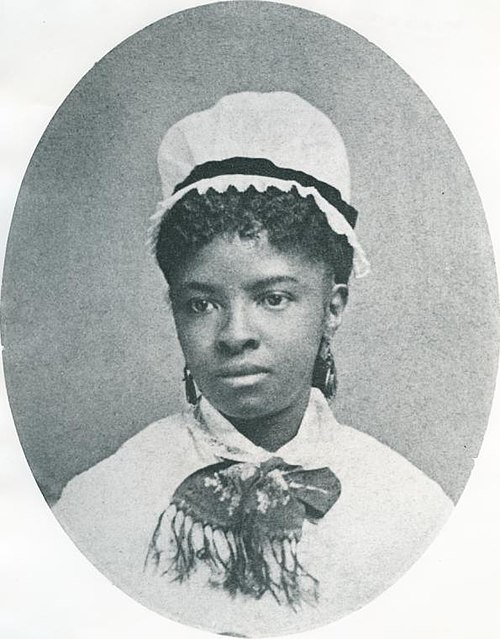
For decades, African American women had healed the sick and injured, especially during the American Civil War, but despite their experience and skills, it wasn’t until 1878 that Woman of the Day Mary Eliza Mahoney, born in OTD 1845 in Massachusetts, became the first to study and work as a professionally trained nurse in the USA. Until then, professional accreditation eluded them, or they were actively barred. Nursing schools in the South rejected their applications. In the North, there were only rare opportunities for enrol in training and graduate programmes. Mary always knew from a young age that she wanted to be a nurse but the only work available to her was domestic service, so at the age of 18, she took a job as a maid at the New England Hospital for Women and Children, and eventually became a washerwoman. It was gruelling work. She spent 16 hours a day, seven days a week, ironing, scrubbing and cleaning, for fifteen years but her diligence and perseverance paid off. According to a friend, “She cooked, washed and scrubbed and she got in…A woman doctor wanted her there, and that was the only influence she had.” Mary was 33 when she was accepted onto the nursing training programme in 1878, older than her fellow students. The training was gruelling: 16 months of 16-hour days comprising lectures and lessons, physiological subjects, food for the sick, surgical nursing, child-bed nursing, disinfectants, and general nursing such as taking vital signs and bandaging. She was used to long hours and hard work. The pay was rubbish: $1 to $4 per week with 25% paid to the hospital. Most of the candidates struggled financially, but she was used to poor pay too. Out of the original forty candidates, only three graduated in 1879. Mary was one, and she was the first and only African American woman. Resistance to black women working in public nursing was widespread, so she took a series of posts as a private nurse on the East Coast. She established a reputation for efficiency, patience, and a caring bedside manner. Seven years after she qualified, Mary joined the Nurses Associated Alumnae of the United States and Canada (later the American Nurses Association) which wasn’t exactly noted for welcoming black nurses. In 1908, she co-founded the National Association of Colored Graduate Nurses and the following year, gave the opening speech at its first national convention. She was honoured with a life membership. A quiet trailblazer, Mary was one of the first women who registered to vote in Boston after the 19th Amendment was ratified in August 1920. She died in 1926, aged 80, after forty years honourable service as a nurse. “Work more and better the coming year than the previous year.”
Lily Craven tweet media
English
5
39
148
3.3K
Vivienne Hayes retweetledi
Ihtesham Ali
Ihtesham Ali@ihtesham2005·
An Arab scholar in 1011 was placed under house arrest in Cairo for 10 years. He used the time to invent the scientific method, prove how vision actually works, and write a 7-volume book that Newton studied 600 years later. I read about him last night and could not stop thinking about it. His name was Ibn al-Haytham. The book is called the "Book of Optics." The textbook story names Bacon, Galileo, and Descartes as the founders of modern science. All three of them came 600 years after Ibn al-Haytham. All three of them studied his work directly or through Latin translations. The man who actually invented the scientific method was working alone in a single room in Cairo while Europe was still in the Dark Ages. Here is the story almost nobody tells you. He was born in Basra around 965 CE. By his 40s he had a reputation across the Arab world as one of the most original minds alive. Then he made the mistake that almost killed him. He claimed publicly that he could regulate the flooding of the Nile. The mad caliph al-Hakim of Cairo summoned him to Egypt to do it. Ibn al-Haytham took one look at the river and realized the project was impossible with the technology of his era. The caliph had executed dozens of scholars for less. So he faked madness. The caliph believed him and put him under house arrest in his own home in Cairo for the next 10 years. Most people would have lost their actual mind. He used the time to invent science. Before him, knowledge worked one way. You quoted authority. If Aristotle had said it, it was true. If Galen had written it, it was correct. The role of a scholar was to memorize and defend the ancient Greeks. I Ibn al-Haytham broke this completely. He wrote a sentence in the Book of Optics that quietly destroyed 1,400 years of intellectual culture. "The seeker after truth," he said, "is not the one who follows his natural disposition to trust the writings of the ancients. The seeker after truth is the one who suspects them, questions them, and submits only to argument and experiment." That single sentence is the foundation of modern science. He wrote it 600 years before the European Renaissance. The second thing he did was build the actual machinery of experimentation. He insisted that no claim about the physical world was acceptable until it had been verified by an experiment anyone could repeat. He gave detailed instructions for every experiment in his book. He told his readers, in writing, not to take his word for any of it. Build the equipment. Run the tests yourself. Verify or destroy my claims with your own eyes. The third thing he did was use the method to overturn one of the most settled questions in physics. The Greeks had taught for centuries that vision worked because the eye emitted invisible rays. Ibn al-Haytham proved them wrong with a darkened room, a small hole, and a wall. The first camera obscura. He showed that light from the outside world enters the eye, the exact opposite of what every Greek thinker had taught. Two hundred years later his book was translated into Latin in Spain. Roger Bacon cited him. Kepler cited him. Galileo's work on the telescope was built on his optics. Newton's foundational work on light rested on his framework. Walk into any physics department today. Ask who founded the scientific method. Almost nobody will say Ibn al-Haytham. The man who invented the way humanity actually knows things did the work under house arrest, with no funding, no laboratory, and a paranoid caliph next door waiting for an excuse to kill him. He did it anyway. Most of the world is still pretending it was someone else's idea.
Ihtesham Ali tweet media
English
267
4.5K
12.3K
802.5K
Vivienne Hayes retweetledi
Prof. Frank McDonough
Prof. Frank McDonough@FXMC1957·
3 May 2002. Labour politician Barbara Castle died (aged 91). She was Labour MP for Blackburn from 1945 to 1979. As Labour Transport Minister she introduced permanent speed limits, breathalysers and seat belts. As Employment Minister she introduced the Equal Pay Act 1970.
Prof. Frank McDonough tweet media
English
102
462
2.5K
112.4K
Vivienne Hayes retweetledi
Womens Resource Centre
Womens Resource Centre@whywomen·
New research- led by the brilliant Prof. Sylvia Walby - discovers sex bias in ONS violent crime reporting that disproportionately affects women. DV cases are being under-reported by 39%! Read our blog post here: wrc.org.uk/Blog/two-stori…
English
0
9
6
457
Vivienne Hayes
Vivienne Hayes@VivHayes·
@whywomen It takes just 5 mins to show your support! Come on people ‘Get your finger out’ as my mum would say And this literally takes one finger to do 👆
English
0
0
0
16
Vivienne Hayes retweetledi
Liz "blue tick" Carr
Liz "blue tick" Carr@thelizcarr·
A reminder that opponents of assisted suicide are not: pro suffering evil or the devil or cruel selfish or indifferent lacking experience in pain, illness or death without compassion inevitably religious uninformed As a disabled woman, here's why I oppose bbc.co.uk/programmes/m00…
English
109
1.2K
4.9K
79.1K
Vivienne Hayes retweetledi
Historical Africa
Historical Africa@historical_Afr·
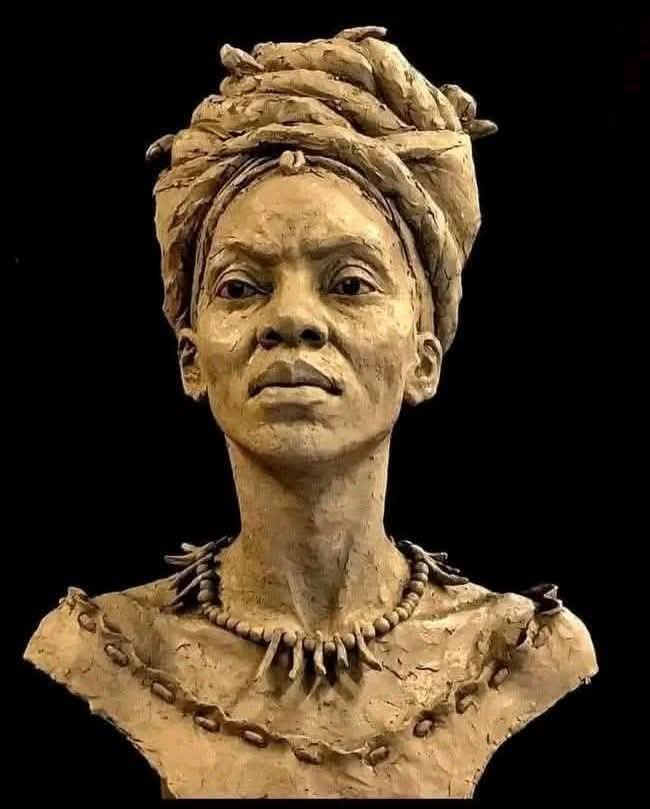
Queen Nanny of the Maroons. Born 1686: Ghana 🇬🇭 Died 1733/1750: Jamaica 🇯🇲 For over 30 years, it is said she fought and freed over 800 enslàved people on the island of Jamaica. There are many stories about her, it is said she was a queen in Ghana from the warrior Ashanti tribe when she was captured and brought to Jamaica where she later escaped and led an armed revolt against the British Empire in the mountains and jungles of Jamaica for two decades. It is said she used guerilla warfare to fight the British who suffered great loss and later settled with a peace treaty to spare their men. She was said to also be a powerful spiritual voodoo priestess who would use her powers to shield her fighters from the attacks of the British. One British officer who was lucky to survive her encounter described her as being small, muscular, and strong with intense eyes. She wore a girdle with at least 10 different combat kn iv es. Queen Nanny is Jamaica's only female hero, and there are still Maroons living in Jamaica today.
Historical Africa tweet media
English
33
982
3.2K
73.7K
Vivienne Hayes retweetledi
Farida Bemba Nabourema
Farida Bemba Nabourema@Farida_N·
One of the most shameless lies still told about colonialism is that European powers gifted Africa its roads, its schools, its hospitals. Shut up! You gifted us nothing. We built it, we paid for it, we bled for it. Those roads were not built so African farmers could trade with each other or so African communities could grow. They were built to move our minerals and our crops from the interior to the ports and ship them to Europe. Every kilometre of colonial railway followed the same logic: not to serve us, but to drain us. The hospitals were built to keep labourers alive enough to keep working, not because colonial administrators believed African lives had value, but because a sick worker interrupts the extraction schedule. My grandmother was denied treatment for her twins dying of smallpox because my grandfather was in prison for resisting colonial rule. She lost one of them. And who built any of it? Our grandparents. Forced, beaten, worked into the ground under quotas, mutilated when they failed to meet them. When someone calls that a gift, what they are really asking is that we thank our oppressors for the infrastructure our own suffering produced. We also paid for it in cash. In 1932, French colonial commissioner Robert de Guise imposed new taxes on Togolese people whose incomes had already collapsed by nearly sixty percent during the Great Depression. When women dared to protest, France shipped 174 colonial soldiers from Côte d'Ivoire to crush them. Girls as young as thirteen were raped and 12 protesters were killed. That is how the roads, the schools, the administrative buildings, the hospitals were financed: with our blood. Not European generosity. And when independence finally came, the colonisers left with a bill. They calculated the cost of everything they had built through our coerced labour and our taxed income, called it colonial debt, and demanded repayment from the very nations they had spent a century looting. We paid for our own exploitation. Twice! In Europe, when a government builds a road, no citizen is asked to be grateful. It is called public service. But when colonisers built infrastructure on our land, with our bodies, with our money, after killing and raping us, we are expected to call it the "benefits of colonialism". The audacity!
English
216
2.4K
5.3K
81.4K
Dr. Ann Olivarius
Dr. Ann Olivarius@AnnOlivarius·
The vast majority of stalkers are men and the vast majority of their victims are women. There's little point in discussing "what makes a stalker tick" if that isn't the premise. It's male entitlement taken taken to the extreme, from a distance. telegraph.co.uk/news/2026/04/0…
English
19
155
557
8.7K
Vivienne Hayes retweetledi
Zoom Afrika
Zoom Afrika@zoomafrika1·
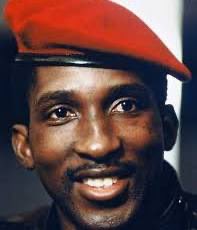
In only 4 years in power (1983-87), Thomas Sankara Built 350 schools, roads, railways without foreign aid Increased literacy rate by 60% Banned forced marriages Gave poor people land Vaccinated 2.5 million kids Planted 10 million trees Appointed females to high governmental positions, encouraged them to work, recruited them into the military, and granted pregnancy leave during sold off the government fleet of Mercedes cars and made the Renault 5 (the cheapest car sold in Burkina Faso at that time) the official service car of the ministers. He reduced the salaries of all public servants, including his own, and forbade the use of government chauffeurs and 1st class airline tickets. As President, he lowered his salary to $450 a month and limited his possessions to a car, four bikes, three guitars, a fridge and a broken freezer. He opposed foreign aid, saying that “he who feeds you, controls you.” Drove out French imperialism & withdrew Burkina Faso from IMF A very productive life that was brutally cut short 💔. He was assassinated at the age of 38. Rest on son of the soil 🕊
Zoom Afrika tweet media
English
60
1.2K
3.3K
54.3K
Vivienne Hayes retweetledi
Alvin Foo
Alvin Foo@alvinfoo·
Sadio Mane, a Senegalese soccer star, earns approximately $10.2 million annually. He gave the world a rude awakenng after some fans were flabbergasted when they saw him carrying a cracked iPhone 11. His response was awesome: "Why would I want ten Ferraris, 20 diamond watches, and two jet planes? I starved, I worked in the fields, played brefoot, and I didn't go to school. Now I can help people. I prefer to build schools and give poor people food or clothing. I have built schools and a stadium, provide clothes, shoes, and food for people in extreme poverty. In addition, I give 70 euros per month to all people from a very poor Senegalese region in order to contribute to their family economy. I do not need to display luxury cars, luxury homes, trips, and even planes. I prefer that my people receive some of what life has given me.
Alvin Foo tweet media
English
1.6K
12.7K
55.6K
1.5M
Vivienne Hayes retweetledi
UN Human Rights Council
"Erasing women and women-specific language and needs based on their sex is not only wrong, but also demeaning, regressive and constitutes one of the worst forms of violence that women and girls can experience," @UNSRVAW Reem Alsalem told the @UN Human Rights Council. #HRC59
English
455
3.5K
10.4K
720.7K
Vivienne Hayes retweetledi
Bell Ribeiro-Addy MP
Bell Ribeiro-Addy MP@BellRibeiroAddy·
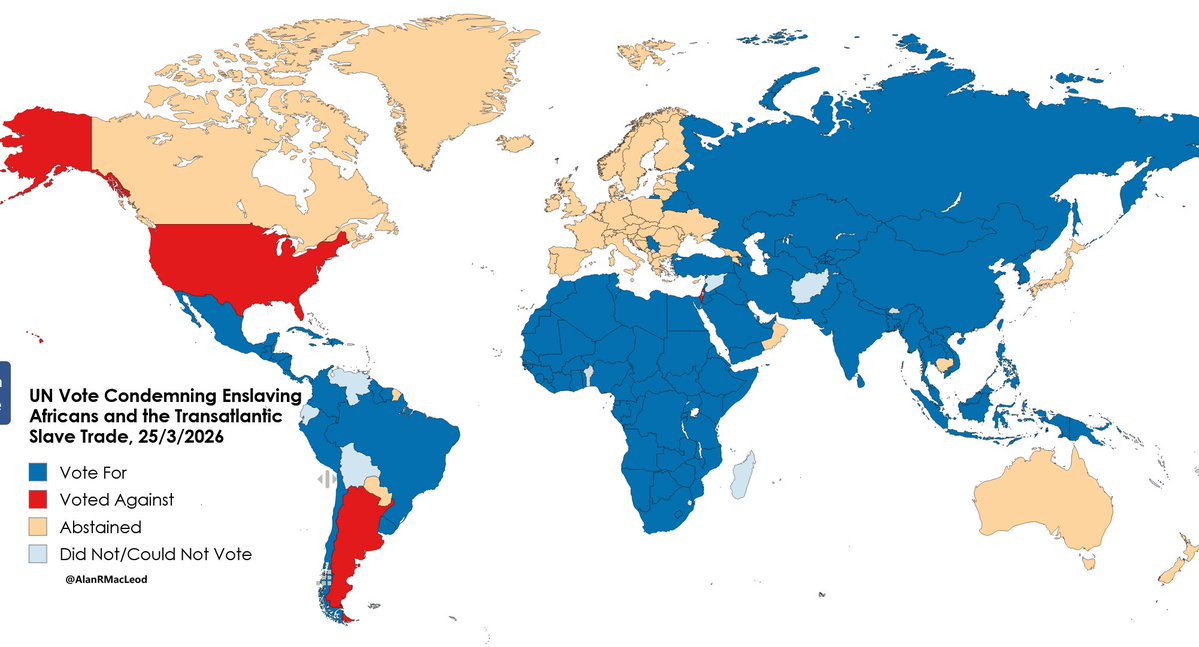
UN Delegates just voted to recognise the Transatlantic slave trade as a crime against humanity. Britain abstained. This refusal to support this motion only places our government more at odds with the global majority. The call for reparatory justice is only getting louder.
English
0
337
989
287.6K
Vivienne Hayes retweetledi
Alan MacLeod
Alan MacLeod@AlanRMacLeod·
BREAKING: The United Nations has voted 123-3 in favor to condemn the enslavement of millions of Africans and the trans-Atlantic slave trade. The three countries voting against it? 🇺🇸 USA 🇮🇱Israel 🇦🇷 Argentina Nearly all of Europe abstained.
Alan MacLeod tweet media
English
4.9K
23.4K
76.1K
5.3M
Vivienne Hayes retweetledi
Farida Bemba Nabourema
Farida Bemba Nabourema@Farida_N·
It is quite irritating to see so many African men, whenever you talk about women’s rights and freedom, tell you that you are promoting Western concepts. It is such an insult to our history and our culture, because what we actually imported from the West through colonialism is patriarchy: that vile form of male domination. We came from societies where there was no such thing as male professions. My grandmother used to be a house painter. Women were medical practitioners, they were priestesses, they were hunters, they were farmers. And then the West came and completely removed them from most professions. In my culture, children take the name from their mother’s tribe because culture states that you can only be certain of your mother, not your father, and you also inherit through your mother’s line. And then the West came and imposed laws in which women had absolutely no rights: no property rights, no inheritance of land, no ability to obtain administrative documents. In the case of Togo, it was until 1992 that Togolese women were allowed to have a passport without the approval of a spouse or a male relative. This was because a law was imported from France. So instead of continually clogging our ears and annoying us with tired rhetoric that feminism and women’s rights are Western concepts, you need to understand that it is your misogyny that is a Western import. You benefited from a structured system of domination built to disempower African women through which your oppression and that of you children was cemented. What was actually imported is the vileness, the cruelty and the false sense of superiority of male supremacy that was transplanted into our culture by reducing the African woman to a condition below even that of European women in the 13th century ( when it was legal in France to sell one’s wife in the market and purchase a new one). So what we are standing against is a reclamation of who we African women used to be before the European men entered and gave you that false sense of superiority, making you forget the inferiority colonialism imposed upon you African men by turning you into the most dominated and disempowered males on the surface of earth.
English
9
94
266
9.2K