Mitchell

4K posts

Mitchell banner
Mitchell

Mitchell

@WR_Crypto

Reimagining money w/ @SierraIsMoney | Tweets represent my own views and are not financial advice

Palau Katılım Mart 2018
2.7K Takip Edilen2.1K Takipçiler
coinfoin
coinfoin@coinfoin_·
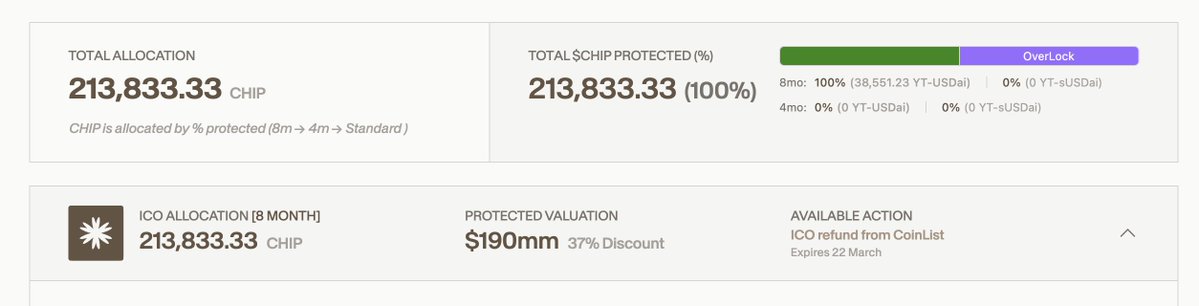
My $CHIP ICO allocation $1B FDV and dream, ~$0.1 per $CHIP = $213K Hopium
coinfoin tweet media
English
20
11
41
5.7K
Mitchell
Mitchell@WR_Crypto·
@based16z They pay more in incentives on PYUSD than the reserves generate
English
0
0
4
190
based16z
based16z@based16z·
Took a decent sized position in shares and calls. Calls are honestly nicer to try this cause cheap vol. kinda reminds me of AEO where deep value pricing with potential for fresh memetics. Ways I get screwed are probably further biz deceleration or more mgmt issues. Will stop it out -10% or so
English
3
0
28
4.4K
Mitchell
Mitchell@WR_Crypto·
Rather than poor market conditions resulting in more airdrop sell pressure, I think the biggest determinant is the extent farmers realized losses to obtain points If true, its bearish new Perp DEX token launches and bullish for governance token launches for Liquid Yield Tokens
English
3
0
4
210
vibhu
vibhu@vibhu·
@kaledora Can you link the source so we can reach out and fix?
English
1
0
8
2.2K
kaledora
kaledora@kaledora·
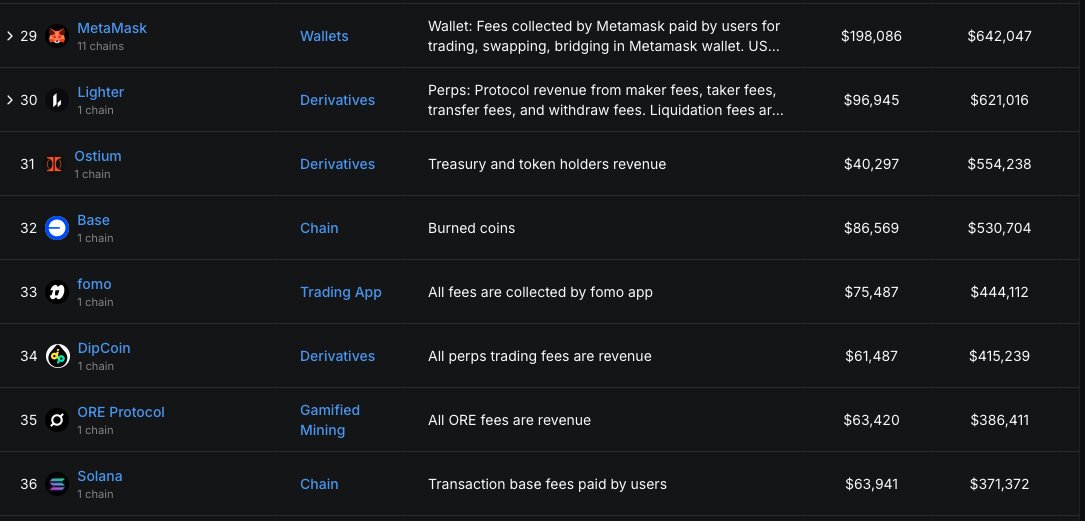
Ostium generated more revenue than Base and Solana in the last 7 days
kaledora tweet media
English
25
10
172
20.1K
Mitchell
Mitchell@WR_Crypto·
@Dorm_DAO Really cool data, thanks for sharing
English
0
0
2
416
Dorm🍜
Dorm🍜@Dorm_DAO·
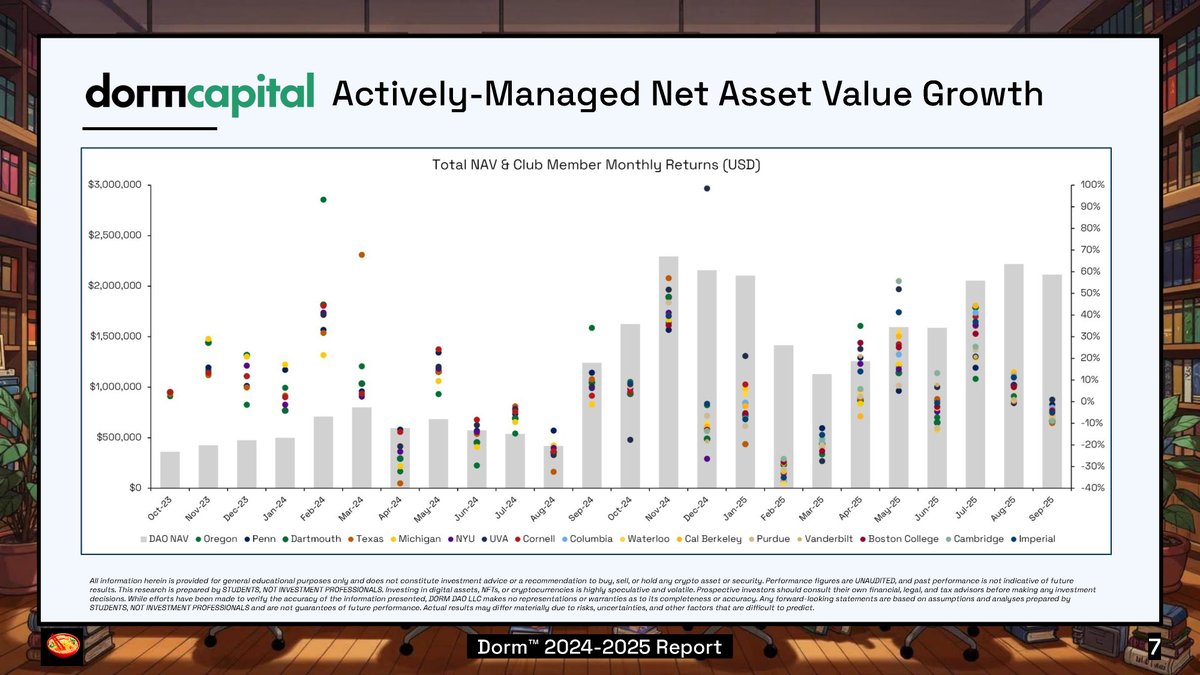
1/ Dorm Capital is a student-led, fund-of-funds managing $2,000,000 in crypto assets. During the '24-'25 academic year, our 16 university blockchain clubs completed 99 token pitches, resulting in 81 new positions. Presenting our Dorm Capital; Season 2 Performance Report: tinyurl.com/ynxjr9pe
Dorm🍜 tweet mediaDorm🍜 tweet mediaDorm🍜 tweet mediaDorm🍜 tweet media
English
23
12
168
39K
Mitchell
Mitchell@WR_Crypto·
@OAK_Res @ethena @maplefinance Two-thirds of Maple's assets are not deployed in their core strategy of overcollateralized lending They effectively face the same problem as what you outlined with Ethena
Mitchell tweet media
English
0
0
4
222
OAK Research
OAK Research@OAK_Res·
🔴 A $5 billion opportunity: @ethena x @maplefinance partnership One of the biggest issues in the market today is that high-quality stablecoin yield has become increasingly difficult to source at attractive levels. This is an issue for protocols like Ethena, where reserve efficiency and the ability to generate yield have become the core value proposition for $USDe. In that context, the current rate environment is not compelling enough. It is worth noting that around 86% of USDe’s collateral is currently unallocated. This means that around $5 billion in stablecoins are currently either liquid or deposited in lending protocols. Lending venues like @aave may still provide some return, but not enough to make USDe attractive enough to stake. This is when Maple comes into play. Maple has built a proposition around institutional, overcollateralized lending. That makes it relevant in the current environment, especially when the challenge is no longer simply finding somewhere to park stablecoins, but finding a yield source that can deliver stronger and more predictable return. The median rate on SyrupUSDC since the beginning of 2026 is around 5%, way above the USDC rate on Aave or the T-bills yield. And while the Open Interest has decreased significantly since October 10th, Ethena has to look for new sources of sustainable yield. Ethena has now put forward a proposal to add Maple and Anchorage as potential direct lending partners for the assets backing USDe. If approved, stablecoins in USDe’s backing could be supplied to those partners in order to earn a return, while also giving Ethena access to a new market segment: offchain, overcollateralized lending. For Maple, this also becomes an opportunity to attract untapped TVL from Ethena that could mount up to several billions, depending on the final allocation decided by Ethena’s team. At the same time, it offers a new business venture for Maple where institutions are not the only allocators of capital to the protocol anymore, and other yield-bearing stablecoins could follow Ethena’s initiative. This proposal is definitely a win-win for both protocols and could increase the value for both of them: higher yields for Ethena, and more TVL for Maple.
OAK Research tweet media
English
11
10
68
7.4K
Mitchell
Mitchell@WR_Crypto·
Anyways, overall I think this is an innovative step forward in token governance for the industry as a whole and appreciate Across' commitment to respecting tokenholder rights
English
0
0
1
41
Mitchell
Mitchell@WR_Crypto·
What's not clear to me is that one motivating factor cited is that their entity structure was only a foundation, which is understandably hard to do commercial business Why not keep the ACX token and setup a wholly owned subsidiary of Foundation that can do commercial efforts and return any value generated to ACX holders?
English
1
0
1
61
Mitchell
Mitchell@WR_Crypto·
I think its awesome to see this unique approach of converting tokenholders to equity shareholders, props to Across for the innovative idea and respecting tokenholders equally with team and private investors Much better outcome for ACX holders than Axelar aquistion
Across@AcrossProtocol

Proposal: “The Bridge Across” A temp-check exploring whether Across should evolve from a DAO + token structure into a U.S. C‑corp. via a token-to-equity exchange and token buyout. Thread and proposal below ⤵️

English
1
1
10
722
Mitchell
Mitchell@WR_Crypto·
The future of successful token launches: fair value raise in private > allow retail ICO participants access to same (or better) terms > find some degree of PMF & revenue > launch at fair FDV > return value to tokenholders > token does well > both team and investors make money
fabrizio@D0itdifferent

the reality of the current market structure: overvalued in private → launch at fabricated FDV → get perps listing → actively mm → profit from shorts → OTC locked tokens at discount → pack up, money made, token can do whatever

English
0
1
4
286
Mitchell
Mitchell@WR_Crypto·
Check out SIERRA’s new market on @pendle_fi and the blog explaining key details around Peaks and the Summit Program Should be some great fixed yields on SIERRA PTs and looping coming soon!
Sierra@SierraIsMoney

We're really excited to announce the launch of SIERRA's market on @pendle_fi This milestone marks the first chapter in new opportunities to earn yield on SIERRA throughout the Summit Program Read below on why we're launching on Pendle, how to participate and key details👇

English
0
0
4
121
Mitchell
Mitchell@WR_Crypto·
@CirrusNFT @gptsiolis Massive tail risk on defaults, to your other reply you wouldn’t lend nearly the same against Seedphrase’s punk
English
1
0
1
438
Cirrus
Cirrus@CirrusNFT·
There's a wallet out there earning $1,000,000 yearly off of 6 high ticket NFT loans The $1,170,783 realized profit over the last year or so also excludes $270,000 they've made on defaults $90,000+ a month run rate to click "refinance" a few times a year... easy life
Cirrus tweet media
English
37
9
291
54.9K
Mitchell
Mitchell@WR_Crypto·
@0xLouisT The self awareness of a founder to raise and offer a put
English
0
0
0
60
0xLouisT
0xLouisT@0xLouisT·
It's generally not a very sound investment strategy to back founders who have a LONG history of soft rugging their protocols; even if the downside is seemingly "protected". And if you need to give a "downside protection" to convince investors to give you money, there may be something wrong with how you're building in the first place. NFA.
English
9
0
60
3.4K
Mitchell retweetledi
Sam Ragsdale
Sam Ragsdale@samrags_·
With all due respect to Hasseeb, I completely disagree with this take. Chris was and is a mentor to me, I'm not pretending otherwise. But neither Chris nor Haseeb are builders in the category. I have spent the last year in the trenches trying to build non-speculative consumer crypto usecases. Ignore "non-financial". That's a useless umbrella. I care about non-speculative. Here's what I know with total clarity: Three years ago it was 100% impossible to ship a good consumer crypto experience. Not hard. Not early. Impossible. The wallet experience was complete and utter dogshit. Injected wallets are an unacceptable UX. Seed phrases, unacceptable. Blind signing, unacceptable. Bridging, unacceptable. Here's your onboarding experience for a consumer media flow: 1. Install a fox-faced browser extension 2. Write down a 24 word seed phrase and hide it under your fridge (btw now some romanian dude's gonna break int your house) 3. Select a chain if god willing you understand what that means 4. Go find a bridge (Wormhole, LayerZero, ...) if you guessed wrong 5. Sign hexadecimal strings with very scary error messages 6. "Transaction pending... would you like to increase your gas price" (wtf is gas? they'll say) Thats is before you even fund the thing. But I'm not done, on ramps were even worse. If you wanted to use some "web3 media" app, you had to open an exchange account. The UI looked like DraftKings for slop-maxxed decentralization jargon. Spin the wheel to get decentralized compute coin on Arbitrum or turbo DNS coin on Polkadot! Last cycle nonsense. Before you buy anything you need to go through a rigorous KYC process. SSN, address, Drivers License verification, transfer to your mobile device, liveness check on your face, transfer back, "a human in a remote country will check this asynchronously and we'll get back to you". Now we sign into Plaid, put our bank credentials into some random form on this new DraftKing exchange, now they can auto-draw down money. Perfect. Now god willing you've found UDSC and bought it on the right chain. You're ready to transfer out. You paste in your 40-character Hex address to the fox-head app. That'll be 24-48 hours before it arrives due to ACH fraud risk. Aaaand now you can use the web3 media app. And KYB on ramps for enterprises? Rectal inspection. I need not go deeper. Consumer apps are viral flywheels. If there's too much friction on the axle, the flywheel never spins. Crypto had superglue on the flywheel. So when we say "the market rejected consumer crypto," we should ask a basic question. Did we ever actually ship it in a form that normal people could evaluate. Finance worked because the users were willing to tolerate absurd friction. Traders will jump through flaming hoops when their perceived EV is +infinite (because they're a genius and have alpha or astrology signals or whatever). Media and other consumer activities do not get that tolerance budget. Now enough with the pessimism of the past. Let's fast forward to today (or next 3 mo). - Embedded wallets are real - OAuth style onboarding is real - Headless custody is real - In app onramps are real - Stablecoin onramps are real (this is a distinct thing and is critically important and I don't have time to explain in this post) - KYB capable providers are emerging Privy. Bridge. Stripe. Zerohash. Coinbases' new stack. This stuff is recent. Widely usable versions are maybe two years old. Broad developer adoption is even newer. For the first time you can do something like: - Sign in with email - Wallet created under the hood - Buy stablecoins inside the app - Transact instantly No exchange account, no raffle spinny wheels for decentralized slop, no fox icon, no seed phrase under your fridge. That stack did not exist in a usable form when most of the "consumer experiments" were run. After teh blood sweat and tears out of the L1 engineers, L2 engineers, the cryptographers, the wallet teams, the exchange teams, the compliance teams, and the onramp providers, we are finally getting something that resembles a sane consumer stack. We are just getting the grease. That does not mean consumer crypto is inevitable. It does mean we are only now in a position to run the experiment honestly. It's the best time to build in crypto, in the history of crypto. If it fails from here, with real UX and real onboarding and real distribution, then fine. I'll eat my shoe. Call it dead.
Haseeb >|<@hosseeb

With all due respect to Chris, I completely disagree with this take. Chris argues that "web3," particularly crypto-powered gaming and media, failed due to scams and regulation, and that better regulation will unlock these non-financial cases. OK, think about this for a second. Does this pass the smell test? Do you think web3 gaming failed because of Gary Gensler? Do you think web3 media plays failed because the scammers crowded out the honest media innovators? Really? If this is true, why didn't they kill financial crypto, which had WAY more of both? Financial use cases were right in the crosshairs of the regulatory harassment, and they also attracted way more scams. Why shouldn't we instead accept the more obvious answer: non-financial use cases for crypto have failed because no one wants them. Let's just admit it. They were bad products. They failed the market test. It was not Gensler or SBF or Terra that caused these things to fail, it was that no one wanted any of it. Pretending otherwise is cope. Enormous sums of capital and talent explored these ideas, and we should acknowledge what we learned. That lesson is not "if we just had better laws, then finally people would finally be using decentralized Spotify" or whatever. Call a spade a spade. Every single use case in crypto that has worked at scale has been financial in nature. 2008: Bitcoin - non-sovereign store of value 2014: Tether - stablecoins 2015: Ethereum - programmable money 2017: ICOs - capital formation 2018: Prediction markets (Augur, later Polymarket) 2020: DeFi - literally finance is in the name 2021: NFTs - non-fungible financial assets (to the extent they worked) 2024: RWAs (the year BUIDL took off) All this stuff was adopted bottoms-up. We as investors discovered that people wanted to do these things with crypto. The web3 consumer stuff, on the other hand, was primarily conjured up by investors and pitch decks, ZIRP accelerationism, and "wouldn't it be crazy if" blog posts. This was the opposite of the "what smart people are doing on their weekends" thesis. In fact, if you go back to the Ethereum white paper from 2014, almost every single Ethereum use case Vitalik describes is financial in nature: token issuance, stablecoins, derivatives, on-chain treasuries/DAOs, on-chain savings, insurance, price feeds, escrow, gambling, prediction markets. It's all in there. This is nothing to be ashamed of. Finance is almost 10% of GDP. It's an enormous part of the world economy, and banks are some of the lowest NPS score companies in the world. People hate their banks and the outdated financial architectures their money runs on. It's literally why Bitcoin was created. There is so much to innovate in the realm of finance, and I truly believe we are only at the beginning of that displacement. You don't need to assume anything more to project the next 10x in crypto. The old saying goes "crypto will do to finance what the Internet did to every other industry." I respect Chris's optimism. But 18 years in, we should not be propagating this meme about consumer web3 use cases as though they're inevitable. If you are hanging around the rim hoping that crypto is going to disrupt media and gaming, you should know the history and look at it with clear eyes. Now if you as a founder believe that despite that, you know the secret to cracking this market--I respect that, and I certainly don't begrudge anyone to follow their convictions. But I think it's important that investors be honest that all the evidence points the other way.
English
66
41
425
129.7K