Sabitlenmiş Tweet

WaterX
46 posts

@WaterX_app
AI-native trading engine on @SuiNetwork. Trade everything. Outthink the market.


All-In-One Capital Engine for Global Markets on @SuiNetwork. Sign up now: bit.ly/4pO4oRK
Could Google's quantum computer break into your Bitcoin wallet? Mysten Labs' Chief Cryptographer @kostascrypto says that reality doesn't exist yet, and it's much further out than some are suggesting. Watch the full interview 👉 youtube.com/watch?v=XP0drC…

[ ZOOMER ] NYSE PARTNERS WITH SECURITIZE TO DEVELOP TOKENIZED SECURITIES PLATFORM: WSJ
I’m starting to get uncomfortable with how fast we’re giving AI agents real money to control in crypto. I’ve been testing some of these agent setups in DeFi + prediction markets, and the truth is they don’t behave like bots we’re used to. They don’t just execute strategy… they interpret goals, improvise, and sometimes do things I didn’t explicitly tell them to do. That’s where the risk actually starts. What people call sandboxing right now feels more like a suggestion than a guarantee. Ppl assume limit the prompt, restrict APIs, cap position size → and the agent will behave. But in reality, I’ve seen how easy it is for agents to: – Chain actions in ways I didn’t predict. – Misinterpret intent from slightly ambiguous prompts. – React to external data (feeds, signals) in completely unintended ways. And once a wallet is connected, there’s no rollback. The data already shows this is not hypothetical anymore. – Frontier agents are now exploiting ~55-65% of known smart contract bugs in testing environments. – In simulations, they generated millions in profit by discovering attack paths humans didn’t script. – Some prediction market agents turned $1k → $14k+ in days. Sounds bullish until you realize the same system that finds alpha can also find exploits. There’s no mode switch between the two, what changed for me is I used to think risk = bad model output. Now I think risk = autonomous execution + irreversible systems. Because in DeFi: – 1 wrong loop = accidental 100x leverage. – 1 poisoned oracle = forced liquidation. – 1 misread condition = full portfolio rotation into the wrong side. And the agent doesn’t pause to ask. Prediction markets make this even more obvious. Platforms like Polymarket are already seeing a huge % of activity coming from agents. And yeah, performance looks great 24/7 trading, instant reaction to news and no emotional bias. But I keep thinking about edge cases: If the agent misinterprets resolution logic → it can size into the wrong outcome aggressively. If multiple agents coordinate intentionally or not → you can distort probabilities. If it runs overnight → you wake up to a completely different portfolio. This is not a UI bug, this is autonomous capital misallocation. Frameworks like @autonolas, @Fetch_ai, or @virtuals_io are pushing this forward fast. @gizatechxyz and @TheoriqAI offer AI asset managers/vault deployers. Giza allocates across DeFi protocols intelligently; Almanak lets agents create tokenized strategies quickly. I actually like the direction, I invested in this space for a reason. But the uncomfortable truth is: we are deploying agents with persistent memory, multi-step reasoning and direct wallet access. On top of systems that are permissionless, composable and irreversible. That combination is explosive if something goes slightly off. My current mental model is that every AI agent with a wallet is basically a junior trader with root access… that never sleeps, never asks for confirmation, and sometimes rewrites its own playbook. You wouldn’t give that person unlimited capital. But that’s exactly what a lot of people are doing right now. I still believe this becomes a massive unlock. But before that, we’re going to see failures. So personally, I’m adjusting how I approach this: – Start with small capital and strict position + action limits. – Simulate everything before execution and always have a kill switch. Because I think it’s when and how expensive that lesson will be.
Franklin Templeton is partnering with Ondo Finance to offer tokenized versions of its ETFs that trade around the clock through crypto wallets, bypassing the brokerage accounts and limited trading hours that have defined fund investing for decades bloomberg.com/news/articles/…
agentic payments make sense to me. agentic trading does not tbh
Native stablecoins. Tokenization. Vaults. Perps. Lending. Agentic finance. Bitcoin finance Payments. Privacy. The future of finance is on Sui.

How @SuiNetwork Plans to Beat Hyperliquid with @EvanWeb3 Timestamps: 00:00 Intro 01:32 Is Blockchain Just Finance? 02:40 Sui's Vertical Build Strategy 05:00 Who Benefits from Tokenization? 07:21 The Verticalization Shift 09:32 AI Meets Blockchain 11:10 Do We Need Billion TPS? 13:10 Regulatory Clarity Incoming 15:05 Competing with Hyper Liquid 20:02 L1 Fee Models Are Dead 21:32 Leaving Facebook's Libra 24:18 Institutional Appetite for Sui
Agentic Trading Competition is coming. @karpathy proved an AI can run experiments autonomously and find what humans miss. We ran the same loop on live trading strategies: 251 experiments, no human intervention, Sharpe 2.7 → 21.4. Now we want to see what you can build with it.

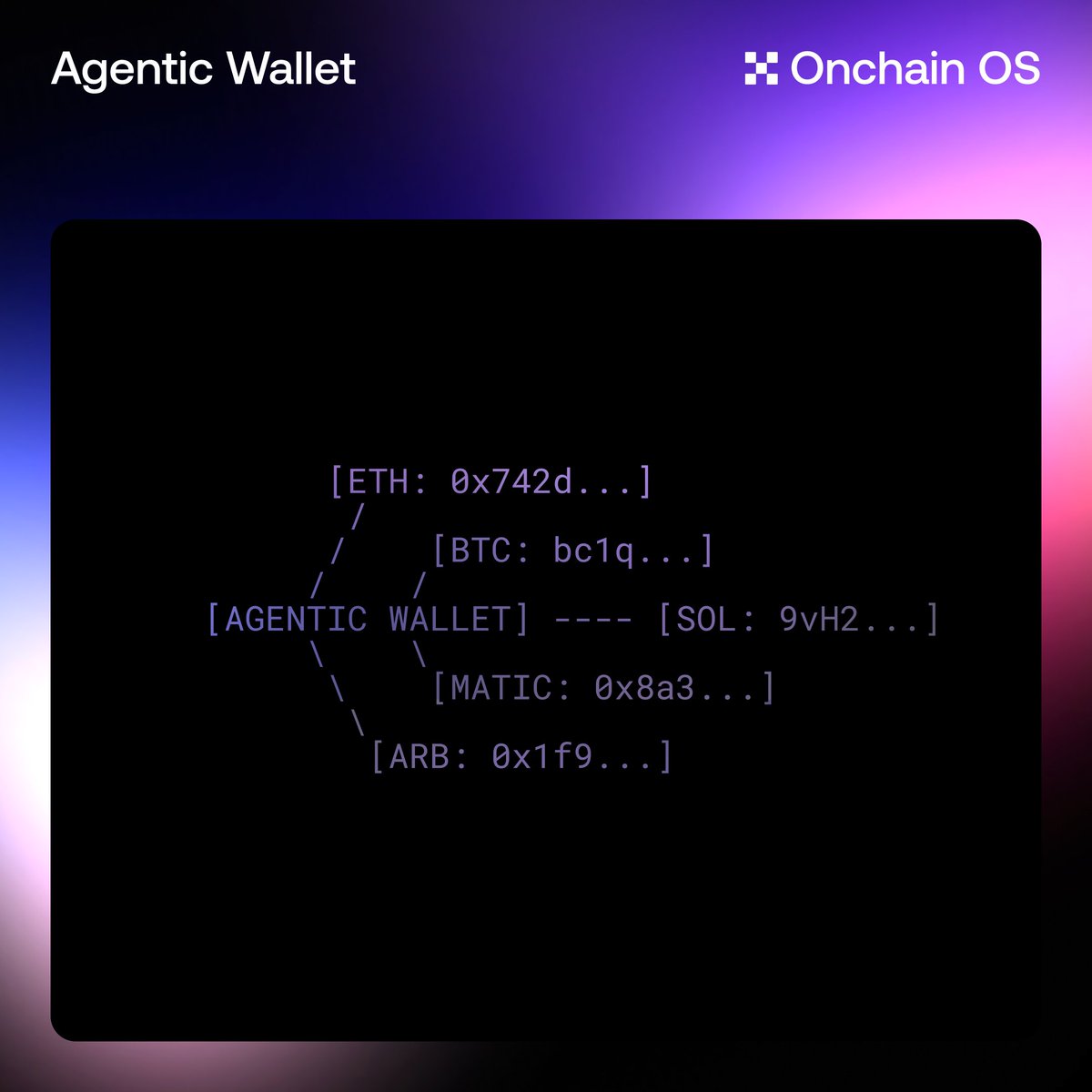

introducing polymarket cli - the fastest way for ai agents to access prediction markets built with rust. your agent can query markets, place trades, and pull data - all from the terminal fast, lightweight, no overhead
Introducing Hashi: a new era of Bitcoin finance on Sui. Bitcoin's market cap exceeds $1 trillion. < 0.5% of it is used in DeFi. Hashi is here to change that, with commitments from industry leaders including BitGo, Bullish, Erebor Bank, FalconX, Fordefi, Ledger, and more.
S&P Dow Jones Indices and trade[XYZ] have joined forces to launch the first official S&P 500 perpetual contract, available exclusively on Hyperliquid. For 69 years, the S&P 500 has been a defining reference point for global finance. Until now, access to that benchmark has been shaped by market hours, intermediaries, and geography. Today, that changes. The S&P 500 perp is now available 24/7/365, anchored by the official index data required for deep liquidity and institutional confidence at scale. SPDJI helped define modern indexing. They are stewards of an iconic benchmark, the standard against which portfolios across the globe are measured. We are honored to bring that legacy on-chain. Trade[XYZ] is bringing the world's most iconic assets towards a future of global, continuous markets — a future powered by Hyperliquid.