Weekly DCA Investor

894 posts

Weekly DCA Investor banner
Weekly DCA Investor

Weekly DCA Investor

@WeeklyDCAInvest

Dad | Electrician⚡️Documenting my long-term investing journey. Weekly DCA | Transparent portfolio updates Core investing + stock swing trades | NFA

Ireland Katılım Nisan 2021
432 Takip Edilen155 Takipçiler
Sabitlenmiş Tweet
Weekly DCA Investor
Weekly DCA Investor@WeeklyDCAInvest·
Starting this account to document my long term investing journey transparently. Weekly DCA into index funds, Bitcoin & a small high-risk satellite portfolio. Occasional swing trades, tracked separately. Portfolio updates are consolidated across platforms and shared openly. NFW
English
1
0
4
536
Serenity
Serenity@aleabitoreddit·
I hate it that my account got so big. That I can’t mention another person anymore without them gaining 1K+ followers or going viral in the algo. Now endless people just make up stuff and bait me into replying…
English
314
8
1.8K
172.8K
Pep Invest
Pep Invest@PepInvestStocks·
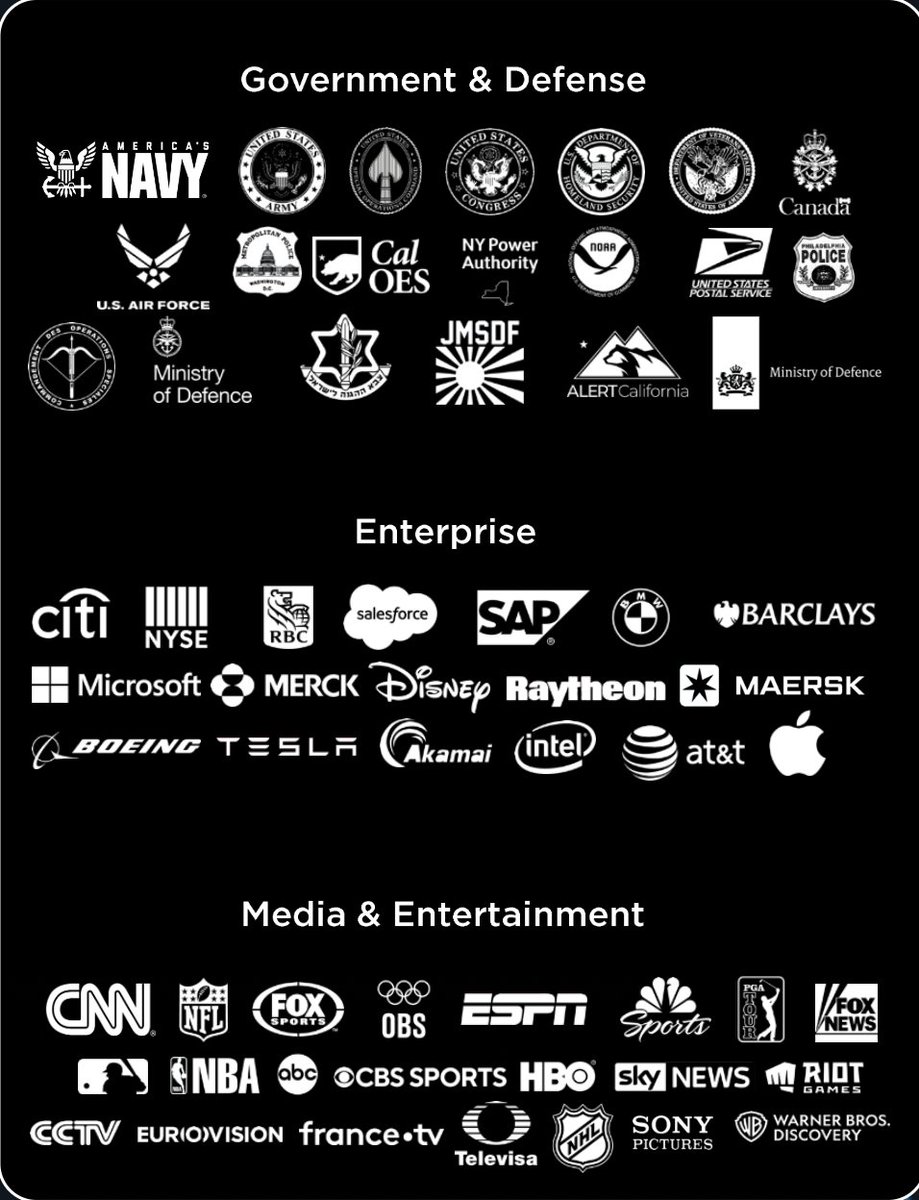
Guess the ticker 👀 $TSLA $MSFT $AAPL $INTC Massive blue-chip customers and government partners across defense, enterprise, and global media, the kind most companies can only dream of. Yet the market cap is only ~180M CAD. The upside here is insane… I still can’t believe it’s this cheap. Drop your guess below 👇
Pep Invest tweet media
English
10
1
22
6.1K
Weekly DCA Investor retweetledi
LazaroLifestyle
LazaroLifestyle@LazaroInvestor·
Classic overreaction $META still printing cash, scaling AI efficiently, and owns the social/ad moat. DCA’ing through the volatility because I’m long-term bullish on Zuckerberg’s vision. Patience + consistency = edge. Who else loading $META on the dip?
LazaroLifestyle tweet media
English
28
2
69
1.9K
Pep Invest
Pep Invest@PepInvestStocks·
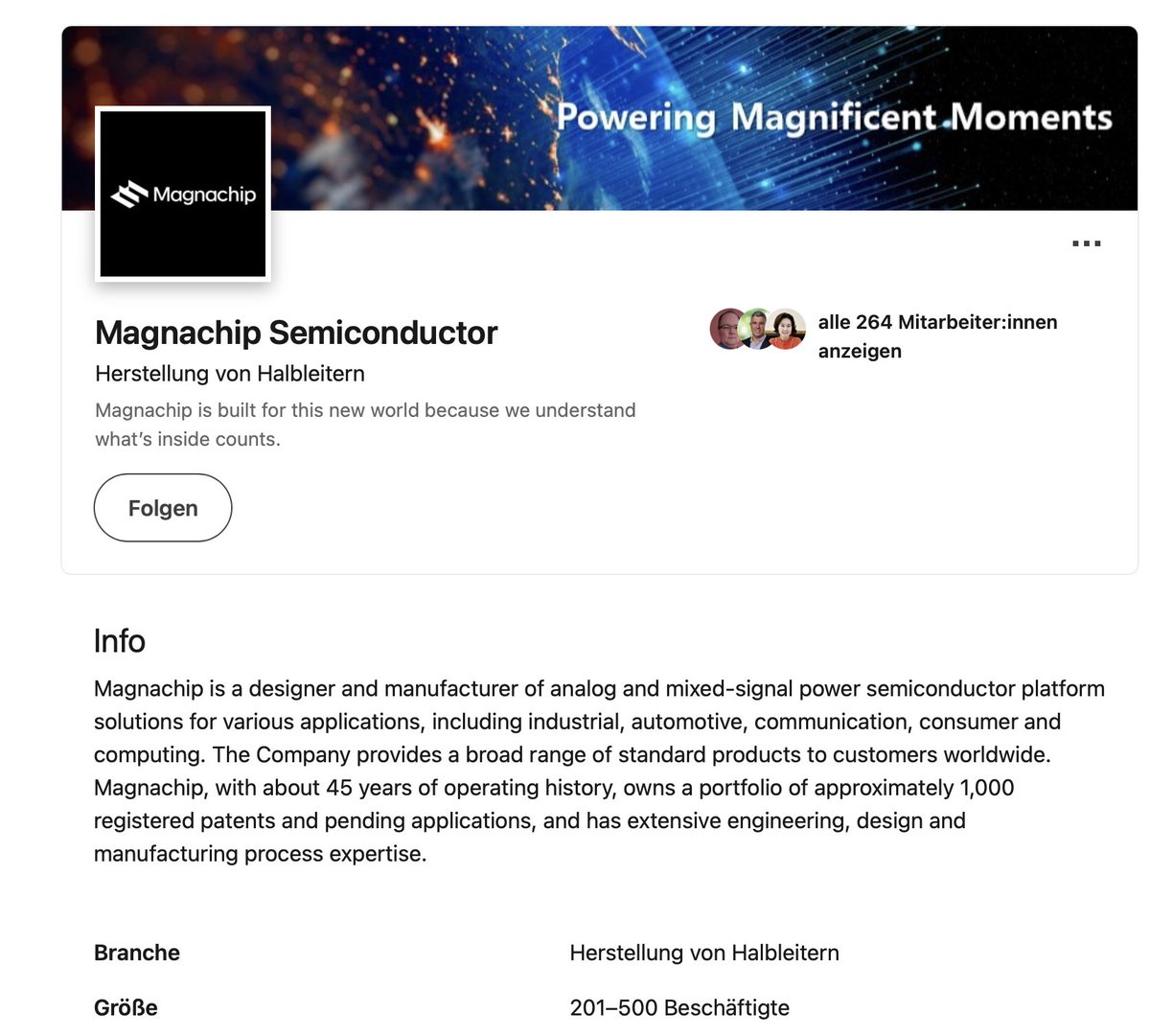
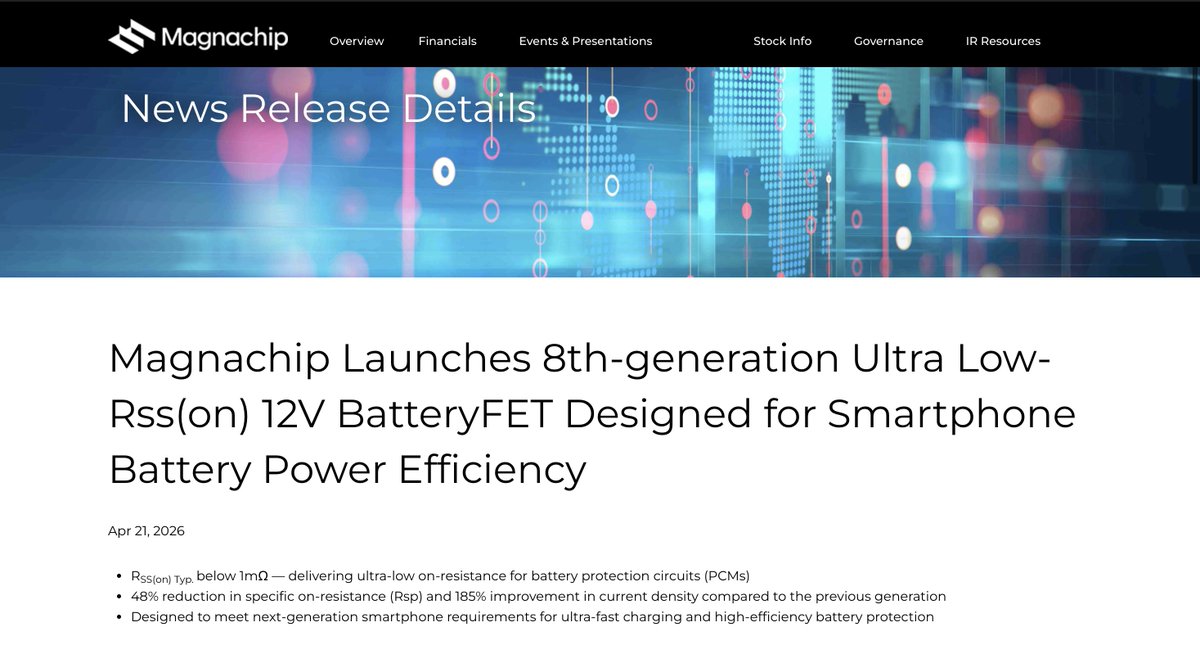
MagnaChip $MX is a pure-play Power Semiconductor specialist from South Korea with over 45 years of experience 🔥 They develop and manufacture analog and mixed-signal power semiconductor platform solutions - primarily: Discrete power components (MOSFETs such as Super Junction, High-Voltage and Medium-Voltage MOSFETs, IGBTs) Power management ICs (PMICs), LED drivers, level shifters and converters Solutions for Automotive, Industrial/motor control, Renewable Energy (solar, storage), Server/Data Center, AI infrastructure and Consumer electronics Since mid-2025 they have fully exited the Display business (OLED-DDICs etc.) and are now a 100 % pure-play Power Company - a complete strategic realignment toward high-growth power markets. Deep process expertise in BCD (Bipolar-CMOS-DMOS), High-Voltage and Ultra-High-Voltage technologies → ideal for energy-efficient, robust power solutions with better heat dissipation, lower consumption and high reliability. Strong in-house manufacturing process know-how + Fab-Lite model → fast product iterations and excellent control over quality and costs. Extensive patent portfolio and decades of engineering expertise → they are not just a fabless designer but can optimize the entire chain from process technology to the finished chip. Clear focus on Eco-friendly High-Performance Power -exactly what EV inverters, solar inverters, server power supplies, industrial drives and AI infrastructure urgently need today.
Pep Invest tweet mediaPep Invest tweet media
English
7
5
38
6.9K
Weekly DCA Investor
Weekly DCA Investor@WeeklyDCAInvest·
@peonyKingOF I install solar for a living and can’t fault there panels will stick this one on the watchlist, are you long?
English
1
0
0
102
peony
peony@peonyKingOF·
$jks leader in most important and fastest growing energy source globally trading at .6x. Bizarro cheap. Just gotta look past whatever short-term supply and pricing issues, and it is pretty obvious this company is worth far more in few years.
English
2
0
11
2.2K
vlmk
vlmk@vlmkapital·
I have previously corrected some misinformation in posts regarding $LPK. I think it is now time to apply the same standard to $SHMD. And I've been thinking of doing this for longer because false narratives about SCHMID have been floating around for so long, and I genuinely think some kind of false narrative seems to be the consensus with SCHMID investors. The quoted post is obviously full of LLM rhetoric but I was surprised to see just entirely incorrect information First, the biggest point - nobody seems to be able to differentiate between work SCHMID does on organic vs. glass substrates! This is one of the reasons why SCHMID gets falsely labelled a "glass substrate pure play" In the post we see multiple mentions of SCHMID's H+ deliveries as evidence towards progress in glass. But none of those deliveries had to do with glass substrates! It was for PLP on organic substrates. SCHMID has exactly one publicly disclosed delivery that is related to glass substrates in particular - their C+ delivery to a Japanese customer. Second, there's also just plain misinformation in the article. A good example is "InfinityLine H+: The world’s only platform capable of handling 700x700mm panels." For example, MANZ and E&R can both process 700x700mm panels AND they both have more commercial and qualificatory validation than SCHMID currently. Also: "We are looking at a company with a market cap of ~$400M–$450M, holding a backlog that nearly matches its entire value." I mean the market cap is like 8x larger than the backlog. Am I missing something? We also just see random namedropping like Intel and TSMC with zero linking. I mean: "As Intel aggressively pushes to lead the industry in glass substrate adoption by 2026-2030, SCHMID’s vertical processing and InfinityLine H+ have moved from "evaluation" to "deployment."" Why would you link the two together when they aren't related in any way? Any point about SCHMID being a "bottleneck" is also weak considering there's essentially 0 evidence they're qualified to any major glass substrate ecosystems, yet said ecosystems are all looking to transition to HVM. I also try to not emphasize the LLM rhetoric like "gold standard" or "mechanical necessity" or whatever. All of it is obviously wrong but LLMs tend to write like this for pump posts. No need to interpret it literally All this being said, I do think SCHMID is probably an OK advanced-packaging play long-term, as long as they get their financials sorted out. I'm just saying that the glass substrate hype currently is so unjustified, considering there seems to be essentially 0 evidence for any meaningful qualifications within glass substrate ecosystems. If they start landing some nice deals I'll obviously adjust my thesis accordingly.
Finn Stockinger@FinnStockinger

Glass Substrates: No longer a theory, but the next AI bottleneck. 💎 The market is finally waking up to what I flagged weeks ago: traditional substrates have hit a physical wall. The 1.6T era belongs to glass, and SCHMID Group ($SHMD) is the gatekeeper of this transition. Why $SHMD is a Unique Play: ✅ InfinityLine H+: The world’s only platform capable of handling 700x700mm panels. Massive scale = drastically lower unit costs for next-gen AI clusters. ✅ Vertical & Touchless: Their vertical etching eliminates "puddling" defects, while non-contact transport solves the breakage issues plaguing glass. This is the "secret sauce" for yields at Intel and TSMC-grade fabs. ✅ Intel & Tier-1 Validation: As Intel aggressively pushes to lead the industry in glass substrate adoption by 2026-2030, SCHMID’s vertical processing and InfinityLine H+ have moved from "evaluation" to "deployment." Recent U.S. deliveries into the Defense/Aerospace sectors confirm their tech is the gold standard for high-reliability, mission-critical hardware. ⬇️The Financial Turnaround The debt structure used to be an anchor, but we are seeing a fundamental shift: Deleveraging: A massive debt-to-equity swap has cleaned up the balance sheet. Order Backlog: 2026 guidance shows revenue surging past €100M, backed by a record backlog. Pivot: They’ve successfully transitioned from legacy tech to high-margin AI infrastructure. ➡️The Investor’s Verdict: $SHMD has crossed the "valuation chasm." We are looking at a company with a market cap of ~$400M–$450M, holding a backlog that nearly matches its entire value. While the financial structure still requires a watchful eye, the risk-to-reward ratio is becoming one of the most asymmetric bets in the semiconductor space. 👉Conclusion: If you believe in the Glass Substrate thesis, SCHMID isn't just an option - it’s the mechanical necessity for the entire 1.6T ecosystem. Is it finally time to go all-in on the Glass Substrate revolution? What do you think?

English
6
0
55
9.7K
Pep Invest
Pep Invest@PepInvestStocks·
6 Small Cap BANGERS EUROPE $SIVE $ALRIB $LPKF $SHT $VGO.WA $P40 (Planoptik) Bookmark it.
Deutsch
11
15
152
15.6K
Pepe Invests
Pepe Invests@pepemoonboy·
Markets are euphoric and everything seems to be going up. What are some gems you have your eyes on currently? I'm not talking about the stocks everyone is posting about. I want to hear about the stock retail HASN'T discovered yet. Shill me your best alpha! I'll compile all the stocks mentioned and will stack rank them for you all based on financials and fundamentals.
English
133
4
167
58.2K
Paradis Labs
Paradis Labs@ParadisLabs·
Most requested stocks for me to research rn: Don't wanna waste 1-2 week's worth of free time looking into a co. that only 4 people care about If a different company, pls comment (Started small positions in LPKF & Silicom cos they looked interesting based on 30m of Googling)
English
40
3
112
23.2K
Dr J Rould
Dr J Rould@jrouldz·
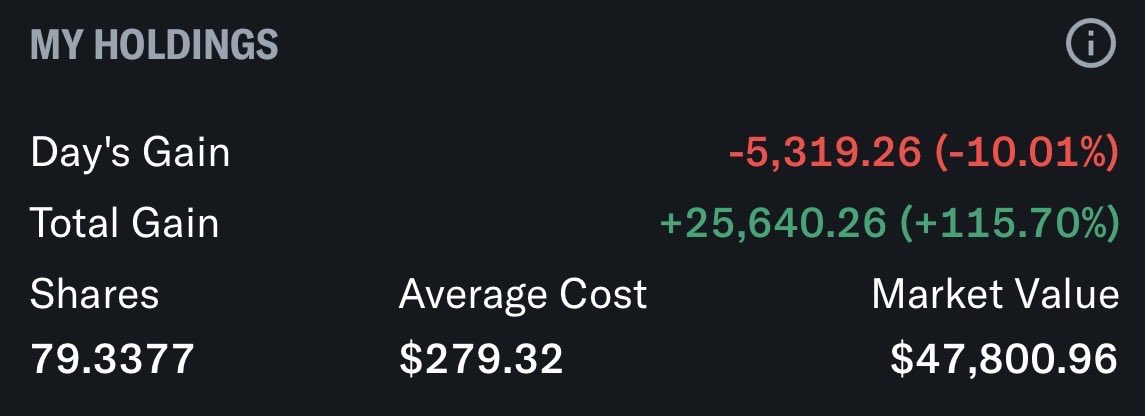
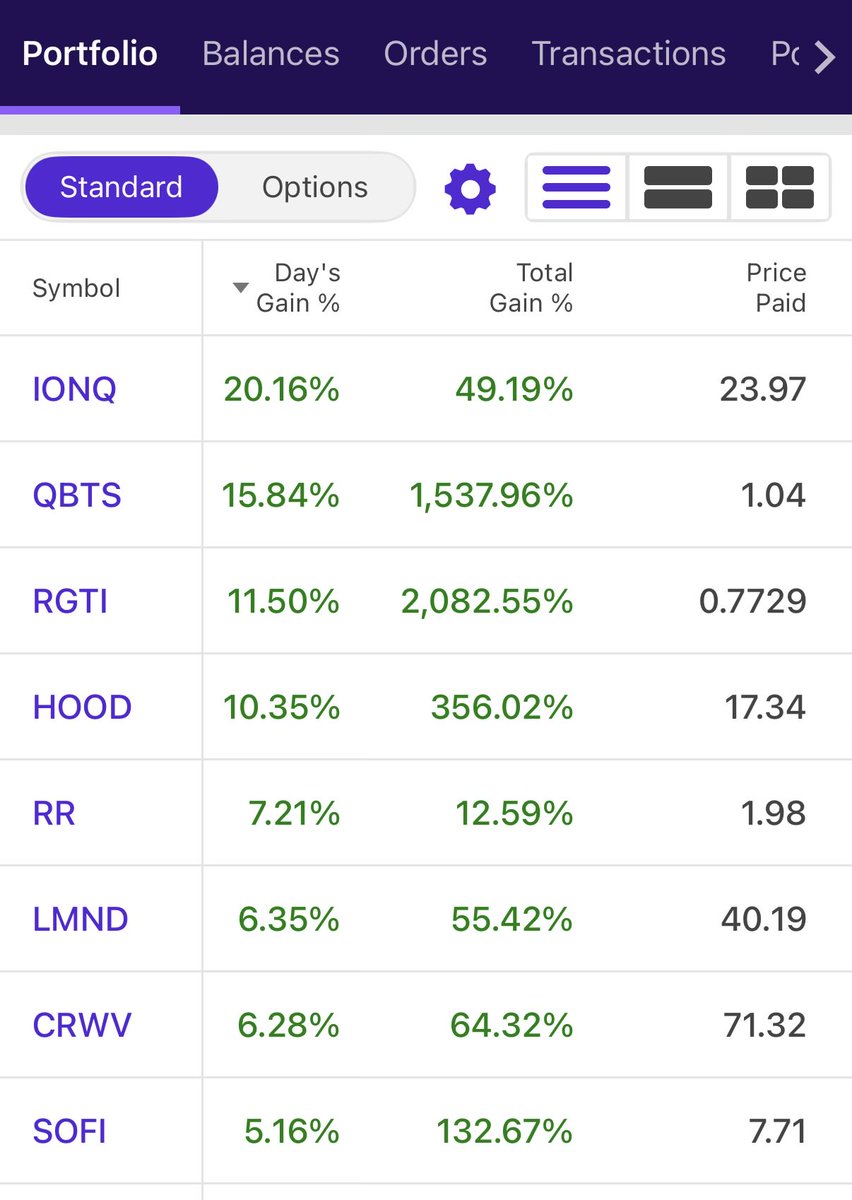
Checking how the portfolio finished today 😂
Dr J Rould tweet mediaDr J Rould tweet media
English
21
3
169
11.7K
Weekly DCA Investor
Weekly DCA Investor@WeeklyDCAInvest·
@FinnStockinger Been looking at this stock over the last few days looks like I won’t be entering now. $Shmd is still my favourite pick for glass substrates exposure
English
1
0
7
714
Finn Stockinger
Finn Stockinger@FinnStockinger·
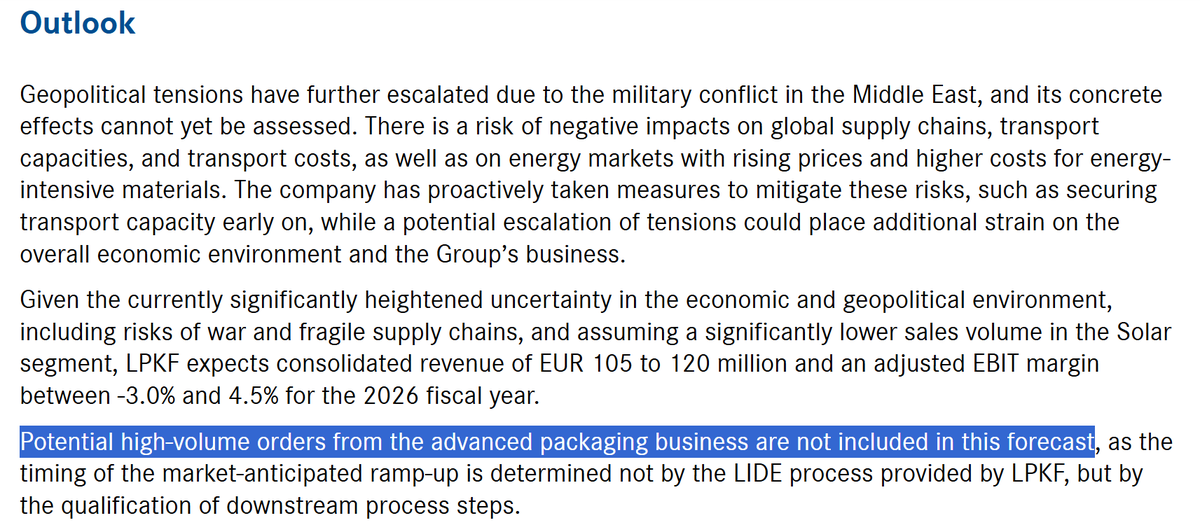
$LPKF Predicted the Glass Revolution weeks ago – The Market is Finally Catching Up Six months ago, I began documenting why LPKF Laser & Electronics ($LPK) was the mispriced king of the next-generation substrate race. While the mainstream was chasing high-level AI hype, I pointed to the molecular reality: without LPKF’s LIDE technology, the 1.6T and 3.2T roadmaps simply don't scale. Since my initial call in February, the stock has jumped from €7.45 to €8.70+. This isn't just a rally; it's the market finally acknowledging the "Glass Age." IMO it's just beginning. The Thesis Validated: ➡️Beyond the "Thermal Wall": Traditional organic substrates are hitting their physical limits. Glass is the only material that matches the thermal expansion of silicon. I flagged this some time ago - now, every Tier-1 integrator (Ibiden, Samsung) is racing to implement it. ➡️The LIDE Standard: LPKF’s Laser Induced Deep Etching is no longer a "niche project." It’s the industrial standard for atomic-smooth TGV (Through-Glass Vias). Smooth walls = Low signal loss = High-speed AI. ➡️From R&D to Revenue: The March 2026 earnings call confirmed exactly what I predicted: LPKF’s North Star program is turning them into a high-margin semiconductor pure-play. The "Solar" drag is fading; the "Chip" boom is taking over. ⬇️Why this is Just the Beginning: The jump to €8.70 is the market finally correcting its previous blindness. As 1.6T moves from pilot lines to mass production, LPKF’s position as the primary toolmaker for glass-core substrates is undergoing a fundamental re-rating. This is no longer a 'future play' - it is the industrial reality of the AI era. The lesson? Technology leads, the market follows. I’m not just watching the chips - I’m watching the machines that make the chips possible. #LPKF #GlassSubstrate #Semiconductors #LIDE #AIHardware #InvestmentThesis #Ibiden
Finn Stockinger tweet media
Finn Stockinger@FinnStockinger

The German Precision at the Heart of 1.6T Connectivity As the global semiconductor industry pivots from 800G to the era of 1.6T and 3.2T bandwidth, the spotlight has been firmly fixed on Asian giants like Ibiden (4062.JP) and Samsung. In my previous analysis, I highlighted why Ibiden’s mastery of ABF (Ajinomoto Build-up Film) makes them the indispensable "integrator" of the upcoming glass-core substrates. However, a critical question remains: Who builds the machines that make this integration possible? The answer lies not in Tokyo or Seoul, but in Lower Saxony, Germany. While the world watches the "Glass-Core" race, a German engineering powerhouse, LPKF Laser & Electronics $LPK, has quietly become the gatekeeper of this entire technological shift. 1⃣ The Hybrid Reality: Why ABF Isn't Dying (Yet) There is a common misconception that Glass Substrates will instantly replace PCB laminates. In reality, we are entering the era of the Hybrid Glass-Core Substrate. The Role of Ibiden: As the undisputed leader in high-end IC substrates (controlling ~40-50% of the premium market), Ibiden is not being replaced. Instead, they are becoming the Master Integrator. The "Sandwich" Structure: The 1.6T chip will sit on a Glass Core (for signal speed) which is then "cladded" with ABF layers for routing and mounted onto a standard PCB. The Challenge: Integrating glass with organic films is a nightmare of thermal expansion. This is where the mechanical precision of the tooling becomes the trillion-dollar variable. 2⃣LPKF Laser & Electronics: The "ASML" of Glass? If you want to build a 1.6T chip, you need TGV (Through-Glass Vias). You need to drill tens of thousands of holes in a sheet of glass thinner than a human hair without causing a single micro-crack. While ASML owns the photolithography stage, LPKF is positioning itself to own the Glass Structuring stage via their proprietary LIDE (Laser Induced Deep Etching) technology. Why LIDE is the "Golden Ticket": Traditional lasers (CO2 or UV) use heat to "blast" through glass, creating stress zones and micro-fractures. At 1.6T densities, these fractures lead to catastrophic failure during thermal cycling. Step 1 (Modification): LPKF’s ultra-fast laser changes the molecular structure of the glass at specific points without generating heat. Step 2 (Etching): A chemical bath removes only the modified glass.The Result: Perfectly smooth vias with Zero Micro-Cracks.Numerical Anchor: The 1.6T Efficiency Signal Loss: Glass reduces insertion loss by over 40% compared to organic cores at 224G SerDes speeds. Via Density: LIDE allows for a pitch (distance between holes) of less than 50 $\mu m$, enabling the massive I/O counts required for 3.2T switching. ➡️The $ONTO x $LPKF Synergy: Solving the Yield Crisis⬅️ The most significant hurdle for glass substrates at 1.6T isn't just making the holes, it’s proving they are perfect before moving to the next expensive production step. The 2025 partnership between LPKF and Onto Innovation addresses this "Yield Gap" by integrating Onto’s Firefly® G3 inspection system into the LIDE workflow. While LPKF’s Vitrion machines drill at speeds of up to 10,000 vias per second, Onto’s metrology provides the "eyes," utilizing sub-surface inspection to detect microscopic fractures that traditional cameras miss. By joining Onto's PACE (Packaging Applications Center of Excellence), LPKF has transformed from a niche tool manufacturer into a validated industrial partner. For integrators like Ibiden, this alliance is the green light for mass production: it ensures that every glass panel is structurally sound, thermally stable, and ready to handle the extreme signal densities of the 3.2T era. 4⃣ The 3.2T Horizon: Co-Packaged Optics (CPO) As we look toward 3.2T, the copper wire itself becomes the bottleneck. We need to bring fiber optics directly to the chip. Glass is the only material that can act as both a structural substrate and an optical waveguide. LPKF’s LIDE process is currently being tested to create "optical pathways" inside the glass core. CTE Alignment: Glass has a Coefficient of Thermal Expansion (CTE) of ~3-8 ppm/K, closely matching Silicon (2.6 ppm/K). Organic substrates sit at a staggering 17 ppm/K. The Verdict: At 3.2T, if you don't use glass, your chip will literally "tear itself apart" from the heat-induced expansion mismatch. 5⃣ Risk Assessment: The Competitive Moat Is LPKF untouchable? Not quite. The Japanese Giants: Companies like Lasertec and Disco Corp have deep pockets and existing relationships with TSMC. The Integrator's Power: While LPKF has the best "drill," Ibiden and Samsung Electro-Mechanics hold the keys to mass assembly. If they find a way to bypass LIDE (unlikely but possible), the landscape shifts. Conclusion: The transition to 1.6T and 3.2T is a "Materials + Machines" play. Ibiden provides the scale and the organic integration, but LPKF provides the fundamental breakthrough that makes glass viable for high-volume manufacturing. For investors and technologists, the indicator of success isn't just the chip's performance—it's the yield rate of the TGV process. If LPKF’s LIDE becomes the industry standard, they will sit at a critical chokepoint in the AI hardware supply chain. #LIDE #GlassSubstrate #LPKF #ONTO #Ibiden #TGV #Semiconductors #FutureTech #AdvancedPackaging #EngineeringExcellence #AIInfrastructure


English
11
7
76
54.7K
Weekly DCA Investor
Weekly DCA Investor@WeeklyDCAInvest·
@SJCapitalInvest Before you go could you give us a small post on your thoughts on $ampx and if you plan to hold long term?
English
1
0
2
298