F. Chr Wehrschuetz

4.1K posts

F. Chr Wehrschuetz banner
F. Chr Wehrschuetz

F. Chr Wehrschuetz

@Wehrschu

Ducunt volentem fata - nolentem trahunt; 22 years Balkans,7 years in Ukraine as chief-correspondent for Austrian TV (ORF). Married, 2 daughters, 1 granddaughter

Velyka Zhytomyrska St, 2А, Kyiv, Ukraine Katılım Mart 2013
2.1K Takip Edilen10.4K Takipçiler
🕊
🕊@jamesforpeace·
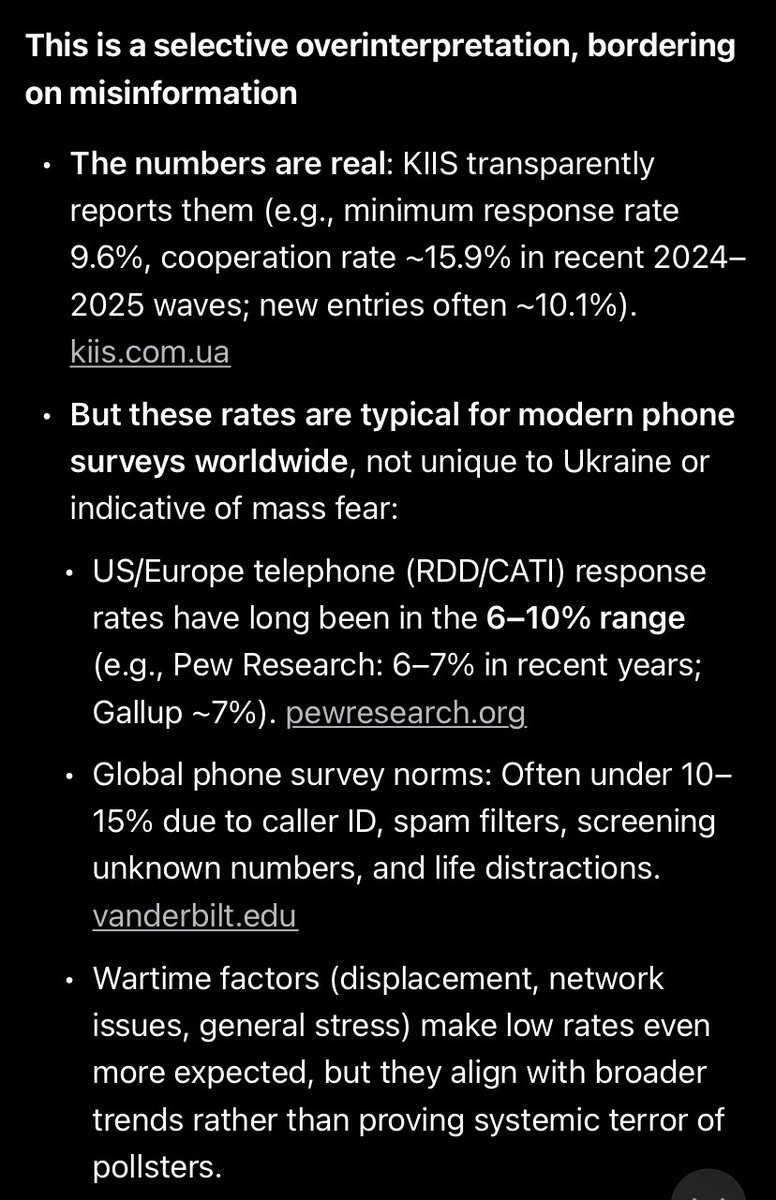
@IuliiaMendel Fyi Grok saying you’re being misleading here. Apparently low response rate is common worldwide
🕊 tweet media
English
6
1
10
1.3K
Iuliia Mendel
Iuliia Mendel@IuliiaMendel·
Don’t look away because it’s inconvenient. Ukrainians are not one united voice. We haven’t been for a long time, and it’s time the West accepted that reality. From everything I’ve seen and everyone I know, the much larger part of Ukrainian society — almost everyone I talk to — believes Ukraine must make compromises and end this war as quickly as possible. They want the killing to stop. They want people to stop fleeing the country. They want the missiles and drones to stop flying over their heads. They want borders opened, they want the street abductions for the front lines to end, and they at least want the military corruption to stop. That is the quiet, exhausted reality. But that’s not what you see in the news. In the news, you see a different story: a heroic, united, patriotic Ukraine led by Volodymyr Zelensky, ready to fight for “dignity” for years, with the goalposts constantly moving. A nation so proud it is apparently willing to die for this ever-changing idea of dignity. Yesterday, something important happened in Ukraine. It was a story that ordinary Ukrainians have been trying to get through to Western audiences — especially to those who think that simply calling for peace is somehow “Russian propaganda.” Here it is: only about 10% of Ukrainian citizens even participate in the public opinion polls. Why? Because when the opinion differs from the official line, people are afraid to be sent to the front, thrown in jail, they are afraid of criminal cases opened for truth. That’s why the polls always show sky-high support for Zelensky, unbreakable will to fight, and total rejection of any compromise. Those numbers aren’t reflecting the country — they’re reflecting who’s still allowed to speak. As one political analyst put it: the future of Ukraine will be decided by the silent majority, not by the loud, brave voices on television pushing the government’s nationalist propaganda. Zelensky is not the first convenient dictator the West has decided to prop up. But in the age of the internet, it’s getting harder and harder to hide the truth. More and more Ukrainians are going to tell you what’s really happening. Don’t look away because it’s inconvenient. Because at the end of the day, we will all have to answer — before God — for what we supported, what we ignored, and what we lied to ourselves about. The silent majority in Ukraine is tired of dying for other people’s scripts. Maybe it’s time the West listened to them.
English
226
401
1K
44.4K
F. Chr Wehrschuetz retweetledi
Conny Bischofberger
Conny Bischofberger@cbischofberger·
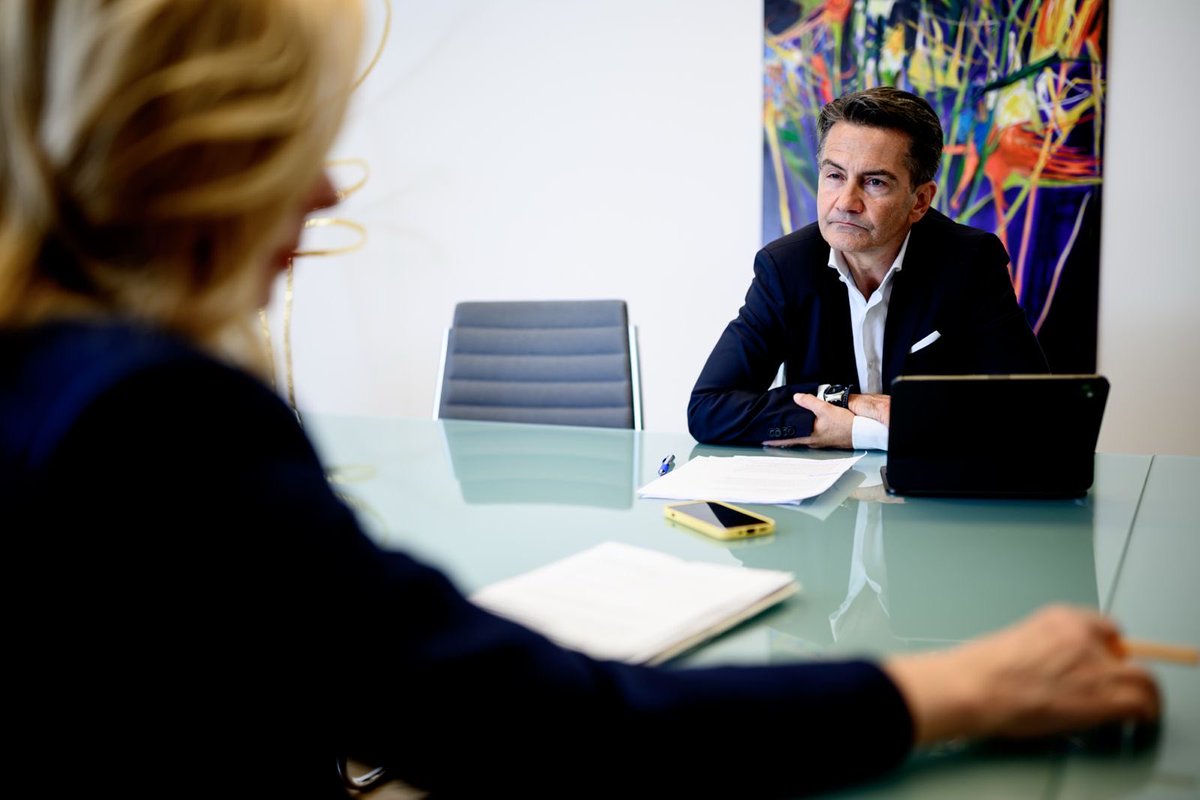
Wenn zwei streiten, sind Interviews mit einem Teil immer heikel. Das ist bei der Affäre um Ex-@ORF-General @RolandWeissmann nicht anders. Der Schlüssel sind immer die Fragen. Ihr lest unser Gespräch morgen in der #Krone und schon heute Abend auf @krone_at [Krone+] Foto: Imre Antal
Conny Bischofberger tweet media
Deutsch
8
6
21
2.6K
Iuliia Mendel
Iuliia Mendel@IuliiaMendel·
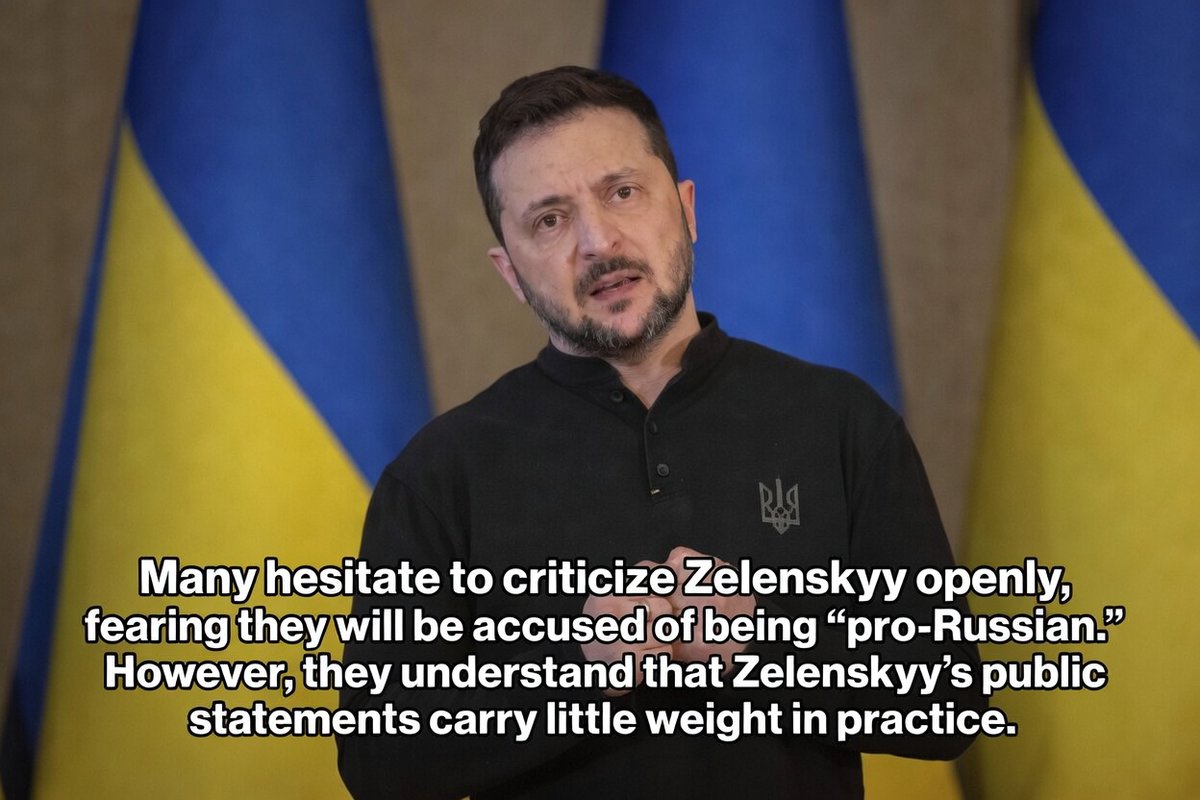
The core problem with Volodymyr Zelenskyy is that he has very little substantive leverage to bring to any negotiating table. His primary platform remains the media, where he releases an endless stream of statements, apparently still operating within the dramatic script of a role he was assigned in 2022. From my experience working closely with him, a vast number of politicians and diplomats — almost all of them — were left bewildered by his pattern of behavior. He would build trust, make solemn promises, demonstrate understanding, and then act in exactly the opposite way. They struggled to explain it. Many initially attributed it to a language barrier, misunderstandings, or shifting circumstances. In reality, the issue was simpler: he was performing a role. Once the performance ended, the commitments were forgotten — much like a stage actor leaving the set after a show with no further obligations. This approach has not gone unnoticed. During the full-scale invasion, many politicians have mastered a similar strategy. They offer public smiles, loud declarations of support, brotherly embraces, and friendly pats on Zelenskyy’s shoulder — all broadcast on camera — to signal that they are “pro-Ukrainian” and enjoy excellent relations with him. Behind closed doors, however, they pursue their own interests and priorities without hesitation. For example, no matter how vigorously French President Emmanuel Macron has publicly demonstrated solidarity with Ukraine alongside Zelenskyy, France became the largest buyer of Russian liquefied natural gas in Europe last year — not only for its own needs, but also serving as a key entry point for supplies reaching other partners, including Germany. There are numerous similar cases. I know that many leaders hesitate to criticize Zelenskyy openly, fearing they will be accused of being “pro-Russian.” At the same time, they privately understand that Zelenskyy's public statements often carry little weight in practice. They tend to be controversial, rarely translate into concrete action, and often misleading, as if it were a scenario for a cheap series. You can verify this yourself: review the constant flow of messages from his office and check what tangible results have followed (with one notable exception — areas where Zelenskyy has clear personal financial interests, where matters are pursued to the end with focused determination). Today, Zelenskyy has once again turned to the media to attack Donald Trump. He publicly highlighted what he called “evidence” of Moscow assisting Iran and accused Trump of showing undue trust in and affinity for Vladimir Putin. This is yet another simplistic script straight from his old television days. In truth, such statements cast doubt on the capabilities and judgment of American intelligence agencies and institutions. With all due respect, U.S. intelligence services possess far superior resources and sources of information than Volodymyr Zelenskyy. It is worth recalling that Zelenskyy himself continued to downplay the imminent Russian invasion until the very end — even after the CIA presented clear warnings. Beyond the policy implications, this behavior raises deeper psychological questions. Remarkably, Zelenskyy does not stop at criticizing Trump; in the same breath, he claims to enjoy “excellent relations” with him. If readers find any coherent logic or constructive value in this stream of rhetoric, then we should all be concerned. Because this pattern, if left unchecked, risks producing more leaders like Zelenskyy — more nations suffering as a result, more prolonged conflicts, and corruption spreading like a cancer across the international system. I worked with Zelenskyy for two years. Despite relentless attacks from his loyal propagandists, I was never dismissed. I chose to leave because I have a conscience and I love my country. While Zelenskyy continues to drain Ukraine’s resources and scatter accusations in every direction, he systematically avoids taking responsibility for his own decisions and their consequences.
Iuliia Mendel tweet media
English
141
198
572
58K
Roman Sheremeta 🇺🇸🇺🇦
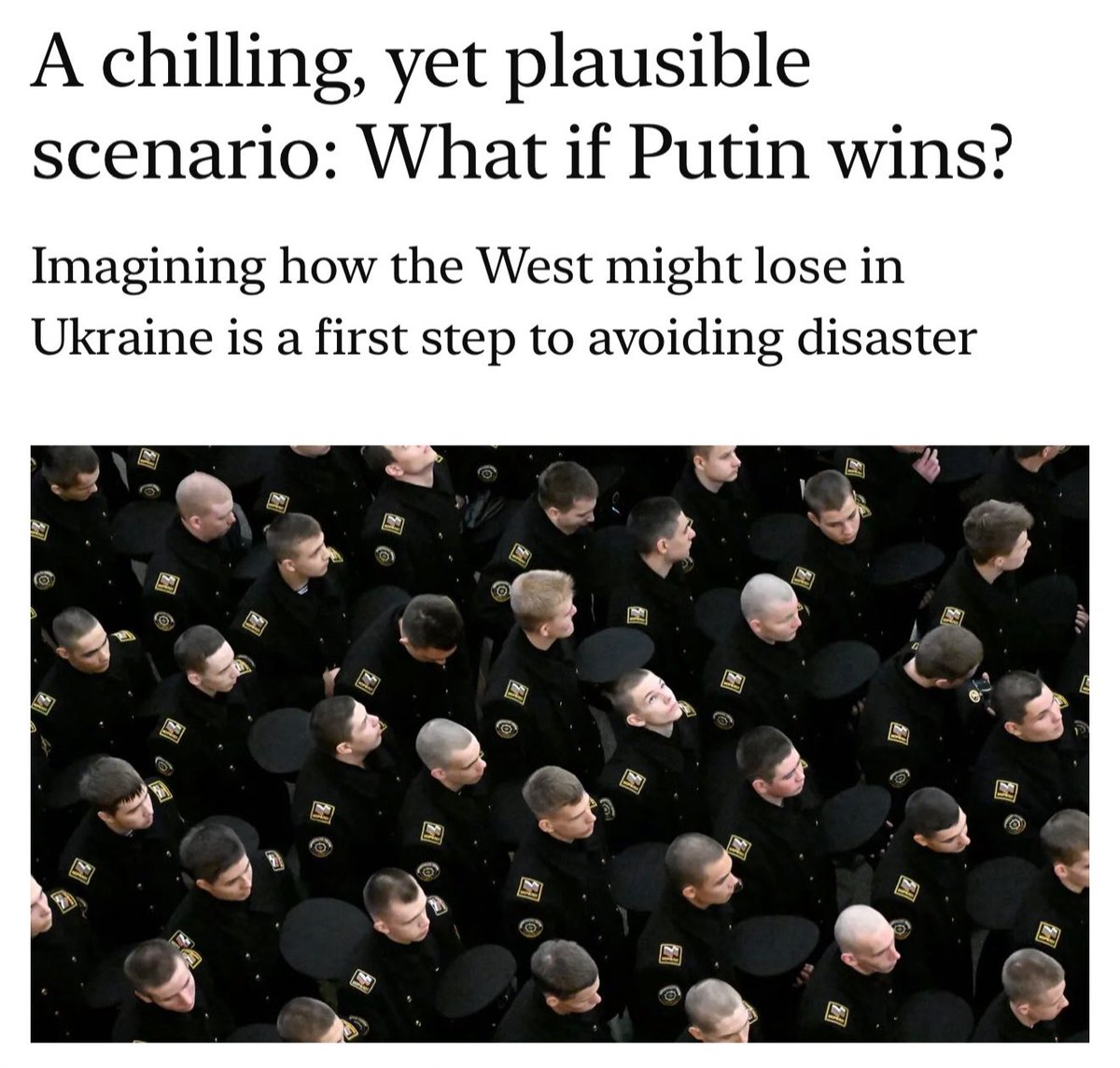
“What if Putin wins?” The Economist recently published a chilling but sober thought experiment: what the world might look like if Vladimir Putin wins the war against Ukraine. Not in a Hollywood sense of “victory.” But in the far more realistic sense: Ukraine is exhausted, Western support weakens, a coerced ceasefire freezes the front lines, and russia emerges believing that brute force works. The article’s central message is uncomfortable but necessary: strategic disasters rarely arrive suddenly. They creep in through fatigue, denial, and wishful thinking. What does “Putin winning” actually mean? It does not require tanks rolling into Kyiv. It means: •Ukraine is pressured into territorial concessions. •russia keeps what it seized by force. •War crimes go largely unpunished. •The aggressor is rewarded with normalization, trade, and time to rearm. In other words: the core post-1945 principle that borders cannot be changed by force quietly collapses. Why this wouldn’t stop with Ukraine The Economist’s scenario stresses that a russian “win” would not stabilize Europe - it would destabilize it. •NATO’s credibility erodes. Deterrence depends not on words, but on whether commitments are honored when it’s costly. •Eastern Europe becomes a pressure zone. Moldova, the Baltics, and even Poland would live under permanent coercion. •Authoritarians everywhere learn the lesson. If persistence outlasts democracy’s attention span, aggression pays. The most dangerous illusion Perhaps the article’s most important insight is this: many in the West still treat Ukraine as a problem to be managed, rather than a front line of the global order. Sanctions are calibrated to avoid discomfort. Aid is drip-fed to avoid “escalation.” Victory is discussed as unrealistic - but defeat is rarely named out loud. Yet history shows that wars do not end because democracies get tired of them. They end because one side can no longer continue. The article is not arguing that Putin will win. It is arguing that he can, if democracies substitute caution for strategy and hope for resolve. Thinking through this scenario is not defeatism. It is exactly how serious states prevent catastrophe: by confronting consequences before they arrive. Because once the lesson is learned - that violence works, that treaties are optional, that democracies fold - it will not be confined to Ukraine. And unlearning that lesson will be far more expensive.
Roman Sheremeta 🇺🇸🇺🇦 tweet media
English
79
438
1.1K
43.5K
F. Chr Wehrschuetz retweetledi
Trita Parsi
Trita Parsi@tparsi·
WOW!!! Never thought we would hear this level of honesty from a Western leader, and certainly not Canada, given the direction of Canada in the past 25 years. Canada's shift towards multialignment is quite clear - and this level of honesty from Carney on Western "fiction" about the old order will be warmly welcomed in much of the Global South: "We knew that the story about the rules-based order was partially false... We knew that international law applied with varying rigour depending on the identity of the accused and the victim. This fiction was useful [because of the goods provided by American hegemony]... So we placed the sign in the window. We participated in the rituals. And we largely avoided calling out the gaps between rhetoric and reality. This bargain no longer works. Let me be direct. We are in the midst of a rupture, not a transition... You cannot live within the lie of mutual benefit through integration when integration becomes the source of your subordination."
English
1.7K
12.2K
50.1K
6.8M
F. Chr Wehrschuetz retweetledi
Klaudia Tanner
Klaudia Tanner@tannerklaudia·
Die Wehrpflicht betrifft nicht nur das Bundesheer alleine, sie hat Auswirkungen auf die gesamte Gesellschaft, die Wirtschaft und das Budget. Gerade deshalb ist mir ein breiter Konsens in dieser Frage besonders wichtig. Kommende Woche legt die Kommission ihren Bericht vor. Er wird Grundlage und Startschuss für die politischen Beratungen der folgenden Wochen sein. Klar ist: Die Wehrfähigkeit unseres Landes muss erhöht werden, damit das Bundesheer voll verteidigungsfähig wird. Frieden, Freiheit, unsere Neutralität und die Bevölkerung müssen im Bedarfsfall geschützt werden können. #missionvorwärts (KT) diepresse.com/20490026/wehrp…
Deutsch
33
10
46
5.6K
F. Chr Wehrschuetz retweetledi
Iuliia Mendel
Iuliia Mendel@IuliiaMendel·
There are extremely important and overlooked facts about the Russian economy. Despite the fact that Russia is "on its last leg" and "on the verge of collapse", it spent 4 years of war without any borrowing and its welfare fund still has over $100 billion... The Ukrainian economy has passed the stage of unofficial default and is fighting at the expense of Western loans. These simple facts bring to its knees all the blatant metaphors about the imminent collapse of Russia, revealing the simple truth: these are just metaphors to save the political image. Meanwhile, the ending of war, whatever politically difficult it is, would save my home-country, Ukraine.
Iuliia Mendel tweet media
English
61
34
131
19.2K
F. Chr Wehrschuetz retweetledi
Franz-Stefan Gady
Franz-Stefan Gady@HoansSolo·
Two hard realities persist: The US won't risk war with Russia over Ukraine, and Europeans won't act without the US. This makes any security guarantee fundamentally less credible, regardless of Paris talk details.
English
18
104
487
62.2K
F. Chr Wehrschuetz
F. Chr Wehrschuetz@Wehrschu·
@HoansSolo Das war kein Bürgerkrieg - das war Caesar und Pompeius in Rom! Das war ein Sezessionskrieg, wie etwa die Abspaltung von Slowenien und Kroatien. Diese Genauigkeit ist nicht nur eine Frage der Semantik, sondern des Wesens des Konflikts!
Deutsch
1
0
1
604
Franz-Stefan Gady
Franz-Stefan Gady@HoansSolo·
In meiner Sonntagskolumne erinnere ich an eine oft vergessene sprachliche Feinheit: Vor dem amerikanischen Bürgerkrieg von 1861 bis 1865 sprach man im Englischen von den USA im Plural – „The United States are …“. Erst nach dem Ende des Kriegs setzte sich der Singular durch: „The United States is …“. Diese grammatikalische Verschiebung spiegelte einen politischen Wandel wider, vom losen Staatenbund zur unteilbaren Nation. Wir täten gut daran, wieder im Plural zu denken, wenn es um unsere Kooperation und unseren Konkurrenzkampf mit den USA geht. kleinezeitung.at/politik/aussen…
Deutsch
3
11
54
11.1K
F. Chr Wehrschuetz retweetledi
Iuliia Mendel
Iuliia Mendel@IuliiaMendel·
Zelenskyy wants to organize referendum on the issue of Donbas concession. When I worked for him, he repeatedly insisted that the referendum result can be controlled as it depends on how the question is being asked.
English
56
41
194
33.3K
F. Chr Wehrschuetz retweetledi
Iuliia Mendel
Iuliia Mendel@IuliiaMendel·
Every subsequent deal for Ukraine will only be worse — because we are losing. We are losing people, territory, and the economy. The EU (which by the way has paid Russia more than €311 billion for energy and goods since February 2022) has no real strategy, no way to stop fueling Russian budget or support Ukraine enough to win, no direct dialogue with Moscow, and no meaningful leverage over either the Kremlin or Washington. Arguments that “Russia has gained so little land” sound almost childish when you consider the human cost. We have lost more people in three years than some European nations have as the whole population. My country is bleeding out. Many who reflexively oppose every peace proposal believe they are defending Ukraine. With all respect, that is the clearest proof they have no idea what is actually happening on the front lines and inside the country right now. War is not a Hollywood movie. I will never abandon the values that God and democracy both place at the very foundation of human existence: human life is the highest good, and people — living, breathing people — are the ones who must be saved.
English
300
656
2.4K
595K
Franz-Stefan Gady
Franz-Stefan Gady@HoansSolo·
Ich durfte mit Österreichs Verteidigungsministerin Klaudia Tanner über den Zustand des Bundesheeres, die Verlängerung des Wehrdiensts, die aktuelle Bedrohungslage und die Folgen der militärischen Neutralität diskutieren. Neutralität macht uns militärisch verletzlicher gegenüber Russland und anderen potenziellen Aggressoren. Auf die Frage, wo das Bundesheer 2035 stehen soll, lautete meine Antwort: "Österreichische Streitkräfte, die befähigt sind, die wahrscheinlichsten Bedrohungsszenarien langfristig abzuschrecken und im Ernstfall so lange durchzuhalten, bis Partner uns zu Hilfe eilen. Ohne Verbündete kann ein Kleinstaat im 21. Jahrhundert im militärischen Ernstfall nicht überleben."
Franz-Stefan Gady tweet media
Deutsch
8
6
43
5.7K
F. Chr Wehrschuetz retweetledi
Marinika Tepić
Marinika Tepić@MarinikaTepic·
Ovako je počelo u ćacilendu u 10:19 Neko je pucao iz vatrenog oružja i onda kenuo i požar iznutra
292
467
1.7K
165.2K
F. Chr Wehrschuetz retweetledi
Dragan Djilas
Dragan Djilas@DraganDjilas·
Ćacilend
315
198
1.4K
128.1K
Michael Bauer
Michael Bauer@Bundesheerbauer·
APA: Italien wäre nicht vorbereitet, falls es derzeit von Russland oder von einem anderen Land angegriffen werden sollte: Davor warnt Verteidigungsminister Guido Crosetto und fordert mehr Investitionen in die Verteidigung."
Deutsch
12
2
44
3.3K