

Wilma Botes
435 posts
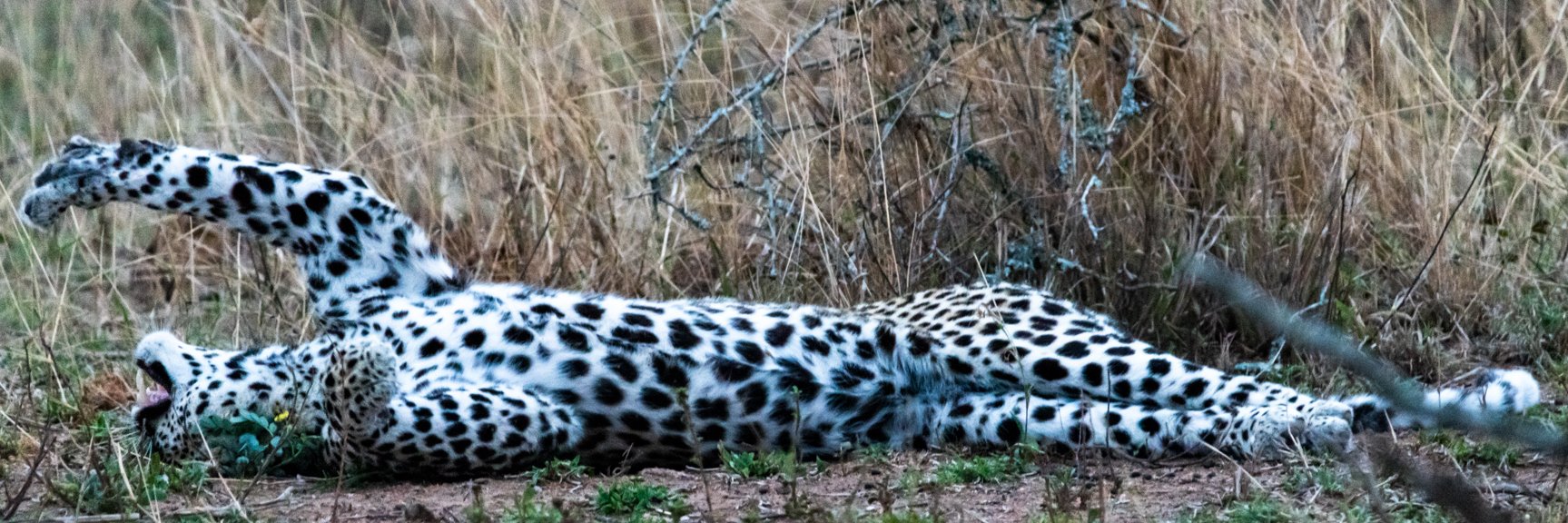

Who had one of these shin killers for school?

English

@eNCA What else should be done because the soldiers were deployed but the shootings are continuing unabated 🤔
English


Wilma Botes retweetledi
Mzanele Manyi (@MzwaneleManyi) and I had an hour-long, very lively debate yesterday about his push to remove section 235 (the self-determination clause) from the South African Constitution.
- I accused him of not understanding international law.
- He called me a racist for thinking self-determination is a good thing.
- I asked him why he's so obsessed with attacking Afrikaners.
- He asked me why I'm so obsessed with being / remaining an Afrikaner.
- I pointed out that giving more power to the state (evidently his primary objective) makes things worse.
- He responded to my concerns about the failure of the state by discussing coal capacity and wind power, but denied that he was changing the topic, because those are policy issues.
- I confronted him about his obsession with race laws.
- He passionately denied that there are race laws in South Africa, and then immediately defended the continued existence of race laws in South Africa.
- I pointed out that these laws (which he defends as passionately as he denies) are objectively destructive.
- He said that those laws are good, because the intentions are good.
- I said that you cannot judge a law by its intentions, but by the outcome.
- He accused me of wanting to bring apartheid back because I oppose race laws (😂)
- I pointed out that he was unknowingly quoting Hendrik Verwoerd.
- He said that if that's true, then perhaps Verwoerd was right.
- I said that his attack on section 235 will create a Streisand effect, strengthening the case for self-determination, as opposed to weakening it.
- He accused me of wanting to promote enclaves.
- He said that I'm filled with hatred.
- He encouraged me to lie awake at night and contemplate my racism.
- I accused him of speaking like a man who lost an argument.
My honest conclusions:
1. Mr Manyi has very strong opinions about why self-determination particularly for Afrikaners is bad, but he evidently doesn't know what it means.
2. He didn't show any comprehension of the fact that there are different forms of self-determination - internal vs external, territorial vs functional etc. He creates the impression that he thinks self-determination is simply a synonym for secession.
3. I got the impression that he doesn't understand that there is a difference between "states" (Afrikaans: state) and "peoples" (Afrikaans: volke). When international law recognises self-determination for peoples, he reads that as self-determination for states.
4. He doesn't understand the difference between self-determination and cultural participation. He argues that having the right to participate in your culture renders the right to self-determination redundant.
5. He doesn't understand the difference between individual and collective rights. I explained to him that the individual right to participate in your culture becomes moot when your cultural institutions are destroyed, and that individual rights alone do not cover the rights of communities for the continued existence of their institutions. That's why self-determination is important. From his response, I got the impression that he had no idea what I was talking about.
6. I asked if he thinks that his party leader, Jacob Zuma was wrong to agree that Section 235 had to be included in the South African Constitution, in response to which he was particularly vague.
I'm sure that he would have dramatically different conclusions from the discussion and I'd be keen to read it. But when all is said and done, we'll leave it to the viewers to decide for themselves.
We will publish the discussion on my YouTube channel on Thursday.
English
Wilma Botes retweetledi

#SecRubioWhiteHousePressCon
“Only thing worse than a Communist, is an incompetent one”. Well here in South Africa we have both. It’s time for real change. @SecRubio
English
Wilma Botes retweetledi





Wilma Botes retweetledi

Wilma Botes retweetledi

I have rented a Chinese car this week and it has completely put me off Chinese cars. Its a disposable MP3 player masquerading as a car.
I'll stick to my 15 year old Toyota.
English
Wilma Botes retweetledi
A whole generation of South Africans would be shocked to read this, especially when they look at where the country is today.
Before 1994, South Africa built capabilities that few countries in the world could claim.
It developed nuclear weapons, a rocket programme, large-scale synthetic fuel production, a globally respected defence industry, and medical breakthroughs that made world history. At the southern tip of Africa, one country achieved all of this before the Cold War had even ended.
Today, Africa is often spoken about as if it is still waiting to industrialise, still dependent, still trying to build what others already mastered long ago. That is what makes this history so striking.
While South Africa was enriching uranium at Pelindaba, testing rockets at Overberg, producing fuel from coal at Secunda, and carrying out the world’s first human heart transplant at Groote Schuur, much of the rest of Africa was being pulled in a very different direction. Instead of industrial self-reliance, many newly independent states were sold ideology. Instead of building durable technical capacity, they were pushed toward socialist models that too often ended in weak institutions, dependency, and collapse. The pattern repeated itself across the continent.
South Africa, by contrast, built real strategic capability under sanctions and international pressure. It developed its own uranium enrichment process, built six nuclear weapons, and then voluntarily dismantled them before the democratic transition, opening its programme to international inspection. No other nuclear state has done that in the same way.
It also built a serious rocket programme. Vehicles in the RSA series were designed and tested, and the country came close to having its own orbital launch capability. That programme was not simply paused. It was dismantled.
Sasol achieved something equally remarkable: turning coal into fuel on a huge scale. When South Africa could not secure enough oil, it used chemistry and engineering to produce its own supply. That was not theory. It was functioning industrial independence.
The defence sector was another pillar of that capability. South Africa designed and produced advanced artillery, armoured vehicles, aircraft projects, and attack helicopters. Some of these systems went on to influence military designs far beyond its borders.
Then there was medicine. In 1967, Christiaan Barnard and his team performed the world’s first successful human heart transplant in Cape Town. That was not an isolated achievement. It reflected a wider culture of scientific and medical excellence.
So the uncomfortable question is this: if all of this is documented, why is so little of it widely remembered?
The answer may be that it does not fit neatly into the version of history most people are taught. Pre-1994 South Africa is rightly remembered for apartheid and injustice, but that is not the whole story. It was also the most technologically advanced state Africa had produced, and acknowledging that forces people to confront how much capability existed, and how much has since been lost.
South Africa did not inherit these achievements. It built them under pressure, under sanctions, and largely on its own. That is not nostalgia. It is history. And the fact that so many people barely know it happened says a great deal about how history is told.
English
Wilma Botes retweetledi

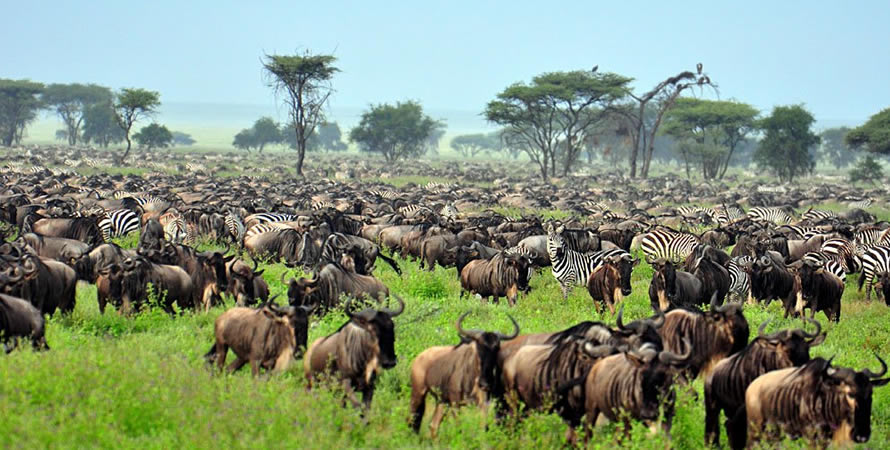
1890: rinderpest arrives in East Africa. The Serengeti wildebeest collapse from over a million to 200,000.
Ecologists expect the grassland to flourish. Fewer mouths, more grass. Obvious.
The grassland goes backwards.
1960s: vaccination clears rinderpest from cattle. The wild herds recover. Ecologists brace for overgrazing.
The wildebeest rebuild to 1.5 million. Largest herbivore population on earth.
The grassland gets greener.
More soil carbon. Lower fire frequency. More tree cover than in 1900. The landscape gets more complex, not less.
The papers have been sitting in prestigious journals for decades.
The campaigners continue to argue that grazers destroy ecosystems.
The largest natural experiment on earth says the opposite and it cannot be cited, because it does not say the right thing.
It just sits there. Getting greener.
English
Wilma Botes retweetledi
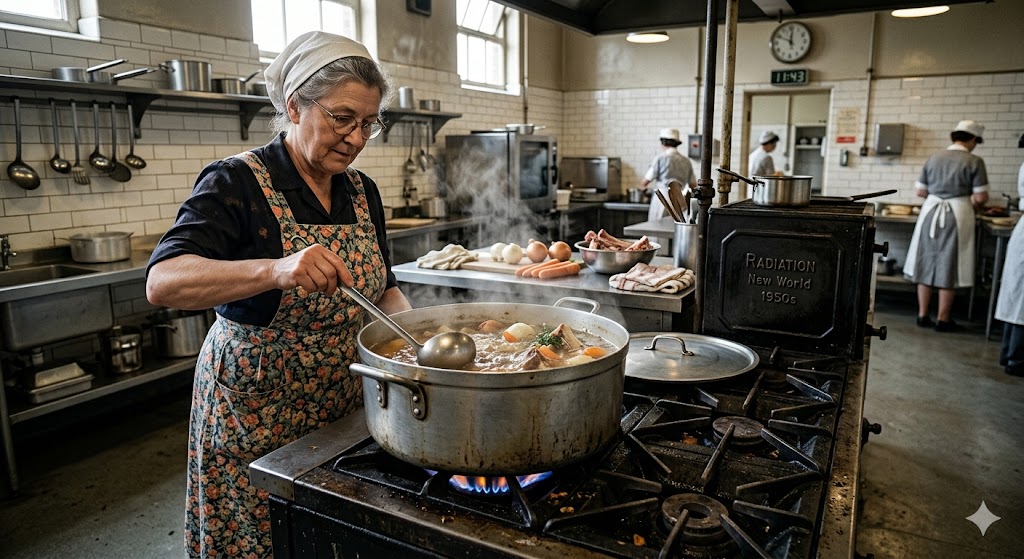
Every hospital in Britain had a stockpot on the stove until approximately the 1960s. Every workhouse before that. Every military mess. Every school kitchen. Every farmhouse. Every household that could afford bones, which was every household, because bones were the cheapest thing the butcher sold.
The stockpot ran continuously. Beef bones, pork bones, chicken carcasses, lamb shanks. The bones went in with water and were simmered for 12, 18, 24 hours. The broth that came out was the foundation of every soup, every stew, every gravy, every sauce.
Bone broth contains collagen, which breaks down into gelatin during cooking. Gelatin provides glycine and proline, essential for joint health, gut lining integrity, and connective tissue repair. It contains calcium, magnesium, phosphorus, and potassium leached from the bones. It contains glucosamine and chondroitin, now sold as joint supplements at £15 per bottle. It contains bone marrow, rich in fat-soluble vitamins A, D, and K2.
Your grandmother did not know the names of these compounds. She knew the broth kept the family well. She knew a bowl of broth settled the stomach when someone was ill. She knew the broth made the gravy and the gravy made the dinner and the dinner kept the children growing.
The broth was replaced by the stock cube.
The stock cube contains salt, maltodextrin, palm oil, yeast extract, flavouring, sugar, and colouring. It does not contain collagen, glycine, glucosamine, or any of the compounds the 24-hour broth provided. The stock cube is flavoured salt water.
The generation that grew up on the broth has joints. The generation that grew up on the stock cube has a glucosamine subscription and an orthopaedic appointment.
The supplement industry now sells, individually and at substantial markup, every compound the bone broth contained for free. Collagen powder: £25. Glucosamine tablets: £15. Bone broth itself, repackaged as a wellness product: £8 per serving from a company in Shoreditch with a minimalist label.
They have not discovered anything new. They have rediscovered what their grandmothers threw away.
The stockpot is still available. The bones are still at the butcher's. Water. Bones. Heat. Time.
The broth has been the broth for approximately 10,000 years.
The stock cube has been the stock cube for approximately 70.
The broth's track record is better.
English
@RomanCabanac @DailyInvestorSA Are there any restrictions i.e. can all 3 be overseas no questions asked?
English
@DailyInvestorSA You should state that the Ministerial Handbook allows a Minister's spouse to accompany them on three trips a year.
English

The state covered R502,000 worth of flight tickets for Enoch Godongwana’s spouse to accompany him on three international trips in 2025 and 2026.
dailyinvestor.com/finance/129908…
English
@Madman_Musa @JacoKleynhans Honestly i think only the Presidents interests and confidence is matters of diplomacy matter …
English

Is the South African ambassador to the US, meant to represent Afrikaner interests only? Is that the main KPI of the position? What about the interests of Indians, coloureds, blacks. Are their interests represented? What about their confidence. Or does that not matter when it comes to USA?
English

The appointment of Roelf Meyer as South Africa's ambassador to the United States is disappointing. At 78, he is a retired politician whose career belongs to a previous political era. Far from instilling confidence among Afrikaners, this choice risks deepening existing concerns within our community. It does little to repair strained relations with Washington and instead appears to be yet another misstep in the South African government's handling of its relationship with the United States.
English
Wilma Botes retweetledi

Wilma Botes retweetledi

A Lesson in History...
The King wanted to go fishing, and he asked the royal weather forecaster for the forecast for the next few hours. The palace meteorologist assured him that there was no chance of rain.
So the King and the Queen went fishing.
On the way, they met a man with a fishing pole riding on a donkey, and the King asked the man if the fish were biting.
The fisherman said, "Your Majesty, you should return to the palace! In just a short time, I expect a huge rainstorm."
The King replied, "I hold the palace meteorologist in high regard. He is an educated and experienced professional. Besides, I pay him very high wages. He gave me a very different forecast. I trust him."
So the King continued on his way. However, in a short time, torrential rain fell from the sky. The King and Queen were totally soaked.
Furious, the King returned to the palace and gave the order to behead the meteorologist. Then he summoned the fisherman and offered him the prestigious position of royal forecaster.
The fisherman said, "Your Majesty, I do not know anything about forecasting. I obtain my information from my donkey. If I see my donkey's ears drooping, it means with certainty that it will rain."
So the King hired the donkey.
And thus began the practice of hiring dumb asses to work in influential positions of government...
English
Wilma Botes retweetledi
A chemistry professor posted a bonus question to an exam...
Is Hell exothermic (gives off heat) or endothermic (absorbs heat)?
Most of the students wrote proofs of their beliefs using Boyle's Law (gas cools when it expands and heats when it is compressed) or some variant.
One student, however, wrote the following:
First, we need to know how the mass of Hell is changing in time. So we need to know the rate at which souls are moving into Hell and the rate at which they are leaving. I think that we can safely assume that once a soul gets to Hell, it will not leave. Therefore, no souls are leaving.
As for how many souls are entering Hell, let's look at the different religions that exist in the world today. Most of these religions state that if you are not a member of their religion, you will go to Hell. Since there is more than one of these religions and since people do not belong to more than one religion, we can project that all souls go to Hell.
With birth and death rates as they are, we can expect the number of souls in Hell to increase exponentially. Now, we look at the rate of change of the volume in Hell because Boyle's Law states that in order for the temperature and pressure in Hell to stay the same, the volume of Hell has to expand proportionately as souls are added.
This gives two possibilities:
1. If Hell is expanding at a slower rate than the rate at which souls enter Hell, then the temperature and pressure in Hell will increase until all Hell breaks loose.
2. If Hell is expanding at a rate faster than the increase of souls in Hell, then the temperature and pressure will drop until Hell freezes over.
So which is it?
If we accept the postulate given to me by Teresa during my Freshman year that, "it will be a cold day in Hell before I go out with you", and take into account the fact that I went out with her last night, then number 2 must be true, and thus I am sure that Hell is exothermic and has already frozen over.
The corollary of this theory is that since Hell has frozen over, it follows that it is not accepting any more souls and is therefore extinct, leaving only Heaven, thereby proving the existence of a divine being, which explains why last night Teresa kept shouting "Oh, my God!"
THIS STUDENT RECEIVED THE ONLY "A".
English


@pookiepolls They are not mad, but they know there are crazy people out there!
English
ARE THESE PEOPLE MAD, OR AM I POOR?
Ladurée, the famous French pastry and candy shop, has opened its first South African store at the V&A Waterfront in Cape Town.
Known as one of the world's most prestigious macaron houses, the store currently offers a premium box of 200 macarons for R27,999.
Ladurée was founded in 1862 by Louis Ernest Ladurée in the heart of Paris and has spent over a century building its global reputation for luxury pâtisserie.
WOULD YOU PAY THIS IF YOU COULD AFFORD IT?

English
Wilma Botes retweetledi

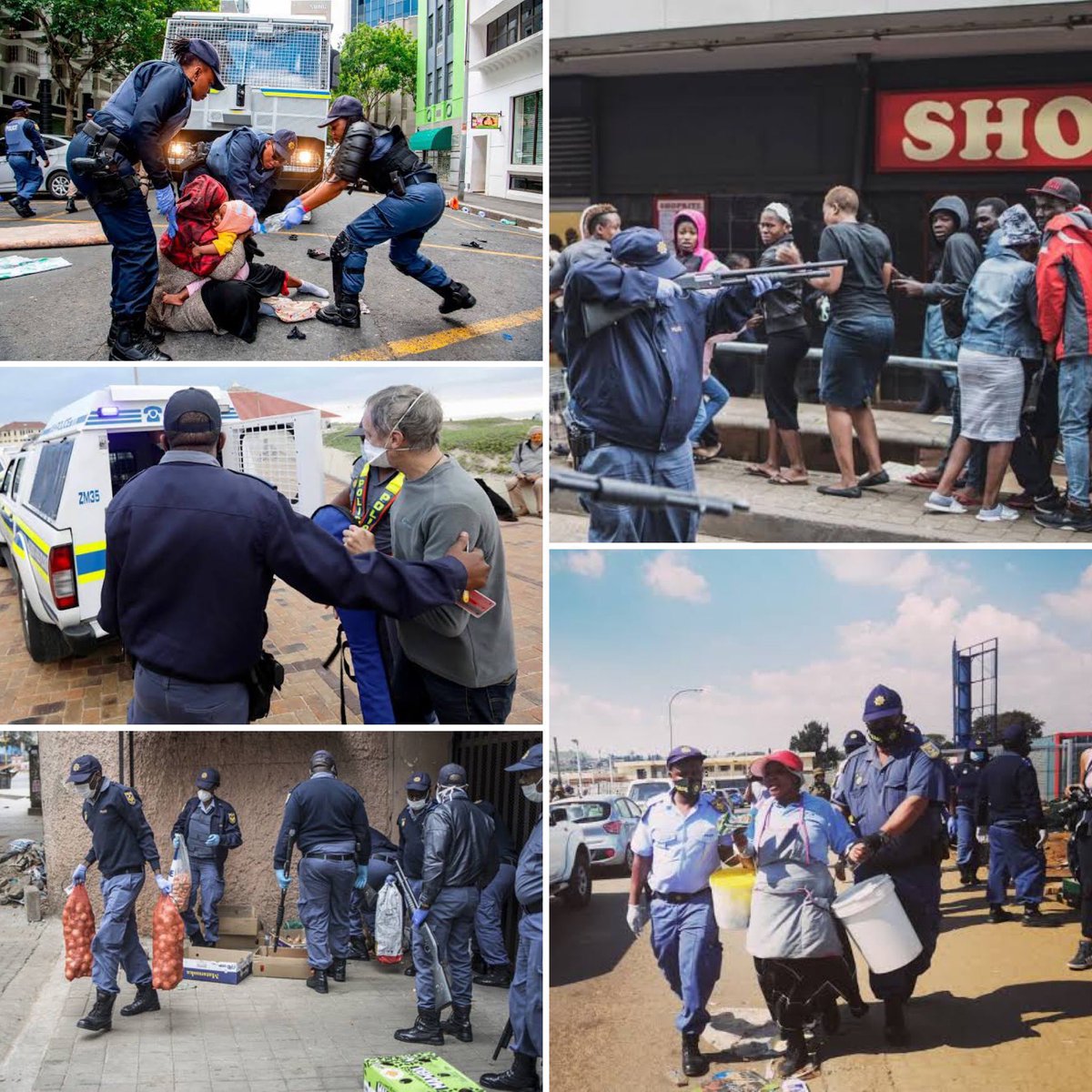
6 years ago, the biggest crime syndicate in South Africa locked us in our homes.
What was supposed to be 21 days became more than 2 years.
They sent police and soldiers into our streets with rifles and shotguns. They destroyed livelihoods, tore families apart and left children to starve.
And while the country suffered, they looted. Funds meant for the sick and hungry were stolen by wealthy politicians who claimed to be “saving lives”.
Ordinary South Africans were treated like criminals. Over 400,000 people were arrested. Citizens were beaten, publicly humiliated, and even killed. The elderly and disabled were blasted with water cannons while trying to access social grants.
And if you refused a medical procedure with no long-term data, you were punished. You lost your job. You were ostracised. You were treated as less than human.
One of the most severe abuses of state power in our recent history. A violation of fundamental human rights. No one charged. No one jailed. No one even apologised.

English