Wire Network

4.3K posts

Wire Network banner
Wire Network

Wire Network

@WireNetwork

Cross-chain infrastructure for humans and AI agents. Build once, deploy across all supported chains. No bridges. Mainnet summer 2026.

Katılım Kasım 2017
700 Takip Edilen13.1K Takipçiler
Sabitlenmiş Tweet
Wire Network
Wire Network@WireNetwork·
Wire Network's Universal Transaction Layer coordinates cross-chain ownership. Assets stay on their native chain; Wire settles ownership under dual-consensus. Contracts compile C++ to WASM and deploy once across all supported chains. Built for humans and AI agents. Whitepaper ⬇️
Wire Network tweet media
English
1
5
20
154.3K
Wire Network
Wire Network@WireNetwork·
If you're building something because it sounds cool and you'll figure out the problem later, that's a hobby. Tim Collins ( @RetroWallSt ) on the line between a startup and a side project. Join us at 3pm ET on Thursday for Wire Incubator Week 11 and see the Wire testnet live!
English
1
0
4
91
Wire Network
Wire Network@WireNetwork·
Risk can't be priced from a single local view when collateral and debt sit on different chains. The engine is reading two snapshots from two different moments. Shared settlement closes that by giving the engine one state to read.
Sumer.Money🐫@SumerMoney

Unified liquidity only works if risk is unified too. If collateral sits on one chain and debt on another, the protocol cannot price safety from a single local view. Cross-chain lending needs a risk engine that sees collateral, debt, and liquidity at the same time.

English
1
0
2
94
Wire Network
Wire Network@WireNetwork·
The pattern Ross DeCamp ( @RDfive09 - Prota Ventures ) keeps seeing in the home run pitches: founder finds a black box nobody understands, builds AI tooling that breaks the opacity wide open, walks in at 1/10th the cost.
English
1
1
7
239
Wire Network
Wire Network@WireNetwork·
The recalibration is overdue. 'Safe' in DeFi has always meant 'safe assuming every bridge in the path holds.' Aave inherited risk it never priced. The architecture we're working on removes the bridges from the path: contracts don't take on each other's bridge risk.
BitKE@BitcoinKE

“Aave was the gold standard. If Aave can carry $200 million-plus in bad debt from a bridge exploit on a different protocol, the market has to recalibrate what ‘safe' actually means in DeFi lending.” bitcoinke.io/2026/04/aave-t…

English
1
2
6
238
Wire Network
Wire Network@WireNetwork·
LIVE NOW - Week 10 of the Wire Incubator with @retrowallst (Skeleton Crew Labs), @jeffreylabs (Red Beard Ventures), and @RDfive09 (Prota Ventures) sharing wisdom on raising money in this post-AI world in which we now exist. Live on Discord and here on X.
Wire Network tweet media
English
0
3
9
1.3K
Wire Network
Wire Network@WireNetwork·
Join us this in one hour for Week 10 of the Wire Incubator with @retrowallst (Skeleton Crew Labs), @jeffreylabs (Red Beard Ventures), and @RDfive09 (Prota Ventures) sharing wisdom on raising money in this post-AI world in which we now exist. Live on Discord and here on X.
Wire Network tweet media
English
0
3
8
473
Wire Network
Wire Network@WireNetwork·
@0xKevlar @0xKevlar What do you have in mind? One thing that's unique about Wire is that we've fractionalized the chain so you can own and monetize a portion of the network compute rather than just participating in token ownership.
English
1
0
1
19
Wire Network
Wire Network@WireNetwork·
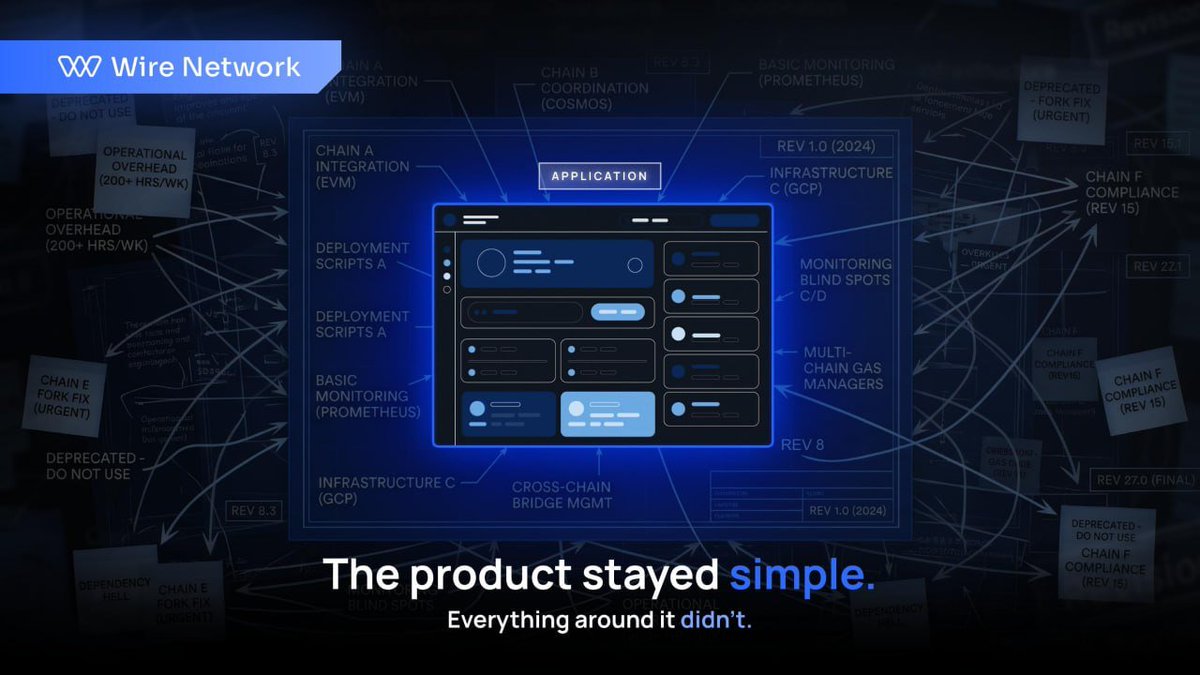
Wire is additive, not a rip-and-replace. The pitch is "we plug into what you've already built." Cross-chain reach, settlement, universal liquidity, agent payments: Wire is the cross-chain layer your architecture needs, without bridges and without forcing a rebuild.
Wire Network tweet media
English
4
3
10
199
Wire Network
Wire Network@WireNetwork·
@rick_grimes You keep your existing contracts on Solana or Ethereum. The integration sits at the settlement boundary. When your dApp needs cross-chain functionality, it calls into Wire's Universal Transaction Layer rather than a bridge. The native asset stays locked in a WNS bucket contract on its home chain, and ownership is tracked by Wire's settlement layer. This is one-time setup. You import the Wire SDK, wire up UPAP for identity so users keep their existing wallets, and route cross-chain calls through Wire. Done once at integration, not revisited per transaction or per chain you want to reach.
English
0
0
0
13
Rick Grimes
Rick Grimes@rick_grimes·
@WireNetwork If I'm a dev with a working stack on Solana or Ethereum today, what does "plug in" actually look like? Where does the integration work go?
English
1
0
0
21
Wire Network
Wire Network@WireNetwork·
The "it just works" feeling shows up when settlement is shared instead of passed via messages. No bridge contract, no wrapped asset, no validator set you trust on the side. Contract calls just resolve. We're working to take cross-chain there at the architectural layer.
🔅LAMIS@lami_thefirst

That “it just works” feeling is rare in crypto Especially when it comes to moving assets across chains. Native Bitcoin swaps without the usual friction? No bridges, no wrappers, no second guessing, just clean execution. When cross-chain starts feeling effortless, that’s when you know the infrastructure is finally catching up. If @Pact_Swap delivers that consistently, it’s a big UX win

English
0
1
2
196
Wire Network
Wire Network@WireNetwork·
We have a great group talking about fundraising and pitching in the Web3 startup ecosystem. Join us at 3pm ET tomorrow (Thursday) for Week 10 of the Wire Incubator on X (@wirenetwork) and Discord. Replay will be available afterward on X if you miss the live version.
Wire Network tweet media
English
0
1
4
111
Wire Network
Wire Network@WireNetwork·
The fix to liquidity fragmentation is a shared settlement layer where ownership across chains trades in one place and users tap liquidity from anywhere. No bridge required.
SK XCHANGE@Koyum_1

@BossMon_02 @MyNeighborAlice Fragmented liquidity has been the biggest hurdle for DeFi growth.

English
1
0
3
208
Wire Network
Wire Network@WireNetwork·
The deeper issue under the finger-pointing: when one party runs the only verifier path, 'decentralized messaging' is a UX label, not a security property. We're building toward dual-consensus where no single operator's compromise translates into user loss. That's the bar.
Zach Rynes | CLG@ChainLinkGod

Rather than provide additional info on how and why LayerZero Labs' centralized infrastructure was infiltrated by North Korean (DPRK) hackers, which resulted in the $292M rsETH bridge exploit Bryan decides throwing the user under the bus the first time wasn't good enough, they just had to do it again for good measure! All for the crime of trusting the LayerZero Labs team and their infra, using a 1/1 config that ~50% of LZ OApps use (per @Dune), that the LZ Labs DVN supported (until it was blocked), and that the LZ Labs team monetized (DVN fees) Why take responsibility, and therefore legal liability, over the exploit when finger pointing is just as good 👆👉👇👈 And nevermind the fact that there are multiple chains in the LZ docs where the LZ Labs DVN is the only one listed, and therefore the only possible config ! Why did the LZ Labs DVN support a 1/1 config up until now if it was such an obviously dangerous thing? Why isn't this config blocked at the protocol level if its always been so obviously bad? People have been pointing out the massive centralization problem in the LayerZero ecosystem for YEARS now, including the 2/2 multisig Stargate bridge run by the LZ Labs team (does anyone genuinely think a 2/2 multisig bridge setup is really all that much better than 1/1?) But only after the $292M bridge hack is such centralization now such an obvious risk, give me a break Why should anyone integrate LayerZero, knowing they're going to be thrown under the bus as disposable meat the moment the LZ Labs fucks up and gets hacked by North Korea?

English
0
1
2
208
Wire Network
Wire Network@WireNetwork·
Join us this Thurs at 3pm ET for Week 10 of the Wire Incubator with @retrowallst (Skeleton Crew Labs), @jeffreylabs (Red Beard Ventures), and @RDfive09 (Prota Ventures) sharing wisdom on raising money in this post-AI world in which we now exist. Live on Discord and here on X.
Wire Network tweet media
English
1
2
7
294
Wire Network
Wire Network@WireNetwork·
In the Wire Incubator Week 9 session, @madebuilt talked about the technology transparency that's needed to drive Web2 adoption of Web3. Check it out below and join us this Thursday at 3pm ET on Discord and X for our next informative web3 startup session.
English
0
1
6
184
Wire Network
Wire Network@WireNetwork·
@Bakioption @CerbAgent The 'interact across chains' line does a lot of work here. Today it means an agent stitching bridges, wrapped assets, and message-passing protocols, each with its own trust assumptions. Reactive security is downstream of fragmented execution. We're working on the surface itself.
English
0
0
0
8
Baki
Baki@Bakioption·
Saw this from @CerbAgent and it says a lot in a simple way. AI agents now: • Hold funds • Execute trades • Pay for services • Interact across chains But security? Still reactive. That’s the problem. $CERB is building something different: Shield. Sentinel. Recovery. Not just notifications actual protection that works in real time. Because let’s be honest: Most losses in crypto don’t happen because people are careless. They happen because threats move faster than humans can respond. By the time you notice something is wrong… it’s already too late. Billions have already been lost this way. So the real question is: Why are we still relying on manual security in an automated world? If your wallet can be attacked at any moment, your protection should be running at every moment too. AI security agents aren’t optional anymore. They’re becoming the baseline for surviving on-chain.
Baki tweet media
English
90
6
159
6.3K
Wire Network
Wire Network@WireNetwork·
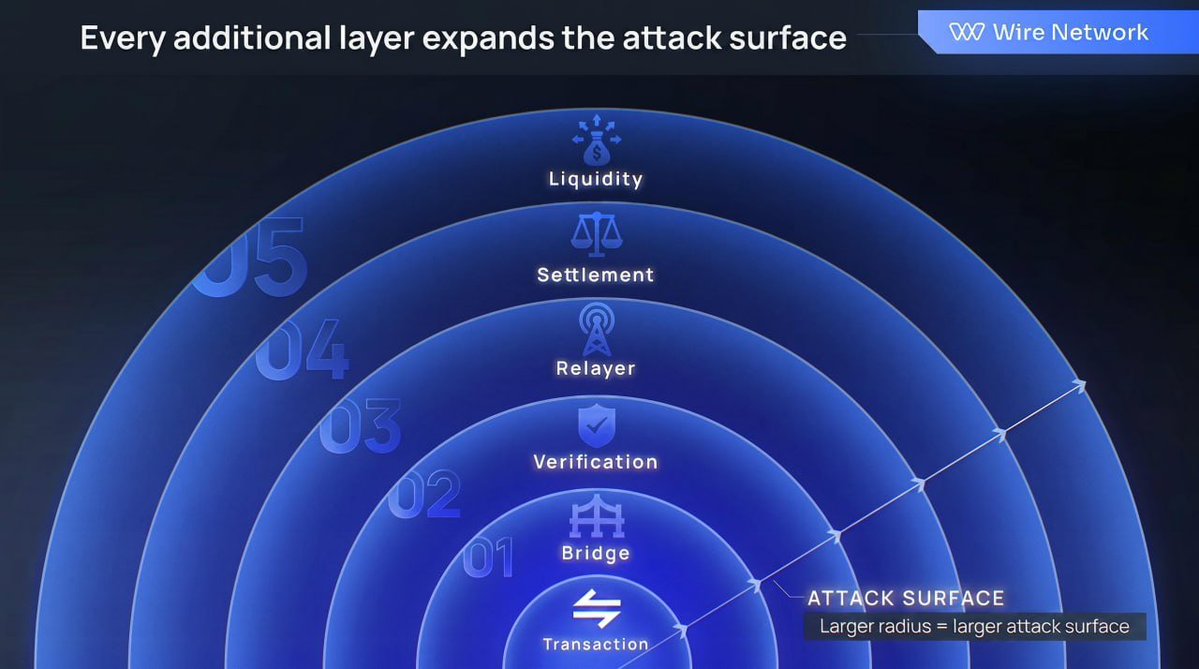
Humans and AI agents need one execution surface across chains, not a maze of bridges. Wire's Universal Transaction Layer gives them exactly that. Write the action once. It clears across all supported chains. No middleware, no custody handoffs.
Wire Network tweet media
English
0
1
4
120
Wire Network
Wire Network@WireNetwork·
The ICP framework is a B2B SaaS construct that got dragged into Web3 and got it backwards. Your first believers don't want case studies. They want a seat at the table. @CryptoVonDoom schooled us yesterday in Week 9 of the Wire Incubator. Listen and learn.
English
5
2
19
676