
WyldeStInv retweetledi
WyldeStInv
582 posts


WyldeStInv
@WyldeStInvest
ASX value investor looking at micro-caps
Sydney, New South Wales Katılım Nisan 2017
732 Takip Edilen834 Takipçiler



I think the sooner Keating disapears from the debate on his pre 1999 CGT model the better. He's got no idea just how bad it is. But he and i do share very similar tastes in classical music; Mahler, Rachmaninov etc;
afr.com/policy/tax-and…
English
WyldeStInv retweetledi

Treasury’s CGT modelling appears heavily dependent on assuming Australian shares only deliver ~4.3%-4.4% capital growth p.a., which seems to come from measuring the ASX/200 and All Odds over the last 20 years, a period the Treasurer keeps repeatedly describing as evidence that shares were supposedly “undertaxed” or “undercompensated” - including in this interview with @BilliFitzSimons
But the only circumstance where inflation indexation actually benefits investors relative to the current 50% CGT discount is where inflation makes up more than 50% of total capital returns. That’s generally only true when capital growth itself is unusually low or it’s a market where a very high portion of the total return is paid in dividends (like Australian large caps). That’s not how most younger Australians invest today!
Most younger investors build globally diversified ETF portfolios with significant global share market exposure. Across Stockspot clients, around 50% of share market exposure is global. As one example, Stockspot’s most popular diversified portfolio (Topaz), delivered 7.3% annual capital growth over the 10 years to the end of April 2026, despite having around 22% in defensive assets like bonds and gold.
That massively changes the outcome under the proposed CGT system.
Using:
• $20k invested
• 10 year holding period
• 2.5% inflation
• 30% tax rate
At Treasury’s apparent 4.3% growth assumption:
> current 50% discount tax = $1,571
> proposed new tax = $3,141
But at a more realistic globally diversified 7.3% growth assumption:
> current 50% discount tax = $3,069
> proposed new tax = $6,138
i.e. the extra tax drag roughly doubles. You can use this CGT calculator to see this stockspot.com.au/cgt-calculator/
That’s because the proposed inflation indexation plus 30% minimum tax model becomes increasingly punitive as long term capital growth rises. The higher the long term growth rate, the larger the portion of gains exceeding inflation, and the larger the compounding tax drag becomes over time. Which raises an important question... if the modelling omits global shares and other higher capital growth assets like crypto that younger Australians increasingly invest in, are the published examples materially understating the long term tax impact and presenting outcomes that aren’t representative of how people actually invest today?
LeeKuanYewRespecter@LeeRespecter
"... If it is a cake shop, a cake from a cake shop that has sales tax, and it's decorated and has candles as you say, that attracts sales tax, then of course we scrap the sales tax, before the GST is..."
English
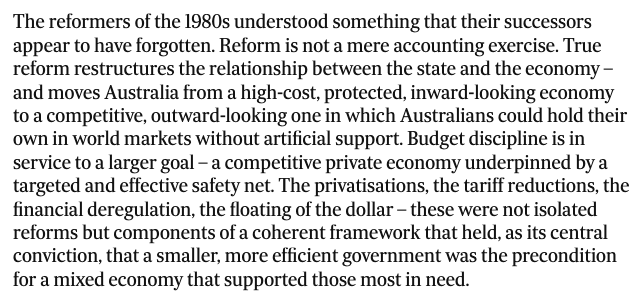
This is brilliant. I'm not against artificial support if there is a plan that it produces long term prosperity (look at Singapore and how it developed it's economy). Alas, now we're too focussed on "redistribution, regulation and resilience"
afr.com/politics/feder…
English
@respeculator @EnergyWrapAU You know how there's an Austrian school of economics...well here is Australian school of economics 🥴
English

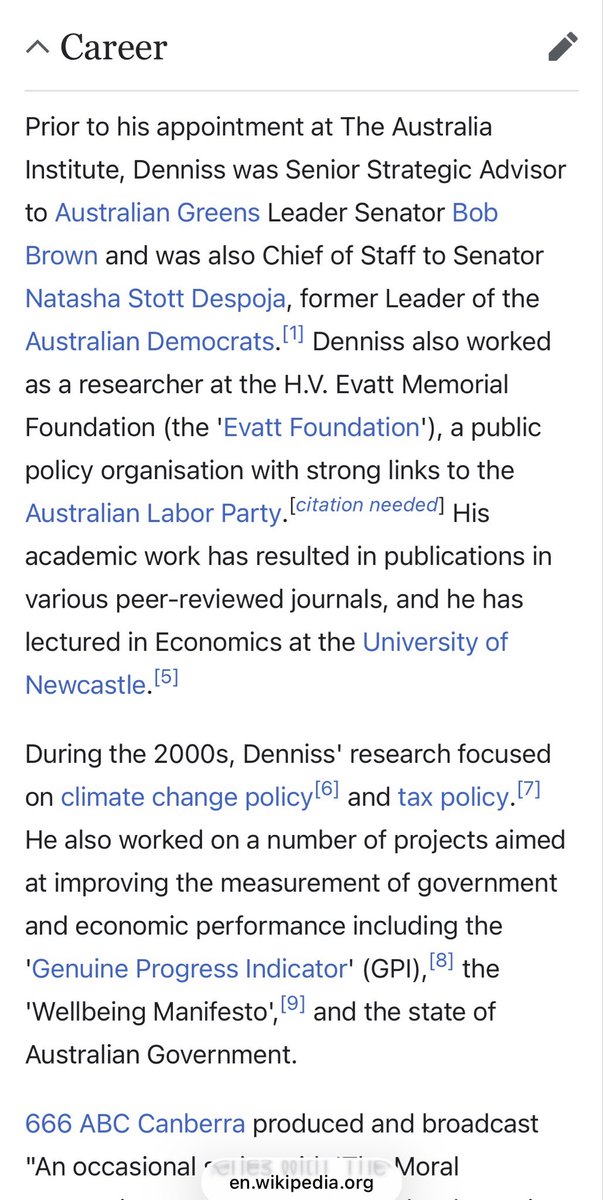
@EnergyWrapAU What’s worse than a career politician that’s literally done no work in their life? A career political advisor.. for left leaning political organisations. Where did this bloke get his “economics” qualifications?
English

@WyldeStInvest They almost never did or would, regardless of CGT regime, thats the point. Almost everyone benefiting from the unfair and inequitable 50% discount was high income, high wealth, old. (boomer, hoomer, karens.)
English
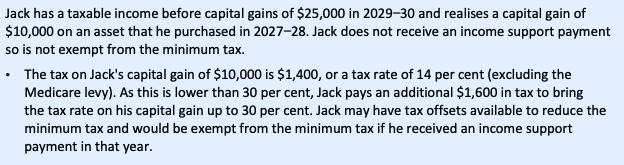
Govt’s own example…why the hell would young people at the start of their career not making much invest in shares or ETF now?
English
WyldeStInv retweetledi

If this is all about housing for young people then why are all our other assets being included such as shares , commercial property , industrial property what’s that got to do with housing ?
English
Where's the productivity enhancing side of this budget? Just more taxes. Do they know that there are other assets than housing in this country and there's productivity implication?
English
WyldeStInv retweetledi
There may be good reasons to cut CGT discount & restrict -ve gearing to say 2 props…but it wont fix housing supply & it’s hard to see how it improves intergen equity. Older gens got the benefit of concessions(I got into prop as a rentvester) & now it’s being curtailed for young!
English
@mondyinvest I believe that's actually what happened in the 1970s in the states...
English

Stuck in a ridiculous loop:
>inflation grinds higher
>RBA responds w/ ‘restrictive’ rates
>Chalmers: it’s the war, not us
>Bullock: wrong, loose Govt spending not helping
>Chalmers & Albo remain fixed on popularity handouts to households
>inflation grinds higher
#auspol #RBA 🔄
mondy@mondyinvest
Live cross to Martin Place: #auspol
English
WyldeStInv retweetledi

10 things billionaires don't want you to know are free.
The richest people on Earth use these every day. You can use them right now. Bookmark this.
1. Harvard CS50
The exact computer science course Harvard freshmen take. Includes a real certificate signed by the professor.
Site → cs50.harvard.edu
2. MIT OpenCourseWare
2,500+ MIT courses online. The same lectures their $80K-a-year students sit in.
Site → ocw.mit.edu
3. Y Combinator Startup School
The exact playbook YC uses to train the founders of Airbnb, Stripe, and Coinbase.
Site → startupschool.org
4. Berkshire Hathaway Letters
Warren Buffett's annual investing letters since 1977. Hedge fund managers re-read these every year.
Site → berkshirehathaway.com/letters/letter…
5. SEC EDGAR
The real-time filing system Wall Street uses. Watch what every billionaire is buying the moment they file.
Site → sec.gov/edgar
6. Stanford Online
Stanford's CS, engineering, and machine learning lectures. The exact courses Andrew Ng once taught.
Site → online.stanford.edu
7. PubMed Central
The NIH's full archive of medical research. Studies that journals charge $40 each to read. Millions of them.
Site → ncbi.nlm.nih.gov/pmc
8. World Bank Open Data
Every economic dataset the World Bank tracks. The same data Goldman Sachs analysts pay for.
Site → data.worldbank.org
9. OpenLibrary
The Internet Archive's free book lending service. Millions of books, no library card needed.
Site → openlibrary.org
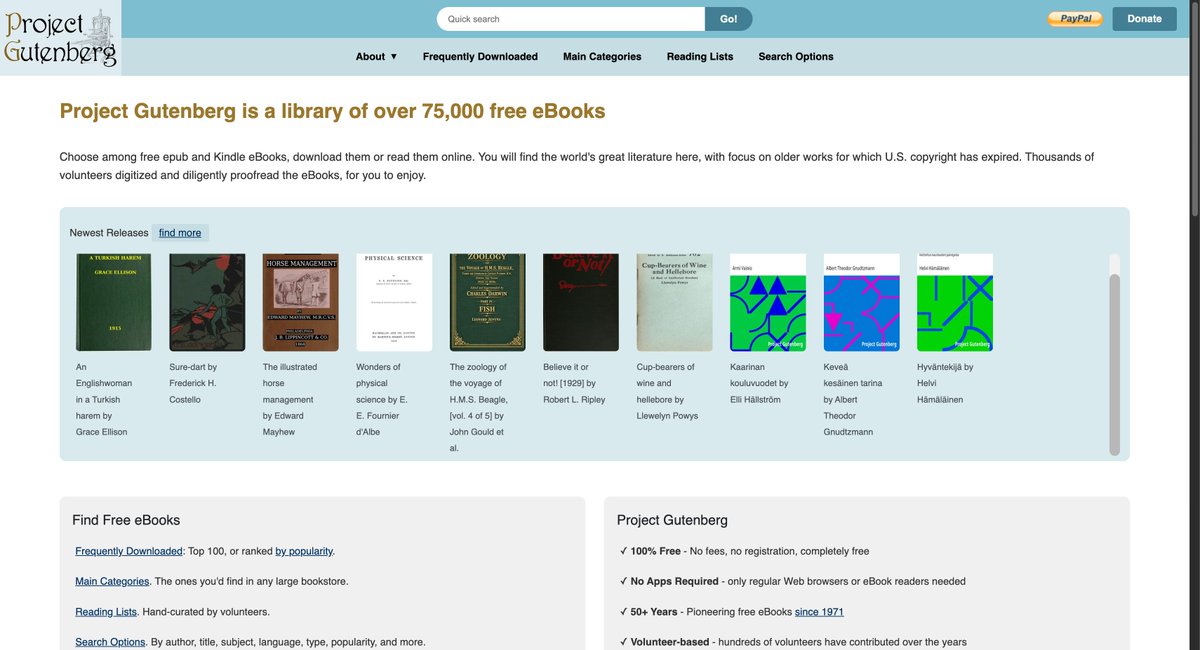
10. Project Gutenberg
70,000+ classic books, completely free. From Plato to Tolstoy.
Site → gutenberg.org
Here's the wildest part:
A Harvard education costs $250K. An MBA costs $200K. A Bloomberg Terminal costs $25K a year. A YC seat costs you 7% of your company.
You just got all of it. For free.
The most expensive things in the world are usually free. You just have to know where the door is.
Most people never look.
Save this before you forget.
100% free. Forever.
English
WyldeStInv retweetledi

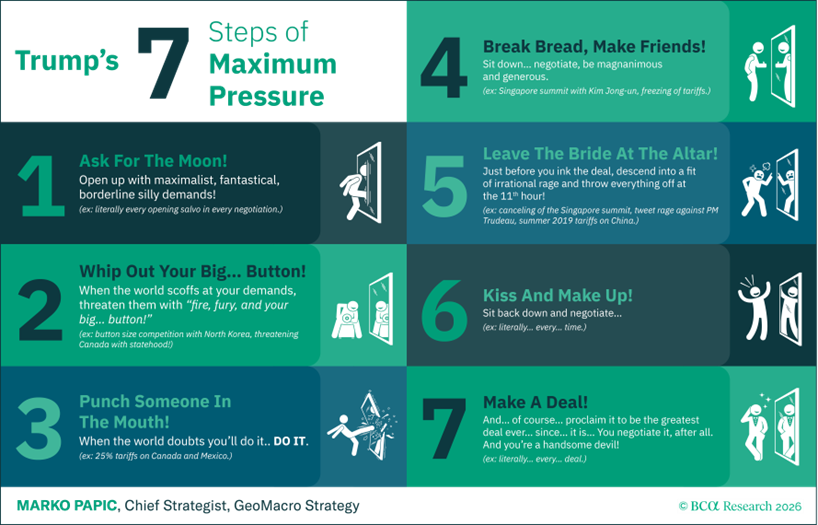
Promise the Moon (Regime Change), get to the roof of your house (JCPOA 2.0).
English
WyldeStInv retweetledi

Philosopher Slavoj Žižek on why searching for your "true self" is a mistake:
Žižek argues that the pursuit of a true inner self is ultimately misguided. Deep introspection, he suggests, often reveals only disturbing or chaotic fantasies.
"Don't look for your inner self. You'll only find deep shit."
Instead of searching for an authentic core, Žižek believes genuine personal growth comes from embracing an external mask, a chosen social role.
"The only way to overcome yourself is to identify with your mask."
To illustrate this, he references the 1960 Rossellini film General Della Rovere.
The film tells the story of a poor man in occupied Italy who is caught by the Nazis. Because he resembles a famous resistance leader, General Della Rovere, the Nazis, who have already killed the real General, force him to pretend to be the General in prison to trick the resistance.
But something unexpected happens. The man identifies so deeply with the role that he refuses to cooperate with the Nazis. He is ultimately shot publicly as General Della Rovere.
Žižek calls this "good alienation." The man's "real self" as a poor beggar mattered less than his complete identification with the heroic persona. Through that total commitment to an outward role, he achieved a kind of moral greatness his "authentic" self never could.
The takeaway is counterintuitive but powerful: true freedom doesn't emerge from endlessly excavating your private, internal world. It emerges when you prioritise your outward actions and commitments. When you fully commit to becoming something greater than what you started as.
What matters is what you choose to embody.
English
WyldeStInv retweetledi

The 2028 Global Intelligence Crisis That Wasn't
A Macro Memo from the Actual June 2028, Not the Fanfic Version
The unemployment rate printed 3.8% this morning, roughly where it's been all year. The market yawned. The S&P 500 is at 7,400, which is somehow both a record high and a disappointment to people who were promised 10,000 by every DCF model with a "AI Upside Case" tab.
We are writing this memo because in February 2026, a widely circulated Substack piece predicted that by this exact date, the S&P would be down 38%, unemployment would be 10.2%, and the mortgage market would be in free fall. It was beautifully written, rigorously structured, and wrong about nearly everything. We feel it is our duty — nay, our privilege— to conduct the post-mortem.
In the authors' defense, it was explicitly labeled a "scenario, not a prediction." In our defense, 2,321 people liked it and several macro Twitter accounts made it their entire personality for six months.
How It Actually Started
In late 2025, agentic coding tools did indeed take a step function jump in capability. The Citrini memo predicted that a competent developer could now "replicate the core functionality of a mid-market SaaS product in weeks."
This was true! What the memo failed to mention was that a competent developer could also replicate the core functionality of a mid-market SaaS product in weeks in 2019. The difference was that back then, nobody did it because maintaining software is horrible, and in 2026, nobody did it because maintaining software is still horrible.
The procurement manager at the Fortune 500 who told the vendor he'd been "in conversations with OpenAI about replacing them entirely"? He got his 30% discount, then spent the next eighteen months trying to get his internal AI prototype to handle SSO correctly. It could write a Shakespearean sonnet about SAML authentication but could not, for the life of it, actually implement SAML authentication without hallucinating an endpoint that didn't exist. He renewed the vendor contract at full price the following year.
The memo predicted ServiceNow's $NOW net new ACV growth would decelerate to 14% as customers cut seats. In reality, ServiceNow reported accelerating growth in 2027 because — and this is the part the doom thesis always misses — the AI agents that companies deployed generated more workflow tickets, not fewer. Every autonomous agent needed monitoring, logging, exception handling, and escalation paths. ServiceNow didn't sell fewer seats. They sold seats to robots.
SERVICENOW Q3 2027: "AI AGENT MANAGEMENT" BECOMES FASTEST-GROWING MODULE; CEO JOKES "OUR BEST CUSTOMERS ARE NOW NON-HUMAN" | Bloomberg, October 2027
The Friction That Refused to Die
The Citrini memo's most elegant argument was that AI agents would eliminate friction, and that trillions in enterprise value depended on friction persisting. Subscriptions that passively renewed, insurance policies nobody re-shopped, delivery apps that exploited laziness — all would be ruthlessly optimized away.
Here's what actually happened with subscriptions: AI agents did start cancelling unused subscriptions on behalf of users. Subscription companies responded by making cancellation flows so Byzantine that the AI agents needed other AI agents to navigate them. An arms race ensued. By Q2 2027, the average subscription cancellation flow involved a 47-step conversational gauntlet with an AI retention specialist. The median consumer's agent spent more tokens trying to cancel a $9.99/month meditation app than the consumer had spent meditating in the entire previous year.
Net result on subscription revenue: approximately zero.
The memo predicted agents would disintermediate travel booking platforms. In practice, when agents assembled "optimal" itineraries, they produced trips that were technically cheaper but involved three layovers, a 4am bus transfer in Ljubljana, and a hotel 45 minutes from the city center with a 4.1-star rating that turned out to be an Airbnb above a nightclub. Consumers used the agent, looked at its itinerary, said "absolutely not," and went back to $BKNG.
It turns out that what humans call "preferences" and what a cost-optimization function calls "irrational friction" are the same thing. People don't want the cheapest flight. They want the one that doesn't leave at 5am. We knew this. We have always known this. We briefly forgot because a Substack told us machines would make us rational.
The DoorDash $DASH Thesis, or "You Underestimate How Lazy People Are"
The memo called DoorDash the "poster child" of habitual intermediation destruction. Agents would compare twenty delivery apps and pick the cheapest. Vibe-coded competitors would flood the market. DoorDash's moat of "you're hungry, you're lazy, this is the app on your home screen" would evaporate.
Counterpoint: have you met people?
The vibe-coded delivery competitors did indeed launch. Dozens of them. They had names like Fetchr, GrubAgent, NomNom AI, and — we are not making this up — "Deliver.sol." They offered lower fees by passing 90-95% through to drivers.
They also had no customer service, no restaurant onboarding team, no logistics optimization, no insurance, and no way to handle the moment when a driver ate half your order and marked it "delivered." The apps worked flawlessly in demo videos and catastrophically in the rain on a Friday night in Brooklyn. By Q3 2027, the subreddit r/VibecodeDeliveryHorror had 400,000 subscribers and a pinned post titled "My agent ordered me sushi from a restaurant that closed in 2019."
DoorDash stock is up 35% from the date of the Citrini memo.
The Payments Armageddon That Wasn't
Perhaps the most creative prediction was that AI agents would route around card interchange using stablecoins, destroying Visa / $V, Mastercard / $MA, and American Express $AXP.
What actually happened: agents tried to pay with stablecoins. Merchants said no. Not because they couldn't accept them, but because the fraud liability framework for stablecoin payments did not exist, and no CFO in America was going to accept payment in magic internet money to save 2% on interchange when the chargeback protections that interchange funded were the only thing standing between them and an army of AI agents submitting fraudulent refund claims.
That's the thing nobody modeled. AI didn't just empower consumers. It empowered fraud. The same agents that could price-optimize your protein bars could also generate synthetic identities, file fake chargebacks, and exploit return policies at scale. Visa and Mastercard's moat turned out not to be friction — it was trust infrastructure. When fraud exploded in early 2027, merchants practically begged to keep paying interchange.
MASTERCARD Q1 2028: NET REVENUES +11% Y/Y; CEO CITES "UNPRECEDENTED DEMAND FOR AI-POWERED FRAUD DETECTION SUITE" AND "RETURN TO CARD RAILS FROM ALTERNATIVE PAYMENT EXPERIMENTS" | Bloomberg, April 2028
Mastercard didn't die. It sold the antidote.
The Mortgage Crisis That Was Actually Just San Francisco Being San Francisco
The memo's most alarming prediction was that the $13 trillion mortgage market would crack because white-collar workers would lose their income and default on their loans.
What actually happened in housing: San Francisco home prices did decline, approximately 8% peak-to-trough. This was treated as a national emergency by San Francisco homeowners and as "Tuesday" by everyone who'd watched San Francisco home prices fall 8% roughly every four years since the city was founded.
The national housing market was fine, because the national housing market has a problem that is far more powerful than AI displacement: there aren't enough houses. The US has been underbuilding for fifteen years. A structural housing shortage does not resolve because some product managers in SOMA lost their jobs. If anything, the modest cooling in tech-heavy metros made housing more affordable for the nurses, teachers, and tradespeople who'd been priced out — people whose jobs, it should be noted, AI has not disrupted in any meaningful way.
The 780-FICO borrowers the memo flagged? Most of them had two-income households, 30-year fixed mortgages locked at 3-4% in 2020-2021, and six months of savings. The ones who lost their jobs found new ones — not always at the same pay, but enough to make a mortgage payment that was locked in at 2021 rates. Turns out a $2,400/month mortgage is pretty easy to service even at $120k instead of $180k, especially when your rate is 3.25% and the alternative is paying $3,500/month in rent.
FANNIE MAE: SERIOUS DELINQUENCY RATE REMAINS AT 0.6%, NEAR ALL-TIME LOWS; "AI DISPLACEMENT CONCERNS HAVE NOT MATERIALIZED IN CREDIT PERFORMANCE" | Fannie Mae Q2 2028 Credit Supplement
The Job Market: Disrupted, Not Destroyed
We are not going to pretend that AI has had zero impact on employment. It has. The labor market is different. Some categories of work have genuinely contracted — particularly rote analytical work, first-draft content generation, and basic code production.
But the Citrini memo made the classic futurist error: it modeled job destruction in high resolution and job creationin zero resolution. It said AI "created new jobs" but "for every new role AI created, it rendered dozens obsolete." This sounded profound and was completely made up.
Here's what they missed:
1. AI made existing jobs bigger, not extinct. The product manager at Salesforce didn't get replaced by Claude. She used Claude to do the work of three product managers, got promoted, and now manages a portfolio twice the size. Companies didn't fire 60% of their PMs. They gave the surviving PMs AI tools and expanded their scope. Headcount was flat. Output tripled.
2. The "build it yourself" thesis created more jobs than it destroyed. All those companies that tried to replace their SaaS vendors with internal AI-built tools? They needed people to manage those tools. A new class of "AI operations" roles emerged — not the fake "prompt engineer" jobs from 2023, but genuine systems integration, agent orchestration, and reliability engineering roles. The BLS hasn't even finished categorizing them yet.
3. Humans got weird. The fastest-growing job categories of 2027-2028 were things nobody predicted: AI output auditors, "authenticity consultants" for brands that wanted to prove their content was human-made, in-person experience designers (turns out when everything digital gets commoditized, people pay more for analog), and — our personal favorite — professional "vibe curators" for corporate events, which is just party planning with a $300/hour rate and a LinkedIn title.
The unemployment rate is 3.8%. It was 3.7% when the memo was written. The composition has shifted, but the apocalypse has not arrived.
The Real Feedback Loop They Missed
The Citrini memo described a "negative feedback loop with no natural brake." AI gets better → companies cut workers → workers spend less → economy weakens → companies buy more AI → repeat until civilization collapses.
The natural brake they missed was called "shareholders."
When companies cut too aggressively, quality collapsed. The first wave of AI-driven layoffs in 2026 did boost margins. The second wave, in early 2027, started producing disasters. AI-generated customer communications that were subtly unhinged. Product launches with no human gut-check that flopped spectacularly. Legal filings with hallucinated case citations (again). A major airline's AI-managed pricing engine that accidentally sold 40,000 business class tickets from New York to London for $12 each before a human noticed.
UNITED AIRLINES Q2 2027: $380M CHARGE RELATED TO "AUTONOMOUS PRICING SYSTEM ERROR"; CEO ANNOUNCES "HUMAN-IN-THE-LOOP" MANDATE FOR ALL REVENUE MANAGEMENT SYSTEMS | Bloomberg, July 2027
Companies re-hired. Not to the same levels, and not the same roles. But the "fire everyone, let the robots handle it" thesis ran directly into the wall of "the robots are confidently wrong 3% of the time and that 3% is extremely expensive."
The negative feedback loop had a natural brake, and its name was liability.
India, Actually
The memo predicted India's IT services sector would collapse, the rupee would crash 18%, and the IMF would come knocking.
What actually happened: TCS, Infosys, and Wipro did see growth slow in traditional staff augmentation. They responded by — and stop us if you've heard this before — selling AI services. It turns out that the same cost arbitrage that made Indian developers attractive for manual coding also makes Indian firms attractive for AI implementation, training, and management. They pivoted from "we'll give you 500 developers" to "we'll give you 50 developers and 450 AI agents managed by our platform."
The rupee is roughly where it was in February 2026. The IMF has not called.
What We Actually Got Right and Wrong
The bears got right: AI is transforming the economy. Wage growth for certain white-collar categories has stagnated. Inequality has widened. The political tensions around AI are real and growing. Some business models — particularly those built purely on information asymmetry — are under genuine pressure.
The bears got wrong: The speed, the severity, and the linearity. The Citrini memo extrapolated every trend at its maximum velocity for 28 months and assumed no adaptation, no friction, no regulatory response, no human irrationality, no corporate incompetence, and no second-order effects that cut the other way.
In short, they modeled the economy as a physics problem and forgot it's a biological one. Systems adapt. Humans are stubborn. Institutions are slow but not dead. And the most powerful force in the American economy is not artificial intelligence.
It's inertia.
Closing
We say this with genuine respect for the original authors: it was a good piece. Thoughtful, well-structured, and asking the right questions. The scenario was worth gaming out. But the scenario assumed a frictionless spherical economy in a vacuum, and we live in a world where a Fortune 500 company once took nine months to change its font.
The canary is still alive. It just learned to use ChatGPT and is now posting on LinkedIn about its "AI-augmented singing journey."
The S&P is at 7,400. The mortgage market is fine. DoorDash still has a 28% take rate. And somewhere, a procurement manager is telling a SaaS vendor he could replace them with AI, while secretly praying they don't call his bluff.
Disclaimer: This is a rebuttal, not a prediction. If the 2028 Global Intelligence Crisis actually happens, please don't forward this back to us.
English
@ValorWealth @MattJoass I wonder whether it's over complicating it. At least in the short term most may go down due to flows...
English

I’ve read numerous articles on the #SAASpocalypse. This is possible the most measured of them all. Well done @MattJoass
open.substack.com/pub/mattjoass/…
English
WyldeStInv retweetledi
After a deluge of requests from subscribers to share this episode with friends, family and colleagues, here is my conversation with @TheMichaelEvery IN FULL
Michael is a brilliant thinker whose work deserves to be shared so please give him a push podcasts.apple.com/gb/podcast/the…
English
Excellent latest article by @benthompson. Lays out the potential scenario for software over the next 5 years and the drivers behind software's evolution. stratechery.com/2026/microsoft…
English
WyldeStInv retweetledi

I strongly recommend you to listen to Hegseth‘s yesterday‘s speech. Carefully pick up the new buzzwords & key takeaways. Watch exactly who‘s with him in the videos. I can‘t give you all the clues just like that. Knowledge is free but you have to pay attention! It‘s new Cold War.
English