D
16.8K posts


D retweetledi

D retweetledi

D retweetledi


D retweetledi

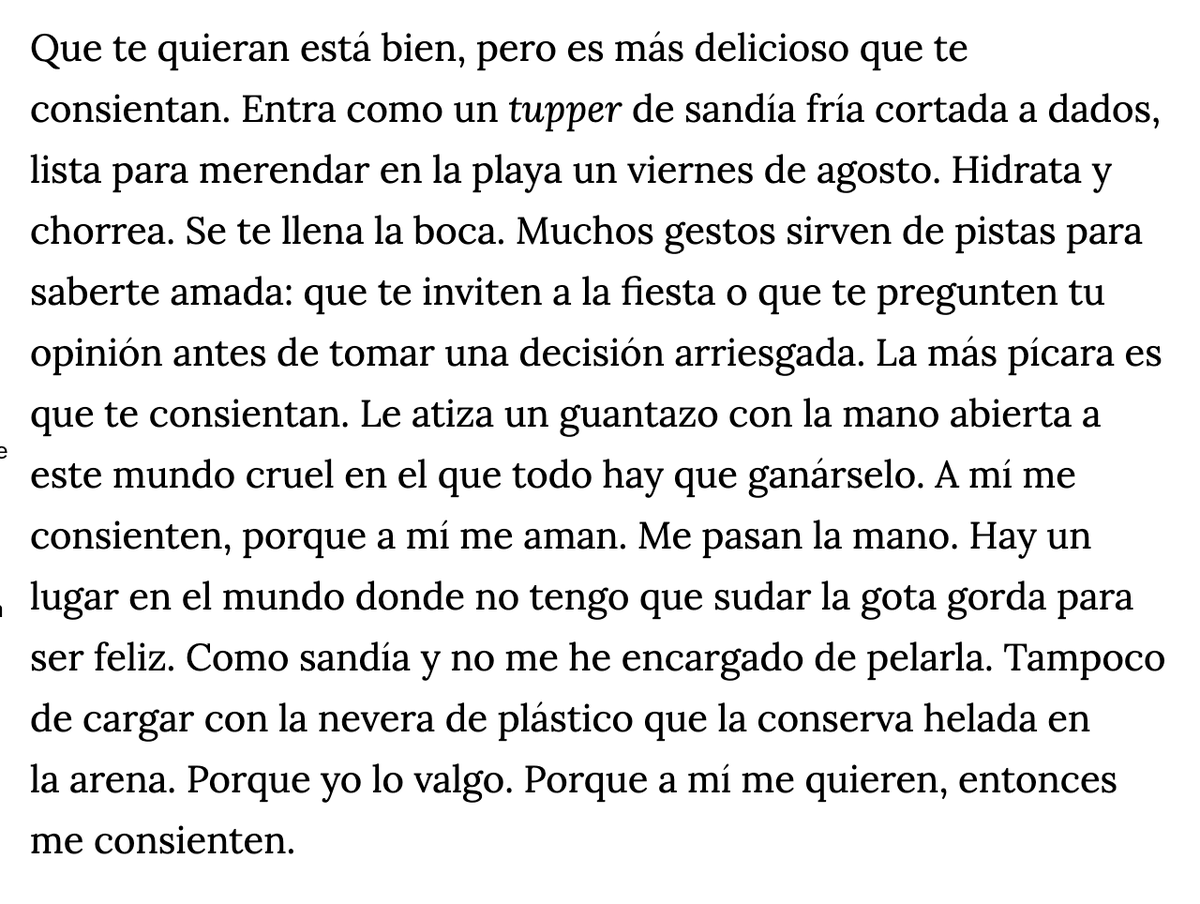
Leonor Cervantes@_leonera_
este mes escribo sobre el matiz más dulce del amor: que te consientan. escribo sobre los regalos innecesarios, sobre ser desagradecido con quien te agasaja, sobre demandarle caprichos a tu pareja que te avergüenza pedir a tus amigas y sobre dejarte ganar. publico.es/opinion/column…
ZXX
D retweetledi


D retweetledi

Winston Churchill fought his depression with bricks. He'd lay them for hours at his country home in Kent. He joined the bricklayers' union. And in 1921 he wrote about why it worked. It took psychology another 75 years to catch up.
He called his depression the "Black Dog." It followed him for decades. His method for fighting it back was as basic as it sounds: laying brick after brick, hour after hour.
Churchill spelled out his theory in a long essay for The Strand Magazine. People who think for a living, he wrote, can't fix a tired brain just by resting it. They have to use a different part of themselves. The part that moves the eyes and the hands. Woodworking, chemistry, bookbinding, bricklaying, painting. Anything that drags the body into a problem the mind can't solve by itself.
Modern psychology now calls this behavioral activation. It's one of the most-studied depression treatments out there. Depression sets a behavior trap. You feel bad, so you stop doing things, and doing less means less to feel good about. Feeling worse makes you do even less. The loop tightens until you can't breathe inside it.
Behavioral activation breaks the loop from the action side. You schedule the activity first, even when every part of you doesn't want to. Doing it produces small rewards: a wall gets straighter, a painting fills in, a messy room gets clean. Those small rewards slowly rewire the brain. Action comes first, and the feeling follows.
Researchers at the University of Washington put this to the test in 2006. They studied 241 adults with major depression and compared three treatments: behavioral activation, regular talk therapy, and antidepressants. For the people who were most severely depressed, behavioral activation matched the drugs. It beat the talk therapy. A 2014 review of more than 1,500 patients across 26 trials backed up the result.
Physical work like bricklaying does something extra on top of this. It crowds out rumination, the looping bad thoughts that grind people down during the worst stretches of depression. Bricklaying needs both hands and gives feedback brick by brick: each one is straight or crooked. After an hour you can see exactly how much wall you built. No room left for the mental chewing.
The line George Mack used in his post, "depression hates a moving target," is good poetry. The science behind it is sharper. Depression hates a brain that has somewhere else to be.
George Mack@george__mack
Winston Churchill used to lay 200 bricks per day to keep his mind busy when feeling down. Depression hates a moving target.
English
D retweetledi
La democracia muere en la oscuridad...
La periodista del Washington Post Hannah Natanson, fue amenazada, demandada y el FBI hasta allanó su casa. Hoy ganó el Pulitzer por su trabajo sobre el desmantelamiento del Estado (Trump/Musk con DOGE). El periodismo es luz en la oscuridad.
Español
D retweetledi


D retweetledi



D retweetledi

D retweetledi
D retweetledi


D retweetledi

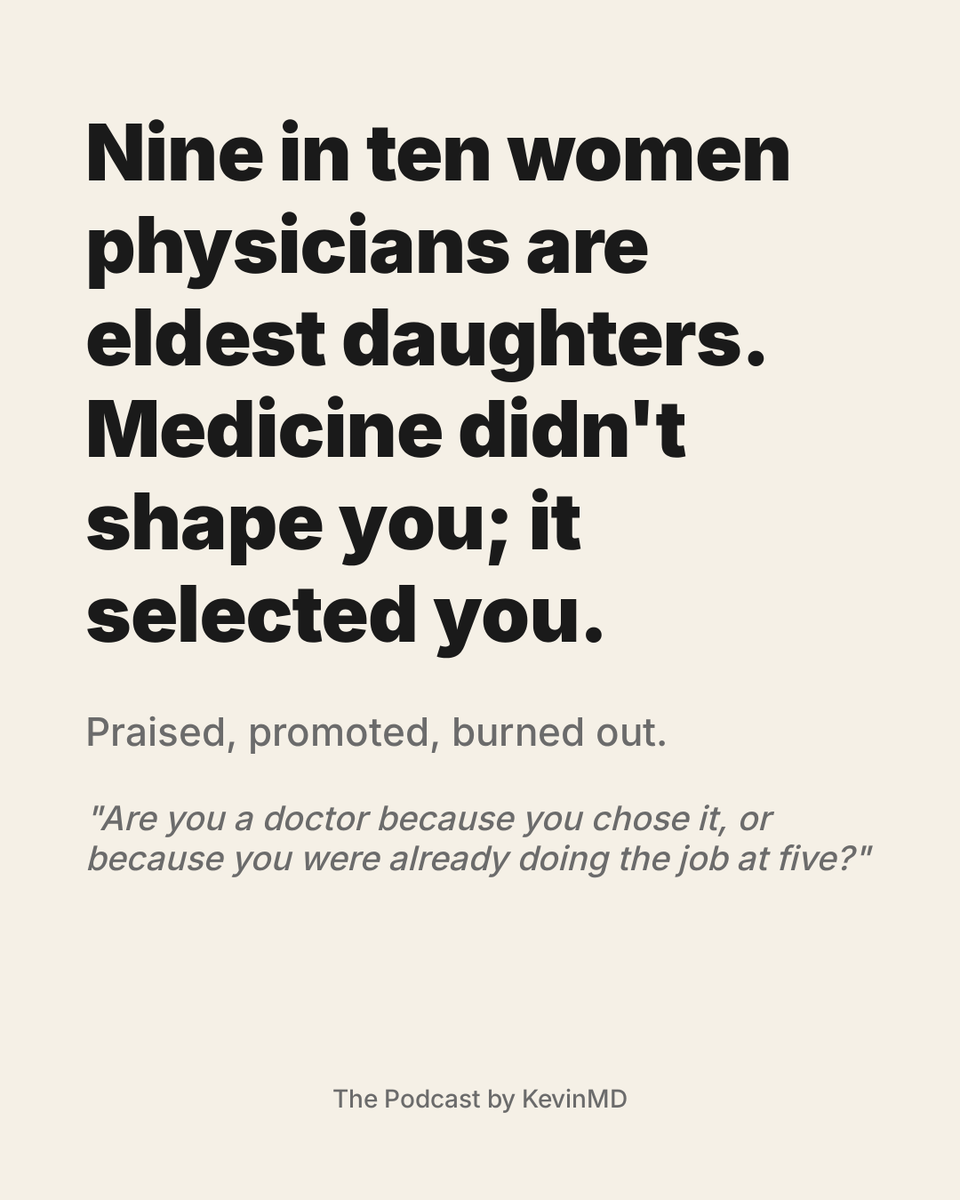
85 to 90 percent of women physicians are eldest daughters.
That is not a coincidence. That is a pipeline.
Eldest daughters are trained, before age five, to over-function. They take on a parent's worry. They organize the family. They clean up without being asked. They do not ask for help, because they were rewarded their whole childhood for not needing any.
Then they walk into medicine.
A career that demands hyper-responsibility, hypervigilance, perfectionism, and silent sacrifice does not have to ask these women to give those things. They were giving them before they could read.
The system is not stumbling into a burnout problem. The system is recruiting from a pool of people whose entire childhood was a training program for it.
This is what pediatrician and certified coach Jessie Mahoney has been finding when she asks the room. In every group, in every retreat. Maybe one or two women are not eldest daughters. The rest have been carrying something since before they could spell their own name.
Most of those women blame themselves. "Why don't I have boundaries?" "Why do I over-function?" "Why can't I delegate?"
Because at five years old, your family rewarded you for over-functioning. Because every teacher praised you for it. Because the medical training system selected for it. Because every job since has reinforced it. The pattern is older than your medical degree by twenty years.
The other piece nobody names: by the time these women are in their fifties, they are carrying eldest-daughter responsibility for aging parents AND running a department as chief AND running a household. The role does not retire when the children do. It just compounds.
Jessie's reframe is the part worth bookmarking.
The "hero" framing is the trap. Eldest daughters were made the savior of the family before they could read. Then medicine made them the savior of the patient. Then the department made them the savior of the team. At every stage, they learned that if they did not do it, terrible things would happen and it would be their fault.
Awareness is the first move. Non-judgment is the second. Excellence is not doing everything yourself. Excellence is letting other people do their jobs.
You are allowed to gift some of it back. You can ask your siblings to carry the aging parent. You can let your medical assistant do the medical assistant's job. You can stop covering the gap that nobody actually asked you to cover.
Most eldest daughters in medicine have never asked for help. When they finally do, they discover people are willing to help. The asking was the whole obstacle.
Listen to the full conversation on The Podcast by KevinMD. Link in the replies.
What is the one task you have been carrying for your family or your team that no one ever actually asked you to carry?
#ThePodcastbyKevinMD
English
D retweetledi

The fountain of youth can be found in the weight section of your gym.
The Associated Press@AP
WATCH: Taiwanese grandmothers aged 89 and 91 train at the gym. An increasing number of elderly people in Taiwan’s super-aged society are hitting the gym to stay healthy, both physically and mentally.
English
D retweetledi

D retweetledi


D retweetledi

D retweetledi