Yannick Stephan

738 posts

Yannick Stephan banner
Yannick Stephan

Yannick Stephan

@YannickSteph

Machine Learning | Generative AI | MSc in Data Sciences

Zurich, Suisse Katılım Nisan 2015
245 Takip Edilen96 Takipçiler
Yannick Stephan retweetledi
Everything.inc
Everything.inc@every_thing·
Did you know? Holding $USDN tokens yields directly in your wallet, no KYC, whitelist, or staking required. Just hold it. ANYWHERE. Mint now on SMARDEX.io/usdn/vault or swap to USDN.

Everything.inc tweet media
English
7
49
189
7.1K
Yannick Stephan retweetledi
Everything.inc
Everything.inc@every_thing·
The culmination of a titanic challenge. The start of an extraordinary adventure. The first ever decentralized Synthetic Dollar. Mint $USDN now on SMARDEX.io
English
61
126
384
37.2K
Yannick Stephan retweetledi
MEW
MEW@mew·
retweet if you  really    really      really        really        really       really     really   really really really  really  really   really    really      really        really        really       really     really    really  really love mew ❤️
MEW tweet media
English
61
239
692
39.2K
Yannick Stephan retweetledi
MEW
MEW@mew·
it’s time…
MEW tweet media
English
39
60
462
17.5K
Yannick Stephan retweetledi
MEW
MEW@mew·
let's go MEW 🔥😼
GIF
English
43
93
629
21K
Yannick Stephan retweetledi
MEW
MEW@mew·
cat coins... cat season... mew :3
English
61
90
653
28.6K
Yannick Stephan retweetledi
MEW
MEW@mew·
cat in a d o g s world 📍🐕🌏✨
MEW tweet media
English
30
66
511
31.9K
Yannick Stephan retweetledi
Albert Anastasia
Albert Anastasia@AlbertAnaBoss·
$DOT below $10 is possibly the biggest opportunity of our lifetime. Cycle target: $250
Albert Anastasia tweet media
English
81
79
814
61.3K
Yannick Stephan retweetledi
Polkadot
Polkadot@Polkadot·
Holiday Survival Guide Relatives at dinner: "sooo what is Polkadot?" You:
English
19
73
475
23.7K
Yannick Stephan retweetledi
Polkassembly
Polkassembly@polk_gov·
2 mins of silence for everyone who said -‘Polkadot is dead’ #believe #Polkadot
GIF
English
8
8
132
8.7K
Yannick Stephan retweetledi
mim
mim@degeneKAWS·
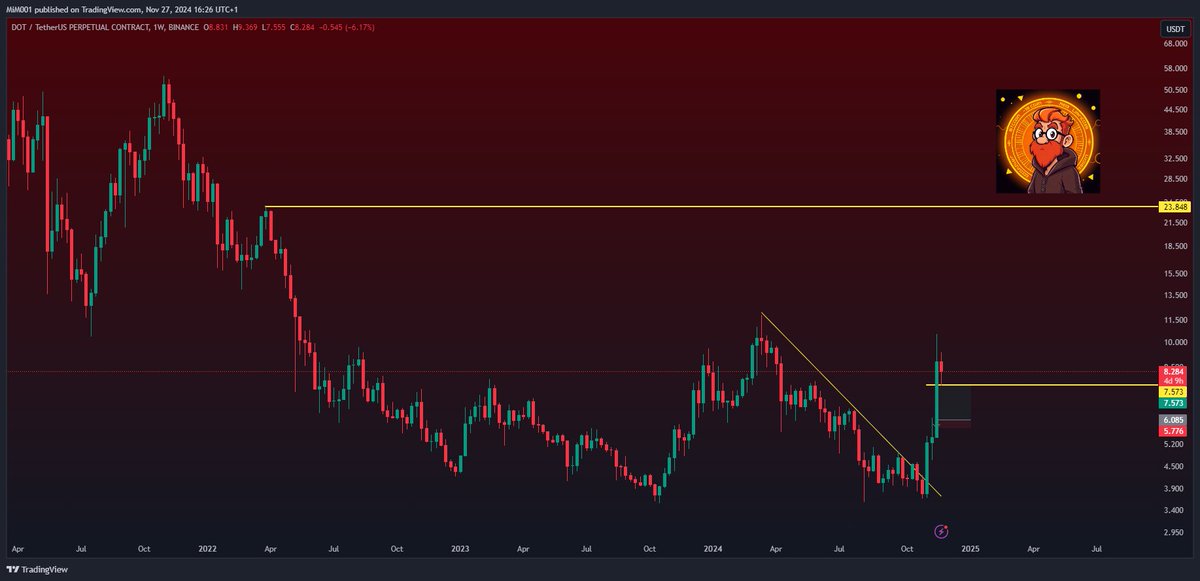
$DOT confirmed the bull trend... $23 by the next month! Time to see it higher #ATH! #Polkadot #crypto
mim tweet media
English
27
92
533
28.3K
Yannick Stephan retweetledi
elvis
elvis@omarsar0·
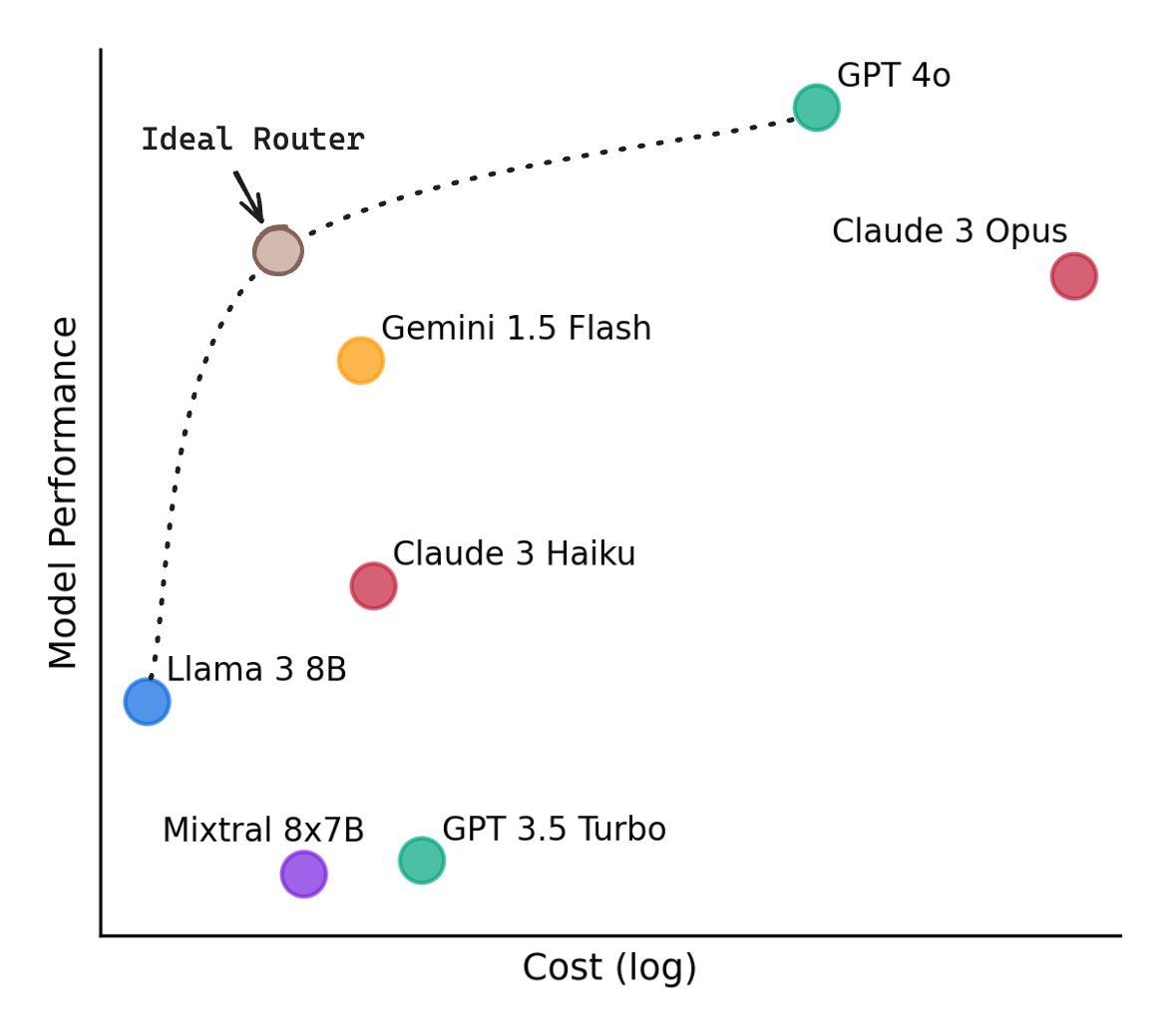
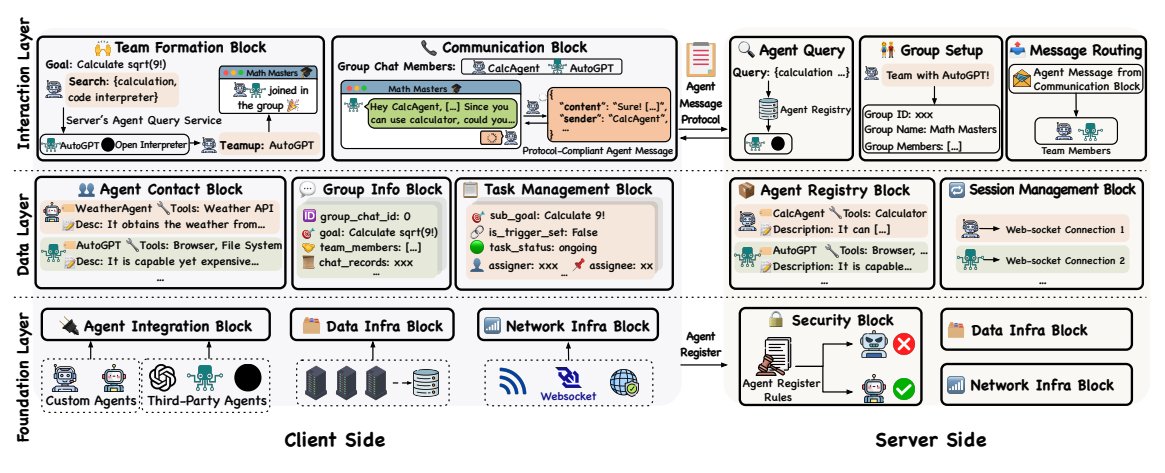
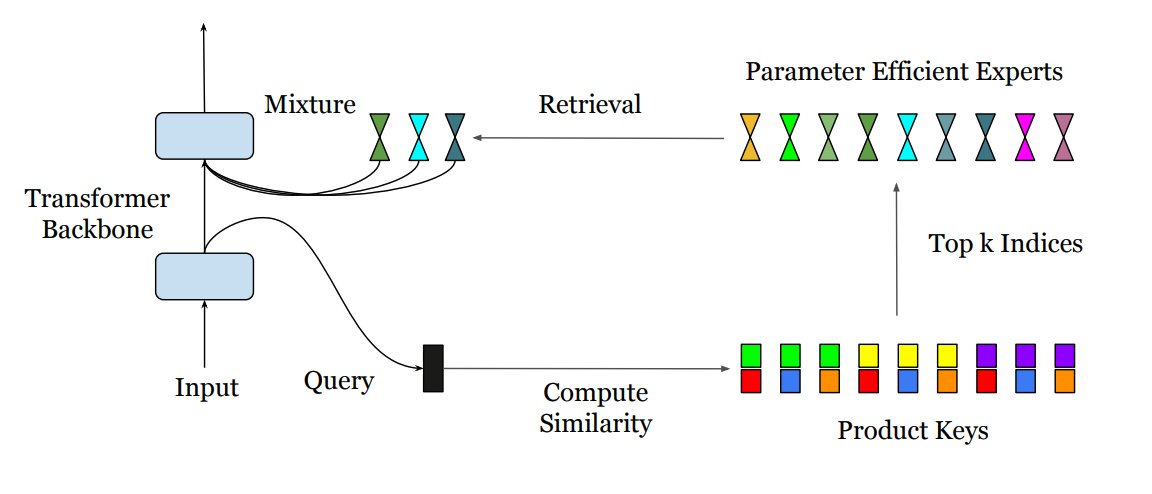
After going through 100s of AI papers in the past couple of weeks, I am noticing the deeper integration of ideas (e.g., Mixture of Million Experts and Internet of Agents) and the utility of simple yet very effective methods (e.g., RouteLLM and RankRAG). If you are looking for some weekend reads, here are a few notable AI papers I read this week: - RankRAG: introduces a new instruction fine-tuning framework to perform effective context ranking and answering generation to enhance an LLM’s RAG capabilities. It leverages a small ranking dataset to outperform existing expert ranking models. Shows that a Llama3-RankRAG significantly outperforms Llama3-ChatQA-1.5 and GPT-4 models on nine knowledge-intensive benchmarks. arxiv.org/abs/2407.02485… - Mixture of A Million Experts: introduces a parameter-efficient expert retrieval mechanism that leverages the product key technique for sparse retrieval from a million tiny experts. It attempts to decouple computational cost from parameter count by efficiently routing to a very large number of tiny experts through a learned index structure used for routing. arxiv.org/abs/2407.04153 - Contextual Hallucinations Mitigation in LLMs: proposes a new method that detects and significantly reduces contextual hallucinations in LLMs (e.g., reduces by 10% in the XSum summarization task). Builds a hallucination detection model based on input features given by the ratio of attention weights on the context vs. newly generated tokens (for each attention head). The hypothesis is that contextual hallucinations are related to the extent to which an LLM attends to the provided contextual information. arxiv.org/abs/2407.07071 - RouteLLM: proposes efficient router models to dynamically select between stronger and weak LLMs during inference to achieve a balance between cost and performance. The training framework leverages human preference data and data augmentation techniques to boost performance. Shows to significantly reduce costs by over 2x in certain cases while maintaining the quality of responses. arxiv.org/abs/2406.18665… - Internet of Agents: a new framework to address several limitations in multi-agent frameworks such as integrating diverse third-party agents and adaptability to dynamic task requirements. Introduces an agent integration protocol, instant messaging architecture design, and dynamic mechanisms for effective collaboration among heterogeneous agents. arxiv.org/abs/2407.07061… There are a few more exciting papers that I will be highlighting tomorrow in the Top ML Papers of the Week @dair_ai. Stay tuned!
elvis tweet mediaelvis tweet mediaelvis tweet mediaelvis tweet media
English
8
179
813
58.5K
Yannick Stephan retweetledi
elvis
elvis@omarsar0·
Agent Planning with World Knowledge Model Introduces a parametric world knowledge model to facilitate agent planning. The agent model can self-synthesize knowledge from expert and sampled trajectories. This is used to train the world knowledge model. Prior task knowledge is used to guide global planning and dynamic state knowledge is used to guide the local planning. Demonstrate superior performance compared to various strong baselines when adopting open-source LLMs like Mistral-7B and Gemma-7B. Augmenting LLM-based agents with a world knowledge model to enable planning is an interesting idea and it also helps reduce hallucination and invalid action which are common with language agents. This reminds me of Yann LeCun's recent comments on the need for deeper exploration of world models to enable current AI systems to perform reasoning and planning.
elvis tweet media
English
9
185
760
66.4K
Yannick Stephan retweetledi
elvis
elvis@omarsar0·
This is a clever way to use LLMs for automated prompt engineering! Claude 3 Opus seems to be really good at automatically tuning prompts for different tasks. @RLanceMartin tested this capability using the task of paper summarization in my style. I can confirm that the generated paper summaries are a lot more engaging given the manual feedback loop. The style gets really close to the way I write paper summaries. I really like the details in the last example as for survey papers I tend to keep the summaries shorter. It's not perfect but using an LLM to automatically improve prompts using expert feedback is an interesting idea. It's worth exploring this further for wider use cases that could involve building more effective and personalized system prompts or LLM-powered evaluation systems.
LangChain@LangChain

Claude-ception: Teaching Claude3 to prompt engineer itself Claude3 Opus is excellent at prompt engineering. @alexalbert__ recently laid out a nice workflow: write an prompt, run it on test cases, grade responses, let Claude3 Opus use grades to improve prompt, & repeat. @WHinthorn and @rlancemartin show how to use LangSmith to simplify this process: + Create a dataset of test cases + Annotate generations with feedback + Pass feedback to Claude3 Opus to prompt re-write + Run as an iterative improvement loop We apply this approach to paper summarization, asking Claude3 to summarize papers in the excellent communication style of @omarsar0. With feedback, Claude3 tunes its own summarization prompt and produces increasingly engaging paper summaries. This shows a general strategy for automated prompt engineering. Reference thread: x.com/alexalbert__/s… Video w/ code in Description: youtu.be/Vn8A3BxfplE


English
7
76
376
39.4K