David Yeh

83.1K posts

David Yeh banner
David Yeh

David Yeh

@Yehdavid

I have much respect for social media platforms... Right or Wrong #EritreaMyLove First.

LA Katılım Ağustos 2009
2.7K Takip Edilen891 Takipçiler
David Yeh
David Yeh@Yehdavid·
The Real Axis of issues in #Sudan: Why are policymakers misreading Sudan's war, which is sustained by a network linked to the #UAE through 4 corridors, & what can be done to effectively address it by disrupting supply chains & targeting intermediaries?👇👉 redseabeacon.com/the-real-axis-…
English
0
0
1
10
David Yeh
David Yeh@Yehdavid·
#Ethiopia's fixation on #Eritrea stems from Eritrea's resilience& self reliance model, which contrasts with Ethiopia's fragmentation& inequality. It's attempts to dominate Eritrea have failed, revealing a deeper issue of sovereignty& regional dynamics.👇👉 redseabeacon.com/why-eritreas-s…
English
0
0
1
7
David Yeh retweetledi
Abraham Gebremichael
Abraham Gebremichael@YohannesSo41790·
THEY FEAR WHAT WE BECOME By Abraham Gebremichael They watched us when we were scattered. Not broken, just unfinished. They saw dust on our hands and mistook it for weakness. They saw silence and mistook it for absence. But they did not understand what silence carries. At the edge of the Red Sea, where memory meets horizon, the work began. Not with noise. With movement. Ants would be referred to as small figures. raising what others said could not be raised. Stone by stone. Step by step. No speeches. No declarations. Only direction. Some climbed. Some carried. Some carved paths through resistance. Others quietly built the future into shape before anyone thought to look. A crane rises not as a machine, but as an intention. A bulldozer is not a moving force. but as persistence. And everywhere, hands working without permission, applause-free, phobia-free. One can see the structure start to emerge. Not just stone. Not just effort. Identity. They tried to define us with borders drawn by others. But here on our own ground we define ourselves again. Through labor. Through memory. Through unity. And then the moment. Not loud. Not announced. But undeniable. The shape stands. Eritrea. Not imagined. Not imposed. Built. And as the sun rises behind it, and flinging gold over the Red Sea, the colors return. Not as adornment but as fact. Green what we will grow. Red what we endured. Blue what carries us forward. And at the center, the wreath. Not a symbol of the past. A promise of continuity. They feared this moment. Not because it is dramatic. But on account of being irreversible. Since what is constructed in this manner with patience, with sacrifice, with collective will cannot be undone by noise. The ants are never loud in their celebration. They do not need to. They stand, facing the horizon, children walk forth into the light. And the world comes to realize, too late. It was never about survival. It was all about becoming. Glory to our martyrs. Strength to our people.
English
0
4
6
26
David Yeh
David Yeh@Yehdavid·
@deutscheritreer @m_erite @AligidirEritrea Recognizing early representation isn’t bragging about colonization, it’s acknowledging resilience and presence in spaces we weren’t meant to thrive in. Big difference. This way or the other, our neighbors were way backwarded.
English
1
0
1
12
German-Eritrean
German-Eritrean@deutscheritreer·
@Yehdavid @m_erite @AligidirEritrea This is nothing to brag about. The only reason Eritrea had a team was because we were colonized. So basically you’re bragging about being colonized, which is weird.
English
3
0
1
31
ERI PHTO33
ERI PHTO33@m_erite·
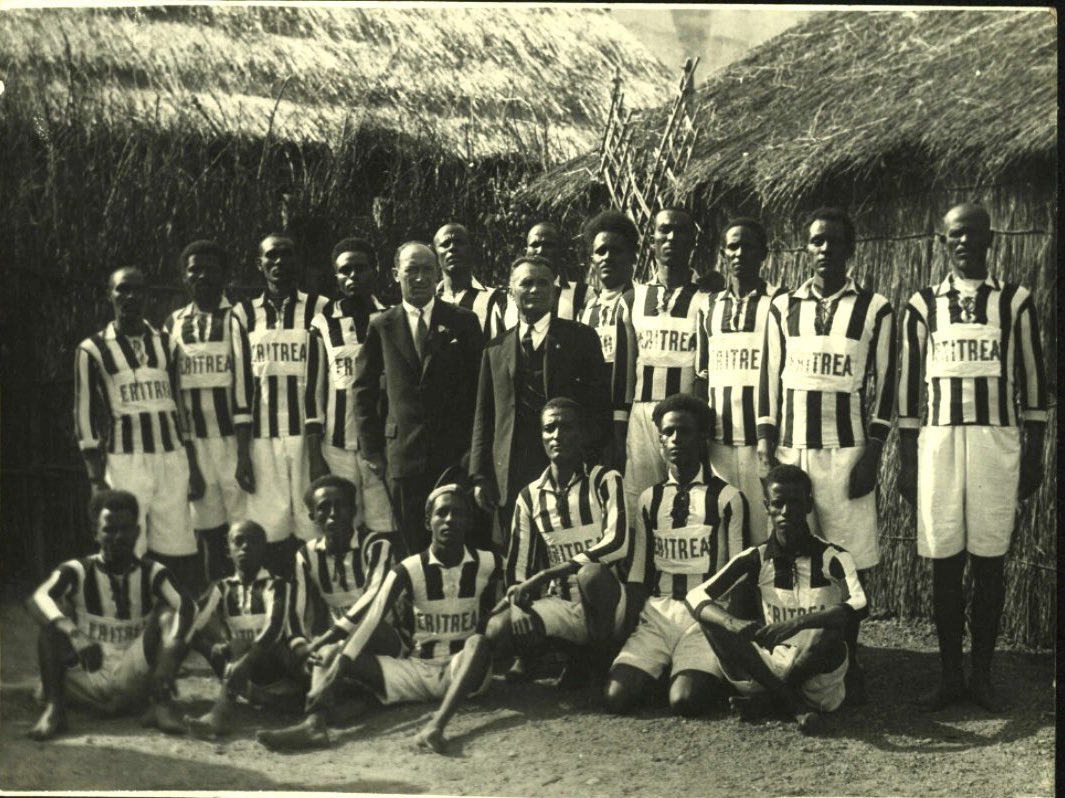
Eritrean football team 11 November 1928 #Eritrea
ERI PHTO33 tweet media
English
2
47
120
2.5K
David Yeh
David Yeh@Yehdavid·
@deutscheritreer @m_erite @AligidirEritrea That’s a lazy take. Eritreans didn’t get a team as some gift of colonization, they built identity, talent, and pride despite it. History isn’t something you erase just because it’s uncomfortable; it’s something people rise above.
English
1
0
1
12
David Yeh retweetledi
Yemane G. Meskel 🇪🇷
The Potemkin Party's disinformation pendulum appears to swing between two poles these days. On the one-hand, the PP continues to ramp up its monotonous, albeit toxic, tone on the imperative for "sovereign access to the sea" and associated saber rattling that it has flaunted for more than two years now. At the same time, there is a distinct twist/tone to its mendacious campaign in these times to portray itself as a "victim" of destabilization and thereby re-package its overarching irredentist agenda as a "legitimate act of self-defence". The latest version in its playbook of ever-shifting fallacious arguments and pretexts consists of ludicrous misinterpretation of the long-settled EEBC Award; to ascertain with a straight face that the Award's implementation remains "unilateral and illegal action before physical demarcation is carried out through an agreed process". These gimmicks are willfully floated to camouflage and divert attention from its reckless irredentist agenda which has been and remains the central kernel and driver of the tension in the region. That the EEBC had closed shop in 2007 having delivered its demarcation decision - duly deposited at the UN Cartographic Office with copies to both parties - is indeed a matter of historical record. The bedrock of the Joint Declaration of Peace and Friendship between Eritrea and Ethiopia, that was signed in Asmara in 2018, was in fact Ethiopia's full and unequivocal, if belated, commitment to the implementation of the EEBC Award, (Art.4). In the event, the Potemkin Party's U-turn is not surprising in many respects; as backstabbing, duplicity and deception are, indeed, part and parcel of its daily political staple. x.com/hawelti/status…
English
2
441
503
11K
David Yeh retweetledi
Yemane G. Meskel 🇪🇷
The Sudan in the Eye of the Storm - An Internal War and a Struggle for Influence over the Horn of Africa and the Red Sea; by Ambassador Osama Ahmed Abdul Bari "A distinctly African approach to the crisis — one that upholds the unity of the national state and rejects destabilizing external interventions — remains the most effective pathway to shielding the region from descent into chaos and to safeguarding the aspirations of its peoples for development, security, sovereignty, and prosperity". shabait.com/2026/03/24/the…
Yemane G. Meskel 🇪🇷 tweet media
English
0
234
268
3.1K
David Yeh retweetledi
Ghideon Musa
Ghideon Musa@GhideonMusa·
The Sudan in the Eye of the Storm – An Internal War and a Struggle for Influence over the Horn of Africa and the Red Sea By: Ambassador Osama Ahmed Abdul Bari, Ambassador of the Republic of the Sudan to the State of Eritrea. Introduction: Geography that Shapes Politics The Sudan has never been a peripheral state in the maps of geopolitics. It occupies a central position within the Nile Basin, extends deep into the African continent, and opens its maritime gateway onto one of the world’s most vital waterways — the Red Sea. This strategic location has rendered it a bridge between the Arab world and East Africa, between land and ocean, and between regional interests and international balances of power. Since the outbreak of war in mid- April 2023, the crisis has ceased to be a purely domestic affair. It has instead evolved into a focal point for intersecting spheres of influence and an open arena for the reconfiguration of power dynamics in the Horn of Africa and along the Red Sea littoral. The Political Challenge The war has generated a profoundly altered political reality. Central state institutions have become direct targets of attrition and fragmentation. As hostilities escalated, local armed actors and regional parties emerged seeking to fill the political vacuum and shape the course of events, thereby conferring upon the conflict dimensions that transcend Sudan’s borders. The confrontation is no longer merely a military struggle; it has become an existential contest over the very definition of the state: whether The Sudan shall remain a unified nation anchored in sovereign institutions, or devolve into contested spheres of influence. Regional and international engagement in the Sudanese arena has intensified — through political backing, financial support, or the instrumentalization of the conflict for strategic gain. The interests of major powers, including the United States, Russia, China, and several European states, intersect with those of regional actors such as the United Arab Emirates, Iran, Israel, a number of Gulf countries, and neighboring states. By virtue of its geographic position, natural resources, and ports, The Sudan is no longer merely a state grappling with internal turmoil; it has become a strategic nexus within a broader matrix of global and regional competition over maritime infrastructure, resources, and shipping lanes. Warnings have accordingly intensified regarding the dangers of territorial fragmentation or the deliberate weakening of central authority, scenarios that could precipitate the emergence of a “fragile state” model. Such an outcome would not threaten Sudan alone but would reverberate across the entire region, as the stability of neighboring states is inextricably linked to the stability of Khartoum. The Security Challenge. The adverse repercussions of the ongoing war extend well beyond Sudan’s borders through displacement flows, the proliferation of arms, and the cross – border movement of armed groups. These dynamics directly affect the security of neighboring countries. Borders that once functioned as historic bridges of communication have increasingly become potential conduits for the spread of instability. Given that the Red Sea constitutes a vital artery for global commerce, rising regional tensions have fostered an expanded military presence by multiple powers along its shores, transforming it into an open theatre for possible escalation. Competition over ports, naval bases, and strategic interests is not detached from the war in Sudan; rather, it is nourished by it. Any internal disturbance thus poses a latent threat to international maritime security, particularly in the Bab El – Mandeb Strait. Beyond the armed conflict itself, challenges such as piracy, armed attacks, and threats to supply chains are escalating, increasing the costs of insurance and shipping, and impacting both regional and global economies. The Economic Challenge The war has inflicted severe damage upon the Sudan’s economy. Investments have declined, public revenues have contracted, and essential services have deteriorated. The prices of goods have risen to unprecedented and exorbitant levels. These developments have affected millions of Sudanese citizens and extended their repercussions to economies connected to the Sudan through trade and remittance flows. The Sudan was once regarded with optimism as a potential “breadbasket” for the region. However, the expansion of hostilities and the disruption of agriculture and supply chains have significantly undermined productive capacity, deepened internal food insecurity, and increased pressure on neighboring states. The operations of the Sudanese ports have likewise been affected, particularly amid maritime security disturbances in the Red Sea. This has resulted in higher transportation costs, delays in the arrival of goods and humanitarian assistance, and mounting pressures on interconnected economies. The Eritrean Position — Supporting Stability from Within the African House The State of Eritrea has emerged as a regional actor supportive of Sudan’s unity and its national institutions. It has affirmed its backing of the Sudanese Armed Forces as a cornerstone of the state. President Isaias Afwerki has, on numerous occasions, articulated a vision grounded in the rejection of foreign interference in African affairs and in the conviction that the continent’s crises should be addressed within the African framework. This stance aligns with a broader perspective in Asmara that views Sudan’s stability as integral to the stability of the Horn of Africa and the Red Sea region, and that considers the dismantling of national states a gateway to prolonged regional disorder. Between the Regional and the International — An Open Contest for Influence In the Horn of Africa, the interests of energy security, maritime routes, military bases, and major investments converge. The conflict in the Sudan therefore intersects with a broader competition that transcends its geographic boundaries. It is, fundamentally, a contest over the future: who controls the ports, who secures the straits, and who delineates the contours of influence in one of the world’s most strategically sensitive regions. Strategic Conclusions The Solution Must Begin from Within No durable stability can be achieved without a comprehensive national settlement encompassing all patriotic forces not beholden to external interests — one that safeguards state institutions and restores political trust. It further necessitates decisive and lawful measures to address elements operating against the national front and to confront dormant cells aligned with the rebel militia through appropriate legal and judicial mechanisms across the country. Effective Regional Cooperation Border management and the security of the Red Sea require coordinated and institutionalized mechanisms among the states of the region. Cross-Border Development Economic integration can serve as a bridge to stability rather than allowing geography to remain a theatre of conflict. Collective Maritime Security Safeguarding maritime navigation constitutes a shared responsibility requiring balanced regional and international coordination that fully respects state sovereignty. Conclusion: The Sudan Is Not an Isolated Island The war in the Sudan is no longer a localized event of limited consequence; it has evolved into a transformative factor in the strategic equation of the Horn of Africa and the Red Sea littoral. The stability of Khartoum is synonymous with the stability of the region, and its collapse — God forbid — would redraw maps of insecurity and uncertainty. A distinctly African approach to the crisis — one that upholds the unity of the national state and rejects destabilizing external interventions — remains the most effective pathway to shielding the region from descent into chaos and to safeguarding the aspirations of its peoples for development, security, sovereignty, and prosperity. shabait.com/.../the-sudan-…
Ghideon Musa tweet media
English
0
38
46
630
David Yeh retweetledi
ⓉⓃ
ⓉⓃ@tesfanews·
(By Minister Yemene G/Meskel) - The Potemkin Party's disinformation pendulum appears to swing between two poles these days. On the one-hand, the PP continues to ramp up its monotonous, albeit toxic, tone on the imperative for "sovereign access to the sea" and associated saber rattling that it has flaunted for more than two years now. At the same time, there is a distinct twist/tone to its mendacious campaign in these times to portray itself as a "victim" of destabilization and thereby re-package its overarching irredentist agenda as a "legitimate act of self-defense". The latest version in its playbook of ever-shifting fallacious arguments and pretexts consists of ludicrous misinterpretation of the long-settled EEBC Award; to ascertain with a straight face that the Award's implementation remains "unilateral and illegal action before physical demarcation is carried out through an agreed process". These gimmicks are willfully floated to camouflage and divert attention from its reckless irredentist agenda which has been and remains the central kernel and driver of the tension in the region. That the EEBC had closed shop in 2007 having delivered its demarcation decision - duly deposited at the UN Cartographic Office with copies to both parties - is indeed a matter of historical record. The bedrock of the Joint Declaration of Peace and Friendship between Eritrea and Ethiopia, that was signed in Asmara in 2018, was in fact Ethiopia's full and unequivocal, if belated, commitment to the implementation of the EEBC Award, (Art.4). In the event, the Potemkin Party's U-turn is not surprising in many respects; as backstabbing, duplicity and deception are, indeed, part and parcel of its daily political staple. x.com/hawelti/status…
ⓉⓃ tweet media
English
3
90
122
2.1K
David Yeh retweetledi
ⓉⓃ
ⓉⓃ@tesfanews·
ETHIOPIA - ⚡️The Oromo Liberation Army (OLF-OLA) has joined the Amhara Fano militia in criticizing Ethiopia’s upcoming "election" ... describing it as a “hollow exercise” limited to a handful of urban areas and little more than a staged event for international audiences. In a statement, the group said the process lacks credibility, arguing that more than 70% of the country is beyond the reach of any meaningful vote. It also said that major independent parties have either withdrawn or are taking part only in the capital Addis Ababa to avoid "deregistration" or to highlight what they describe as flaws in the process before pulling out. According to the OLA, the remaining parties that are participating are either formed by or aligned with the government. x.com/OLF_OLA/status…
ⓉⓃ tweet media
ⓉⓃ@tesfanews

🔥 #BREAKING — The Amhara Fano National Movement (AFNM) announced today that there will be no “election” held in the Amhara region by July 1, calling it political theater while the government of Abiy Ahmed continues what they describe as a war against the #Amhara people. At the same time, as the Abiy Ahmed administration has foolishly revoked the party status of the TPLF, which effectively means elections will not be held in the #Tigray Region either. If the Oromo Liberation Army (OLA) issues a similar declaration and threatens action should voting proceed in the #Oromia Region, the 2026 parliamentary elections could be canceled or postponed indefinitely, given that these three regions together represent more than 70% of Ethiopia’s population. Such a scenario would leave PM Abiy Ahmed governing without a renewed electoral mandate. He first came to power in 2018 largely by political circumstance and has continued to rule without being directly elected by the public. If this level of conflict, violence, and bloodshed has occurred in the country while he has not been elected by the people, many fear the consequences if he were granted a new mandate through what critics describe as a fraudulent election.
English
2
21
27
1.3K
David Yeh retweetledi
Yemane G. Meskel 🇪🇷
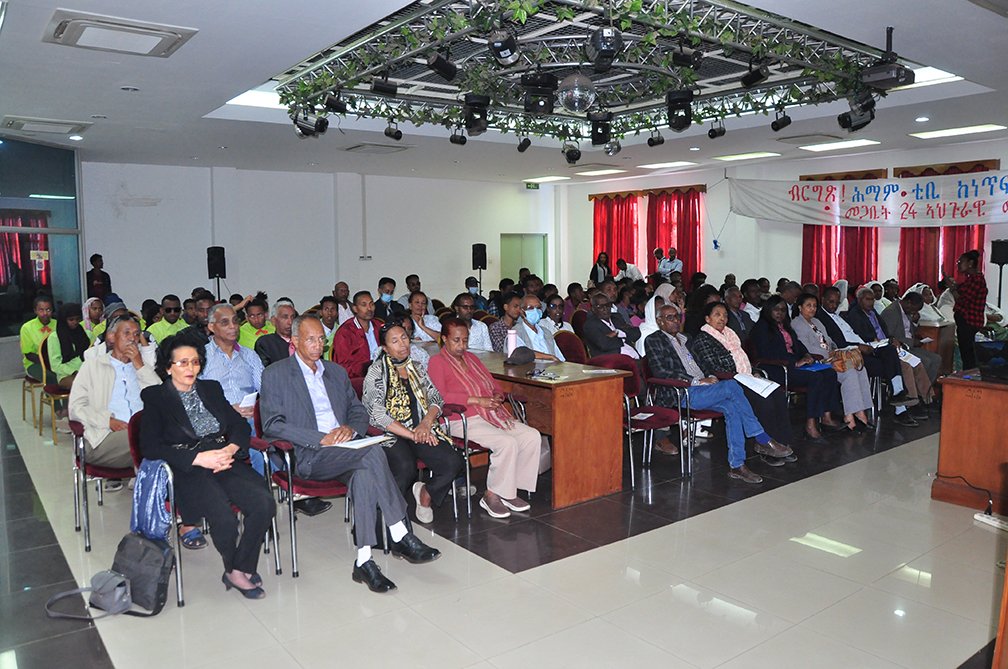
World Tuberculosis Day commemorated in Asmara today under the theme: "Yes! We Can End TB! Led by Countries, Powered by Communities, we reaffirm our collective commitment to ending TB as a public health threat". Opening Remarks by Dr. Araia Berhane, Director of CDC at the MoH; and, Dr. Mary Stephen, the WHO Country Representative. Event also featured Presentation on Global and Current Situation as well as Panel Discussion on Different Topics of Tuberculosis. Dr. Araia underlined MOH's operational strategy and ongoing efforts for the elimination of TB by 2030 throughout the nation. The WHO Res. Rep. attested to "great progress that Eritrea has made towards ending TB with steady TB notification rate at 87%, 100% treatment enrollment, and 90% success rate for all forms of TB and 81% for MDR-TB. Mortality has also decreased from 8.5 to 3.4 per 100,000 population in 2024".
Yemane G. Meskel 🇪🇷 tweet mediaYemane G. Meskel 🇪🇷 tweet mediaYemane G. Meskel 🇪🇷 tweet mediaYemane G. Meskel 🇪🇷 tweet media
English
0
234
277
3.1K
David Yeh retweetledi
deb3091
deb3091@deb30911·
Hilarious but perfect reflection of #Eritrea's handling of warmonger #AbiyRegimeIsCriminal For the past 3 years, #Ethiopia's #PP officials have been singing "Tuta Tuta", asking #Eritrea to be intimidated into submission. Indeed, we have no time to be scared off ፈራሕ ሰነፍ ነዳይ! from @ERiTV_Official ሳውን series!
English
1
5
16
436
David Yeh retweetledi
ⓉⓃ
ⓉⓃ@tesfanews·
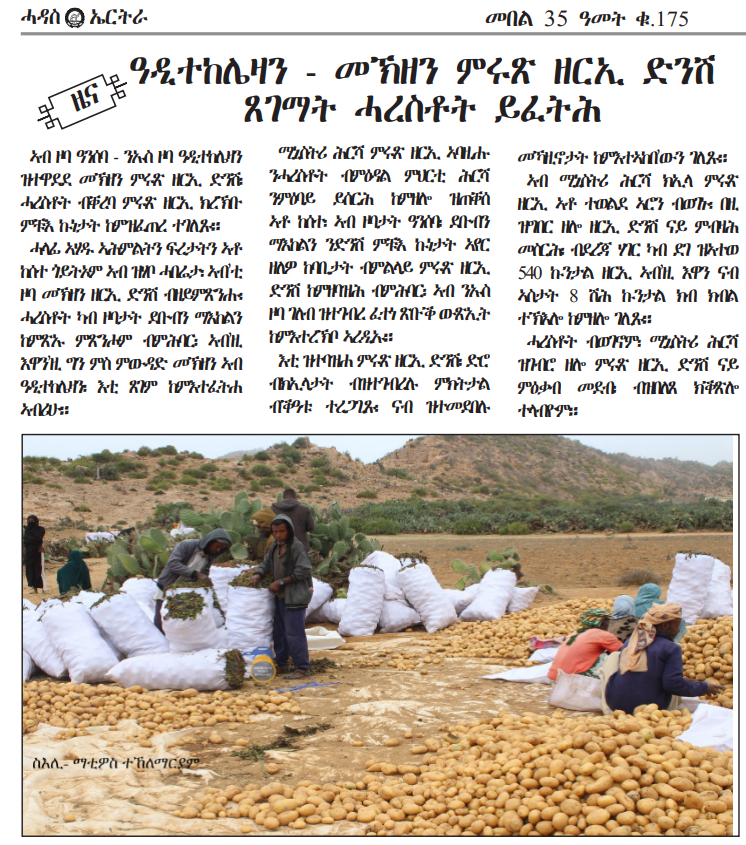
ERITREA ― Farmers are reaping the benefits of a national push to improve potato production, as high-quality seed multiplication stores continue to supply farmers with high yield seeds. The integrated seed store in Adi Tekelezan sub-zone now serves as a hub for farmers seeking disease-free, high-yield potato seeds, complemented by a similar facility in Mendefera sub-zone in the south. The program, which began with the importation of 540 quintals of improved seed varieties, has expanded rapidly. Ministry of Agriculture officials report that seed multiplication has now reached over 8,000 quintals, supporting thousands of farmers across the country. This has significantly reduced dependence on stored tubers from previous harvests, or low-quality potatoes purchased from local markets, which were often prone to disease. Yields have surged from 13 to 28 tons per hectare, producing larger, uniform potatoes that fetch higher prices in local markets. Local experts describe the program as a critical step in modernizing Eritrea’s farming sector and strengthening the country’s food self-sufficiency.
ⓉⓃ tweet mediaⓉⓃ tweet mediaⓉⓃ tweet media
English
1
35
63
897
David Yeh retweetledi
ⓉⓃ
ⓉⓃ@tesfanews·
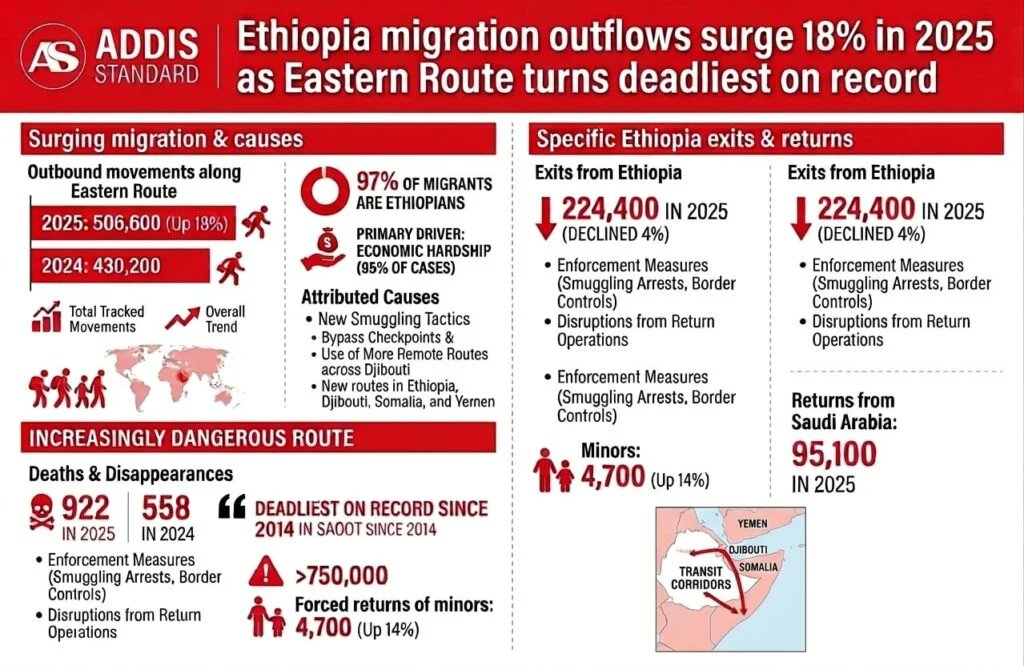
ETHIOPIA – 🔥 Irregular migration from #Ethiopia has surged, according to data from the International Organization for Migration (IOM). The number of Ethiopians leaving the country rose by 18% in 2005, reaching 506,600 compared to 430,200 a year earlier. Over the two-year period, more than one million Ethiopians flee their country, with 97% citing economic hardship as their primary motivation. The trend has raised further concern as the migrants are heading to neighboring countries such as #Djibouti, #Somalia, and #Yemen, destinations they view as comparatively more stable and economic opportunity than Ethiopia.
ⓉⓃ tweet media
English
3
14
23
1K
David Yeh retweetledi
Ghideon Musa
Ghideon Musa@GhideonMusa·
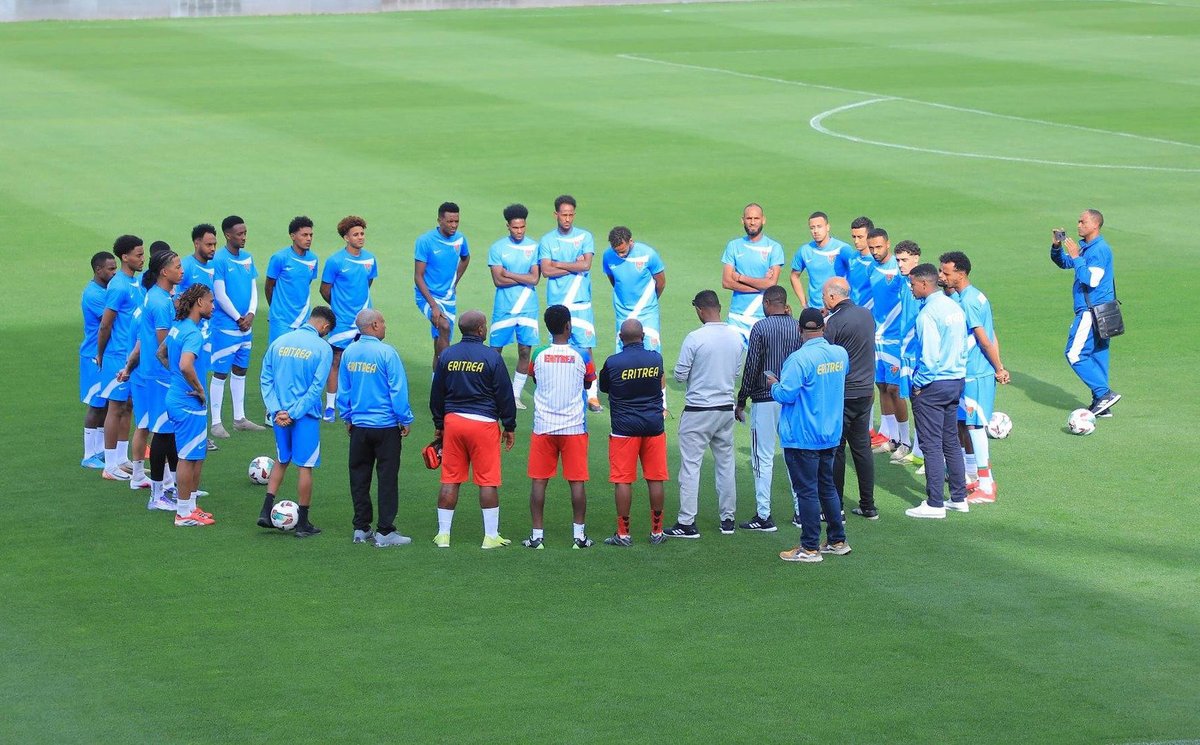
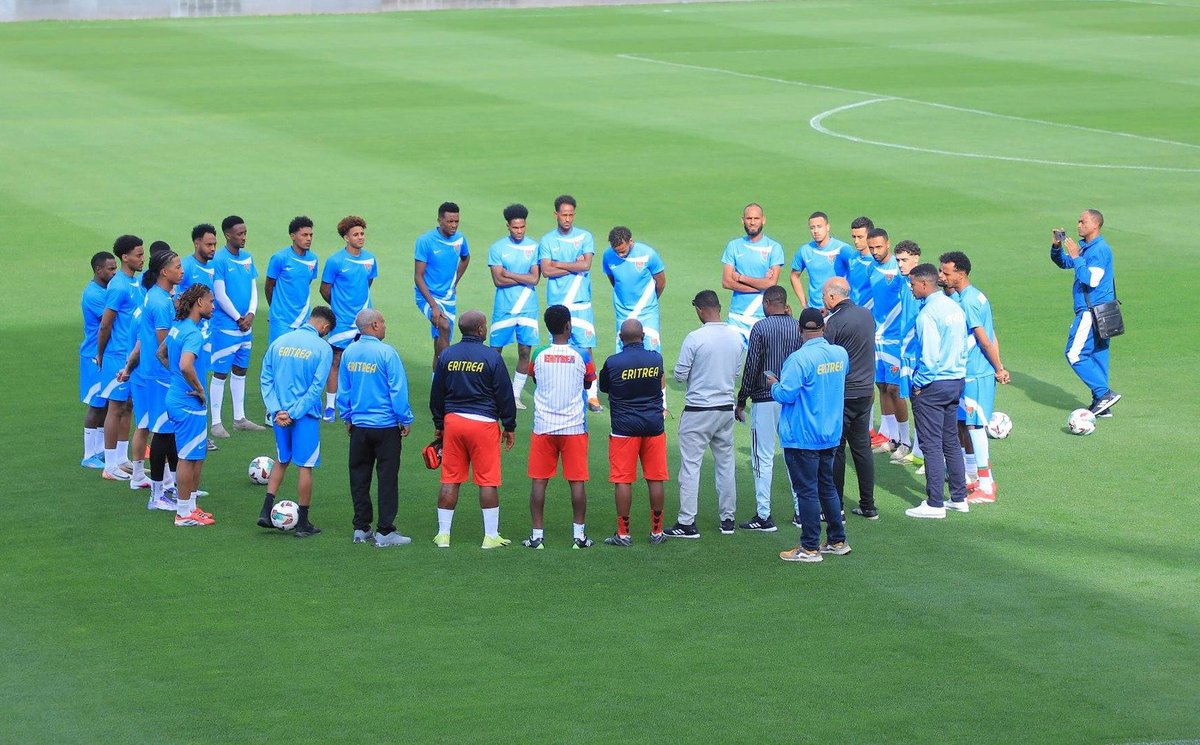
The Eritrean national football team held its final training session today at the Stade d'Honneur in Meknes, Morocco — the same stadium where they will play their big match tomorrow March 25, 2026. Kick-off time: 14:00 local time (Morocco time) In East Africa Time (Eritrea/Eswatini): 17:00 (5:00 PM)
Ghideon Musa tweet media
English
2
54
87
1.1K
David Yeh retweetledi
ⓉⓃ
ⓉⓃ@tesfanews·
Yesterday, the story was local Eritrean footballers seeking asylum. Today, it is Eritrean professional footballers returning home to represent their national team. #Morocco #AFCON2027 #Eritrea
ⓉⓃ tweet media
English
1
22
62
1.2K
David Yeh retweetledi
Ghideon Musa
Ghideon Musa@GhideonMusa·
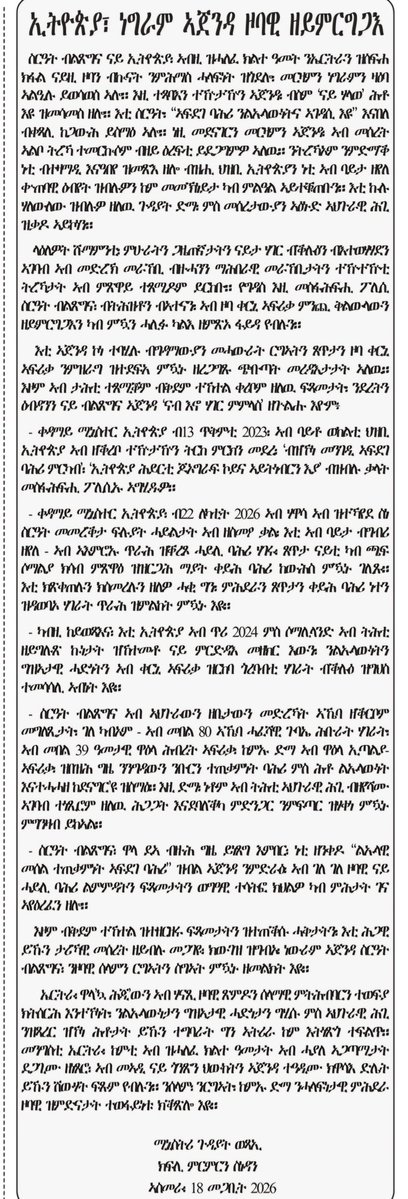
ኢትዮጵያ፣ ነግራም ኣጀንዳ ዞባዊ ዘይምርግጋእ ስርዓት ብልጽግና ናይ ኢትዮጵያ፡ ኣብዚ ዝሓለፈ ክልተ ዓመት ንኤርትራን ዝሰፍሐ ክፋል ናይዚ ዞባን ብኲናት ንምሕማስ ሓላፍነት ዝጎደሎ፡ መርዛምን ነግራምን ዛዕባ ኣልዒሉ ይወሳወስ ኣሎ። እዚ ተጻባእን ተዅታዅን ኣጀንዳ፡ ብስም ‘ናይ ሃላወ’ ሕቶ እዩ ዝመሳመስ ዘሎ። እቲ ስርዓት፡ “ኣፍደገ ባሕሪ ንልኡላውነትና ኣገዳሲ እዩ” እናበለ ብቀጻሊ ከጋውሕ ይስማዕ ኣሎ። ነዚ መደናገርን መርዛምን ኣጀንዳ፡ ኣብ መሰረት ኣልቦ ትረኻ ተመርኲሶም ብዘይ ዕረፍቲ ይደጋግምዎ ኣለዉ። ንትረኻኦም ንምድማቕ ነቲ ብተዛማዲ እናዓበየ ዝመጽእ ዘሎ ብዝሒ ህዝቢ ኢትዮጵያን ነቲ ኣብ ባይታ ዘየለ ቍጠባዊ ዕብየት ዝብሉዎን ከም መመኽነይታ ካብ ምልዓል ኣይተቘጠቡን። እቲ ኩሉ ሃለውለው ዝብሉዎ ዘለዉ ጉዳያት ድማ፡ ምስ መሰረታውያን ኣዕኑድ ኣህጉራዊ ሕጊ ዝቃዶ ኣይኮነን።. .. ሚኒስትሪ ጉዳያት ወጻኢ ክፍሊ ምርምርን ስነዳን ኣስመራ፡ 18 መጋቢት 2026 @shabait #Eritrea
Ghideon Musa tweet media
AM
0
90
107
1.5K