
Ali Darwish

12K posts

Ali Darwish banner
Ali Darwish

Ali Darwish

@_ADarwish

From 🇪🇬, living in 🇸🇬 | Partner @MonkshillVC | An entrepreneur at heart | perfectionist | tinkerer by nature

Singapore Katılım Kasım 2010
5.4K Takip Edilen1.9K Takipçiler
Ali Darwish retweetledi
Oguz Erkan
Oguz Erkan@oguzerkan·
Dylan Patel: “CPUs are sold out.” $INTC earnings and conference call confirmed the looming CPU shortage. There are three main drivers: - Agentic systems, as CPUs do the planning and orchestration. - Increasing complexity of and demand for reinforcement learning environments that run on CPUs. - Increasing deployment of AI instilled apps. Models run on GPUs but apps themselves run on CPUs. Demand for all these will grow secularly as AI systems will only get more agentic, RL environments will only get more complex, and deployment will only accelerate. As a result, GPU-to-CPU ratio in AI workloads will move from 1:8 to 1:2 or maybe even 1:1 in the future. CPU supercycle is about to start. $AMD $INTC $ARM
Wall St Engine@wallstengine

INTEL $INTC CEO: “Demand continued to run ahead of supply for all our businesses, esp for Xeon server CPUs” “CPU is reasserting itself as the indispensable foundation of the AI era” “The ratio of CPU to GPU used to be 1:8 & now it’s 1:4 & I think towards parity or even better” "18A yields are now running ahead of the internal projections.” “Intel 14A maturity yield and performance are outpacing Intel 18A at a similar point in time.” “A year ago, the conversation about Intel was about whether we could survive. Today, it’s about how quickly we can add manufacturing capacity.” "Our collective AI driven businesses now represent 60% of revenue and grew 40% year over year.” “AI revenue was $5.1 billion” and “ASIC growth” was “up more than 30% sequentially and nearly doubling year over year.”

English
20
47
419
92K
Ali Darwish retweetledi
Jeson Lee
Jeson Lee@thejesonlee·
Breaking: @travisk and @bgurley are still not friends
English
8
20
511
95.7K
Ali Darwish retweetledi
signüll
signüll@signulll·
anthropic went 0 → ~$350B in like 4 yrs. employee #200 is getting outcomes that historically required being employee #20 at google.
English
49
65
3.6K
236.9K
Ali Darwish retweetledi
TBPN
TBPN@tbpn·
Travis Kalanick Joins, xAI Rebuild, Spotify CEO Joins, Apple Faces Slop Allegations, Nikesh from Palo Alto Networks Joins x.com/i/broadcasts/1…
English
5
19
174
100.8K
Okara
Okara@askOkara·
here's how to get your first users without spending a dollar on ads: > go to okara.ai/reddit > drop your product url > add keywords your ideal users care about > it monitors reddit 24/7, finds relevant threads, and drafts authentic replies you can post
English
6
10
75
6.7K
Ali Darwish
Ali Darwish@_ADarwish·
Djoko ! 💪🏻
Indonesia
0
0
3
111
Ali Darwish retweetledi
Kimi.ai
Kimi.ai@Kimi_Moonshot·
Here's a short video from our founder, Zhilin Yang. (It's his first time speaking on camera like this, and he really wanted to share Kimi K2.5 with you!)
English
234
856
9.5K
1.7M
Ali Darwish retweetledi
Crystal
Crystal@crystalsssup·
Consulting-level slides, mimicking the McKinsey-style layout. I used kimi slide's adaptive mode to create them (coding version, not image gen version) .All the content was powered by K2's coding capabilities, fully editable. My prompt: Analyze Global EV market opportunities. Requirement: A professional, high-density consulting presentation slide, designed in the style of a top-tier strategy firm (McKinsey/BCG) blended with high-end editorial aesthetics. Core Content & Layout: 1. Rich Data Visualization: The slide is populated with complex, precise charts (stacked bar charts, waterfall charts, or line graphs) and detailed data tables with rows and columns. 2. Structured Frameworks: Includes strategic diagrams or 2x2 matrices constructed with thin, clean lines. 3. High Information Density: The layout is sophisticated and multi-column, mimicking an actual business analysis deck, not just an empty cover page. Visual Style: 1. Aesthetic: Tech-minimalist but information-heavy. Clean, sharp, and authoritative. 2. Typography: Serif fonts (like Times New Roman) for the main headlines to give a premium financial report feel; clean Sans-serif for chart labels and data numbers. 3. Color Palette: Clean white background. Text is sharp black. Charts and graphical accents use Deep Royal Blue and distinct shades of grey for data hierarchy. 4. Graphics: Use fine hairline borders for tables and precise vector lines for graphs.
English
50
266
3.2K
252.1K
Felix Lee
Felix Lee@felixleezd·
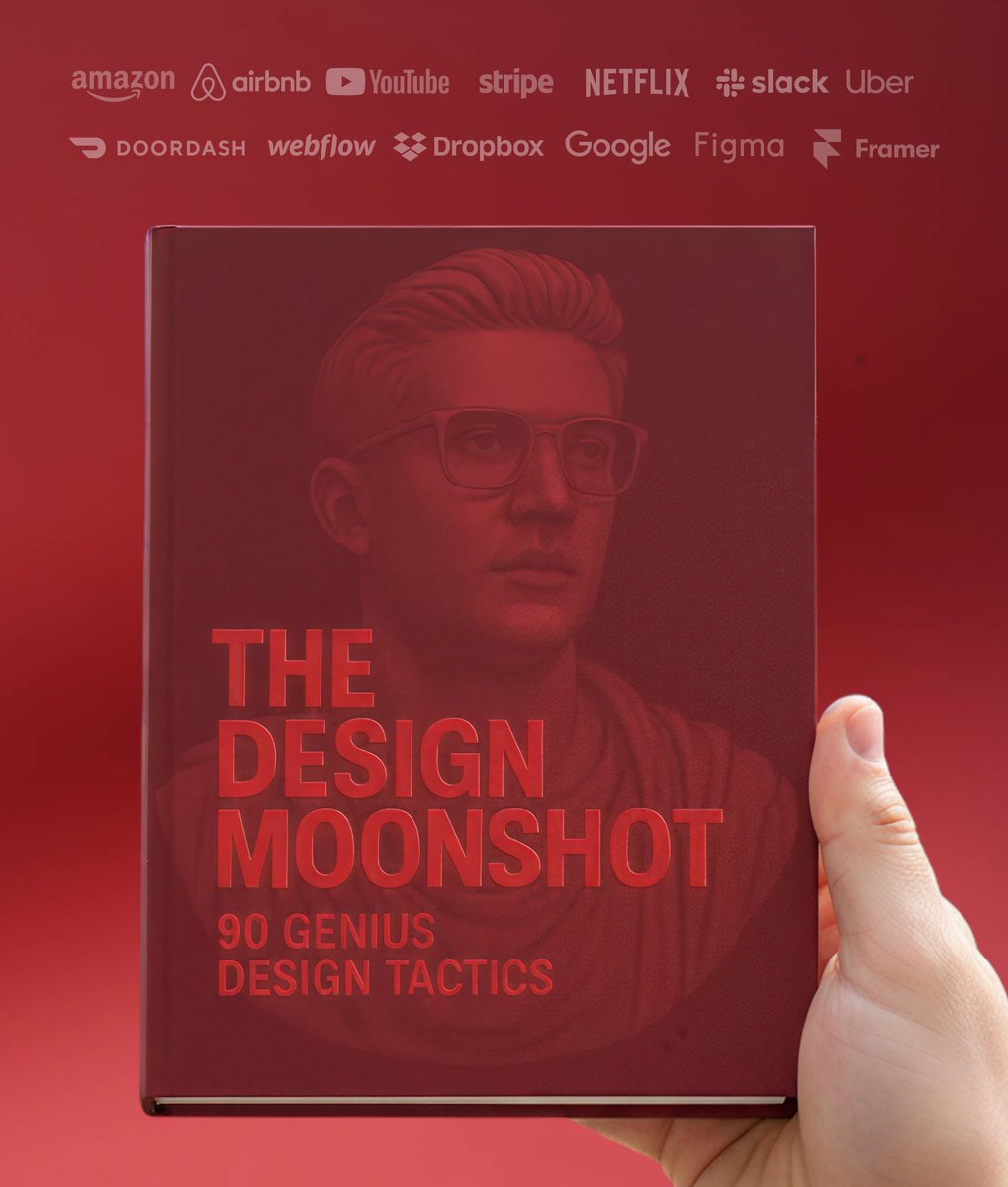
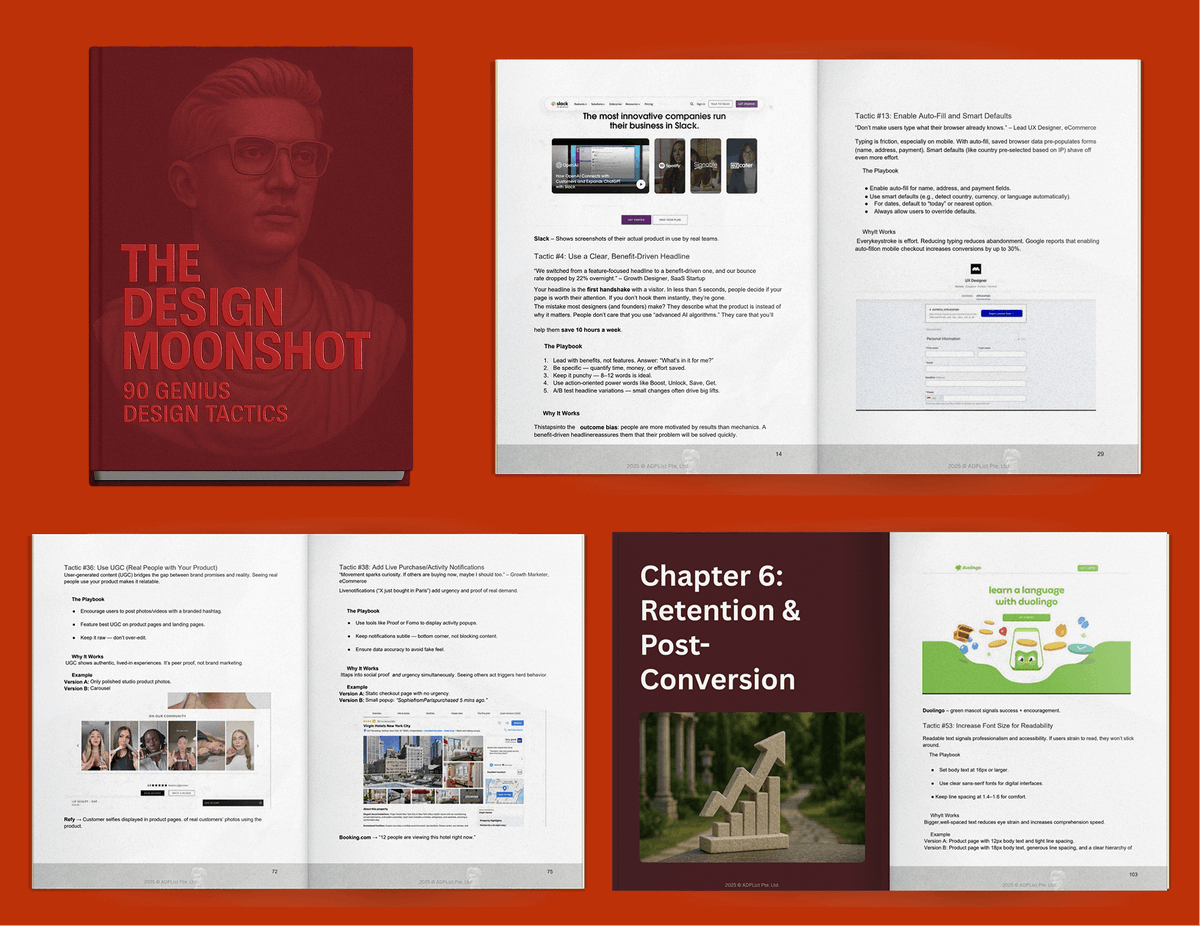
Design is the differentiator in AI era. Companies are waking up to the importance of having good design. Today, @ADPList is releasing an extraordinary collection of 90 winning design tactics used by the world's best products like Duolingo, Airbnb, Figma and more. This is a blueprint for design, proven by the best, and ready for you to use—we believe craft is eating the world. Want a copy? Just raise your hands below, I will send it to you!
Felix Lee tweet mediaFelix Lee tweet mediaFelix Lee tweet media
English
2.5K
182
2.9K
208.4K
Ali Darwish retweetledi
Kalshi
Kalshi@Kalshi·
JUST IN: Japan had below 670,000 births this year, despite having a population of 120 million
English
154
115
1.4K
3.5M
Ali Darwish retweetledi
hidecloud
hidecloud@hidecloud·
My keynote sharing in the websummit Lisbon. Talk about the frontiers of agentic AI and how Manus is building to that future.
English
3
4
20
3.7K
Ali Darwish retweetledi
Streets🗣
Streets🗣@IghtReto·
Jake Paul while knowing he was two punch’s away from seeing the maker
GIF
English
1
1
4
497
Ali Darwish retweetledi
Lenny Rachitsky
Lenny Rachitsky@lennysan·
My biggest takeaways from @ElenaVerna (Head of Growth at @Lovable): 1. In AI, you now need to find product-market fit every three months. Product-market fit used to mean: build something people want, then scale it for years. In AI, the underlying technology changes so fast—and customer expectations with it—that you’re constantly re-earning that fit. Even at $200M ARR. 2. The growth playbook has fundamentally changed for AI companies. Elena has led growth at Miro, Dropbox, and Amplitude and advised dozens more companies on growth. At Lovable, she says only 30% to 40% of what she learned in 20 years still applies. 3. At Lovable, growth is driven mostly through new features, not optimizing funnels. At the fastest-growing company in history, optimization drives about 5% of their growth. The other 95% comes from launching new features and products. Small tweaks don’t move the needle when everything is changing. 4. Ship constantly, and talk about it. Lovable’s main growth and retention strategy: ship features fast enough that customers feel the product is always alive. Engineers announce their own updates. The founder tweets progress daily. This keeps users curious—and keeps competitors scrambling. 5. Give your product away like candy. AI products are expensive to run, so most companies gate them behind paywalls. Lovable does the opposite: they fund hackathons, sponsor events, and hand out free credits. They treat this spending as marketing, not cost—and it compounds through word of mouth. 6. Influencer marketing outperforms paid ads by 10x. Lovable found that short videos showing what the product can do spread faster and convert better than traditional paid advertising. Showing beats telling. 7. “Minimum viable product” is dead. Elena describes the new minimum bar as “minimum lovable product.” If the experience doesn’t delight people, they won’t tell anyone. And word of mouth is your primary engine. 8. Community isn’t a nice-to-have. It’s a key lever for growth. Lovable’s Discord has hundreds of thousands of members helping each other. This amplifies word of mouth, drives retention, and makes customers feel like insiders. Building the product alone isn’t enough anymore—you’re building a world. 9. Hire people who create clarity from chaos. Fast-moving AI companies don’t have neat job descriptions or stable roadmaps. Elena looks for high-agency people who thrive in mess, including new graduates who are AI-native and former founders who know how to operate without instructions. 10. You can work at one of the fastest-growing companies in history and still see your kids. Elena wakes at 6 a.m. Stockholm time, protects her gym and family hours, and refuses to treat burnout as a badge of honor. Her point: if you set boundaries, the work will fill the available time—not all the time.
English
46
136
1.2K
164K
Ali Darwish retweetledi
RJC
RJC@RJCcapital·
BREAKING: OPENAI IN TALKS TO RAISE $100B AT $750B - THE INFORMATION
RJC tweet media
English
3
1
35
4.4K
Ali Darwish
Ali Darwish@_ADarwish·
Just landed in SF ✌🏻
English
0
0
5
83
Ali Darwish retweetledi
Neuron Powers 🧠
Neuron Powers 🧠@neuronpowers·
Energy givers vs Energy drainers
Neuron Powers 🧠 tweet media
English
6
474
2.6K
56K
Ali Darwish retweetledi
Molly O’Shea
Molly O’Shea@MollySOShea·
BREAKING: Inside General Catalyst’s $1.5B AI Roll-Up Engine: The Creation Strategy Marc Bhargava, Managing Director at General Catalyst leads the Creation Strategies for incubations, transformations, & venture buyouts, as well as leading early stage crypto & fintech investing. He breaks down one of the most significant shifts happening inside venture & private markets today: AI Roll-Ups. As one of the 3 largest venture players with ~$40B AUM, General Catalyst has quietly built a $1.5B AI roll-up engine reshaping a $16 trillion market – historically defined by low margins & slow modernization. To date, Marc has led GC's investments in Long Lake, Rox, Eudia, Titan MSP, Dwelly, Pallet, Kick, Serval, Vivere, Cartesia, Aaru, Civic Roundtable, Physical Intelligence, Agora, etc. as well as sourced Mercor, Windsurf, Together AI. 𝐓𝐈𝐌𝐄𝐒𝐓𝐀𝐌𝐏𝐒 (00:00) Marc Bhargava, General Catalyst (02:54) Inside the $1.5B Creation Strategy & why AI rollups emerged (05:42) Early successes: Crescendo, Long Lake, Titan MSP, Eudia (08:15) The 4 categories of task automation (10:42) How GC narrowed 70 industries → 10 (13:18) The $16T services AI opportunity (15:46) Competing with traditional PE: long-term compounding vs. short-term flips (18:11) Funding mechanics: incubate → automation proof → acquisition → scale (20:33) How GC builds hybrid teams: AI-native + PE + operators (22:47) Why Fortune 100 AI transformation often fails (24:55) Will AI shrink or expand the workforce? (27:22) How GC decides when to build an AI rollup vs. invest in SaaS (29:49) Global expansion & where talent lives today (32:10) Why AI rollups are still massively underrated & what's coming next (44:19) Global Expansion & Talent Distribution (47:13) General Catalyst's Investment Philosophy (48:56) Looking Ahead: The Future of AI Rollups
English
14
37
332
313.6K
Ali Darwish retweetledi
Arianna Huffington
Arianna Huffington@ariannahuff·
There's no better time to start.
Arianna Huffington tweet media
English
35
772
7.7K
117.5K