Levy II

6.7K posts

Levy II banner
Levy II

Levy II

@_LimbikaniM

Confidential informant

Zambia Katılım Şubat 2011
353 Takip Edilen319 Takipçiler
Levy II retweetledi
Tanya
Tanya@Tanyaelisabeth·
“Feminism is just about choice” “feminism is good for women” Also feminism: In The Second Sex (1949), de Beauvoir wrote: “No woman should be authorized to stay at home… Women should not be allowed to have that choice, precisely because if there is such a choice, too many women will make it.” The mother of modern feminism believed women had to be denied freedom, because freedom would make them choose traditional roles. Firestone: In The Dialectic of Sex (1970), Firestone wrote: “The end goal of feminist revolution must be… not just the elimination of male privilege but of the sex distinction itself: genital differences between human beings would no longer matter culturally… The tyranny of the biological family would be broken.” The goal was never equality, it was the destruction of sex-based reality. Betty Friedan: “women who 'adjust' as housewives, who grow up wanting to be 'just a housewife,' are in as much danger as the millions who walked to their own death in the concentration camps...they ate suffering a slow death of mind and spirit.” Kate Millett: Sexual Politics (1970) argued: “The chief institution of patriarchy is the family. The family unit must go…” Gloria Steinem: “We Became the Men We Wanted to Marry” Steinem’s vision of feminism wasn’t about honoring womanhood, but replacing it, with a female iteration of male ambition. Friedrich Engels: In The Origin of the Family, Private Property and the State, Engels (Marx’s collaborator) wrote: “The modern individual family is founded on the open or concealed domestic slavery of the wife.”To destroy capitalism, you had to destroy the traditional family. That’s why early socialist movements embraced feminism, not to liberate women, but to dissolve the structure that made civilization sustainable.
English
62
520
2.1K
60.2K
Levy II
Levy II@_LimbikaniM·
@ssishuwa @briansimasiku What would you say if you woke up tomorrow to the news that 'white saviour' Gonzalez has retracted everything he said and apologised?
English
0
0
1
118
Sishuwa Sishuwa
Sishuwa Sishuwa@ssishuwa·
@briansimasiku What would you say if you woke up tomorrow to the news that Zambia has signed the US health funding deal?
English
7
1
11
3.7K
Levy II
Levy II@_LimbikaniM·
@mutendegomo @Space2013M Aah! Kansi you're talking about political differences? So to you political differences mean Zambia is divided? Nishi kansi we have always been divided since democracy was introduced to us.
English
1
0
0
16
Manda
Manda@mutendegomo·
@_LimbikaniM @Space2013M Even worse! The silence you hear is when people are fed up and fear of this gvnt but the whispers are there. Pa ground where are you hearing this is the best gvnt and we are good?
English
1
0
0
6
Manda
Manda@mutendegomo·
@_LimbikaniM @Space2013M The constant reference to tribe which is the most prevalent it has ever been! There can’t even be unity over the burial of the former head of state. Just look at how polarizing social media is. If it’s praise for gvnt whether with insults you are safe. Dare criticize and fear
English
1
0
0
12
Levy II
Levy II@_LimbikaniM·
Dude, of course it matters who has access to our minerals. I always try not to call you STUPID but you make it really, really hard for me.
Sishuwa Sishuwa@ssishuwa

@ZaBiggie x.com/ssishuwa/statu… What matters is not who has access to our minerals; it is the policies we implement in the mining industry to ensure sufficient revenue collection; the ownership structure; the strength of our anti-corruption laws; and their effective enforcement.

English
2
0
4
219
Levy II
Levy II@_LimbikaniM·
@ssishuwa @ZaBiggie Of course it matters who has access to our minerals. I always try not to call you STUPID but you make it really, really hard for me sometimes.
English
0
0
0
29
Sishuwa Sishuwa
Sishuwa Sishuwa@ssishuwa·
@ZaBiggie x.com/ssishuwa/statu… What matters is not who has access to our minerals; it is the policies we implement in the mining industry to ensure sufficient revenue collection; the ownership structure; the strength of our anti-corruption laws; and their effective enforcement.
Sishuwa Sishuwa@ssishuwa

@hashjenni Just to add that Zambia has been independent since 1964. It is the responsibility of my government, the Zambian government, not Trump or the United States, to keep Zambians healthy. x.com/ssishuwa/statu…

English
2
0
3
1.1K
Sishuwa Sishuwa
Sishuwa Sishuwa@ssishuwa·
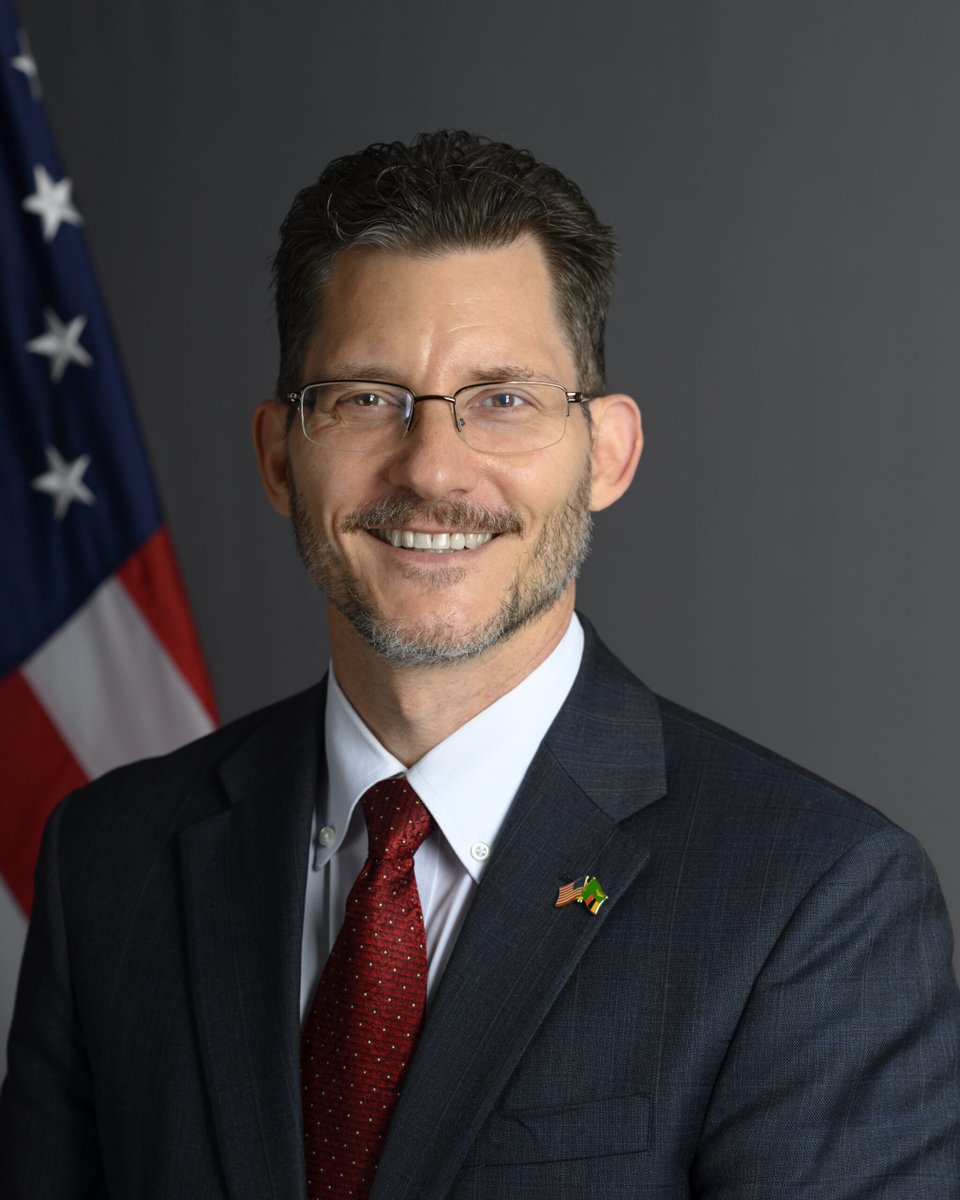
'I ask those of you whose country it is: Is this the Zambia you want?' Too often, people in the diplomatic community move from one duty station to another with little concern for the problems of the countries that briefly host them. Not Michael Gonzales, the United States Ambassador to Zambia who is leaving the country to take up a deserved promotion in Washington. I have never met Gonzales in person, but developed a liking for him, based on his work in Zambia and what I unearthed about him in the course of my academic research in other countries such as Zimbabwe and Malawi where he previously worked. He has a consistent track record of holding governments accountable for their actions in violation of their own laws and for harming the interests of their people and countries for personal benefit. Over time, I discovered the key to understanding Gonzales: His character. It radiates sharp focus, care and respect for the dignity of other people, and capacity to speak one's mind. Gonzales is a forthright, upstanding, and authentic human being with basic decency, integrity, and rectitude. The outgoing US Ambassador, who took up his appointment in August 2022, is leaving the same way he led: with care, courage, compassion, candidness, and affection for Zambia. For him, Zambia was not simply a duty station; it was a place he genuinely loves and cares for, one that has been let down by successive government leaders including the current ones. On 30 April, he delivered his parting words. They were as pointed as his nose. Below are excepts form his farewell speech, followed by the complete text of his remarks. On the insanity of appointing corruption accused suspects to lead anti-corruption bodies “But appointing a Director General of the Anti-Corruption Commission who was actively under investigation by the ACC, and her admonishment to her intentionally under-resourced agency not to investigate senior government officials, only cripple hopes that clean business can be done.” On the lawlessness of the government and its consequences “When Parliament ignores the Constitutional Court’s ruling that the process used to ram through a constitutional amendment was itself unconstitutional, investors rightly ask “If they can do that to the constitution, what does that mean for the sanctity of my contract?” They rightly wonder if the next constitutional amendment which the Attorney General has already announced is really just a guise for resetting term limits.” On the selective application of the law: “The rhetoric of “no sacred cows” is rubbish when there aren’t any cows except those who are deemed to be disloyal. When only opponents are arrested, but not those in office engaged in the very same practices, the hollow rhetoric of “rule of law” only further keeps investors away, preventing the creation of growth, jobs, and tax revenues to pay for public service commitments.” On the need to fight corruption including illicit financial flows: “The Zambian government’s own reports reveal that every year Zambia loses over $4 billion in dirty money flows to East Asia. That is Zambian money that does not benefit the Zambian people or contribute to the budget. If taxed, that would bring an additional $1 billion for the government to fund healthcare, education, social services, and development.” On how corruption has become a norm with no consequences for the perpetrators “Every year, hundreds of millions of dollars of government funds are lost to the Zambian people through corruption. Certainly, it’s not just U.S. taxpayers’ support that is stolen. Every year, the country loses out on hundreds of millions of dollars in new investment and growth because they are hijacked by unmitigated petty corruption, blocked because law-abiding investors refuse to pay kickbacks to Zambian bureaucrats or leaders who are never held accountable. "Even the Chinese government convicted AVIC’s Chairman to death for corruption. AVIC’s Chingola-Chililabombwe Road was washed out last month, its negligence disrupting Zambia’s trade with the region. AVIC’s fraud in a $320 million police housing tender in 2014 is well documented. Despite that, this government ignored the competitive bid by renown Zambian investors only to award AVIC the $650 million Lusaka-Ndola Dual Carriageway project, subsidizing this notoriously fraudulent and corrupt company with $300 million from the public pension scheme. How does this happen? Can law-abiding investors do clean business here? Will donors be asked to backfill the loss when the pension money too is wiped out?” On confirming reports that President Hichilema's officials unsuccessfully asked the US State Department in 2024 to recall Gonzales over his strong criticism of corruption in government: “Attacking the messenger who dares to name these dynamics out loud is not limited in targeting the U.S. ambassador and asking Washington for his removal. Today, 10% of my diplomats have family members who still haven’t received basic residency permits from the Zambian government. Several have received court summonses as a result. Like Zambians themselves experience, ZRA staff shake down my departing diplomats for fees that don’t apply to them too. When elevated, their supervisors double down on the demand.” On the duty of active citizenship: “So, as I prepare to leave this country that I love, I ask those of you whose country it is: Is this the Zambia you want? Are you on course to achieve it? If not, what action will you take to contribute to making that become a reality?” Below is the complete text of Gonzales' speech. Remarks by Amb. Michael Gonzales Farewell Reception – April 30, 2026 Good evening. For decades, the U.S. relationship with Zambia was one centered around aid. The United States has provided billions of dollars of assistance to Zambia, helping the country reach HIV epidemic control, contributing to a 20-year increase in life expectancy, slashing malaria deaths, and truly impacting the lives of every Zambian alive today. When we paused funding to review our assistance programs last year, so much of Zambia’s health system began to crumble almost overnight. Despite over $7 billion in U.S. health assistance since 2000 and the hard work of many Zambians alongside us, that crumbling system revealed that while we thought we were building capacity, successive Zambian governments had not built systems. Too often, Zambian officials and leaders abdicated their responsibilities, letting the United States pay for healthcare while officials diverted government funds to their own pockets. Last year I shed tears before the world when I announced a $50 million cut in US health assistance. After years of pleading, I could no longer standby while the Zambian government refused to stop or take action to hold people accountable for the systematic and nationwide theft of U.S. provided medicines while the Zambian citizens for whom those were intended went without. One year later, not a single notable person has been arrested since last February. Not a single notable prosecution has even begun. After last year’s pause, we resumed almost all of our health assistance: over $400 million including over $75 million in medication. We continue to pay the salaries for over 23,000 healthcare workers, as we have for decades. Such is the legacy of America’s support to the Zambian people. Now, I know there have been alarmist allegations recently. But let me be clear, any suggestion that the United States would withhold critical life-saving healthcare support from those Zambians whose lives and health depend on it unless we get critical minerals is disgusting and patently false! In reality, since October, my government has offered over $2 billion in additional health and economic assistance to Zambia. But we can no longer accept empty promises. The future must look different. The Zambian government must also increase Zambian funding, staffing, and genuine ownership of its systems. This is not to impose our will; it is the only way we know for Zambia to truly own a sustainable healthcare system and to enable robust growth. It’s the only way we know to ensure that system serves the people while finally breaking the cycle of foreign aid dependency. Since January, however, like with so many of our other overtures to the Zambian government, we have had effectively zero substantive engagement from Zambian officials to move these efforts forward. Our calls go ignored, questions unanswered, meetings cancelled, leaving us without even opportunities to speak, much less engage in substantive deliberations. Instead of continuing to languish without engagement, the actual funding under our Health MOU should have started this month. Instead, we have reached April 30 still cobbling together funds for mismatched projects without an implementation plan to guide us forward under Zambian leadership, much less a finalized MOU that guides our strategic approach. We know that the Zambian budget cannot even afford to pay for public services today, not to mention the increased healthcare funding or the myriad other huge budget commitments that seem to get pledged daily. So, something has to change if Zambia will ever meet its full potential or be able to sustainably provide services to its own people. At the same time, the Zambian government’s own reports reveal that every year Zambia loses over $4 billion in dirty money flows to East Asia. That is Zambian money that does not benefit the Zambian people or contribute to the budget. If taxed, that would bring an additional $1 billion for the government to fund healthcare, education, social services, and development. Every year, hundreds of millions of dollars of government funds are lost to the Zambian people through corruption. Certainly, it’s not just U.S. taxpayers’ support that is stolen. Every year, the country loses out on hundreds of millions of dollars in new investment and growth because they are hijacked by unmitigated petty corruption, blocked because law-abiding investors refuse to pay kickbacks to Zambian bureaucrats or leaders who are never held accountable. The narrative of the U.S.-Zambia relationship is adorned with flowery words of “partnership,” “collaboration,” “strategic,” or “mutual.” Regrettably, the reality of our unrequited relationship for decades has been starkly different. For years, the United States funded programs and sent technical advisors to help achieve Zambia’s development objectives. As we have for these past four months, we have often struggled to get successive governments to even bother answering the phone. It takes months to get a meeting that yields nothing. Officials draft policies they have no intention of implementing, invoking them in only speeches to sound like they are taking action. MOUs decay on the shelf among the others before the signing ceremony even ends, never to be implemented because the ministry won’t even meet to discuss implementation. Why? Because generations of Zambian officials and leaders gain from the dysfunction. The non-responsiveness on our availed funding and efforts to truly build a Zambian-owned health system that serves the Zambian people is sadly the norm. The theater of commissioning a report to get a scandal out of the news cycle but taking no substantive action on accountability is all too common. Of course, the systematic theft of public resources is not unique to American-provided medicines. Attacking the messenger who dares to name these dynamics out loud is not limited in targeting the U.S. ambassador and asking Washington for his removal. Today, 10% of my diplomats have family members who still haven’t received basic residency permits from the Zambian government. Several have received court summonses as a result. Like Zambians themselves experience, ZRA staff shake down my departing diplomats for fees that don’t apply to them too. When elevated, their supervisors double down on the demand. Zambia’s institutionalized and refined corruption does not only dissuade transparent and law-abiding investors from the United States. The inaction, corruption, and intimidation of opponents also harms American citizens, it undermines American organizations, NGOs, companies, and philanthropies. Zambians and so many other global friends of Zambia are also hampered by these very same dynamics, often bearing far more of the brunt of their effects. America’s support to Zambia is long-standing. Our goodwill runs through the veins, the hearts, and the dreams of millions of Zambians. Our hands remain open, outstretched in a genuine, transparent offer of true, tangible, and meaningful collaboration for mutual benefit. But there must be change. Going forward, the benefits of our relationship must be mutual. Empty promises must be replaced with tangible action. Commitments must be honored, laws must be implemented and enforced consistently and equally. The decades of paying for healthcare while national resources are pocketed must give way to ownership and systematic improvements that enable growth, development, and accountability. Since President Hichilema and I committed to reset the U.S.-Zambia relationship last July, America has re-doubled our efforts to support robust Zambian agency. We have availed billions of dollars to support tangible investments and reforms to catalyze Zambia’s success. We have offered expert support to inform reforms that would systematically benefit both the Zambian people and their many friends from around the world, without bias or favor. Sadly, so many of our overtures and goodwill have been met with … to use the most persistent and notorious of the Zambian government’s responses … “Noted. With thanks.” But, appointing a Director General of the Anti-Corruption Commission who was actively under investigation by the ACC, and her admonishment to her intentionally under-resourced agency not to investigate senior government officials, only cripple hopes that clean business can be done. Last May, multiple senior government officials shared with me and have confirmed that the government has a 500-page expert report detailing the irreversible harm and risk of generations of birth defects, cancers, heart and liver disease caused by carcinogenic heavy metals unleashed into the Kafue River ecosystem by last year’s Sino Metals’ tailings dam disaster. But, my heart broke when on July 29th last year, one of the country’s seniormost leaders vehemently denied that the government even had the report, much less would act on it until the polluter themselves provided it. I pleaded with her to take action to protect the Zambian people and I again offered U.S. assistance, which the Foreign Ministry had already formally declined. While so many American prospective investors leave, put off by bureaucratic drudgery, inaction, and corruption, the Zambian government recently approved Sino Metals to expand its operations. Did this happen in the face of Zambia’s myriad impediments, or because of them? Today, Sino Metals is scarring game management areas abutting the Kafue National Park. When that tailings dam breaks, I will not be alone shedding tears. Punctuating this, apart from the truly exceptional cases, too many American companies cannot get licenses, approvals, or action on basic administrative matters without being shaken down to give the Sino-brown envelopes of cash. The Zambian people suffer the consequences of these dual offenses: exploitation and foregone opportunity. When Parliament ignores the Constitutional Court’s ruling that the process used to ram through a constitutional amendment was itself unconstitutional, investors rightly ask “If they can do that to the constitution, what does that mean for the sanctity of my contract?” They rightly wonder if the next constitutional amendment which the Attorney General has already announced is really just a guise for resetting term limits. Even the Chinese government convicted AVIC’s Chairman to death for corruption. AVIC’s Chingola-Chililabombwe Road was washed out last month, its negligence disrupting Zambia’s trade with the region. AVIC’s fraud in a $320 million police housing tender in 2014 is well documented. Despite that, this government ignored the competitive bid by renown Zambian investors only to award AVIC the $650 million Lusaka-Ndola Dual Carriageway project, subsidizing this notoriously fraudulent and corrupt company with $300 million from the public pension scheme. How does this happen? Can law-abiding investors do clean business here? Will donors be asked to backfill the loss when the pension money too is wiped out? The rhetoric of “no sacred cows” is rubbish when there aren’t any cows except those who are deemed to be disloyal. When only opponents are arrested, but not those in office engaged in the very same practices, the hollow rhetoric of “rule of law” only further keeps investors away, preventing the creation of growth, jobs, and tax revenues to pay for public service commitments. Zambia does not need money. It needs leaders who govern for the people with integrity. It needs the political will to put Zambia first. But, of course, you don’t need me to say this. Dambisa Moyo, herself a daughter of the soil, made these same arguments 17 years ago. What America is trying to do here is both bolster Zambia’s sovereignty and catalyze Zambia’s growth. We are offering a transparent and open hand to join the Zambian people for mutual progress. We know that while you pursue a Zambia First agenda and we pursue America First, we are still able together to achieve something notably better for both of our countries, and we can do so without it coming at anyone’s expense, anyone’s exclusion, fully transparently, and legally. Now, of course the United States will absolutely continue to honor our long-standing commitment to the Zambian people to provide critical life-saving healthcare support. We will not leave Zambians without access to ARVs. We are redoubling our support to ensure that babies are not born HIV-positive. But, · Against the unmitigated systematic theft of U.S. assistance, · Against the refusal by the Zambian government to engage and to own or enable a sustainable healthcare system that serves the people, · In an environment where only the most exceptional of American investors can do clean business, and · Where Zambian government officials often can scarcely be bothered to take meetings with American officials or companies, not to mention capture the billion dollars of its own money secreted out of the country to east Asia, or hold accountable the company that unleashes generations of cancer and birth defects onto the people… without fundamental change, as the American Ambassador to the Republic of Zambia, how can I ask American taxpayers, Congress, or President Trump to continue the massive aid budgets that have been the hallmark of our relationship for decades? The United States remains intent to work with Zambia toward our mutual objectives, but how Washington responds to silence, inaction, aversion to accountability, and lack of ownership remains to be seen. That said, I am confident that it will depend on fundamental changes by the Zambian government to take action to do right by the Zambian people. It will depend on actions to foster and enable the Zambian people – and their partners who abide by the rule of law – to be able to tangibly contribute to a mutually beneficial future. Washington’s hand remains open and outreached for transparent, accountable collaboration enabling tangible action to benefit both of our countries. But we can no longer own the projects more than the Zambian government. We can’t justify continuing to prioritize funding where the Zambian government also does not deploy its own resources. No longer will we lead, while Zambian officials sit back unresponsively. Quite simply, America can best support Zambia’s sovereignty, agency, and success, if we finally abide by the maxim and refrain from wanting development more than the Zambian government does. That said, what happens between governments and embassies is important, but it is only a small fraction of the broader relationship between countries. The ties between Zambia and America are profound, strong, and everlasting. The connections between churches and civil society; the linkages between students, artists, and researchers; the bonds between communities; the union of our peoples – these are the essence of the U.S.-Zambia relationship, and these will never fade. Too often people hope for change. They note what others should do. But, hope is not a strategy, and we cannot control the actions of others, only our own. So, as I prepare to leave this country that I love, I ask those of you whose country it is: Is this the Zambia you want? Are you on course to achieve it? If not, what action will you take to contribute to making that become a reality? I first stepped foot in Zambia in 1995. My daughter took her first steps in Livingstone. As I prepare to depart, I take with me beautiful memories of Zambia and the Zambian people, but I depart with a heavy heart wondering if realization of the Zambian dream will be deferred for yet another 64 years while even more Zambians fall into poverty instead of being able to rise into the brilliant future that is possible. But my role here is not about this little guy with a big heart for Africa. It is about America and Zambia. America will continue reaching out to the people of Zambia, offering our support, seeking as much to learn as to share, doing so openly and transparently, and eager to help enable the realization of that Zambian dream and the creative future that benefits, and can only be discovered through, our sincere partnership. I thank you.
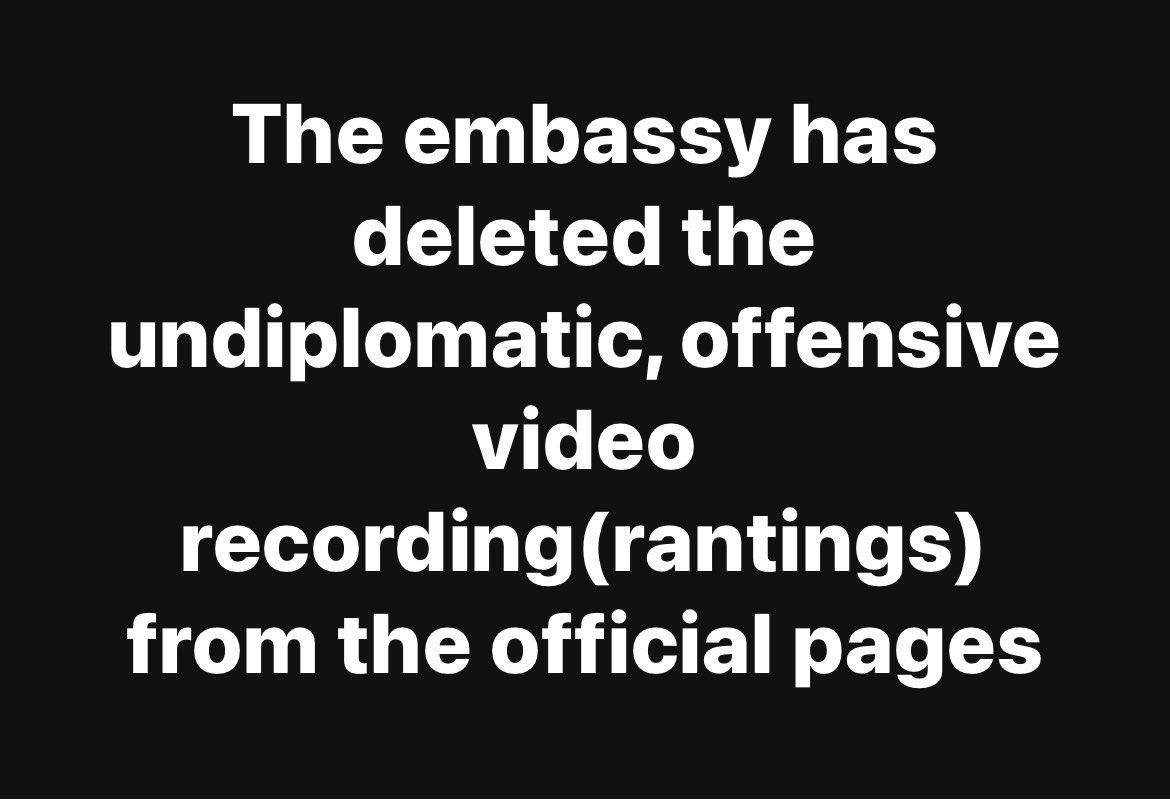
Sishuwa Sishuwa tweet media
English
51
66
249
29.5K
Levy II
Levy II@_LimbikaniM·
@mutendegomo @Space2013M Ok, then what is your measure of disunity? When you claim that Zambia is divided, what do you mean exactly?
English
1
0
1
17
Manda
Manda@mutendegomo·
@_LimbikaniM @Space2013M I’m literally speechless! Your measure of unity is by the size of traditional ceremonies? I hope you are right that the country is united according to “pa street”! Us “propagandists” as your sergeant of PR calls anyone who raises concerns hope you are right for Zambia’s sake
English
2
0
0
20
Levy II retweetledi
Magatte Wade
Magatte Wade@magattew·
"Clean energy" is built on fossil fuels and there's no way around it.  That turbine you see on top is almost 80% steel, and steel requires coking coal at 1,500°C as a chemical ingredient in the reaction that turns iron ore into iron.  Without coal in that process, you don't get steel.  The cement foundation is the same problem because two-thirds of the CO₂ it releases comes from a chemical reaction that happens regardless of what fuel you use.  These are the products Western governments and institutions want Africa to adopt instead of using our own natural gas.  600 million Africans don't have electricity, and the "clean" alternative they're pushing was built on coal.
Magatte Wade tweet media
English
125
568
1.2K
29.7K
Levy II
Levy II@_LimbikaniM·
@mutendegomo @Space2013M You think the country is divided coz the politicians you like are not in power and they're complaining all the time (expectedly so). Otherwise pa street we all like each other and our traditional ceremonies are bigger than ever.
English
2
0
1
23
Manda
Manda@mutendegomo·
@Space2013M By claiming to be a victim because of where he comes from thus making the inference that he’s hated because of his tribe. Most criticism has come because of his failings! This has made his followers believe everything is tribalism and abuse that
English
4
0
3
203
Sishuwa Sishuwa
Sishuwa Sishuwa@ssishuwa·
The specific ‘opposition leaders’ we were shown at Mulungushi Conference Center yesterday were sent there for a reason! Just see the way they behaved and how those videos went viral. The whole idea is to send a message to the country and beyond that Zambia has no serious opposition leaders. If you check at the Office of the Registrar of Societies, you will find that many of those parties don’t even exist. They are not even registered. They were just carefully picked from here-and-there and given a few coins. If you analyse the whole thing, you will note that no videos of the serious opposition leaders introducing themselves went viral. Both the rogue media and the private-but co-opted ones were busy only circulating the specific ‘opposition leaders’. Think harder. Think critically. Open your eyes. Do not fall for the bait.
English
10
4
42
1.6K
Zenith of sacrifice
Zenith of sacrifice@ArmstrongKamwi·
If what I saw at Mulungushi today is the only opposition we have then I can't help it but to just feel sad 😭
English
12
4
48
3.9K
Levy II retweetledi
Daniel Black🦎
Daniel Black🦎@Dani_Activist·
I used to think Christians were naive. I thought faith in God was just an emotional crutch for people who could not handle reality. Now I think the opposite. The more seriously I looked at life, history, suffering, conscience, beauty, evil, and the limits of human reason, the less convincing atheism became. Because everyone has faith. Everyone. The only real question is where that faith is placed. In God, or in man. I was taught that intelligence means distance from God. But what is so intelligent about believing that matter somehow produced mind, that chaos somehow produced order, that chemistry somehow produced conscience, and that human beings can ground morality by themselves while constantly contradicting even their own standards? If we are only matter, then human dignity is just a useful story. Love is chemistry. Evil is preference. Sacrifice is irrational. Meaning is self invented. But almost no one actually lives that way. We all live as if truth matters, as if cruelty is really wrong, as if beauty means something, as if love is more than a chemical reaction, and as if justice should exist even when it costs us. That is not nothing. That points beyond survival. The Bible understood this long before modern people started pretending they had outgrown it. Genesis grounds human dignity in the image of God. That means people are not valuable because they are productive, attractive, healthy, or useful. They are valuable because they bear His image. John 1 does not begin with chaos. It begins with the Logos. Reason, order, meaning. Reality is not random noise. It is intelligible because it comes from a mind greater than ours. Ecclesiastes says that pleasure, work, success, and achievement collapse into vanity when cut off from God. Anyone who has chased status, money, sex, or recognition long enough knows how true that is. Romans 1 says creation points beyond itself. And it does. The order of the world, the mathematical beauty of reality, the existence of consciousness, the hunger for meaning, the presence of moral knowledge, these are not small things. And history teaches the same lesson. The bloodiest experiments of the last century did not come from too much faith in God. They came from man trying to replace God with ideology, state, race, class, or power. When God is removed, something else always takes His place. Usually something crueler. Christianity also does not begin with a vague spiritual feeling. It makes a historical claim. That Christ entered history, was crucified, and rose again. You can reject that claim, but it is not the same as saying faith is just blind comfort. Christianity stands or falls on what it says actually happened. So no, I no longer think faith in God is stupid. I think one of the most shallow ideas modern people were ever sold is that disbelief is automatically intelligent. Sometimes disbelief is not depth. Sometimes it is pride. And sometimes faith is not an escape from reality. It is what remains when you look at reality honestly enough and realize that man is not enough, matter is not enough, and this world cannot explain itself. I used to think Christians were foolish. Now I think many of them simply saw earlier what I was too proud to see.
English
108
339
1.5K
45K
lorah
lorah@lorahmoe·
If you’re a man, please respond. If you’re a woman, ask the men in your life and report back: What is your initial gut reaction when you hear a woman say, “I hate men”?
English
8.5K
215
3.7K
710.8K
Lackson D. Mudenda
Lackson D. Mudenda@LacksonMudenda·
Quite an interesting read. @ssishuwa raises very good points on some issues. I like the section on the economics of CDF with population in mind & how that can potentially affect inequality in the future. I would have enjoyed more discussion on the historical allocation of resources & how it has persistently driven development in some regions while leaving others behind. I think I like such write ups because they stir the debate pots. It’s best to debate these topics extensively & widely. Some parts tho seem like a boy who cried wolf. Like the claim that they may “…abolish the presidential vote.” Really!? What I also found unnecessarily too strong was this below. I mean, are we truly such a mean people? “State institutions and actors were also employed to facilitate the death of former president Lungu, who in the absence of a viable opposition, had emerged to become the opposition, by blocking him from seeking medical treatment on time.” PSA: I read every word in case that is going to be used as a rebuttal.
Sishuwa Sishuwa@ssishuwa

How to rig elections the legal way: understanding the politics behind the 70 new constituencies By Sishuwa Sishuwa On 16 April 2026, the Electoral Commission of Zambia (ECZ) published a list of 70 new constituencies. These will be added to the existing 156, creating a total of 226 constituency-based seats in the National Assembly. As I predicted on 30 November last year in an article entitled “The devil in delimitation: why Hichilema is desperate to create new constituencies”, the majority of these new constituencies have been allocated to sparsely populated areas that support the ruling United Party for National Development (UPND) rather than densely populated, opposition-leaning urban centres like Lusaka and the Copperbelt. Of the 70 new constituencies, thirty-one (31) are in the Zambezi region – comprising parts of Central Province (8) and the three provinces sharing the Zambezi River: Southern (9), Western (7), and Northwestern (7). These areas have historically supported the UPND. Another twenty-six (26) are in the Luangwa-Chambeshi region – the four provinces sharing the Luangwa and Chambeshi rivers: Eastern (9), Luapula (5), Muchinga (6), and Northern (6). These areas have historically backed the main opposition party, the Patriotic Front (PF). The remaining thirteen (13) new constituencies are distributed as follows: six in Lusaka and seven on the Copperbelt. Notably, four of Lusaka's six new constituencies were carved from existing ones with strong historical support for the UPND, driven mainly by their ethnic demographics. These include Makeni (sliced from Kanyama), Kafue East (from Kafue), Chilanga West (from Chilanga), and Chongwe West (from Chongwe). The other two new constituencies, Lima and Roma, were cut from Matero and Mandevu constituencies, respectively. Taken together, there are four major political implications of the new constituencies. The first is that when added to existing constituencies, the Zambezi region now has the highest number of constituencies in the country by geographical spread or location totaling 97, distributed as follows: Southern (29), Western (26), Northwestern (19) and Central (23).  The Luangwa-Chambeshi region has 82 constituencies, distributed as follows: Eastern (29), Luapula (20), Muchinga (14), and Northern (19). Lusaka (18) and Copperbelt (29) have 47 constituencies between them. This means that even before the first vote is cast, the UPND strongholds already have an in-built majority of 97 arguably guaranteed seats (since they are in safe zones), thanks to this redrawing of electoral districts or gerrymandering. When one adds the 31 seats that the Constitution empowers the winning presidential candidate to appoint to parliament through nominations (11) and proportional representation (at least 20 of the 40 seats), this number, if President Hakainde Hichilema wins re-election, rises to 128 seats – more than half of the seats in the National Assembly. (Note: propositional representation seats are allocated to parties based on the vote that a party’s presidential candidate has received. Since Zambia’s constitution requires a winning presidential candidate to receive more than fifty percent of the total valid votes cast, 20 is only the minimum number; the final number will be determined by the percentage received by the president-elect, but it cannot be less than 50 percent). The second implication is that since the main opposition party is formally run by a leadership that was installed by President Hichilema, even most of the 82 seats in PF strongholds are likely to be won by the UPND in the forthcoming election. In fact, in controlling the PF through the state-supported Robert Chabinga, one of Hichilema’s objectives was to prevent the more than 50 PF members of parliament from defending their seats on the opposition party’s ticket. Their seats are mostly held in the Eastern Province and the Bemba-speaking provinces of Muchinga, Luapula, and Northern – constituencies where the UPND has fared poorly in previous general elections. A significant number of these MPS have already made it easier for Hichilema by defecting to the UPND, on whose ticket they are likely to seek adoption to return to parliament. Those who resist defection will be confronted with a new hurdle. Recently, the ECZ introduced a new administrative requirement that any aspiring parliamentary candidate sponsored by a political party must produce an adoption certificate signed “by the secretary-general or president as reflected at the office of Registrar of Societies”, an office controlled by the executive.  The Hichilema-controlled Chabinga, who is recognised by the Registrar of Societies as the PF’s leader, is unlikely to issue a certificate of adoption to a PF prospective parliamentary candidate who does not accept his leadership. As a result, most of the incumbent PF MPs will have to find alternative platforms on which to defend their seats. Already, Hichilema has instigated factions in at least four other opposition parties – with at least one faction supported by the State – for the purpose of making it harder for any of them to field candidates at both presidential and parliamentary level. The affected parties are the Movement for Multiparty Democracy, United National Independence Party, National Democratic Congress, and Forum for Democracy and Development. This scenario would increase the ruling party’s chances of winning the seats as the UPND will be competing against candidates standing either as independents or under relatively unfamiliar or unestablished parties – that is assuming Hichilema, using the Registrar of Societies and the ECZ, will allow any serious candidate or opposition party to run against him or his party. The third implication is that Zambia may effectively emerge from the August election as a defacto one-party state. This is because the UPND is likely to retain most of the parliamentary seats it won in 2021, win the newly created additional 31 seats in its safe zones, and, through the orchestrated exclusion of the main opposition party from the ballot, secure the majority of seats that were previously held by the PF. I was an opponent of the PF’s undemocratic actions when it was in power and a regular critic of then President Edgar Lungu. But one does not have to support the PF to see that the absence of a viable opposition party will be a terrible development for Zambia’s multiparty democracy. Over the last decade, the country has evolved into a two-party system. For instance, as things stand, out of the 156 parliamentary seats directly elected under first-past-the-post, the UPND (89) and PF (54) share 143. If one of these parties disappears or if Hichilema succeeds in his efforts to obliterate the PF, Zambia will become, except in designation, a one-party state. I do not think Hichilema will be bothered. If anything, he will be pleased with any election that will produce a UPND-controlled parliament because such an outcome would make it easier for him to make further changes to the Constitution such as abolishing the presidential vote or removing presidential term limits on his office. The fourth implication is that the geographical spread of the 70 new constituencies vis-à-vis population density reinforces existing structural inequalities in the allocation of the Constituency Development Fund (CDF) to the advantage of the Zambezi region. Currently, each constituency in Zambia, regardless of population size, receives K40 million annually to support community-level development. This dynamic is most unacceptable when one considers the population dynamics and the fact that most rural constituencies are sparely populated. According to the 2022 census report, Luapula Province has a population of 1.5 million people but only 20 constituencies. Western Province has 1.3 million people but 26 constituencies. This means the province with fewer people will receive at least K240 million more money than the one with more people every year. Similarly, Lusaka Province has 3 million people, but 18 constituencies. Southern Province has 2.3 million people and 29 constituencies. This means the province with fewer people will receive nearly half a billion Kwacha more money than the one with more people every year. Overall, the Zambezi region will receive at least K600 million Kwacha more than the Luangwa-Chambeshi region in CDF allocations alone every year. This is rigged development. I have seen a few people claiming that the distribution of the 70 new constituencies created by ECZ is fair and balanced, considering the size and geographical spread of the redrawn electoral districts. This is an ill-informed position that could be a result of an uncritical reading of the law governing delimitation or an induced desire to be seen as “objective” by hunting for things over which to praise the government, no matter how misplaced. According to Article 59 of the Constitution, size and geographical spread of constituencies are unimportant factors to consider when delimitating the boundaries constituencies. What must be taken into account are the following considerations: the history, diversity and cohesiveness of the constituency; population density, trends and projections; ensuring that the number of inhabitants in each constituency is reasonable, taking into account the means of communication and geographical features; ensuring that constituencies are wholly within districts; and seeking to achieve an approximate equality of constituency population, subject to the need to ensure adequate representation for urban and sparsely populated areas. Had delimitation been done transparently and impartially, most of the new constituencies should have gone to Lusaka (3 million people), Copperbelt (2.7m), and Eastern (2.4) provinces. These provinces would also have the highest number of constituencies overall since they each have more people than the remaining seven provinces. Unfortunately, partisan political considerations appear to have been behind the latest exercise. Altogether, the creation of the 70 new constituencies should not be seen in isolation but as part of a multi-pronged strategy by the executive to rig the election the legal way and install a constitutional dictatorship. This strategy consists of at least four key steps designed to undermine democratic accountability. The first is undermining the sources of horizontal accountability. This has found expression through installation of a legislative leadership that is subservient to the presidency, offering incentives to opposition and independent MPs that has reduced parliament to effectively operating as an extension of the executive, the dismissal of judges who were seen as a threat to the interests of the ruling core, and the staffing of the superior courts with loyalists who defer to executive political interests. The second step is dismantling social accountability. This has found expression through the co-optation into government bodies of most of the critical voices from civil society that challenged Lungu’s authoritarian tendencies, the arrest, harassment, and vilification of the remaining voices for criticising antithetical government actions, and the application of new and existing anti-democratic legislation to cultivate a climate of fear that has left many citizens unable to express themselves freely. The third step involves crippling the political opposition. The executive has repeatedly used the police to prevent opposition parties from holding public rallies and to arrest their leaders on a variety of political offences. State institutions and actors were also employed to facilitate the death of former president Lungu, who in the absence of a viable opposition, had emerged to become the opposition, by blocking him from seeking medical treatment on time. The fourth step involves assaulting vertical forms of accountability with the goal of reducing the visible fairness and competitiveness of elections. This has found expression through a variety of mechanisms. These include the appointment of loyalists of the executive to the Electoral Commission of Zambia, the exclusion of rival candidates from the ballot, the redrawing of electoral districts to enable gerrymandering, and tampering with the voter’s roll to inflate the number of registered voters in the ruling party’s strongholds. Other shenanigans are changing the mechanism by which votes are converted into seats in the legislature (For instance, proportional representation seats are to be tied to the votes received by a presidential candidate rather than having a separate ballot for each political party) and making eleventh-hour changes to the electoral law to both obstruct the opposition and secure advantage for the ruling party. For instance, before parliament currently is a widely opposed Bill that proposes horrifying amendments to the Electoral Process Act such as removing key security features from ballot papers, which would make rigging easier, and empowering the ECZ “to suspend a political party or candidate for breach of the code of conduct” even during the campaign period. In this incremental and systematic effort to undermine accountable democratic governance, Hichilema has greatly benefited from the growing disinterest in promoting democracy among great powers such as the USA and the European Union as well as regional powers including South Africa and organisations such as the African Union. As a result, Zambia’s democracy is being hollowed out through incremental institutional capture, in which the executive has weakened oversight bodies, tilted the playing field, and entrenched its advantage over time. These dynamics do not necessarily threaten immediate collapse, but they do erode the foundations of democratic stability over time. A more urgent and present danger is that the ongoing executive-driven dismantling of the formal guardrails and norms that have long kept executive power in check risks eroding public trust in the use of the ballot as the best mechanism of changing governments. Trust is the glue that holds democracy together. When it erodes, citizens become more likely to disengage, question electoral outcomes, and support leaders who promise to bypass or undermine democratic rules. This can fuel polarisation and increase the risk of instability.


English
6
0
30
3.1K
Bright Jr🖤💪
Bright Jr🖤💪@Bright_200314·
Lawyers: This law is retrogressive. Musicians: This law is progressive. So Musicians think they understand the law better than lawyers? 😆... Almost every lawyer has condemned the law that @WeziVMhone and her friends are celebrating.
Bright Jr🖤💪 tweet media
English
9
10
63
4.6K
Levy II
Levy II@_LimbikaniM·
@LauraMiti He would have been terrible at it. Politics ili na bene bake.
English
0
0
0
198
Laura Miti
Laura Miti@LauraMiti·
When John Sangwa announced his foray into politics, I was saddened because I felt he was leaving a role that would be difficult to fill, to take up one that just about anyone can. Politicians in Zambia - mafi ya mpombo. On the other hand, growing a John is a monumental task.
English
11
5
66
4.2K
Levy II
Levy II@_LimbikaniM·
@IzoDizo @Malik_ZMB Because politics teyabana. Politics is nasty business everywhere on this planet. Better get used to that reality.
English
0
0
0
13
𝒦𝒶𝓁-𝐸𝓁
𝒦𝒶𝓁-𝐸𝓁@Malik_ZMB·
They are laughing at John Sangwa for giving up but not calling out the Police and Registrar of Societies for being unprofessional and partisan. Weak institutions are the reason this country will never develop.
English
15
25
153
5.2K
Levy II
Levy II@_LimbikaniM·
@Malik_ZMB 1. The difference between KK and LKY is in their policies. KK pursued a state-controlled economic model, whereas LKY pursued a free market, pro-business model. 2. More to do economic policies than the 4-year presidential cycle.
English
0
0
0
17
𝒦𝒶𝓁-𝐸𝓁
𝒦𝒶𝓁-𝐸𝓁@Malik_ZMB·
Anti-democrats love to use Singapore as an example. But this is easily the weakest selling point for supporting dictatorship. 1. Lee Kuan Yew led Singapore to independence in 1965 and served until 1990. In the same period Kenneth Kaunda led Zambia to independence in 1964 and served until 1991. If longer terms and dictatorships were the solution to development, then by your own logic, Zambia should’ve been better than Singapore. 2. The greatest economy on earth, the USA, has operated under a 4 year presidential cycle since 1788, at its foundation. If short terms were not good for development, then by your own logic, the USA shouldn’t have the biggest economy in the world.
Benedict@touristeagle1

Look at the countries that transformed rapidly: Singapore maintained strong policy continuity for over 20 years under Lee Kuan Yew before becoming the global success it is today.

English
6
11
32
2.2K
Bush baby
Bush baby@Umuntu187·
@LauraMiti Discipline is one thing, but forcing prayer is another. Faith is a matter of conviction. Yes, schools can have rules but punishing without considering valid reasons or personal conscience crosses the line from discipline into coercion. It doesn't defend values it weakens them.
English
2
0
1
269
Laura Miti
Laura Miti@LauraMiti·
Parents are upset that Matero Boys sec punished kids who were absent on a prayer day. Maybe they should present doctor's sick notes or move their kids to a non religious sch. Everything in this country is broken. Must we try to kill the last sites of discipline - Catholic ed??
English
17
18
177
9.1K
Levy II
Levy II@_LimbikaniM·
@ShimumaP69714 @ssishuwa I called him stupid and lacking in wisdom and common sense, I didn't call him EVIL. I gave him more charity than he gives others.
English
0
0
0
16
Shimuma Poya
Shimuma Poya@ShimumaP69714·
@_LimbikaniM @ssishuwa It's not necessary to go this far. If the doc is wrong just point out his faults. Tomorrow it might be u providing checks and balances. Are u saying when your time comes to provide an oversight eye you should be insulted simply because you harbour a different opinion?!
English
1
0
3
33
Sishuwa Sishuwa
Sishuwa Sishuwa@ssishuwa·
10 months ago today, a former president died. His successor heard. Since then, the successor’s primary concern has been the same: not grief nor concern for the deceased’s family, but self-service. “I must attend the funeral or else there will be none.” After failing to get his way, he moved to block the burial and waste millions of taxpayers’ money on hiring lawyers in a foreign land to secure his interest. That is his mind in its purest form: what is in it for me? Not empathy. Not compassion. Not dignity. Just a presidency where even death gets measured in personal benefit. The man is EVIL. He does not care about anything and anyone except for their use and benefit to him. Vile. Despicable.
Sishuwa Sishuwa tweet media
English
64
27
157
43K