Peter Akande

1.2K posts

Peter Akande banner
Peter Akande

Peter Akande

@_PeterAkande

Software Engineer, Built @frenboxapp @authivate, Building an AI OS in stealth

Katılım Ekim 2021
741 Takip Edilen258 Takipçiler
Peter Akande retweetledi

Zynnode
Zynnode@zynnode·
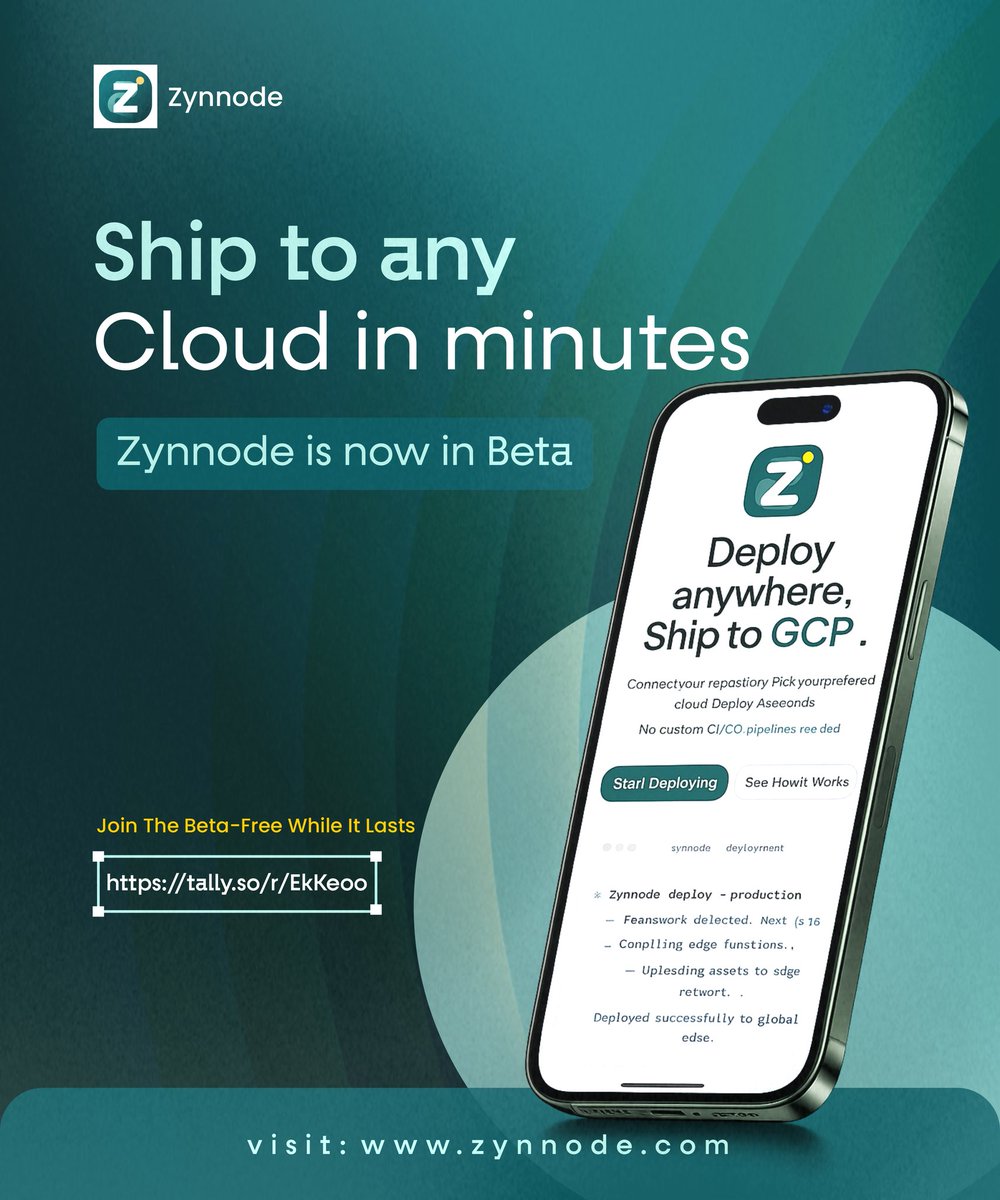
Zynnode Beta is live. Deploy with less cloud friction and less setup overhead. Built for developers and founders who just want to ship. Website: zynnode.com Join beta: tally.so/r/EkKeoo
Zynnode tweet media
English
1
1
3
35
Peter Akande retweetledi
fks
fks@FredKSchott·
Introducing Flue — The First Agent Harness Framework Flue is a TypeScript framework for building the next generation of agents, designed around a built-in agent harness. Flue is like Claude Code, but 100% headless and programmable. There's no baked in assumption like requiring a human operator to function. No TUI. No GUI. Just TypeScript. But using Flue feels like using Claude Code. The agents you build act autonomously to solve problems and complete tasks. They require very little code to run. Most of the "logic" lives in Markdown: skills and context and AGENTS.md. Flue is like Astro or Next.js for agents (not surprising, given my background 🙃). It's not another AI SDK. It's a proper runtime-agnostic framework. Write once, build, and deploy your agents anywhere (Node.js, Cloudflare, GitHub Actions, GitLab CI/CD, etc). We originally built Flue to power AI workflows inside of the Astro GitHub repo. But then @_bgiori got his hands on it, and we realized that every agent needs a framework like Flue, not just us. Check it out! It's early, but I'm curious to hear what people think. Are agents ready for their library -> framework moment?
fks tweet media
English
176
334
3.7K
716.2K
Peter Akande retweetledi
Zynnode
Zynnode@zynnode·
What's Zynnode? Zynnode is an AI-powered deployment platform that let you deploy to your own cloud provider/account (GCP,AWS,Azure) 😉 #buildinpublic
English
0
3
4
51
Peter Akande retweetledi
signüll
signüll@signulll·
the future interface is probably three layers: 1. ambient intent capture voice, location, calendar, screen context, messages, habits, biometrics, etc. the system understands what you’re trying to do before you explicitly “open” anything or augments your intent deeply. 2. agentic execution the actual work happens through agents operating software, apis, browsers, documents, email, calendars, workflows, payments, support systems, whatever. most “computer use” becomes machine to machine clerical labor. 3. ephemeral verification ux humans still need to inspect, compare, approve, edit, reject, or enjoy things. that’s where gui survives but as disposable, task specific surfaces generated for the moment.
English
130
198
2K
131K
Peter Akande retweetledi
OpenAI
OpenAI@OpenAI·
Introducing GPT-5.5 A new class of intelligence for real work and powering agents, built to understand complex goals, use tools, check its work, and carry more tasks through to completion. It marks a new way of getting computer work done. Now available in ChatGPT and Codex.
English
2.5K
7K
51.9K
13M
Peter Akande retweetledi
Naval
Naval@naval·
Introducing USVC - a single basket of high-growth venture capital, for everyone. No accreditation required, SEC-registered, and a very low $500 minimum. Includes OpenAI, Anthropic, xAI, Sierra, Crusoe, Legora, and Vercel. As USVC adds more companies, investors will own a piece of that too. Liquidity typically comes when companies exit, but we’re aiming to let investors redeem up to 5% of the fund every quarter. This isn’t guaranteed, but if we can make it work, you won’t be locked up like in a traditional venture fund. It runs on AngelList, which already supports $125 billion of investor capital. And I’ve joined USVC as the Chairman of its Investment Committee. — Go back to the 1500s, you set sail for the new world to find tons of gold - that was adventure capital. Early-stage technology is the modern version. It says we are going to create something new, and it’s risky. It’s daring. But ordinary people can’t invest until it’s old, until it’s no longer interesting, until everybody has access to it. By the time a stock IPOs, most of the alpha is gone. The adventure is gone. Public market investors are literally last in line. This problem has become farcical in the last decade. Startups are reaching trillion dollar valuations in the private markets while ordinary investors have their noses up to the glass, wondering when they’ll be let in. Investing in private markets isn’t easy. You need feet on the ground. You need judgment built over years. Most people don’t have the patience to wait ten or twenty years for an investment to come to fruition. But there is no more productive, harder-working way to deploy a dollar than in true venture capital. USVC enables you to invest in venture capital in a broad, accessible, professionally-managed way, through a single basket of innovation, focused on high-growth startups, at all stages. It is how you bet on the future of tech: the smartest young people in the world, working insane hours, leveraged to the max, with code, hardware, capital, media, and community. Your dollar doesn’t work harder anywhere. There is an old line - in the future, either you are telling a computer what to do, or a computer is telling you what to do. You don’t want to be on the wrong side of that transaction. USVC lets you buy the future, but you buy it now. Then you wait, and if you are right, you get paid. Get access here: usvc.com
English
804
962
12K
5.3M
@jason
@jason@Jason·
We started an AI founder twitter group... reply with "I'm in" if you're a founder and want to be added
English
10.9K
136
4.6K
901.3K
Peter Akande retweetledi
Omar (mainnet arc)
Omar (mainnet arc)@acceleratooooor·
Here's how to triage: 1. Go to admin.google.com 2. Security → Access and data control → API controls → App access control → Manage Third-Party App Access 3. Search for client ID: 110671459871-30f1spbu0hptbs60cb4vsmv79i7bbvqj if found → revoke / block
Vercel@vercel

Our investigation has revealed that the incident originated from a third-party AI tool with hundreds of users whose Google Workspace OAuth app was compromised. We recommend that Google Workspace Administrators check for usage of this app immediately. #indicators-of-compromise-iocs" target="_blank" rel="nofollow noopener">vercel.com/kb/bulletin/ve…


English
31
282
2.3K
566.7K
Peter Akande retweetledi
Benji Taylor
Benji Taylor@benjitaylor·
Making something people love is mostly making something you love and hoping the overlap is real
English
341
1.3K
8.4K
864.3K
Peter Akande retweetledi
Andrej Karpathy
Andrej Karpathy@karpathy·
Wow, this tweet went very viral! I wanted share a possibly slightly improved version of the tweet in an "idea file". The idea of the idea file is that in this era of LLM agents, there is less of a point/need of sharing the specific code/app, you just share the idea, then the other person's agent customizes & builds it for your specific needs. So here's the idea in a gist format: gist.github.com/karpathy/442a6… You can give this to your agent and it can build you your own LLM wiki and guide you on how to use it etc. It's intentionally kept a little bit abstract/vague because there are so many directions to take this in. And ofc, people can adjust the idea or contribute their own in the Discussion which is cool.
Andrej Karpathy@karpathy

LLM Knowledge Bases Something I'm finding very useful recently: using LLMs to build personal knowledge bases for various topics of research interest. In this way, a large fraction of my recent token throughput is going less into manipulating code, and more into manipulating knowledge (stored as markdown and images). The latest LLMs are quite good at it. So: Data ingest: I index source documents (articles, papers, repos, datasets, images, etc.) into a raw/ directory, then I use an LLM to incrementally "compile" a wiki, which is just a collection of .md files in a directory structure. The wiki includes summaries of all the data in raw/, backlinks, and then it categorizes data into concepts, writes articles for them, and links them all. To convert web articles into .md files I like to use the Obsidian Web Clipper extension, and then I also use a hotkey to download all the related images to local so that my LLM can easily reference them. IDE: I use Obsidian as the IDE "frontend" where I can view the raw data, the the compiled wiki, and the derived visualizations. Important to note that the LLM writes and maintains all of the data of the wiki, I rarely touch it directly. I've played with a few Obsidian plugins to render and view data in other ways (e.g. Marp for slides). Q&A: Where things get interesting is that once your wiki is big enough (e.g. mine on some recent research is ~100 articles and ~400K words), you can ask your LLM agent all kinds of complex questions against the wiki, and it will go off, research the answers, etc. I thought I had to reach for fancy RAG, but the LLM has been pretty good about auto-maintaining index files and brief summaries of all the documents and it reads all the important related data fairly easily at this ~small scale. Output: Instead of getting answers in text/terminal, I like to have it render markdown files for me, or slide shows (Marp format), or matplotlib images, all of which I then view again in Obsidian. You can imagine many other visual output formats depending on the query. Often, I end up "filing" the outputs back into the wiki to enhance it for further queries. So my own explorations and queries always "add up" in the knowledge base. Linting: I've run some LLM "health checks" over the wiki to e.g. find inconsistent data, impute missing data (with web searchers), find interesting connections for new article candidates, etc., to incrementally clean up the wiki and enhance its overall data integrity. The LLMs are quite good at suggesting further questions to ask and look into. Extra tools: I find myself developing additional tools to process the data, e.g. I vibe coded a small and naive search engine over the wiki, which I both use directly (in a web ui), but more often I want to hand it off to an LLM via CLI as a tool for larger queries. Further explorations: As the repo grows, the natural desire is to also think about synthetic data generation + finetuning to have your LLM "know" the data in its weights instead of just context windows. TLDR: raw data from a given number of sources is collected, then compiled by an LLM into a .md wiki, then operated on by various CLIs by the LLM to do Q&A and to incrementally enhance the wiki, and all of it viewable in Obsidian. You rarely ever write or edit the wiki manually, it's the domain of the LLM. I think there is room here for an incredible new product instead of a hacky collection of scripts.

English
1.1K
2.8K
26.6K
6.9M
Peter Akande retweetledi
Adedayo Agarau
Adedayo Agarau@adedayoagarau·
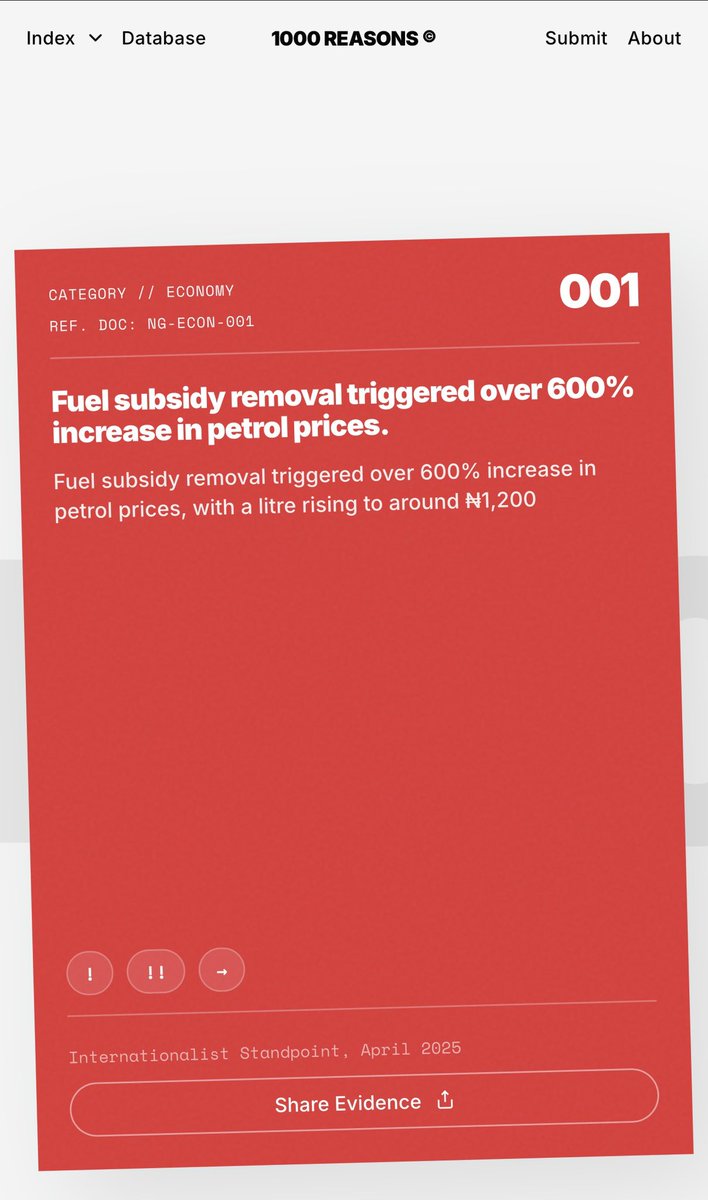
I put together 1000 Reasons Why You should not Vote for Tinubu in the next election. 1000-reasons.vercel.app Good morning Nigerians.
Adedayo Agarau tweet media
English
546
19.8K
29.1K
1.3M
Peter Akande retweetledi
Naval
Naval@naval·
Vibe coding is more addictive than any video game ever made (if you know what you want to build).
English
1.8K
3K
29.9K
1.7M
Taryl🔥
Taryl🔥@Taryl_Ogle·
We connect African founders to VC's and pre-seed funding. But that's a members-only perk. Right now we're opening access to a £25k–£100k accelerator backed by a $50M fund exclusively for African Founders Community. members. Comment "AFC" and I'll send you the link to join.
English
309
27
272
15.5K
Peter Akande retweetledi
andy nguyen
andy nguyen@kevinnguyendn·
Memory for OpenClaw is now Native! Our first OpenClaw Memory Skill was a massive success: 30k+ downloads in a week and 500k+ organic impressions overnight for launch post. But we knew memory needed to be native. On March 21, OpenClaw merged PR #50848, allowing us to go beyond the skill layer and integrate directly into the agent’s context assembly flow. We try to make OpenClaw a truly 24/7 employee capable of complex workflows. The technical setup isn’t the hardest part but the real challenge is giving it a "brain" that remembers exact project details, past decisions, and team changes over time. The Native Memory Plugin is now live on NPM & ClawHub. Here is what it brings to your OpenClaw agents: 👉 Native Integration: Automatically manages a Three-Layer Memory architecture (Context Tree, Workspace Memory, Daily Memory). 👉 Git-like Stateful Memory: Organizes memory into a semantic hierarchy of human-readable, diffable Markdown files. You always get updated knowledge and can actually see and fix what your agent learns. 👉 Top Market Accuracy: Achieves an industry-leading 92.2% retrieval accuracy (LoCoMo & LongMemEval benchmarks), maintaining 90% accuracy even with cheap, lightweight models. 👉 Local-first & Portable: Local-by-default, fully portable for multi-agent teams. 👉 Super Easy Setup
English
74
100
911
168.6K